Recent research published in the journal Geology on August 17, 2026, by a team led by Dr. Thomas Gernon of the University of Southampton, provides a compelling, evidence-based hypothesis to explain this geological heist. The study suggests that the culprit was a colossal, continent-spanning escarpment—a massive cliff system—that functioned as an engine of erosion, abetted by the global climatic shifts of a "Snowball Earth" era.
The Mechanics of a Geologic Heist
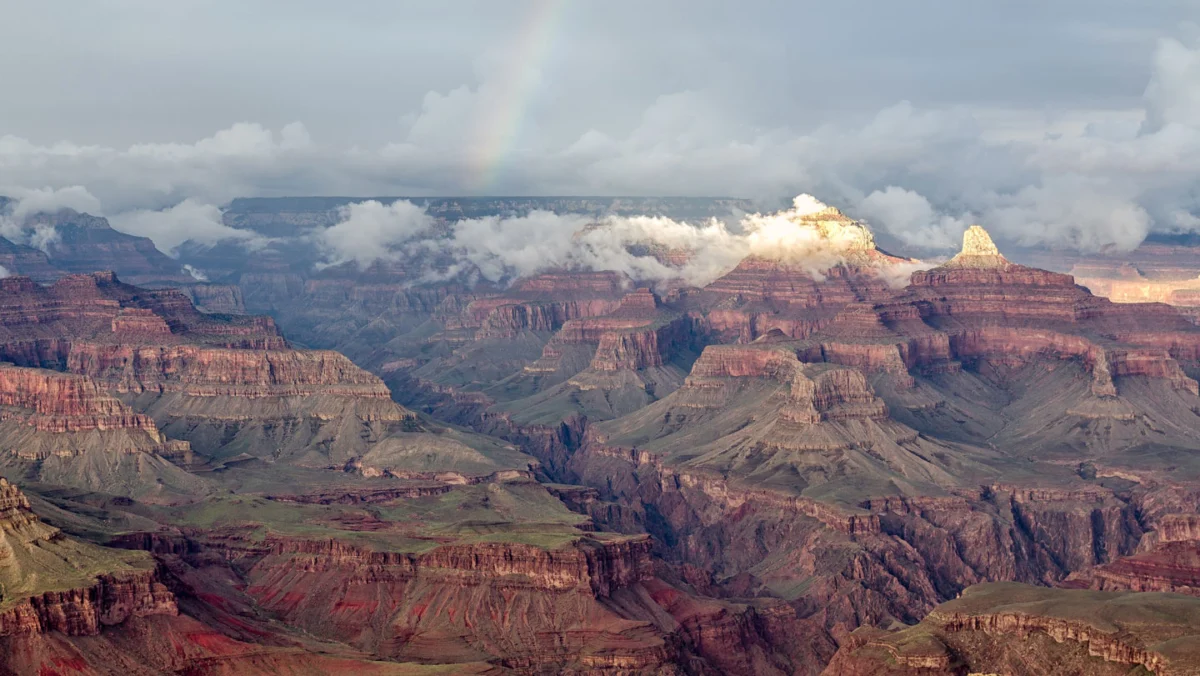
To understand the magnitude of this discovery, one must first appreciate the scale of the Grand Canyon’s geologic record. The canyon exposes rocks that date back nearly two billion years, yet the layers between 1.8 billion and 520 million years ago are largely absent from the stratigraphic sequence. This absence is not localized; it is a global phenomenon observed on multiple continents.
Dr. Gernon’s team utilized sophisticated computer modeling to simulate the evolution of the supercontinent Rodinia, which began to rift apart approximately 800 million years ago. As the crust pulled apart, it gave rise to a colossal escarpment that stretched across the ancient continent of Laurentia, the precursor to modern-day North America. This cliff, which would have extended from the latitudes of modern-day Alaska down to the American Southwest, reached heights of one to two kilometers.
The presence of such a massive vertical feature fundamentally alters the landscape’s hydrologic and erosive capacity. With such extreme elevation, the gravitational potential energy of water, ice, and wind becomes significantly amplified. Over millions of years, the escarpment acted as a persistent scar on the face of the planet, where relentless weathering processes stripped away the upper layers of rock. Like a conveyor belt moving material from high elevation to low-lying basins, this escarpment effectively "deleted" the rock record that existed during that billion-year gap.
Chronology of the Disappearing Act
The timeline proposed by the research team aligns with major tectonic and climatic events in Earth’s history. The chronology can be broken down into three critical phases:
- The Formation (800 Million Years Ago): The breakup of the supercontinent Rodinia triggers massive tectonic uplift, creating the primary escarpment. This sets the stage for the large-scale erosive process.
- The Glacial Catalyst (720 to 635 Million Years Ago): The emergence of the escarpment coincides with the onset of the Cryogenian period, commonly known as "Snowball Earth." During this time, global temperatures plummeted, and ice sheets expanded from the poles toward the equator.
- The Erosive Culmination: The combination of high-elevation topography and extreme cold created a "glacier factory." The escarpment served as a site for rapid ice accumulation and subsequent scouring, accelerating the removal of the geological record.
By the time the seas returned and the Cambrian explosion brought a surge of complex life to the planet roughly 541 million years ago, the original surface layers had been scraped clean, leaving only the "basement" rocks that we see today at the base of the Grand Canyon.

Supporting Data and Comparative Analysis
The strength of the Gernon study lies in its use of modern geological analogs. The team points to the Great Escarpment in South Africa and the massive cliffs of Antarctica as living laboratories for this theory. In a separate, related study published in the journal Science, Dr. Gernon demonstrated that similar tectonic-induced escarpments were responsible for the birth of the East Antarctic Ice Sheet roughly 34 million years ago. By applying these observations to the ancient landscape of North America, the researchers created a model that is consistent with both historical data and observed modern phenomena.
The model demonstrates that an escarpment of this scale would have been highly efficient at transporting sediment. When the team ran the simulations, the volume of rock removed by the erosive forces acting upon the cliff was sufficient to explain the missing billion years of sedimentary strata. This provides a quantitative backbone to what was previously a purely qualitative, and often speculative, debate.
Perspectives from the Scientific Community
The academic community has received the findings with cautious optimism. Alan Collins, a geologist at the University of Adelaide, noted that the link between the breakup of Rodinia and the subsequent erosion provides a necessary framework for the hypothesis. "Linking the disappearance of the rocks to verified events in Earth’s history, such as the tectonic shifts of Rodinia, bolsters the case significantly," Collins stated.
While the theory is robust, the scientific process demands further scrutiny. One primary challenge remains: precisely pinning down the timing of the erosion. Because the process likely occurred over hundreds of millions of years, distinguishing between erosion caused by the initial tectonic uplift and that caused by the subsequent glacial advances is difficult. Dr. Gernon acknowledges this, noting that the "real hole that needs filling" is the precise temporal mapping of the erosion continent by continent.
Broader Implications for Earth Science
The implications of this study extend beyond the Grand Canyon. If the "Great Unconformity" was indeed driven by a continental-scale escarpment, it changes how geologists interpret the evolution of the Earth’s surface. It suggests that the planet’s history is not always a steady accumulation of layers, but rather a dynamic cycle of formation and destruction governed by large-scale tectonic structures.
Furthermore, this study highlights the interconnectedness of Earth’s systems. The tectonics that built the cliff (the breakup of Rodinia) influenced the climate (the formation of glaciers), which in turn dictated the geological history that we are able to read today. By understanding the forces that erased the past, scientists can better predict how modern landscapes will respond to changing climatic conditions.
The mystery of the missing billion years is not yet "case closed," but the discovery of a continental-scale escarpment provides the most straightforward and plausible explanation to date. As researchers continue to refine the model and conduct field studies across other former fragments of Rodinia, the "missing" chapters of Earth’s history are slowly being reconstructed. The Grand Canyon, once a symbol of what was lost, is now becoming a key to understanding how our planet reshapes its own memory. Through the lens of this new research, the canyon walls tell a story not just of what remains, but of the immense, forgotten forces that carved the foundation of the modern world.