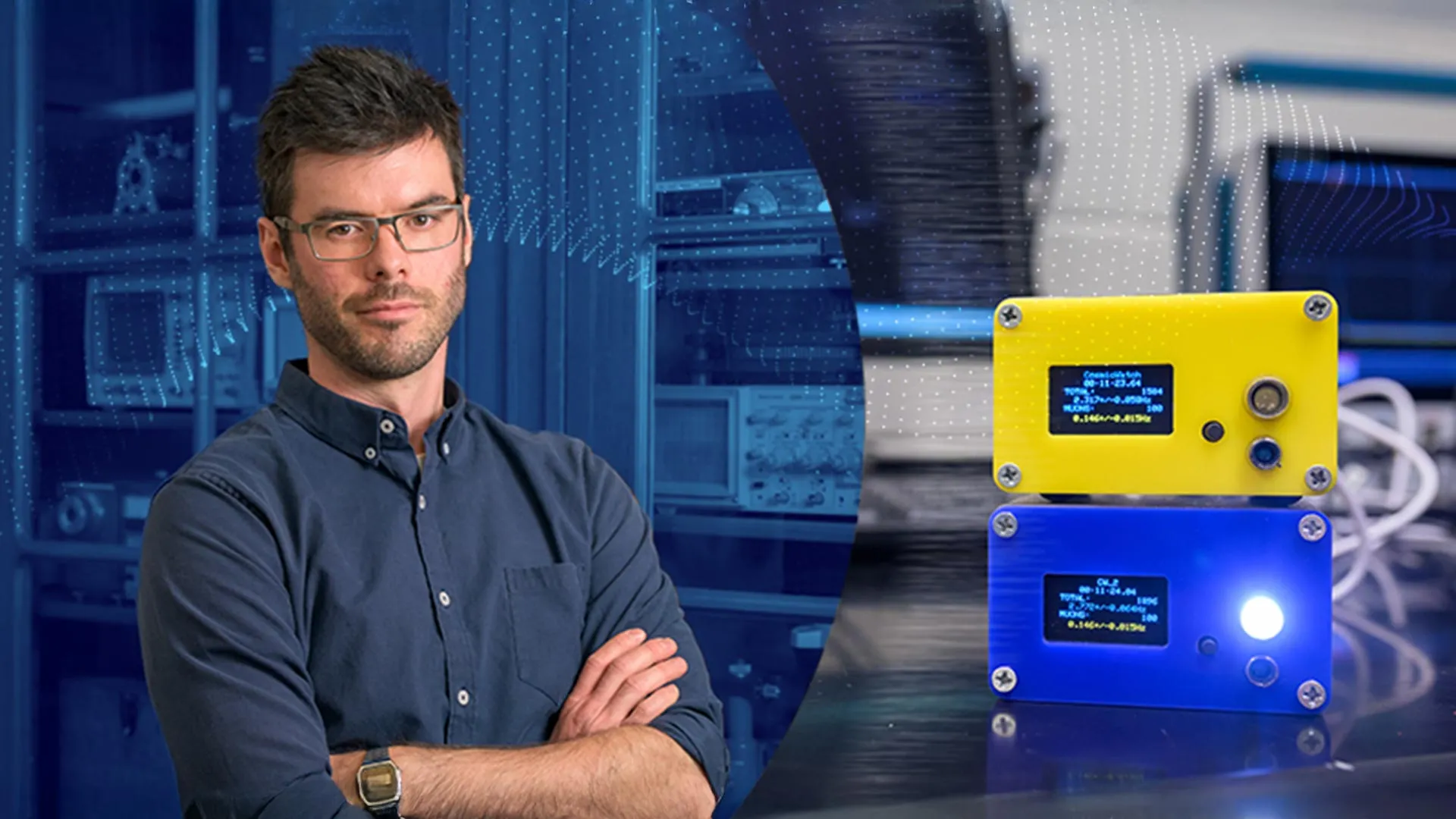
Humanity’s quest to measure time with absolute precision has reached a definitive turning point. After decades of painstaking theoretical research and technological hurdles, an international collaboration centered in Vienna has successfully developed and demonstrated the world’s first self-stabilizing nuclear clock. This groundbreaking device, built by a team at TU Wien in partnership with PTB Braunschweig, bypasses the limitations of traditional atomic systems by anchoring its rhythm directly to the atomic nucleus. Operating independently and continuously for more than 24 hours without external stabilization from conventional atomic clocks, the prototype establishes a foundational stepping stone toward a new era of metrology—the science of measurement.
While the current prototype does not yet surpass the absolute peak performance of the world’s most advanced optical atomic clocks, its architectural design opens an entirely new frontier in physics. By utilizing the unique properties of thorium nuclei, researchers have unlocked a self-regulating timekeeping mechanism that promises staggering levels of accuracy, potentially shrinking error margins to fractions of a second over millions of years and offering researchers a hyper-sensitive instrument to probe the fundamental laws of the universe.
The Chronology of a Breakthrough: From Theory to Reality
For decades, the concept of a nuclear clock remained a theoretical ambition rather than an engineering reality. Standard atomic clocks rely on the electron shells of atoms—such as cesium or strontium—to provide a stable frequency reference. When irradiated with microwaves or laser light, these electrons transition between energy states, creating a reliable tick that can be counted. However, electron shells are relatively large and easily perturbed by external electromagnetic fields, temperature fluctuations, and environmental noise.
Atomic nuclei, by contrast, are more than 10,000 times smaller than entire atoms. Shielded deep within the atomic structure, nuclei are profoundly resilient to external disturbances. The fundamental catch has always been energy scales: forcing a nucleus to change its energy state typically requires gamma rays and millions of electron-volts of energy, an environment far too violent and energetic to harness for precision timekeeping.
Thorium represents the solitary known exception to this rule. Two of its nuclear energy states are separated by an extraordinarily small energy gap. For years, physicists theorized that this specific gap could be bridged using ultraviolet laser light, but locating the exact frequency required to trigger the transition was akin to finding a needle in a cosmic haystack.
A historic milestone was achieved in April 2024, when a team led by Professor Thorsten Schumm at the Institute of Atomic and Subatomic Physics at TU Wien, working closely with Professor Ekkehard Peik’s team at PTB Braunschweig in Germany, experimentally identified the long-sought nuclear transition. For the very first time, the researchers demonstrated that ultraviolet laser beams could directly excite thorium nuclei embedded in a solid-state lattice.
Building upon this momentum, the research collaborative took the next logical step in the fall of 2024. By tethering their thorium excitation apparatus to a conventional optical atomic clock, they proved that thorium nuclei could indeed serve as a stable timekeeping reference. Yet, this initial setup relied on an external atomic clock to maintain its frequency stability. The ultimate goal—a completely autonomous, self-regulating nuclear clock—remained unfulfilled until the recent Vienna breakthrough.
Inside the Mechanism: How the Self-Stabilizing Nuclear Clock Operates
To achieve true independence, the Vienna team engineered a sophisticated system revolving around a specialized, high-purity crystal containing thorium atoms, manufactured directly in-house at TU Wien.
In this new apparatus, a specialized laser shines directly onto the thorium-doped crystal, interacting continuously with the nuclei inside. The oscillation of the laser light provides the rhythm that functions as the clock’s tick. However, even microscopic environmental shifts—such as minute temperature fluctuations in the laboratory or mechanical vibrations—can cause the laser’s frequency to drift away from its ideal rate.
To solve this, the researchers turned the thorium nuclei into an active feedback controller. Thorium nuclei are exceptionally selective; they will only absorb laser light if that light matches the exact frequency of the nuclear transition. If environmental factors cause the laser to drift even slightly, the rate of light absorption by the thorium nuclei drops measurably.
The system’s integrated feedback electronics immediately detect this drop in absorption and automatically apply a correction to the laser, pulling its frequency back to the precise value required. This closed-loop system allows the clock to maintain its own stability dynamically and continuously, functioning autonomously for over 24 hours without manual intervention or reliance on external atomic standards.
"What you really want is a self-stabilizing nuclear clock," explains Professor Thorsten Schumm, summarizing the elegance of the design. "The basic idea is simple: you have a laser and you have thorium. The laser changes the energy state of the thorium nuclei, and the thorium nuclei are used to stabilize the frequency of the laser."
Performance Metrics and Current Limitations
Evaluating the early prototype reveals both the immediate success and the future potential of nuclear metrology. During tests evaluating its day-to-day stability, the Vienna nuclear clock achieved a relative precision of approximately $10^-15$.
To put this performance metric into perspective, a relative precision of $10^-15$ translates to a timing error of roughly one second over a span of 30 million years. While this figure is calculated based on extended operational measurements over a 24-hour window rather than a literal multi-million-year trial, it demonstrates the remarkable fidelity of the nuclear reference frame even in its infancy.
Despite this extraordinary achievement, the current prototype does not yet dethrone the reigning champions of timekeeping: the world’s most advanced optical atomic clocks. Those established devices, which use strontium or ytterbium atoms trapped in optical lattices, currently achieve relative precisions exceeding $10^-19$, representing errors of less than one second over the entire age of the universe.
"This is not yet at the level of the world’s best optical atomic clocks, but for a first prototype it is a fantastic result," notes Professor Schumm. The current performance gap is attributed to technological limitations in laser power, crystal purity, and signal-to-noise ratios—all of which are engineering challenges with clear pathways to resolution.
Broader Implications for Physics and Technology
The realization of a self-stabilizing nuclear clock extends far beyond the realm of building a better timepiece. Precision timekeeping is deeply intertwined with fundamental physics, navigation, and telecommunications.
Because atomic nuclei are shielded from electromagnetic interference by their tiny physical volume, they are far less susceptible to environmental noise than electron clouds. As researchers refine thorium crystals and integrate more powerful, stable lasers, future generations of nuclear clocks are expected to surpass the theoretical limits of current atomic clocks.
Such unprecedented precision will unlock new avenues for scientific inquiry. Ultra-stable clocks serve as ultra-sensitive probes for fundamental physics. They can be used to test Einstein’s theory of general relativity with extreme accuracy, searching for microscopic fluctuations in gravitational fields or testing whether fundamental constants of nature—such as the fine-structure constant or the mass of the electron—truly remain constant over time or subtly evolve across the universe.
Furthermore, compact and robust nuclear clocks could eventually transition out of specialized metrology laboratories. Unlike delicate atomic clock systems that require massive vacuum chambers and complex laser cooling rigs, solid-state nuclear clocks built into crystals could offer rugged, transportable high-precision time standards. This could revolutionize global positioning systems (GPS), deep-space navigation, high-speed telecommunications networks, and synchronization protocols for power grids.
For now, the achievement by the TU Wien and PTB Braunschweig teams marks the crossing of a major scientific finish line. By successfully demonstrating the world’s first self-stabilizing nuclear clock, the research community has transformed a decades-old theoretical concept into a functional, self-sustaining reality, laying the technical groundwork for a future where time can be measured with an accuracy hitherto thought impossible.