For over a century, the foundational architecture of condensed matter physics rested on a binary division of collinear magnetism. Scientists and textbook authors alike taught that when atomic magnetic moments aligned within a solid material, they could do so in only two fundamental ways: ferromagnetism, where all moments point in the same direction to yield a net magnetic field, or antiferromagnetism, where neighboring moments point in opposite directions, perfectly canceling one another out and eliminating external magnetic signatures. This neat dichotomy governed everything from compass needles to high-density magnetic storage media. That enduring paradigm has now been comprehensively overturned.
An international team of theoretical and experimental physicists has unveiled a third primary category of magnetic order known as altermagnetism. This groundbreaking discovery bridges the gap between the macroscopic external utility of ferromagnets and the internal structural balance of antiferromagnets. In recognition of this monumental shift, the European Physical Society (EPS) Condensed Matter Division has selected Professor Jairo Sinova of Johannes Gutenberg University Mainz (JGU), Dr. Libor Šmejkal, and Professor Tomas Jungwirth as the joint recipients of the prestigious 2026 Europhysics Prize. Established in 1975, the award stands as one of the highest accolades in European physics, historically honoring visionary breakthroughs that fundamentally alter our comprehension of physical matter.
The announcement cements a scientific triumph that has rapidly evolved from a theoretical proposition into one of the most dynamic and heavily funded areas of quantum research across Europe, North America, and Asia. Hundreds of independent research papers have flooded academic journals in the wake of the team’s foundational publications, sparking intense global interest as laboratories race to map out the materials capable of exhibiting this hidden phase and harness its unique electronic properties for next-generation technology.
A Century-Old Blind Spot: The Mechanics of Altermagnetism
To understand the magnitude of the altermagnetic breakthrough, one must examine the limitations of classical magnetic theory. Ferromagnetic materials, characterized by parallel-aligned magnetic moments, generate strong stray magnetic fields. While indispensable for traditional data storage—such as hard disk drives—these stray fields create significant limitations in modern microelectronics. When components are packed closely together on a silicon chip, the magnetic fields generated by adjacent ferromagnetic elements inevitably interfere with one another, causing data corruption or operational cross-talk.
Antiferromagnetic materials were long viewed as the ultimate solution to this miniaturization dilemma. Because their internal magnetic moments point in alternating opposite directions, their net magnetization is zero. Consequently, antiferromagnets produce virtually no stray magnetic fields, allowing engineers to pack them densely without magnetic interference. Furthermore, antiferromagnetic dynamics operate on a much faster timescale—typically in the terahertz regime, thousands of times faster than standard ferromagnets. However, manipulating antiferromagnets has historically proved exceptionally difficult precisely because their electronic states are so thoroughly balanced, rendering them largely unresponsive to standard magnetic fields and electrical read-out mechanisms.
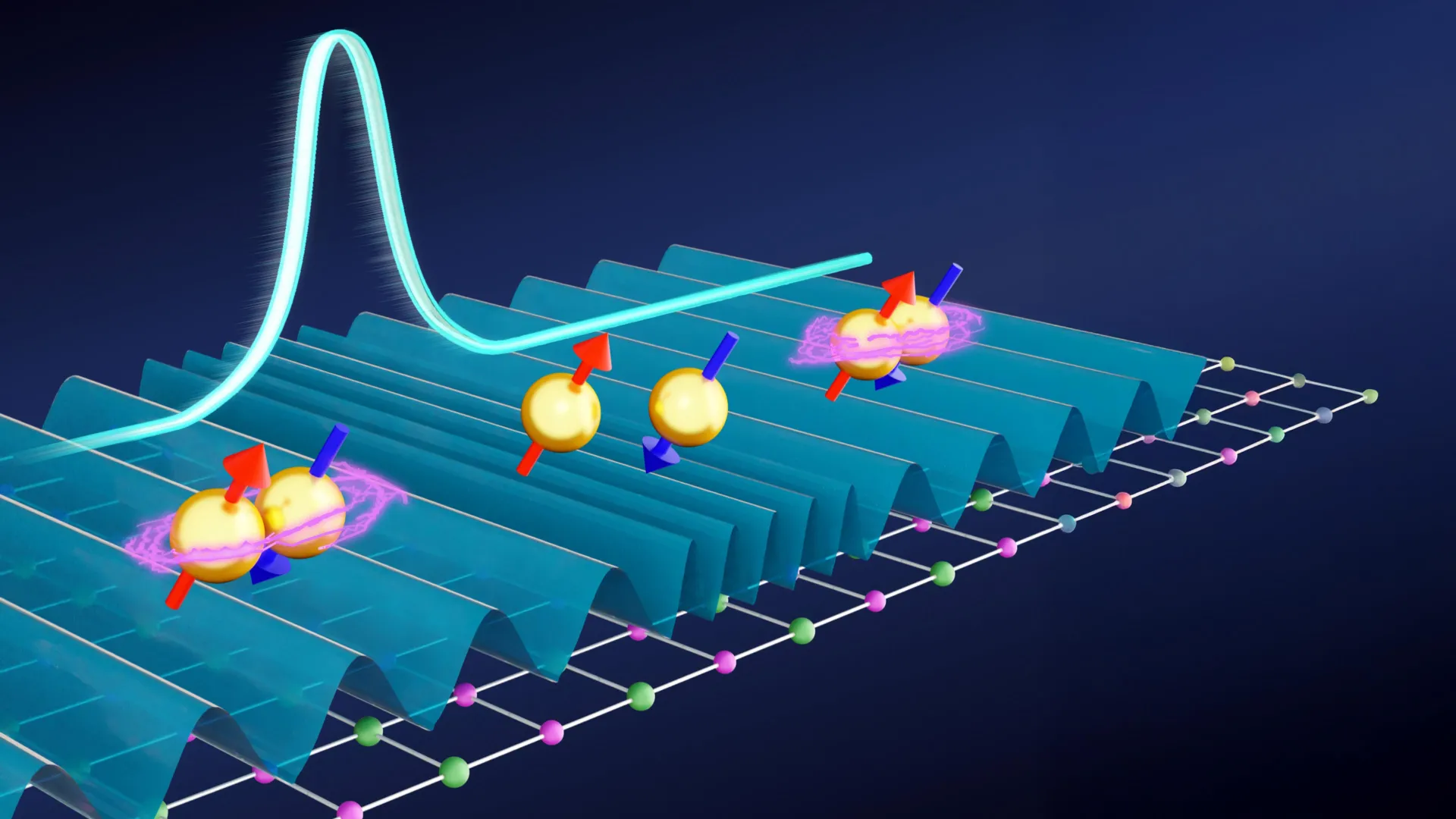
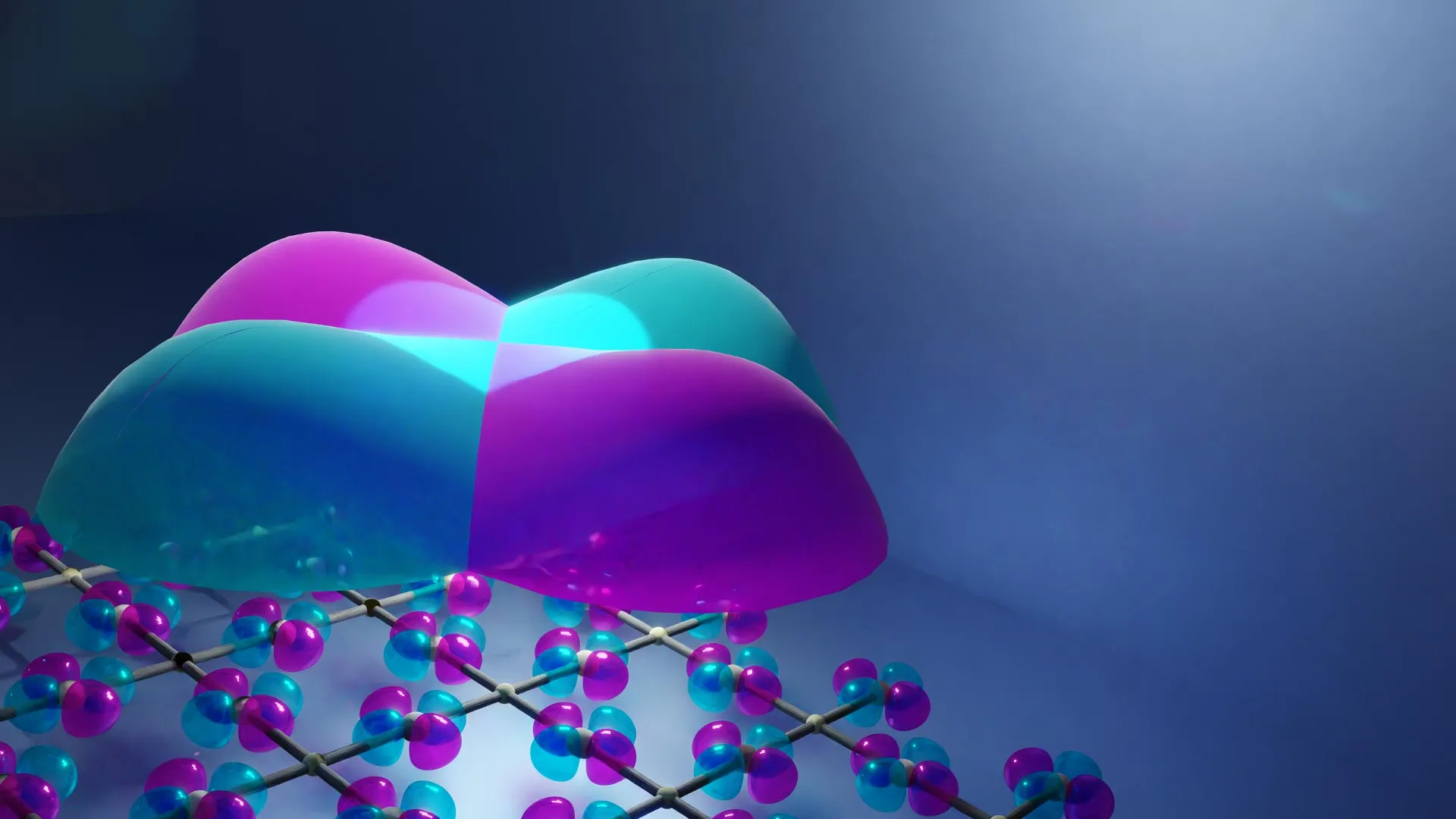
Altermagnetism shatters this compromise by offering the best of both worlds. Like antiferromagnets, altermagnets feature alternating, mutually canceling magnetic moments that produce zero net magnetization, thereby avoiding stray-field interference and enabling ultra-high-density data packing. Yet, at the quantum level, the spatial arrangement of their atomic lattices and electron orbitals introduces a profound asymmetry.
This structural twist forces the electron spins to split in momentum space in a manner previously thought exclusive to ferromagnets. As a result, altermagnets can naturally support electrical currents carrying strongly spin-polarized electrons while exhibiting extraordinarily rapid magnetic dynamics. This dual capability makes them prime candidates for advanced spintronics—a field that seeks to build electronic devices utilizing the intrinsic spin of electrons rather than merely their electrical charge, promising unprecedented leaps in processing speeds and energy efficiency.
Chronology of a Paradigm Shift: From Theoretical Hypothesis to Global Consensus
The discovery of altermagnetism was not a sudden accident, but the culmination of nearly a decade of painstaking theoretical formulation and interdisciplinary collaboration. The trajectory of this research traces a clear, deliberate path through the European academic landscape, uniting Johannes Gutenberg University Mainz and the Institute of Physics of the Czech Academy of Sciences in Prague.
The foundational roots of the breakthrough date back to the mid-2010s, when researchers began investigating anomalies in how electricity moves through complex crystal lattices. Among the early puzzle pieces was the theoretical prediction and subsequent observation of the crystal anomalous Hall effect—an unconventional transverse electrical voltage generated in certain magnetic materials without the aid of an external magnetic field. While initially interpreted as isolated quirks native to specific compounds, the research teams began to suspect a deeper, unifying principle at play.
Between 2016 and 2024, Dr. Libor Šmejkal served as a linchpin for this collaborative effort. Splitting his time between Prague and Mainz—where he pursued his doctoral studies before transitioning to a postdoctoral researcher within Professor Sinova’s group—Šmejkal spearheaded the mathematical modeling required to categorize these anomalous behaviors. By merging advanced symmetry analysis with the principles of spintronics, the researchers realized that these materials were not mere anomalies; they belonged to an entirely distinct, unrecognized class of magnetic order.
A major watershed moment occurred in 2022, when the collaboration published a comprehensive symmetry classification framework that formally introduced altermagnetism to the scientific community. Crucially, the team did not stop at theory; their analytical model predicted that altermagnetic behavior should be present in hundreds of already-known crystals, ranging from metallic oxides to semiconductors.
This theoretical roadmap immediately galvanized experimental groups worldwide. Armed with the team’s predictions, experimentalists employed angle-resolved photoemission spectroscopy (ARPES)—a cutting-edge technique that maps the energy and momentum of electrons inside solid materials—alongside sophisticated electrical transport measurements. By late 2022 and throughout 2023, independent laboratories successfully verified altermagnetic signatures across a diverse array of materials. What began as a theoretical hypothesis rapidly solidified into an experimentally verified physical reality, transforming the global condensed matter physics landscape in record time.
Official Reactions and Institutional Tributes
The awarding of the 2026 Europhysics Prize serves as formal validation from the European scientific establishment, highlighting the profound implications of the discovery for the future of quantum materials.
"This award recognizes a fundamental discovery that challenged one of the most established paradigms in condensed matter physics," remarked Professor Jairo Sinova, Director of the Spin Phenomena Interdisciplinary Center (SPICE) at Mainz University. "Discovering that an entirely new magnetic phase had remained hidden for more than one hundred years demonstrates that even the most mature scientific fields can still hold fundamental surprises. It is a testament to the power of sustained, collaborative basic research."
Colleagues and institutional leaders have echoed these sentiments, pointing to the unique transnational synergy that made the discovery possible. The partnership between Sinova’s group in Mainz, Germany, and Jungwirth’s team at the Institute of Physics of the Czech Academy of Sciences in Prague exemplifies the collaborative strength of the European Research Area.
Dr. Šmejkal, whose career bridges these foundational institutions, has since expanded his research footprint with appointments at prestigious German facilities, including the Max Planck Institute for the Physics of Complex Systems in Dresden and the Max Planck Institute for Chemical Physics of Solids. Professor Tomas Jungwirth, who maintains affiliations with the Czech Academy of Sciences and the University of Nottingham, emphasized that the rapid global adoption of altermagnetism highlights how modern physics thrives at the intersection of symmetry theory and materials science.
Implications for Quantum Materials and Future Technologies
Beyond the immediate excitement within academic circles, the discovery of altermagnetism carries sweeping implications for applied physics and industrial technology. The most direct applications lie in the domain of spintronics and quantum computing.
Traditional electronic devices rely exclusively on the electrical charge of electrons, a method hitting fundamental thermodynamic limits as transistors shrink to atomic scales and generate unmanageable amounts of heat. Spintronics bypasses this thermal bottleneck by encoding data in the quantum spin state of electrons. Because altermagnets combine the zero net magnetization of antiferromagnets with the strong spin-polarization properties of ferromagnets, they offer an ideal material platform for ultra-dense, non-volatile magnetic memory and logic gates. Such devices could theoretically operate at terahertz frequencies, processing information thousands of times faster than today’s silicon-based microprocessors while consuming a fraction of the energy.
Furthermore, the theoretical framework of altermagnetism has opened unexpected intellectual bridges to other frontiers of modern physics. Researchers have begun exploring deep connections between altermagnetic symmetry and topological quantum phenomena, as well as unconventional superconductivity—the ability of certain materials to conduct electricity with zero resistance at elevated temperatures. Because strong electron-electron interactions lie at the heart of both altermagnetism and high-temperature superconductivity, studying the former provides physicists with a vital new laboratory tool to decode the mechanisms of the latter.
As the scientific community prepares for the formal presentation of the 2026 Europhysics Prize at the 32nd General Conference of the European Physical Society Condensed Matter Division (CMD32) in Graz, Austria, the momentum surrounding altermagnetism shows no sign of slowing down. What began as an effort to resolve anomalous electrical transport data has successfully rewritten the introductory chapters of physics textbooks, proving that even after centuries of rigorous inquiry, the natural world still harbors fundamental secrets waiting to be uncovered.