The universe is permeated by magnetic fields that span vast distances, from the localized environments of planets to the staggering reaches of entire galaxies. For decades, one of the most persistent mysteries in astrophysics has been the origin of these massive, organized structures. While magnetic fields are known to be generated by the movement of plasma—a state of matter consisting of charged particles—the prevailing theories often suggested that the inherent turbulence of space should result in small, chaotic, and disorganized fields. However, a groundbreaking study led by researchers at the University of Wisconsin-Madison and published in the journal Nature has finally identified the mechanism that allows order to emerge from this cosmic chaos. By utilizing some of the most powerful supercomputers in the world, the team discovered that large-scale magnetic fields are forged when turbulent plasma develops organized, jet-like flows, driven by steady velocity gradients.
The Paradox of the Cosmic Dynamo
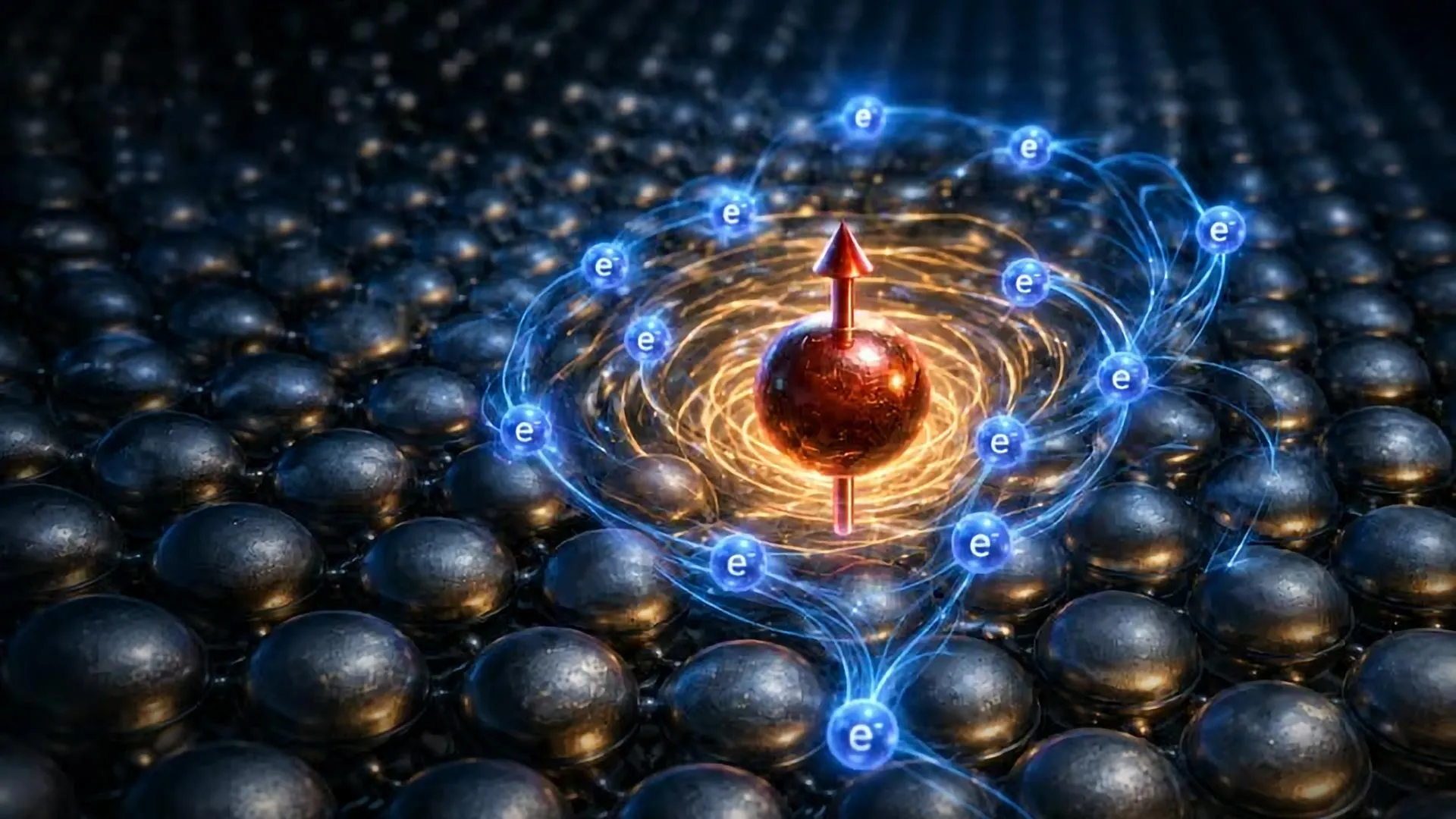
The study of how celestial bodies generate magnetic fields, a field known as dynamo theory, dates back approximately 70 years. The fundamental premise of a dynamo is that the kinetic energy of a conducting fluid, such as liquid iron in Earth’s core or ionized gas in a star, is converted into magnetic energy. While this process explains the existence of magnetic fields in a general sense, it has historically failed to account for the scale and regularity of the fields observed by astronomers.
In a typical turbulent system, energy tends to dissipate or break down into smaller and smaller scales. Scientists expected that the turbulence found in the early universe or within forming galaxies would produce a "small-scale dynamo," resulting in a tangled "spaghetti" of magnetic field lines. Yet, when telescopes peer into the deep cosmos, they see magnetic fields that are remarkably coherent over thousands of light-years. This discrepancy between theoretical models and empirical observation has remained one of the most frustrating hurdles in plasma physics.
Bindesh Tripathi, the study’s lead author and a former UW-Madison physics graduate student now serving as a postdoctoral researcher at Columbia University, noted that the destructive nature of turbulence was the primary conceptual obstacle. "Given that turbulence is known to be a destructive agent, the question remains, how does it create a constructive, large-scale field?" Tripathi asked. The answer, it appears, lies in the specific way plasma moves when subjected to unequal speeds across different regions.
A Chronology of Discovery: From 2D Intuition to 3D Complexity
The path to this discovery began with Tripathi’s earlier work on fluid dynamics and two-dimensional magnetic fields. In 2D systems, scientists have long observed that energy can undergo an "inverse cascade," where small-scale fluctuations merge to form larger structures. However, the universe operates in three dimensions, and the laws governing 3D magnetohydrodynamics (MHD) are significantly more complex. In 3D, energy typically flows from large scales to small scales, which should, in theory, prevent the formation of large-scale magnetic fields.
While analyzing visualizations of 3D magnetic turbulence, Tripathi noticed a recurring pattern: the shapes of the emerging magnetic structures bore a striking resemblance to large-scale plasma flows. This observation suggested that the magnetic field was not an isolated phenomenon but was being sculpted by the underlying motion of the plasma itself.
To prove this, the research team had to move beyond simplified models. They recognized that previous simulations might have missed a critical component: the velocity gradient. In any cosmic environment—whether it is the interior of a rotating star or the accretion disk surrounding a black hole—matter does not move at a uniform speed. There is a "gradient," where one layer of plasma moves faster than the layer next to it. By introducing a constantly renewed velocity gradient into their simulations, the team aimed to mimic the persistent shearing forces found in nature.
Harnessing the Power of the Anvil Supercomputer
The computational requirements for this study were immense. To capture the transition from small-scale turbulence to large-scale order, the researchers needed to simulate plasma at an unprecedented resolution. They turned to the Anvil supercomputer at Purdue University, a high-performance computing resource supported by the National Science Foundation’s ACCESS program.
The team’s model utilized 137 billion grid points in 3D space, allowing them to track the infinitesimal movements of particles across a massive virtual volume. Over the course of the project, they performed roughly 90 separate simulations, consuming nearly 100 million CPU hours. This effort generated approximately 0.25 petabytes of data—a volume of information equivalent to millions of high-definition movies.
The methodology involved starting with a plasma flow characterized by a specific velocity gradient. They then introduced "tiny perturbations"—minor disturbances similar to a single ripple in a pond. They watched as these perturbations grew, initially creating chaotic, small-scale magnetic tangles. However, as the simulation progressed, a transformation occurred. The small-scale turbulence began to organize itself into jet-like flows. These jets, in turn, acted as the framework upon which a large-scale, ordered magnetic field could grow.
A crucial moment in the research came when the team ran a control simulation. When they removed the steady, large-scale velocity gradient, the organized magnetic structures failed to appear. The system remained a mess of small-scale, disordered fields. This confirmed that the velocity gradient was the "missing piece" required to sustain the large-scale dynamo.
Experimental Validation and Historical Context
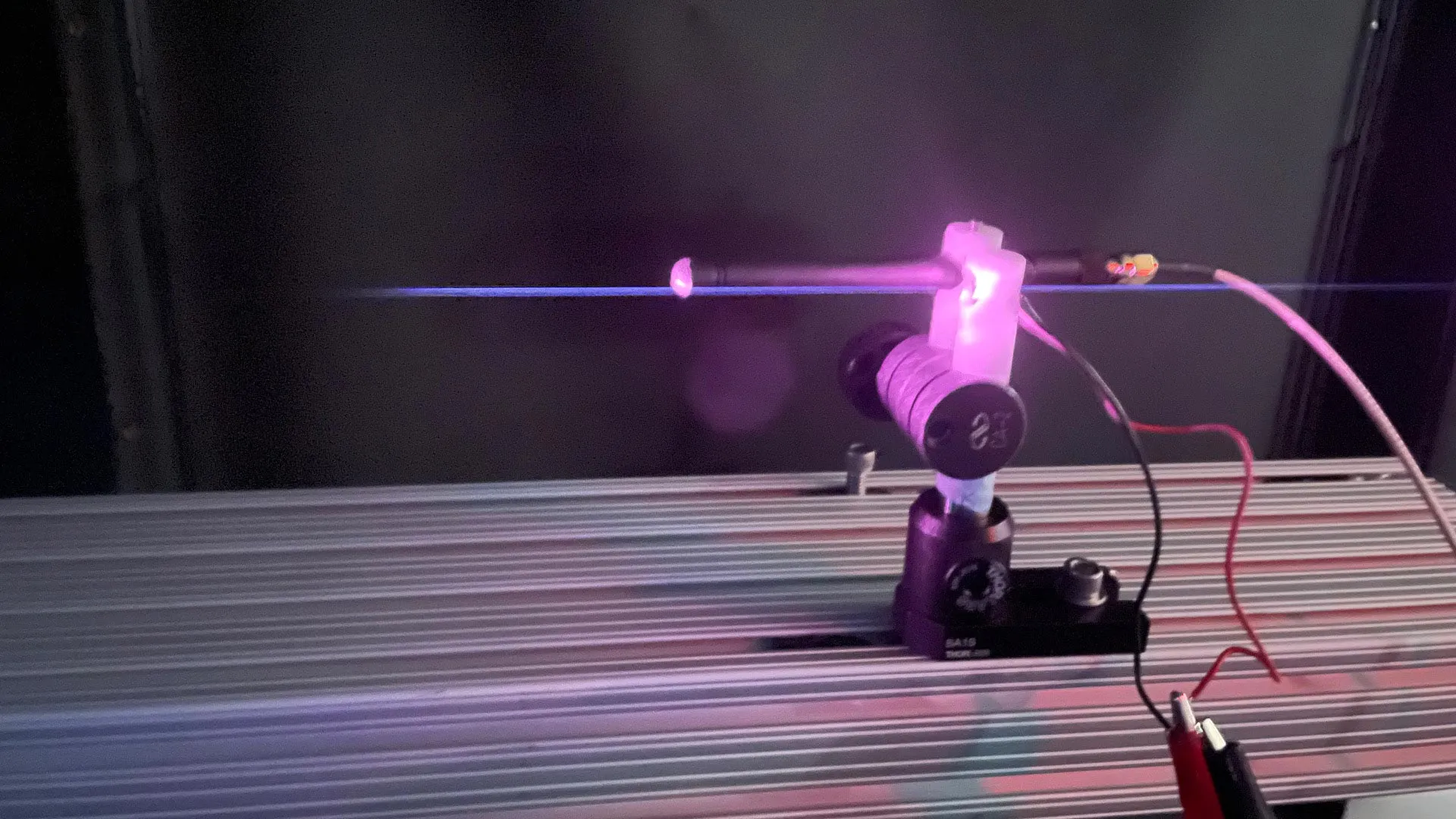
While the findings are rooted in computer simulations of the distant universe, they find surprising support in laboratory experiments conducted right here on Earth. In 2012, researchers at the Wisconsin Plasma Physics Laboratory (WiPPL) observed magnetic behaviors in plasma that defied the standard models of the time. The experimental data showed organized magnetic growth that the scientific community could not fully explain using existing dynamo theories.
Paul Terry, a physics professor at UW-Madison and senior author of the study, emphasized that the new model aligns closely with those puzzling 2012 results. "Magnetic field generation via dynamos has been extensively studied for 70 years, with the frustrating result that the generated fields almost always end up at small scales and highly disordered, unlike observations," Terry stated. "This work, therefore, potentially resolves a long-standing issue."
The alignment between high-fidelity simulations and physical laboratory experiments provides a double layer of verification. It suggests that the "jet-like flow" mechanism is a universal property of plasma physics, applicable both to small-scale experiments in a lab and to the gargantuan scales of the interstellar medium.
Implications for Astrophysics and Multimessenger Astronomy
The discovery has far-reaching implications for our understanding of the most violent and energetic events in the cosmos. One of the primary areas of interest is the study of neutron star mergers and black hole formation. These events are the focus of "multimessenger astronomy," a relatively new field that combines data from gravitational waves with traditional electromagnetic observations (like light and X-rays).
Magnetic fields play a decisive role in these events. When two neutron stars collide, the resulting magnetic turbulence is thought to power the massive bursts of gamma rays observed by satellites. By providing a clearer model of how these fields organize themselves, the UW-Madison study helps scientists interpret the gravitational and light signals coming from these collisions.
Furthermore, the research offers a better framework for understanding "space weather." The Sun is a massive ball of turbulent plasma with complex velocity gradients. These gradients drive the solar dynamo, which occasionally produces massive gas ejections known as Coronal Mass Ejections (CMEs). When these ejections hit Earth, they can disrupt satellite communications, GPS signals, and power grids. The ability to model how large-scale magnetic structures form in the Sun could lead to more accurate predictions of solar storms, providing vital early warnings for Earth’s technological infrastructure.
Conclusion: A New Framework for the Universe
The study represents a paradigm shift in plasma physics. By demonstrating that turbulence—long thought to be the enemy of order—can actually facilitate the creation of large-scale structures through the medium of velocity gradients, the researchers have bridged a 70-year gap in scientific knowledge.
This research was made possible through a partnership between the National Science Foundation and the U.S. Department of Energy, highlighting the importance of inter-agency cooperation in tackling fundamental scientific questions. As astronomers continue to map the magnetic "web" of the universe, they now have a theoretical map to explain why that web is so remarkably organized. From the birth of stars to the behavior of the supermassive black holes at the centers of galaxies, the "jet-like flows" of plasma are the invisible architects of the cosmic order.