The fundamental understanding of how objects move against one another has remained largely unchanged for more than three centuries. Since the late 17th century, the scientific community has relied on Amontons’ law of friction, which posits that the friction force between two sliding surfaces is directly proportional to the applied load. However, a groundbreaking study from the University of Konstanz has upended this long-standing empirical rule, identifying a completely new type of sliding friction that occurs without any physical contact. This discovery, rooted in the collective behavior of magnetic elements, reveals that friction does not always increase steadily with load but can instead reach a definitive peak when the internal magnetic ordering of a system becomes frustrated.
For centuries, the mechanics of friction have been a cornerstone of classical physics and engineering. The relationship established by Guillaume Amontons in 1699—and earlier observed by Leonardo da Vinci—dictates that if you double the weight of an object, you double the force required to slide it across a floor. This phenomenon is typically attributed to the microscopic irregularities, or asperities, on surfaces. Even the smoothest-looking materials are jagged at the atomic level; when pressed together, these points of contact deform and interlock. Increased pressure leads to more contact points and greater deformation, resulting in higher resistance. However, the researchers at Konstanz have demonstrated that in systems where internal structures are dynamic rather than static, these classical rules no longer apply.
The Mechanical Foundation: Understanding Amontons’ Law and Its Limitations
To appreciate the significance of the Konstanz discovery, one must look at the historical context of tribology—the science of wear, friction, and lubrication. Amontons’ law is an empirical observation that has served as the "gold standard" for mechanical design, from the construction of ancient pyramids to the development of modern internal combustion engines. It assumes that the materials involved are essentially passive; while they may deform, their internal molecular or atomic arrangements do not undergo radical, systemic shifts during the sliding process.
In most traditional mechanical systems, the energy lost to friction is dissipated as heat through the vibration of atoms (phonons) at the interface of two materials. This process is inherently tied to physical contact. However, as technology has moved toward the micro and nano scales, the limitations of contact-based friction have become a significant hurdle. Physical wear limits the lifespan of tiny moving parts in Micro-Electro-Mechanical Systems (MEMS), and traditional lubricants often fail or become too viscous at such small dimensions. The quest for "contactless" friction—resistance generated through fields rather than physical touch—has been a holy grail for physicists seeking to minimize wear while maintaining control over motion.
The Konstanz Experiment: A Tabletop Gateway to New Physics
The research team, led by Professor Clemens Bechinger, sought to investigate how friction behaves when the resistance arises not from surface roughness, but from the internal "frustration" of magnetic fields. To do this, they constructed a sophisticated tabletop experiment involving two distinct layers of magnetic components.
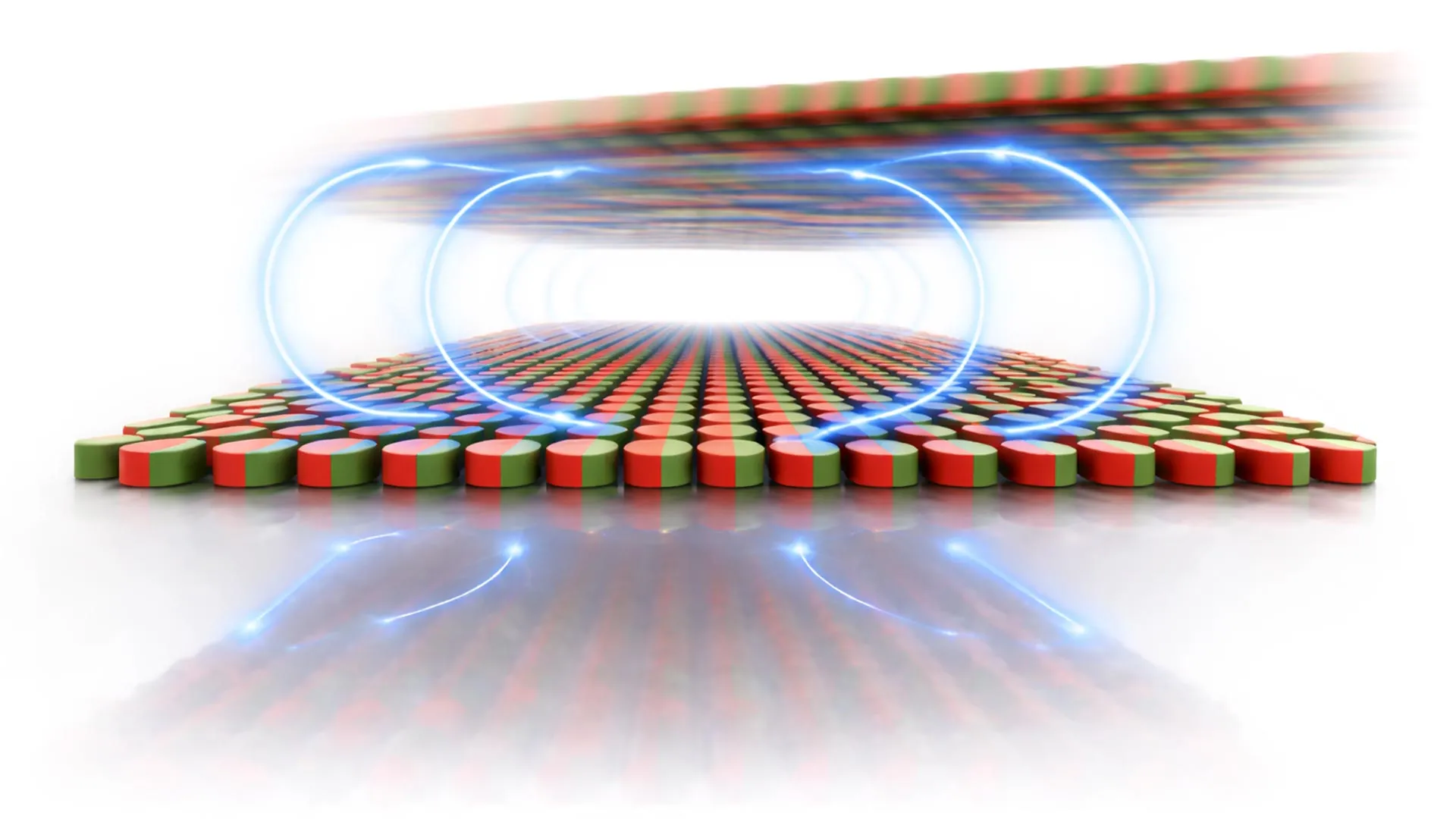
The setup featured a two-dimensional array of magnetic "rotors"—small magnetic elements capable of rotating freely on their axes. This array was positioned at a controlled distance above a second magnetic layer. Crucially, the two layers were separated by a gap that prevented any physical contact, ensuring that any resistance to motion was purely the result of magnetic interactions. By sliding the top array over the base layer and varying the distance between them, the researchers could simulate a "load" without actually pressing surfaces together. In this magnetic context, a smaller distance represented a higher load, as the magnetic forces between the layers became stronger.
Hongri Gu, the researcher who conducted the experiments, noted that the system allowed for unprecedented observation of internal dynamics. Unlike opaque solid materials where internal changes are hidden, the magnetic rotors provided a visual and measurable map of how the system’s "order" evolved during motion. The team discovered that by adjusting the distance, they could force the system into a regime where the magnetic elements were constantly competing with one another to find a stable orientation.
The Discovery of Magnetic Frustration and the Friction Peak
The most striking finding of the study was the non-linear behavior of the friction force. According to Amontons’ law, as the layers move closer (increasing the "load"), the friction should increase steadily. Instead, the team observed a "friction peak."
The data showed that friction was relatively low when the layers were far apart, which was expected due to weak magnetic coupling. However, as the layers were brought closer together, the friction did not simply rise and plateau. It spiked at an intermediate distance and then, surprisingly, began to decrease as the layers were moved even closer. This behavior represents a direct violation of the linear relationship predicted by classical physics.
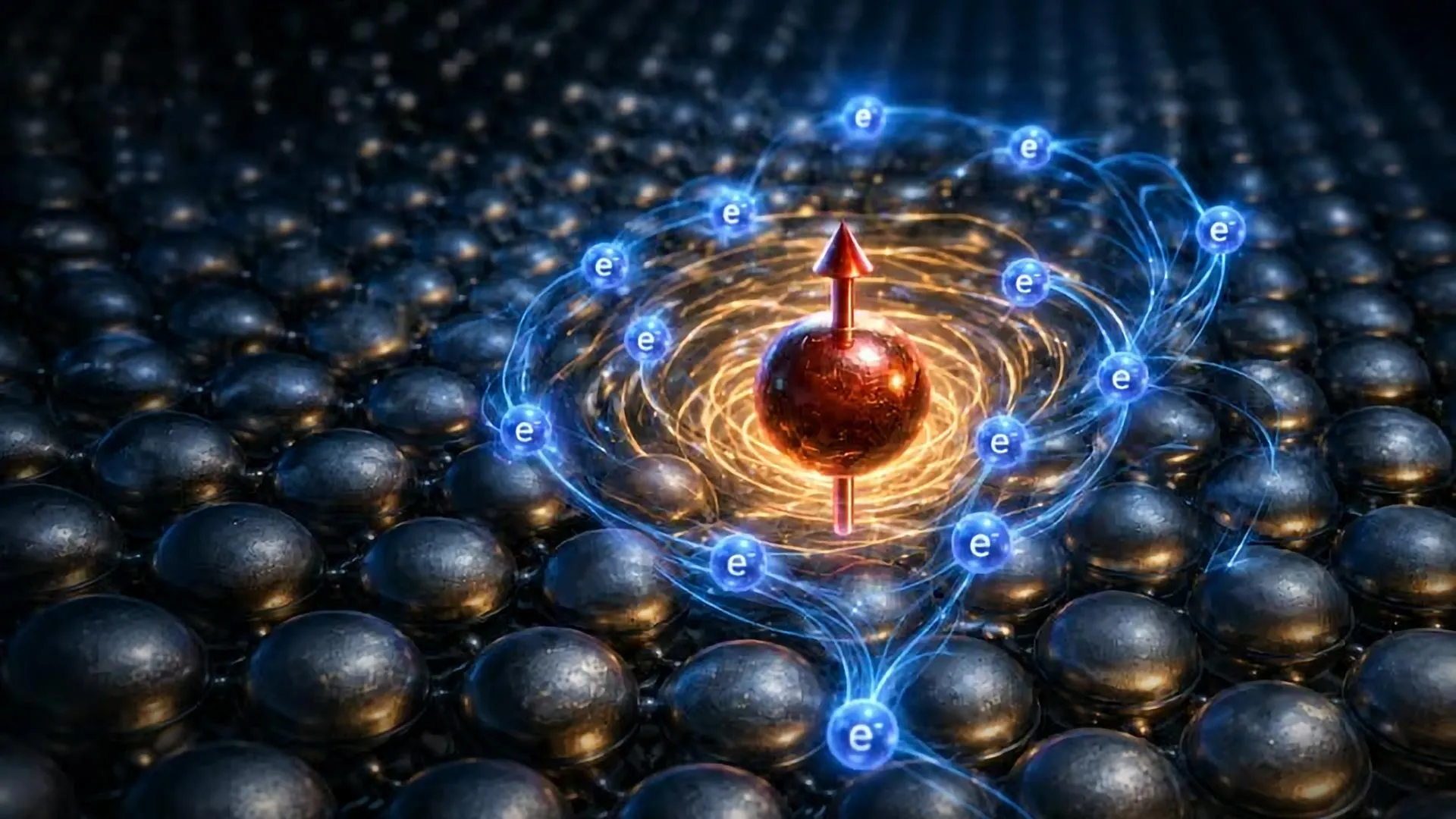
The explanation for this anomaly lies in a phenomenon known as magnetic frustration. The researchers found that the two layers possessed conflicting magnetic preferences. The upper layer of rotors was designed to favor an antiparallel configuration, where neighboring magnets point in opposite directions. Conversely, the lower layer exerted a force that encouraged a parallel arrangement. As the top layer slid over the bottom, the magnetic rotors were caught in a tug-of-war between these two incompatible states.
Anton Lüders, who developed the theoretical framework for the study, explained that this conflict drives the system into a state of constant reorganization. As the magnets struggle to align with the moving base while simultaneously trying to satisfy their own internal antiparallel preferences, they undergo rapid, "hysteretic" switching. In physics, hysteresis occurs when the state of a system depends on its history; in this case, the magnets "flip" between orientations, and each flip dissipates a small amount of energy.
Data Analysis: Why the Peak Occurs
The peak in friction occurs at the precise distance where the competition between the two magnetic preferences is most intense. At this "intermediate" distance, the system is at its most unstable, leading to the maximum number of magnetic reorientations and, consequently, the highest energy loss.
When the layers are moved even closer together, the magnetic field from the lower layer becomes so dominant that it "overwhelms" the internal antiparallel preferences of the top layer. The rotors are forced into a more stable, locked-in arrangement. Because there is less "flipping" and switching, the energy dissipation—and thus the friction—actually drops, despite the "load" being higher. This reversal of the friction-load relationship provides a new roadmap for engineers, suggesting that in magnetic systems, more pressure does not always equal more resistance.
Official Responses and Theoretical Significance
The implications of this research have resonated throughout the physics community. Professor Clemens Bechinger, who supervised the project, emphasized the purity of the mechanism. "What is remarkable is that friction here arises entirely from internal reorganization," Bechinger stated. "There is no wear, no surface roughness, and no direct contact. Dissipation is generated solely by collective magnetic rearrangements."
This shift in perspective moves friction from the realm of surface science to the realm of collective dynamics and phase transitions. By showing that friction can be a product of internal "spin" behavior, the Konstanz team has linked the field of tribology with condensed matter physics in a way that was previously only theoretical.
Independent analysts suggest that this work may lead to a re-evaluation of how we measure magnetism in 2D materials. Traditionally, magnetic properties are measured using sensitive electronic or optical tools. The Konstanz study suggests that one could potentially "read" the magnetic state of a material simply by measuring the mechanical friction it exerts on a probe, providing a new diagnostic tool for the semiconductor industry.
Broader Impact: From NEMS to Space Exploration
The discovery of contactless magnetic friction that defies Amontons’ law has profound implications for several high-tech industries.
-
Micro and Nano-Electromechanical Systems (MEMS/NEMS): One of the primary causes of failure in micro-machines is the wear and tear of moving parts. Since these devices are often too small for traditional liquid lubricants, a contactless magnetic friction system could allow for moving parts that never touch, effectively eliminating wear and extending device lifespans indefinitely.
-
Frictional Metamaterials: The ability to "tune" friction by adjusting magnetic fields or distances opens the door to metamaterials with programmable mechanical properties. Engineers could design surfaces where friction is high in one direction and low in another, or where friction changes dynamically in response to an external magnetic field.
-
Space Technology: In the vacuum of space, traditional lubricants can evaporate or freeze, leading to catastrophic mechanical failure. Contactless magnetic bearings and joints, governed by the principles identified at Konstanz, could provide a reliable alternative for satellite components and robotic arms.
-
Vibration Isolation and Damping: The energy-dissipating properties of magnetic frustration could be used to create high-precision damping systems. By tuning the system to its "friction peak," engineers could create components that soak up vibrations without the need for hydraulic fluids or complex mechanical dampers.
Conclusion: A New Chapter in Tribology
The University of Konstanz’s identification of this new type of sliding friction marks a pivotal moment in the history of physics. By demonstrating that the collective behavior of magnetic moments can generate resistance in the absence of physical contact, and by proving that this resistance does not follow the linear constraints of Amontons’ law, the researchers have opened a new frontier for both theoretical study and practical application.
As the industry moves toward increasingly smaller and more complex devices, the ability to control motion through magnetic fields rather than physical force will likely become a standard tool in the engineer’s kit. The "friction peak" discovered by Gu, Lüders, and Bechinger serves as a reminder that even the most established laws of physics are subject to revision when viewed through the lens of modern experimental techniques. The study of friction, once a matter of "bumps and grinds," has now officially entered the sophisticated world of magnetic collective dynamics.