A groundbreaking study spearheaded by researchers at the University of Arizona has unveiled a startling reality about the planet’s biodiversity: for every vertebrate species currently recognized by science, there exist, on average, two additional, as-yet-undiscovered species. These elusive organisms, termed "cryptic species," present a profound challenge to existing biodiversity estimates, as they are virtually indistinguishable from their known counterparts in appearance but are genetically and evolutionarily distinct. The findings, published in a leading scientific journal, suggest that the true extent of global vertebrate diversity is significantly underestimated, raising urgent questions about the number of undocumented species and their inherent vulnerability to extinction.
The Unseen Tapestry of Life
The implications of this research are far-reaching, fundamentally altering our understanding of life on Earth. "Each species that you and I can see and recognize as distinct may actually be hiding two different species, on average," stated John Wiens, the senior author of the paper and a distinguished professor in the University of Arizona’s Department of Ecology and Evolutionary Biology. "This means that across vertebrates, there may be twice as many species as we previously thought, and many of these hidden species could already be at risk of extinction." This revelation underscores a critical gap in our knowledge and highlights the potential for widespread loss of biodiversity before these species are even identified.
DNA: The Unveiler of Hidden Worlds
Historically, the classification and identification of animal species have relied heavily on observable morphological characteristics. Differences in coloration, the arrangement of scales, body shape, or skeletal structures have served as the primary markers for distinguishing one species from another. For example, the subtle variations in markings or build have long been used to differentiate between various snake species.
However, the discovery of cryptic species complicates this traditional approach. These organisms defy easy categorization because, despite their near-identical outward appearances, genetic analysis reveals them to be distinct evolutionary lineages. Their genetic code tells a story of long-term separation and independent evolution that is invisible to the naked eye. "Many of these cryptic species have likely been evolving separately for a million years or more," explained Wiens. "So, their DNA tells us that they’ve been distinct for a long time, even if they look identical." This genetic divergence, often accumulating over millennia, signifies that these are not mere variations within a species, but rather separate branches on the tree of life.
A Pervasive Pattern Across the Vertebrate Kingdom
The advent and widespread adoption of molecular sequencing technologies have revolutionized the field of taxonomy. These advancements have made it significantly faster and more cost-effective to compare DNA among different populations, leading to a continuous stream of discoveries of previously unrecognized species. What has surprised the research team most is the pervasive nature of this phenomenon across the entire spectrum of vertebrate life.
According to Wiens, this pattern is not confined to a few isolated cases but appears to be a consistent trend across major vertebrate groups. "On average, morphologically based species of fishes, birds, mammals, reptiles, amphibians and other vertebrate groups all seemed to be hiding around two cryptic species," he noted. This finding suggests that the underestimated diversity is a systemic issue rather than an anomaly specific to certain animal classes.
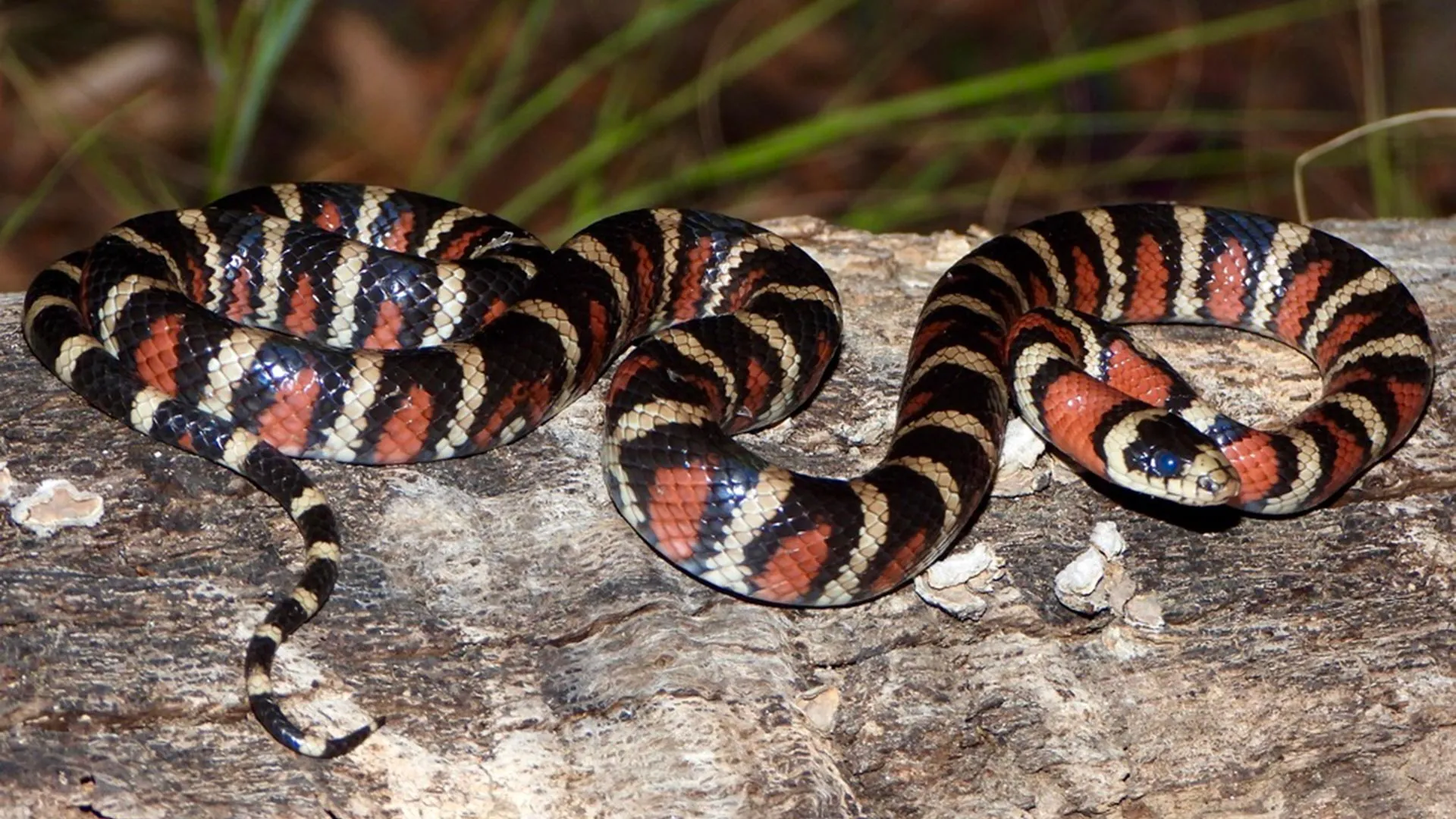
A compelling example illustrating this concept originates from Arizona itself. For many years, the Arizona mountain kingsnake ( Lampropeltis pyromelana) was considered a single species across the entire state due to the superficial similarity in appearance among individuals. However, a pivotal molecular research study conducted in 2011 revealed significant genetic distinctions between snakes from northern and southern Arizona. Consequently, the southern population was elevated to full species status, now known as Lampropeltis knoblochi, while the northern population retained the original designation.
"If you compare those two mountain kingsnakes, they all look pretty much the same with their red, black and yellow-white stripes," remarked Yinpeng Zhang, a graduate student in the Department of Ecology and Evolutionary Biology and the paper’s first author. "But the molecular data show that there are distinct but cryptic northern and southern species." This case vividly demonstrates how genetic insights can reveal hidden biodiversity that remains concealed behind a façade of morphological uniformity.
A Global Synthesis of Cryptic Discoveries
The impetus for this comprehensive study arose from Zhang’s personal observations several years ago. He noticed a recurring pattern in numerous taxonomy studies: the consistent uncovering of genetically distinct species that were visually indistinguishable. This observation led him to question the overall prevalence of this phenomenon across all vertebrates. To address this question systematically, the research team embarked on an extensive compilation and analysis of findings from over three hundred published studies conducted worldwide.
"There aren’t many research groups focused purely on cryptic species," Zhang commented. "Most people discover them as a byproduct of other biodiversity or taxonomy studies rather than as the main goal." This indicates that cryptic species are often serendipitous discoveries, suggesting that a dedicated focus could yield even more profound insights into hidden biodiversity. The researchers meticulously evaluated the methodologies employed in these studies to estimate the number of cryptic species, thereby providing valuable guidance for future research endeavors in this specialized area.
The Conservation Conundrum of Hidden Species
The implications of this research extend far beyond academic classification; they carry significant weight for conservation efforts. When a single, broadly distributed species is reclassified into multiple distinct cryptic species, each newly identified species inherently occupies a smaller geographic range. This reduction in range size dramatically increases a species’ vulnerability to extinction. "People have generally found that the smaller a species’ range size is, the more likely that species is to go extinct," Wiens emphasized.
Wiens strongly advocates for the formal description and naming of these cryptic species as a critical prerequisite for their effective protection. "Even though hundreds of molecular studies have uncovered hundreds of cryptic species, very few have been formally described or named," he stated. "That leaves these species without official recognition or legal protection." Without formal recognition, these species cannot be included in conservation assessments, protected under endangered species legislation, or targeted by specific conservation programs.
Furthermore, there are practical ramifications for conservation management. Zhang pointed out that conservation initiatives aimed at bolstering population numbers could inadvertently lead to the interbreeding of individuals from different cryptic species if these distinctions are not properly identified. This could result in genetic dilution and the erosion of unique evolutionary lineages. "Hidden diversity is an important consideration to make in our conservation efforts," Zhang urged.
The core message from the researchers is unequivocal and urgent. "If we don’t know a species exists, then we can’t protect it," Wiens concluded. This statement encapsulates the fundamental challenge posed by cryptic species: their invisibility to traditional identification methods renders them susceptible to being overlooked and, consequently, unprotected in the face of escalating environmental threats.
Broader Implications for Science and Policy
The findings from the University of Arizona study have profound implications that ripple across various scientific disciplines and policy-making arenas. For evolutionary biologists, this research reinforces the dynamic and often complex nature of speciation. It suggests that the processes driving the formation of new species may be more continuous and less punctuated than previously assumed, with genetic divergence often preceding readily observable morphological changes. This can lead to a re-evaluation of existing phylogenetic trees and a deeper understanding of evolutionary pathways.
Ecologists, in turn, will need to revise their models for ecosystem functioning and species interactions. If the actual number of species is significantly higher than currently estimated, then the complexity of food webs, competition dynamics, and the overall stability of ecosystems could be far greater than understood. This could impact predictions regarding the effects of habitat loss, climate change, and invasive species.
For conservation organizations and governmental agencies, the study presents a stark reality check. The current global inventory of species, which forms the basis for conservation priorities and resource allocation, may be significantly incomplete. This necessitates a re-evaluation of conservation strategies and potentially a substantial increase in the scope and scale of biodiversity protection efforts. The sheer number of potentially undiscovered and vulnerable species could overwhelm existing conservation capacities, demanding innovative approaches and increased international cooperation.
The study also implicitly calls for advancements in taxonomic research. While molecular techniques have proven invaluable, the formal description and naming of new species remain a labor-intensive process. The research highlights the need for greater investment in taxonomic expertise and infrastructure to keep pace with the rate of discovery, especially in regions with high biodiversity and limited research capacity.
A Call for Renewed Vigilance and Research
The University of Arizona study serves as a powerful reminder of how much we still have to learn about the natural world. The existence of numerous cryptic species, hidden in plain sight, underscores the limitations of our current understanding and the potential for significant losses to go unnoticed. As Wiens and Zhang powerfully articulate, effective conservation hinges on knowledge. The challenge now is to bridge the gap between what we can see and what our genetic analyses reveal, ensuring that these hidden threads in the tapestry of life are recognized, understood, and ultimately, protected. Future research will undoubtedly focus on developing more efficient methods for identifying and describing cryptic species, and on assessing their conservation status to prevent their silent disappearance from our planet. The race against time to document and safeguard biodiversity has just become more urgent.