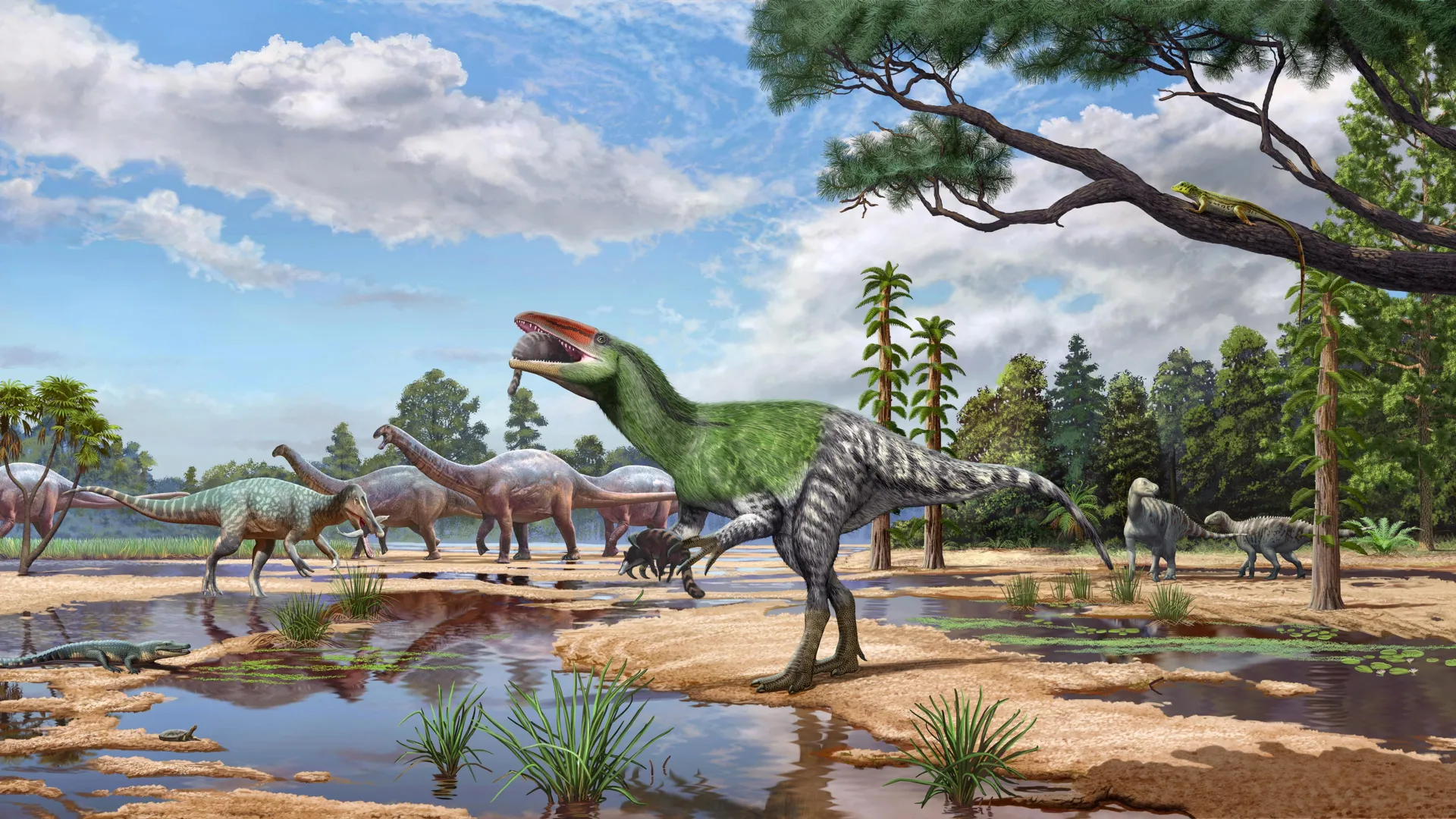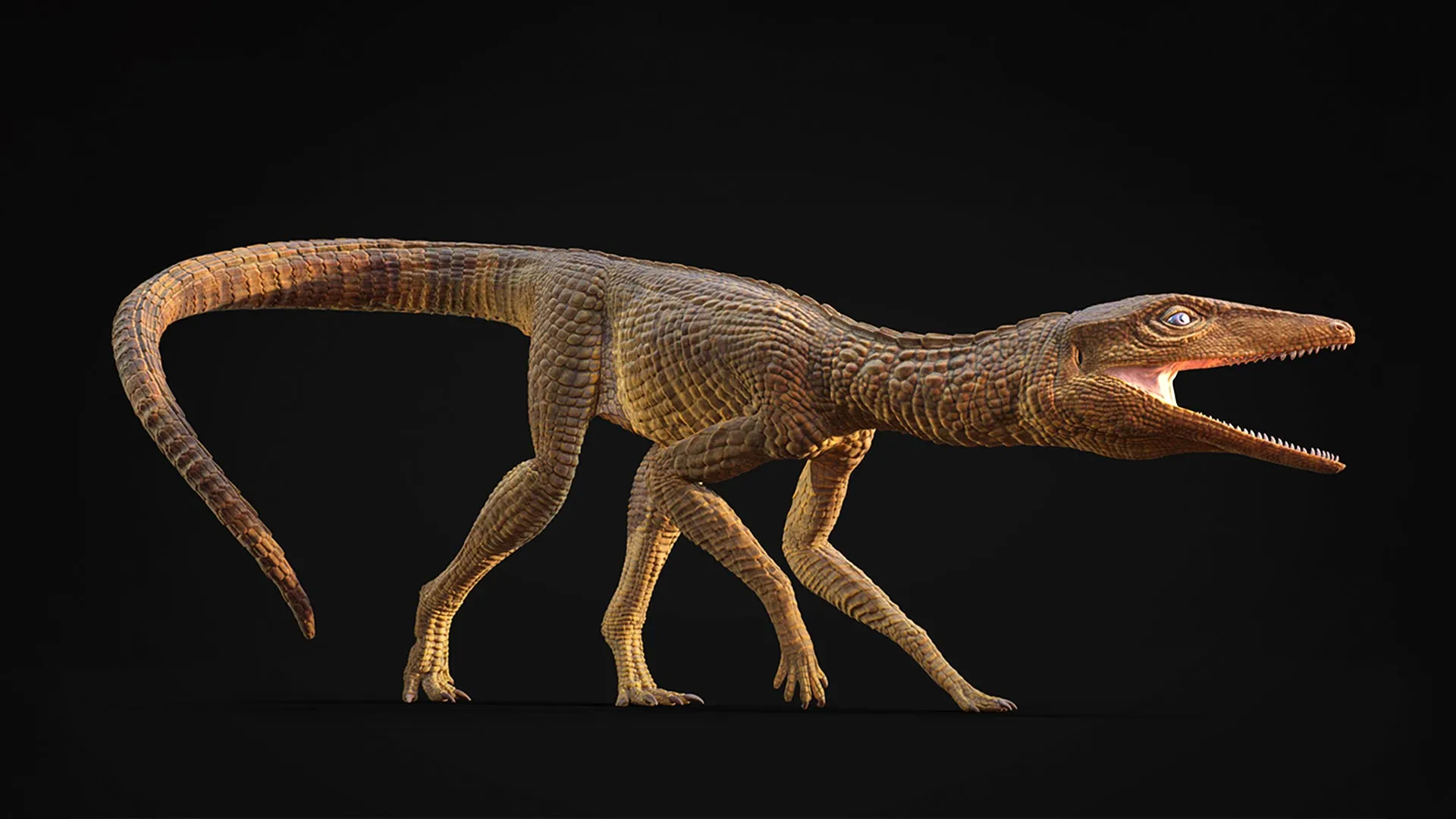
The ancient landscape of what is now Gloucester, United Kingdom, has yielded a remarkable secret from approximately 215 million years ago: the fossilized remains of a newly identified crocodylomorph, a distant relative of modern crocodiles. This extinct creature, christened Galahadcorvus rhysi, was not an aquatic hunter but a fast-moving, terrestrial predator, shedding new light on the diverse ecologies that thrived just prior to the devastating Triassic-Jurassic mass extinction event. The discovery, detailed in a recent publication in The Anatomical Record, paints a vivid picture of a nimble hunter adapted to a very different world from that of its scaly, water-loving descendants.
A Knightly Name for a Swift Hunter
The scientific name, Galahadcorvus rhysi, carries a dual significance, blending literary allusion with a personal tribute. The genus name, Galahadcorvus, draws inspiration from the legendary Arthurian knight Sir Galahad, renowned for his upright character and nobility. This choice reflects the inferred upright posture of the ancient animal, a stark contrast to the sprawling gait of many modern reptiles. The specific epithet, rhysi, honors David Rhys Jones, a former physics teacher at Ysgol Uwchradd Aberteifi in Cardigan, Wales, who played a pivotal role in inspiring the study’s lead author, Ewan Bodenham.
Bodenham, a PhD student at the Natural History Museum London and UCL, expressed his deep admiration for his former teacher. "We named it after my secondary school physics teacher," Bodenham stated. "Mr. Jones was just such a good teacher, not only in being able to explain things well, but you could tell that he was genuinely interested in the sciences. I think that really inspired me." He further elaborated on Mr. Jones’s impact, noting his ability to challenge students and foster their potential, describing him as "a very funny, genuine, nice guy." This personal connection underscores the profound influence educators can have on shaping scientific curiosity and driving new discoveries.
Unearthing the Past: Fossils from Ancient Cave Systems
The fossilized remnants of Galahadcorvus rhysi were meticulously recovered from fissure deposits located on both sides of the Bristol Channel, spanning across southern Wales and southwest England. These geological formations are essentially ancient underground cavities where the remains of surface-dwelling animals were washed into, eventually becoming entombed by sediment over millennia. This process of fossilization within fissures provides a unique snapshot of the fauna that inhabited the region during the Late Triassic.
Among the treasures unearthed from these deposits was Terrestrisuchus, another early member of the Crocodylomorpha lineage. Like the newly identified Galahadcorvus rhysi, Terrestrisuchus was characterized by its long, slender legs and a fully terrestrial lifestyle, diverging significantly from the semi-aquatic adaptations of later crocodile species. The presence of multiple terrestrial crocodylomorphs in these ancient fissure deposits suggests that this group was more diverse and ecologically varied in the Triassic than previously understood.
Differentiating a New Species: A Rigorous Anatomical Examination
The process of identifying Galahadcorvus rhysi as a distinct species involved a rigorous comparative anatomical study. Ewan Bodenham explained the methodology behind the discovery: "My PhD project is looking at the evolutionary relationships of these early crocodiles. So we conducted a detailed anatomical description of this specimen, making comparisons to other early crocodiles to determine if it was another specimen of Terrestrisuchus or if it was something new."
Through meticulous examination of the fossilized skeletal structure, researchers identified thirteen distinct anatomical differences that set the new specimen apart from known crocodylomorphs, including Terrestrisuchus. These variations, observed in elements such as limb proportions, cranial features, and vertebral morphology, were significant enough to warrant the classification of a completely new species. This painstaking process of comparison and differentiation is the bedrock of paleontological discovery, ensuring that each new fossil represents a unique piece of Earth’s evolutionary puzzle.
Ecological Context: A Triassic Landscape Transformed
The environment in which Galahadcorvus rhysi lived was vastly different from the temperate, verdant landscapes often associated with Britain today. During the Late Triassic, approximately 215 million years ago, global climate was significantly warmer and drier. The region where the fossils were found was characterized by an elevated terrain, likely interspersed with vegetation, surrounded by expansive hot and arid plains.
This setting would have favored a swift, agile predator capable of traversing open ground and hunting in the scrubby or forested areas. Galahadcorvus rhysi, with its inferred lightweight frame and long, slender legs, was perfectly adapted for such an environment. Its diet likely consisted of smaller terrestrial vertebrates, including early mammals, lizards, and amphibians, which would have been abundant in the varied microhabitats of the Triassic landscape. The discovery of such a specialized terrestrial predator highlights the ecological plasticity of early crocodylomorphs, demonstrating their ability to exploit a range of niches beyond the aquatic realm.
Broader Implications: Understanding Pre-Extinction Ecosystems
The identification of Galahadcorvus rhysi contributes significantly to our understanding of the biodiversity that characterized the Late Triassic period in southwestern Britain. This discovery adds another piece to the complex mosaic of species that existed in the crucial interval leading up to the Triassic-Jurassic mass extinction event. This extinction, one of the most severe in Earth’s history, dramatically reshaped the planet’s biosphere, paving the way for the age of dinosaurs.
Scientists are increasingly focused on studying ecosystems and their inhabitants in the immediate pre-extinction period to understand the mechanisms of extinction and the subsequent recovery of life. By analyzing the diversity, adaptations, and ecological roles of species like Galahadcorvus rhysi, researchers can gain invaluable insights into how life responds to periods of immense environmental stress. This includes understanding the factors that made some species more vulnerable than others and the evolutionary strategies that enabled certain lineages to survive and diversify in the aftermath of mass extinction events. The increased volcanic activity and consequent climate disruption that are believed to have triggered the Triassic-Jurassic extinction serve as a stark reminder of the profound impact geological and climatic changes can have on the planet’s biodiversity.
The Anatomical Record: Publication of the Groundbreaking Study
The formal scientific description of Galahadcorvus rhysi is presented in a peer-reviewed paper titled "A second species of non-crocodyliform crocodylomorph from the Late Triassic fissure deposits of southwestern UK: implications for locomotory ecological diversity in Saltoposuchidae," published in the esteemed journal The Anatomical Record. This publication marks the culmination of extensive research and provides the scientific community with the detailed evidence and analysis necessary to recognize this new species. The journal’s focus on anatomy and evolutionary biology makes it an ideal venue for disseminating such significant paleontological findings.
Future Research and Ongoing Investigations
The discovery of Galahadcorvus rhysi is not an endpoint but rather a catalyst for further research. Paleontologists will continue to investigate the fissure deposits of southwestern Britain and Wales, hoping to unearth more fossil evidence that can expand our knowledge of Triassic ecosystems. Comparative studies with other early crocodylomorphs from different geographical locations will be crucial in mapping the evolutionary journey of this ancient lineage. Furthermore, biomechanical analyses of the fossilized limb structures, if sufficiently preserved, could provide quantitative data on the locomotion and speed capabilities of Galahadcorvus rhysi, offering even more detailed insights into its predatory behavior and ecological niche. The ongoing exploration of these ancient fossil sites promises to reveal further chapters in the remarkable story of life on Earth.