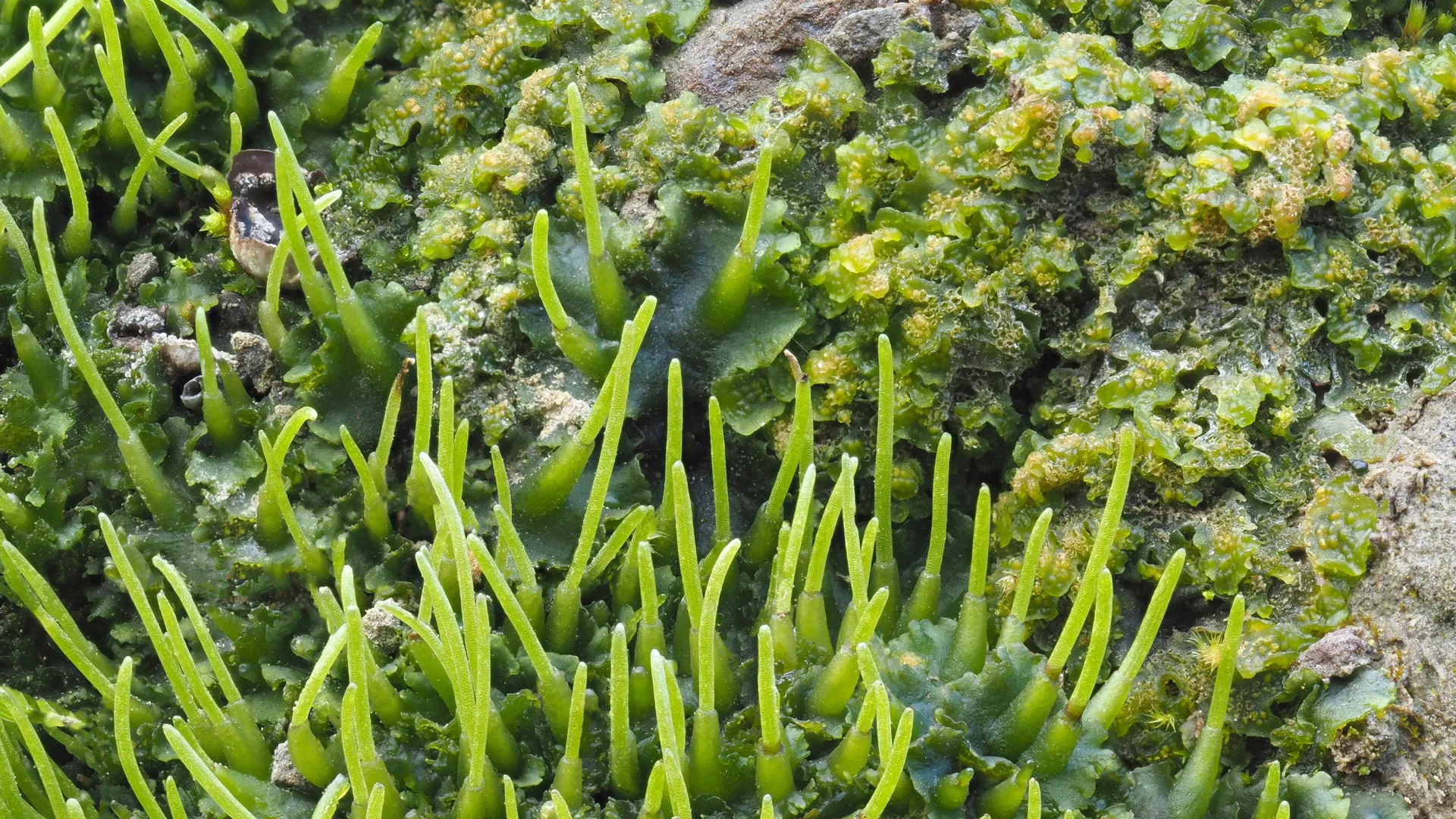
An international team of scientists has uncovered a surprising molecular strategy used by a rare group of land plants. The finding could one day help researchers redesign important crops such as wheat and rice so they convert sunlight into food far more efficiently.
Unlocking Photosynthesis’s Bottleneck: The Rubisco Challenge
At the heart of global food security lies a fundamental biological process: photosynthesis. This intricate dance of light, water, and carbon dioxide sustains nearly all life on Earth, transforming sunlight into the energy that fuels our planet. However, for decades, agricultural scientists have grappled with a significant inherent limitation within this vital process, specifically concerning an enzyme named Rubisco. This enzyme, responsible for capturing carbon dioxide from the atmosphere to initiate the conversion into sugars, is notoriously inefficient.
Rubisco, formally known as Ribulose-1,5-bisphosphate carboxylase/oxygenase, plays an undeniably central role. It is the primary gateway for atmospheric carbon into the biosphere, forming the very foundation of the food chain. Despite its critical importance, Rubisco is plagued by a critical flaw: its slow reaction rate and a penchant for mistakenly binding with oxygen instead of carbon dioxide. This "mistake" is energetically costly, leading to photorespiration, a process that effectively wastes plant energy and significantly curtails growth efficiency.
"Rubisco is arguably the most important enzyme on the planet because it’s the entry point for nearly all carbon in the food we eat," explained Dr. Fay-Wei Li, an Associate Professor at the Boyce Thompson Institute (BTI) and a co-leader of the groundbreaking research. "But it’s slow and easily distracted by oxygen, which wastes energy and limits how efficiently plants can grow." This inherent inefficiency means that even under optimal conditions, plants cannot achieve their full photosynthetic potential, a persistent hurdle in efforts to increase crop yields.
The evolutionary journey of life has seen various organisms develop ingenious solutions to overcome Rubisco’s limitations. Among the most successful are many types of algae. These aquatic powerhouses have evolved specialized cellular compartments known as pyrenoids. Within these microscopic structures, Rubisco is strategically encased, creating a microenvironment that effectively concentrates carbon dioxide around the enzyme. This targeted enrichment ensures that Rubisco is far more likely to encounter its intended substrate, carbon dioxide, thereby minimizing wasteful interactions with oxygen and dramatically boosting photosynthetic efficiency.
For years, the scientific community has harbored a fervent hope: to engineer this elegant carbon-concentrating mechanism into terrestrial food crops. Such an advancement could revolutionize agriculture, leading to plants that grow faster, produce more biomass, and require fewer resources. However, the practical realization of this ambition has proven exceptionally challenging. The intricate molecular machinery responsible for forming and maintaining pyrenoids in algae is complex, and transferring such a sophisticated system into the fundamentally different cellular architecture of land plants has been a formidable obstacle.
The Unexpected Ingenuity of Hornworts
A pivotal breakthrough in this long-standing quest emerged from the study of a surprisingly overlooked group of plants: hornworts. These ancient, non-vascular plants, often found in damp environments, are the only known land plants to possess structures that bear a striking resemblance to the pyrenoids found in algae. Given their evolutionary proximity to crop plants—hornworts are more closely related to modern cereals than algae are—researchers at the Boyce Thompson Institute (BTI), Cornell University, and the University of Edinburgh, who spearheaded the investigation, harbored a strong suspicion that their molecular tools might offer a more accessible pathway for transfer.
The team’s initial hypothesis was that hornworts would employ a mechanism similar to that observed in algae, involving a dedicated protein that acts as a scaffold to gather Rubisco molecules together. However, what they discovered instead was a revelation, showcasing a remarkably distinct and elegant evolutionary solution.
"We assumed hornworts would use something similar to what algae use — a separate protein that gathers Rubisco together," recounted Tanner Robison, a graduate student working with Dr. Li and a co-first author of the published study. "Instead, we discovered they’ve modified Rubisco itself to do the job." This unexpected finding shifted the focus of the research, revealing a more intrinsic and potentially more transferable mechanism.
The RbcS-STAR Protein: A Molecular Velcro for Rubisco
The linchpin of this novel strategy is an unusual protein component that the scientists have aptly named RbcS-STAR. Rubisco enzymes are complex molecular assemblies, composed of both large and small protein subunits. In hornworts, a specific version of the small subunit has evolved to include an additional, distinctive segment—the STAR region.
This STAR region functions as a form of "molecular velcro." When present, it causes the Rubisco proteins to self-assemble and aggregate, forming dense, clustered structures within the plant cell. This clustering effectively recreates the high-concentration environment that algae achieve through their pyrenoids, but through an intrinsic modification of the enzyme itself.
To validate the functionality and transferability of this STAR mechanism, the research team conducted a series of meticulous experiments. Their initial tests involved introducing the RbcS-STAR component into a closely related hornwort species that, under normal circumstances, does not naturally form these carbon-concentrating structures. The results were striking: the Rubisco enzyme, which was previously dispersed throughout the cell, rapidly reorganized and congregated into distinct, clustered structures, mirroring the organization seen in pyrenoids.
Buoyed by these findings, the scientists then moved to test the RbcS-STAR component in Arabidopsis thaliana, a small flowering plant widely used as a model organism in plant biology research. This crucial experiment aimed to ascertain whether the mechanism could function in a more complex and evolutionarily distant land plant. Once again, the results were highly encouraging. Upon the introduction of the RbcS-STAR component, Rubisco in Arabidopsis cells readily gathered into dense compartments within the chloroplasts, the cellular powerhouses where photosynthesis takes place.
"We even tried attaching just the STAR tail to Arabidopsis‘s native Rubisco, and it triggered the same clustering effect," stated Professor Alistair McCormick from the University of Edinburgh, another co-leader of the research. "That tells us STAR is truly the driving force. It’s a modular tool that can work across different plant systems." This observation highlights the adaptability and potential universality of the STAR region as a mechanism for controlling Rubisco localization and function.
Implications for a Sustainable Food Future
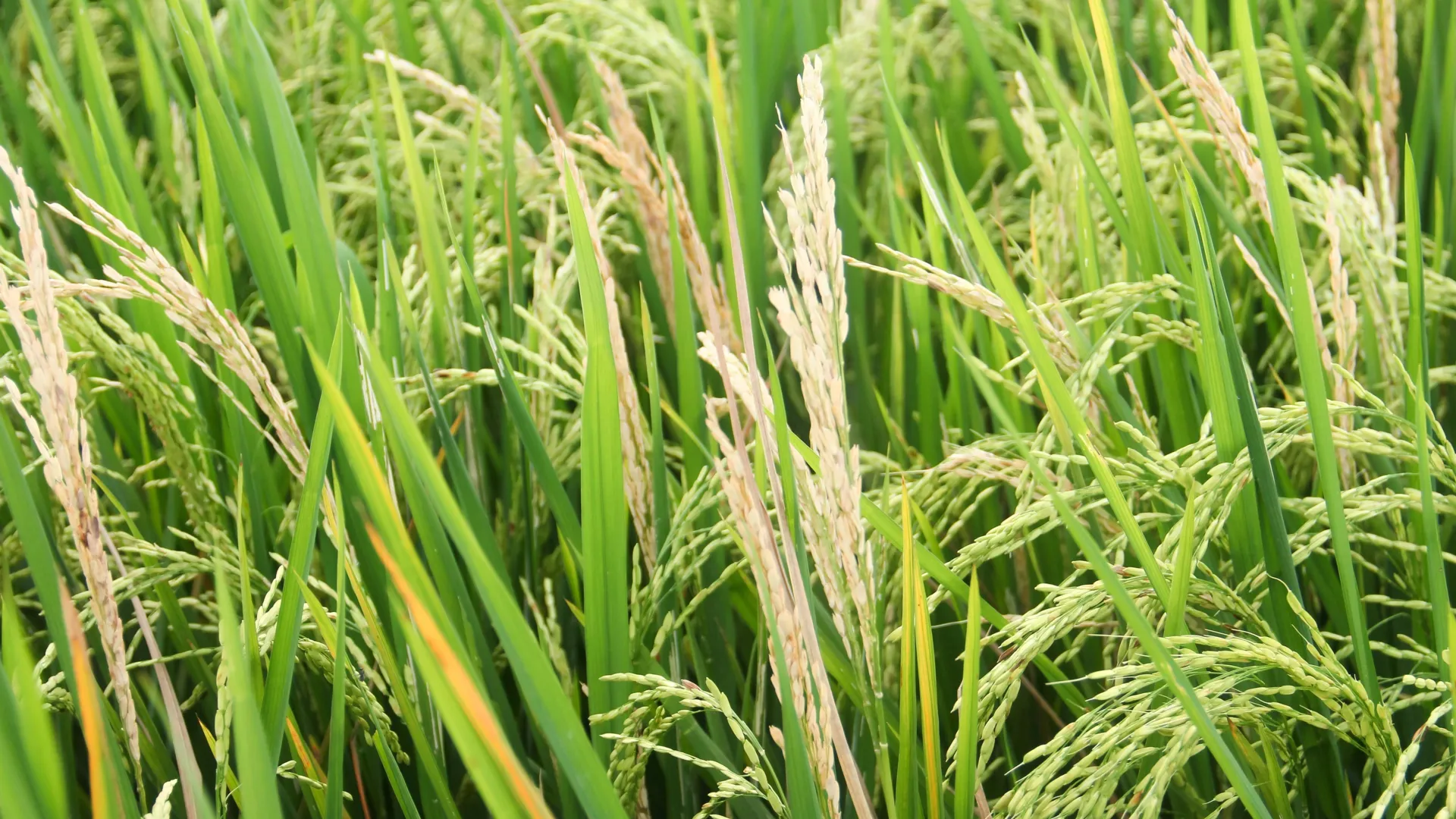
The remarkable ability of the RbcS-STAR component to induce Rubisco clustering across different plant species marks this discovery as particularly significant for the future of agriculture. It presents a tangible and potentially more straightforward pathway for scientists to enhance photosynthetic efficiency in staple food crops like wheat, rice, and maize. The prospect of triggering Rubisco clustering in these vital crops simply by introducing this universal "velcro" component offers a tantalizing glimpse into a future of significantly improved crop yields.
However, the researchers are quick to emphasize that this discovery, while transformative, represents a critical step rather than the final destination. Dr. Laura Gunn, an Assistant Professor at Cornell University and a co-leader of the research, drew an apt analogy: "We have built a Rubisco house, but it won’t be an efficient house unless we update the HVAC." The current challenge lies in ensuring that the increased concentration of Rubisco is accompanied by an equally efficient supply of carbon dioxide to this enzyme. While clustering Rubisco addresses one bottleneck, the delivery system for carbon dioxide remains another crucial factor for optimal photosynthetic performance. The team is actively engaged in further research to address this "HVAC" component, exploring strategies to enhance carbon dioxide delivery alongside Rubisco clustering.
Broader Impact and the Quest for Global Food Security
The discovery of the RbcS-STAR mechanism represents a significant advancement in the ongoing scientific endeavor to optimize photosynthesis, a process fundamental to life on Earth. Even incremental improvements in photosynthetic efficiency could translate into substantial increases in crop yields, a critical factor in meeting the demands of a rapidly growing global population. This endeavor is increasingly framed within the context of sustainable agriculture, aiming to produce more food with reduced environmental impact.
The environmental benefits of more efficient crops are manifold. Increased productivity per unit of land could alleviate pressure on natural habitats, reducing deforestation and biodiversity loss. Furthermore, more efficient plants may require less water and fewer fertilizers, leading to reduced water pollution and greenhouse gas emissions associated with fertilizer production and use. For instance, it is estimated that a 10% increase in global crop yields could significantly reduce the land required for agriculture, potentially preserving millions of acres of forest and other natural ecosystems.
The research underscores a powerful principle: nature itself is a vast repository of ingenious solutions. By meticulously studying the diversity of life, scientists can uncover elegant strategies that have evolved over millennia. "This research shows that nature has already tested solutions we can learn from," Dr. Li remarked. "Our job is to understand those solutions well enough to apply them where they’re needed most — in the crops that feed the world."
The study, published in the prestigious journal Science, highlights the collaborative nature of modern scientific discovery, with equal contributions from four early-career scientists: Tanner A. Robison, Yuwei Mao, Zhen Guo Oh, and Warren S.L. Ang. The corresponding authors, Drs. Laura H. Gunn, Alistair J. McCormick, and Fay-Wei Li, emphasized the crucial role of international collaboration and interdisciplinary expertise in tackling complex biological challenges. This research not only provides a fundamental insight into plant molecular biology but also offers a tangible and exciting pathway toward ensuring global food security in a sustainable and environmentally responsible manner. The journey from understanding nature’s clever tricks to engineering them into our food supply is ongoing, but this discovery marks a significant leap forward.