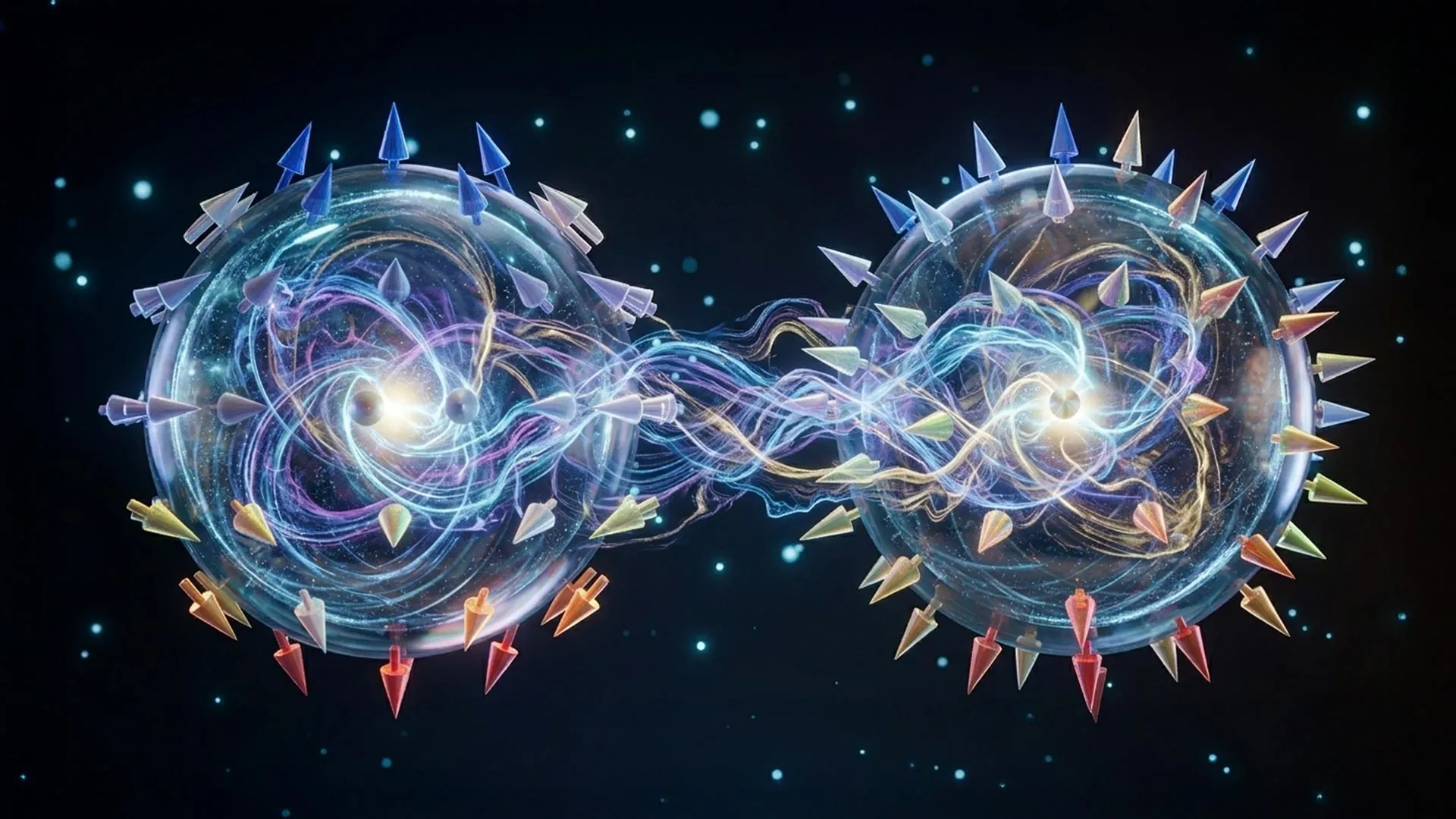
A collaborative research initiative led by the University of the Witwatersrand (Wits) in South Africa and Huzhou University in China has announced a fundamental breakthrough in the field of quantum optics, identifying previously hidden topological structures within the spatial properties of entangled photons. The study, published in the prestigious journal Nature Communications, reveals that the standard methods used globally to generate quantum entanglement contain a vast, untapped reservoir of high-dimensional data. By reaching a record-breaking 48 dimensions and identifying over 17,000 distinct topological signatures, the team has effectively created a new "alphabet" for quantum communication—one that promises unprecedented stability and resistance to environmental interference.
This discovery centers on a phenomenon known as Spontaneous Parametric Downconversion (SPDC), a cornerstone technique in quantum laboratories for decades. While SPDC has long been understood to produce entangled pairs of photons, the research team demonstrated that these pairs possess an intrinsic, high-dimensional topology that emerges naturally from the orbital angular momentum (OAM) of light. This finding challenges the long-standing academic assumption that multiple properties of light, such as polarization and OAM combined, are required to create such complex structures. Instead, the researchers proved that the spatial entanglement itself provides these topological features "for free," offering a robust framework for encoding information in a manner that is inherently protected from the "noise" that typically plagues quantum systems.
The Evolution of Quantum Entanglement and Spatial Topology
To understand the magnitude of this discovery, it is necessary to examine the historical context of quantum entanglement research. For much of the 20th and early 21st centuries, entanglement was primarily studied through discrete, low-dimensional properties, such as the spin of an electron or the polarization of a photon. These "two-state" systems (qubits) form the basis of current quantum computing logic. However, the limitation of qubits lies in their capacity; they can only hold a limited amount of information per particle and are notoriously sensitive to external perturbations, leading to decoherence.
In recent years, the focus of the global scientific community has shifted toward high-dimensional entanglement. By using the spatial modes of light—specifically the way light twists as it travels—scientists can create qudits, which exist in more than two states. The orbital angular momentum (OAM) of light is a primary candidate for this, as it can theoretically span an infinite number of dimensions. However, maintaining the stability of these high-dimensional states has remained a significant hurdle.
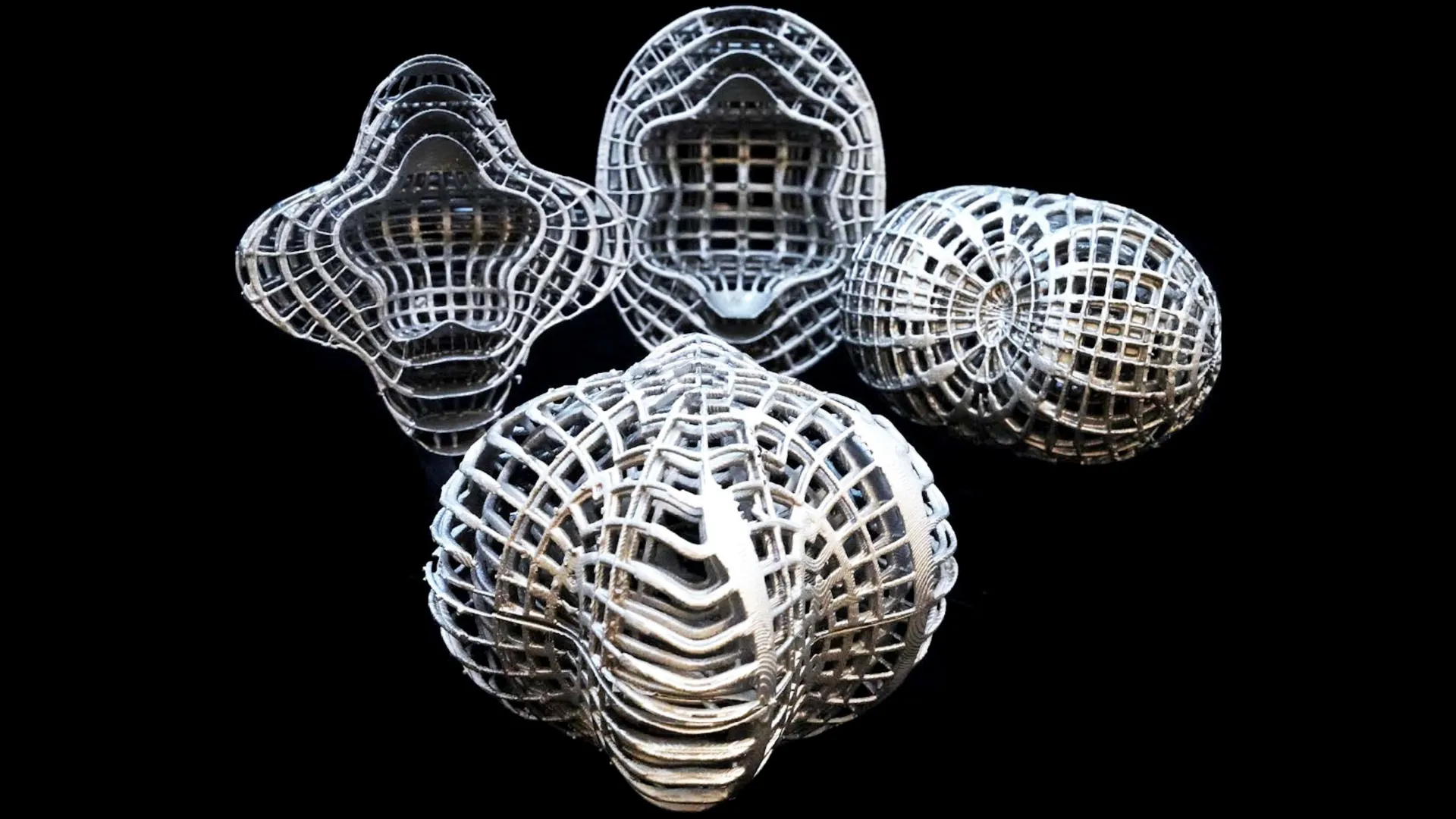
Topology, a branch of mathematics concerned with the properties of space that are preserved under continuous deformations (such as stretching or twisting, but not tearing), offers a solution to the stability problem. In physics, topological states are prized because they are "topologically protected." Much like a knot in a rope remains a knot regardless of how the rope is moved, topological information in a quantum system remains intact even when the system is subjected to external noise. Until now, creating these topological states in light was believed to require complex experimental setups involving the manipulation of multiple independent physical properties.
Chronology of the Breakthrough: From Theory to Laboratory
The path to this discovery began with a theoretical inquiry led by Professor Robert de Mello Koch at Huzhou University. Drawing on abstract concepts from quantum field theory—a framework usually reserved for high-energy particle physics—the researchers began to hypothesize that the entanglement patterns in SPDC might contain higher-order symmetries than previously documented.
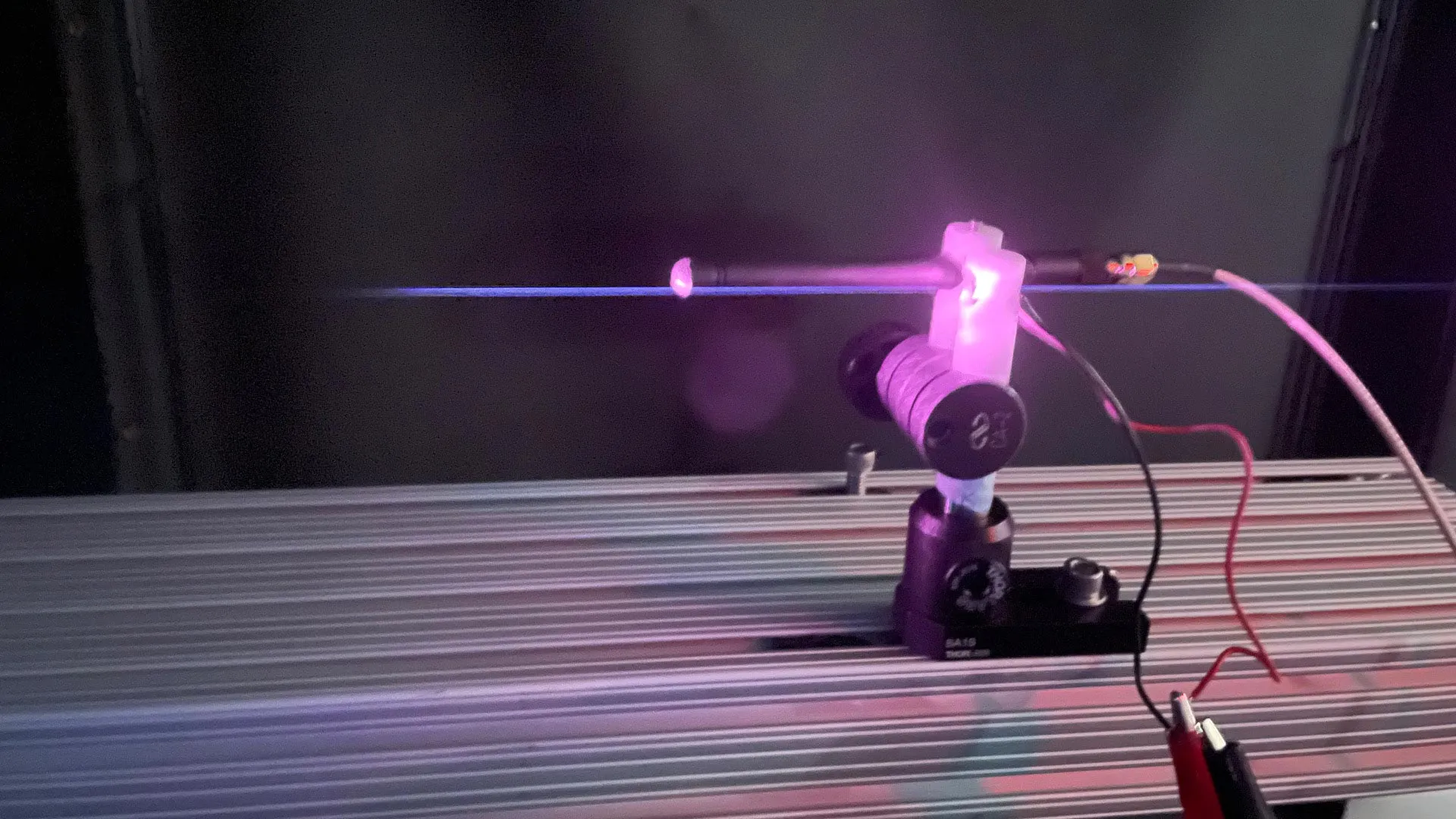
Following the development of this theoretical roadmap, the experimental phase was conducted at the Wits School of Physics in South Africa, under the direction of Professor Andrew Forbes. The team utilized a standard SPDC setup, where a high-energy laser beam is passed through a nonlinear crystal. This process causes a single pump photon to split into two entangled "daughter" photons.
By precisely measuring the OAM of these entangled pairs, the researchers observed that the resulting patterns were not merely random correlations but were organized into sophisticated topological structures. The timeline of the experiment involved months of data collection to map the 48-dimensional space, followed by rigorous mathematical verification to categorize the 17,000 distinct signatures. The complexity of the data required the team to move beyond traditional single-number descriptors for topology, adopting a multi-valued approach to characterize the richness of the discovered field.
Technical Analysis: Breaking the Dimensional Ceiling
The most striking data point from the study is the leap to 48 dimensions. In the context of quantum information, each dimension represents an additional "slot" for data. A 48-dimensional system allows for an exponentially higher information density compared to standard two-dimensional systems.
Furthermore, the identification of 17,000 topological signatures provides a massive library of unique identifiers. In a practical quantum network, these signatures could serve as "addresses" or "keys" for secure data transmission. Because these signatures are rooted in the topology of the light, they are remarkably resilient. Even if the light travels through a turbulent atmosphere or a stressed fiber-optic cable—conditions that would typically scramble quantum information—the underlying topological "knot" remains identifiable.
Professor Andrew Forbes highlighted the simplicity of the approach as a major advancement. "Previously, it was assumed that at least two properties would be needed—usually OAM and polarization—to make a topology," Forbes stated. "The consequence is that since OAM is high-dimensional, so too is the topology, and this let us report the highest topologies ever observed."
The fact that these structures were found using only OAM suggests that the potential for high-dimensional quantum states has been vastly underestimated. By leveraging a single property, the researchers have simplified the experimental requirements while simultaneously increasing the complexity and utility of the output.
Professional Perspectives and Global Implications
The scientific community has reacted to the findings with a mixture of surprise and optimism. The discovery is being described as "hiding in plain sight," as the equipment used to uncover these structures is standard in almost every quantum optics laboratory in the world.
Pedro Ornelas, a researcher involved in the project, emphasized the accessibility of the discovery. "You get the topology for free, from the entanglement in space," Ornelas noted. "It was always there, it just had to be found." This sentiment suggests a paradigm shift in how quantum researchers view their own tools. It implies that the infrastructure for a more robust quantum internet may already exist; the challenge is not building new hardware, but rather refining the "software" of how we measure and interpret the light.
From a strategic perspective, the collaboration between South African and Chinese institutions underscores the increasingly global nature of quantum research. As nations race to develop "unhackable" communication networks, the ability to encode information in stable, high-dimensional topological states provides a significant competitive edge.
Implications for Future Quantum Technologies
The long-term impact of this research is expected to be felt across several domains of quantum technology:
- Quantum Communication: Current quantum key distribution (QKD) systems are limited by bit-rate and distance. High-dimensional encoding using the 17,000 topological signatures could allow for much higher bandwidths, enabling the transmission of complex data sets with absolute security.
- Quantum Error Correction: One of the greatest challenges in quantum computing is the high rate of errors caused by environmental noise. If information can be stored in topological structures that are physically resistant to change, the need for resource-intensive error-correction algorithms could be reduced.
- Atmospheric and Underwater Transmission: Light traveling through air or water is subject to scattering and turbulence. Because topological properties are "global" features of the light rather than local ones, they are less likely to be disrupted by local environmental fluctuations, making them ideal for satellite-to-ground or submarine communication.
- Democratization of Quantum Research: By showing that high-level quantum features can be extracted from standard laboratory setups, the Wits and Huzhou team has lowered the barrier to entry for other institutions to engage in high-dimensional topological research.
Conclusion: A New Frontier in Optical Science
The discovery of 48-dimensional topological structures in entangled light represents a landmark achievement in quantum optics. By bridging the gap between abstract quantum field theory and practical experimental physics, the researchers from the University of the Witwatersrand and Huzhou University have provided a new lens through which to view the fundamental nature of light.
As the world moves closer to a practical quantum era, the ability to harness the "free" topology of entangled photons will likely play a critical role in the development of secure, high-capacity, and noise-resistant information systems. The 17,000 signatures identified in this study are not just a record of scientific achievement; they are the foundation of a more resilient quantum future. The research team is now looking toward the next phase of their work, which involves testing these topological signatures in real-world environments to determine exactly how much "noise" they can withstand before the information is lost. For now, the discovery stands as a testament to the fact that even in the most well-trodden areas of science, there are still profound mysteries waiting to be uncovered.