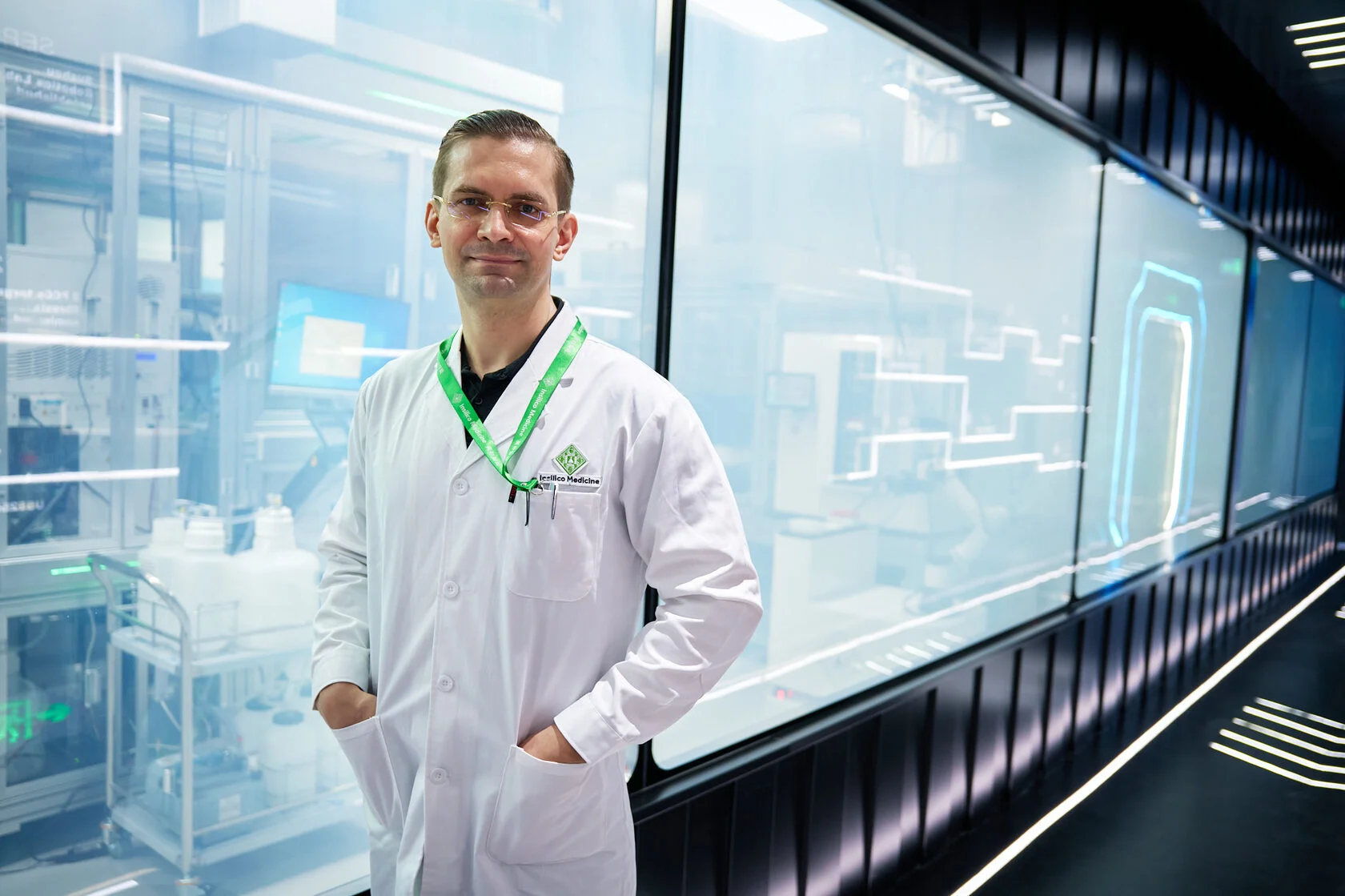
On March 29, Insilico Medicine, a pioneer in artificial intelligence-driven drug discovery, announced a landmark collaboration with pharmaceutical giant Eli Lilly, poised to revolutionize the development of new therapeutics. The agreement grants Lilly an exclusive worldwide license to a comprehensive portfolio of Insilico’s preclinical oral therapeutics and establishes joint research and development programs spanning a multitude of therapeutic areas. The financial implications of this strategic alliance are substantial, with Insilico slated to receive an upfront payment of $115 million. Furthermore, the deal includes significant milestone payments that could escalate its total value to an estimated $2.75 billion, complemented by tiered royalties on any future product sales.
This collaboration is not merely a transaction; it represents a pivotal moment in the pharmaceutical industry’s embrace of artificial intelligence, signaling a definitive shift from AI-assisted research to entirely AI-native drug discovery pipelines. Alex Zhavoronkov, Ph.D., founder and CEO of Insilico Medicine, articulated this transformation in an interview, stating, "The industry is moving from AI-assisted science to AI-native pipelines, and this partnership reflects that shift." This sentiment underscores a growing recognition within Big Pharma that AI is no longer a supplementary tool but a core engine for innovation.
The Genesis and Evolution of a Strategic Partnership
The expansive commercialization deal announced in late March did not materialize overnight. It is the culmination of a meticulously built relationship that began several years prior, evolving through distinct stages of increasing commitment and validation. The journey commenced in 2023 when Eli Lilly first licensed Insilico’s cutting-edge software, integrating its AI capabilities into Lilly’s existing research infrastructure. This initial phase allowed Lilly to evaluate Insilico’s platform, understand its operational efficiencies, and assess its potential to accelerate discovery.
Building on the success and insights gained from the software licensing, the relationship deepened in 2025, progressing into a full-fledged research collaboration. This stage saw the two companies working hand-in-hand on specific research programs, applying Insilico’s AI engine to real-world drug discovery challenges. This direct engagement was crucial, providing Lilly with firsthand experience of Insilico’s “end-to-end AI engine” in action—from target identification to generative chemistry. The success of these initial research endeavors served as the ultimate proof of concept, paving the way for the substantial commercialization agreement in 2026.
Zhavoronkov emphasized the significance of this staged progression, highlighting it as a critical barometer of trust and validation within the industry. He noted that the initial software licensing focused on validating Insilico’s technological capabilities, ensuring its algorithms and platforms performed as promised. The subsequent research collaboration was designed to validate the outcome of Insilico’s AI, specifically its ability to generate novel and viable therapeutic candidates efficiently. Finally, the current commercialization deal represents the ultimate validation: a commitment to bring AI-designed assets through clinical development and to market. This stepwise approach mirrors a broader industry trend where AI is transitioning from a "nice-to-have" assistive technology to an indispensable "asset generator" capable of driving entire therapeutic pipelines.
Insilico’s AI Engine: Powering the Future of Drug Discovery
At the heart of this transformative partnership lies Insilico Medicine’s sophisticated "end-to-end AI engine," a suite of proprietary platforms designed to accelerate every stage of drug discovery. Zhavoronkov detailed how this engine functions in practice, integrating seamlessly with Lilly’s formidable clinical development capabilities. The synergy is envisioned as a fusion of Insilico’s “Superintelligence” for discovery with Lilly’s “Clinical Excellence” to navigate the complex journey of bringing a drug to patients.
The workflow begins with PandaOmics, Insilico’s AI-powered target discovery platform. This tool is tasked with uncovering novel, "multi-purpose" therapeutic targets, delving into what Zhavoronkov refers to as the "biological dark matter" often overlooked by traditional discovery methods. PandaOmics leverages vast datasets, including genomics, transcriptomics, and proteomics, to identify disease pathways and potential intervention points with unprecedented speed and precision.
Once a therapeutic area and potential targets are identified by Lilly, Insilico takes the lead in the generative design phase through its Chemistry42 platform. This AI-driven chemistry engine is capable of designing novel molecules with desired properties, optimizing them for potency, selectivity, and pharmacokinetic profiles. The goal is ambitious: to dramatically reduce the time required to reach a Preclinical Candidate (PCC), aiming for 12 to 18 months, with Insilico’s fastest recorded achievement being just nine months. This acceleration is critical in an industry where drug development typically spans over a decade.
The entire process is supported by a "closed-loop validation system," aptly named the "From Prompt to Drug" framework. This framework ensures that AI-generated hypotheses are not just theoretical constructs but are instantly tested in automated robotic laboratories. This rapid, high-fidelity iteration allows for quick validation and refinement of compounds, minimizing costly delays and increasing the probability of success. As assets advance towards clinical trials, Insilico provides strategic support through InClinico, an AI platform designed to maximize the probability of success in clinical development by predicting outcomes and optimizing trial designs.
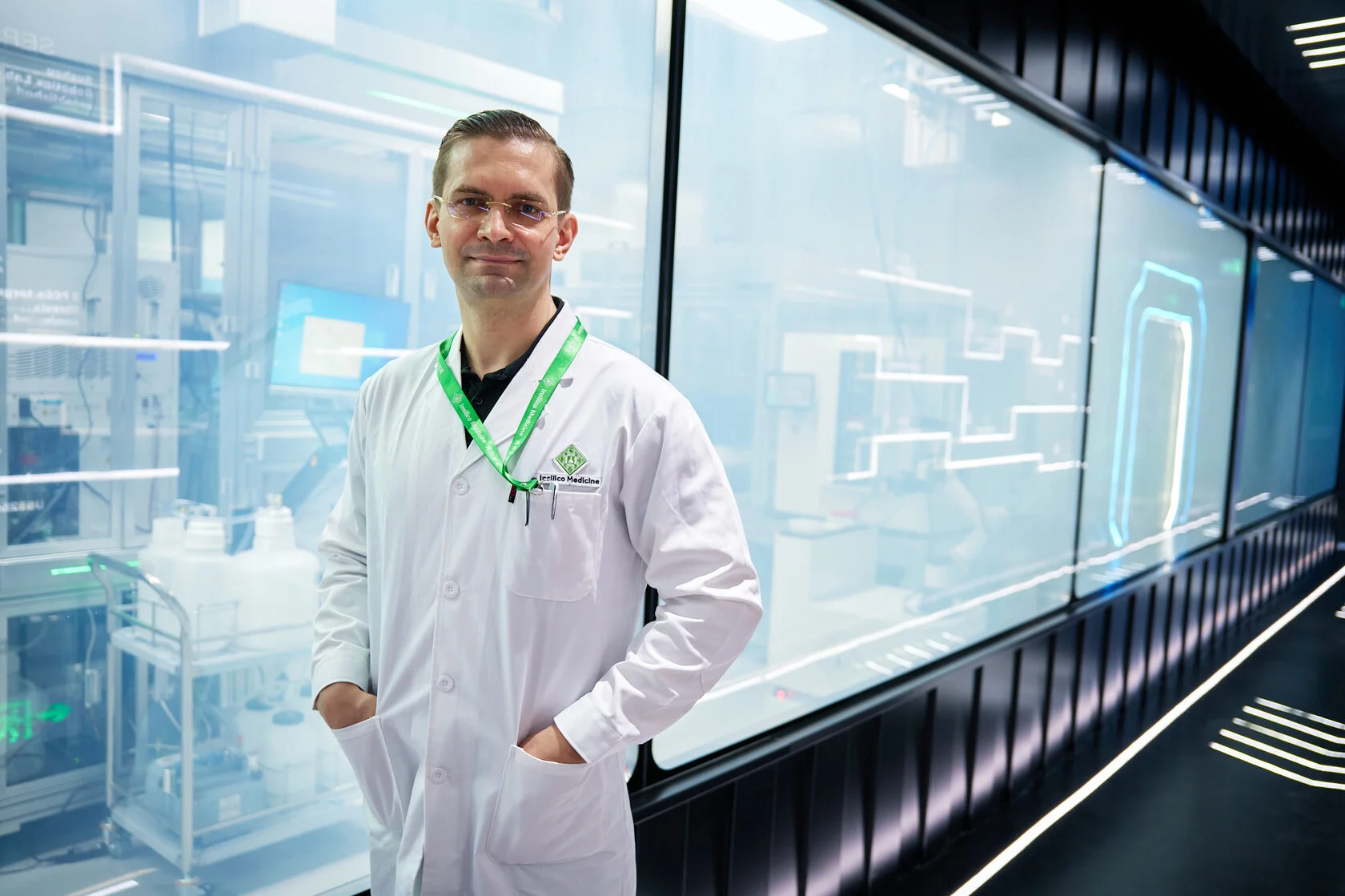
Zhavoronkov firmly believes that this collaboration signifies a move beyond mere "AI experiments" to the "industrialization of generative biology and chemistry." This industrial-scale application of AI is aimed at solving the most challenging human diseases with unprecedented speed and efficiency.
Strategic Implications for Insilico and the Broader Industry
For Insilico Medicine, a deal of this magnitude significantly reshapes its operational and strategic landscape. Zhavoronkov articulated that such a partnership enables the company to pursue two parallel objectives: expand its externalized pipeline through collaborations while simultaneously fueling internal innovation. The $115 million upfront payment and potential $2.75 billion in milestones provide substantial capital, effectively funding continued platform scaling and allowing Insilico to dedicate internal resources to high-conviction, potentially first-in-class programs.
Insilico categorizes its pipeline into three buckets, although the specific details were not fully elaborated in the original context, the implication is a diversified strategy encompassing internal development, strategic partnerships, and platform licensing. The decision to partner or retain assets is guided by several factors: the disease area, the novelty of the target or compound, the specific expertise required for development, and the capital needs of the program. This flexible approach allows Insilico to monetize specific assets through partnerships like the one with Lilly, while continuously improving its underlying AI capabilities and advancing its most promising wholly-owned assets.
From a broader industry perspective, the Insilico-Lilly partnership is a powerful validation of the AI-enabled drug discovery model. It demonstrates that major pharmaceutical companies are not only investing in AI tools but are willing to commit significant capital to AI-generated assets. This shift has profound implications for the traditional drug discovery ecosystem, potentially democratizing access to early-stage innovation and accelerating the pace at which new medicines reach patients.
The partnership also reinforces the notion that success in modern drug discovery hinges on integrating frontier compute capabilities, proprietary data, and novel biology. Lilly’s own investment in AI supercomputing infrastructure, coupled with Insilico’s advanced algorithms and unique biological insights, exemplifies this winning architecture. As Zhavoronkov explained, "No single component is sufficient. Large models without good data fail. Data without strong models doesn’t scale. And neither matters without new biology that translates clinically." The collaboration therefore represents a continuous learning system where models improve as data is generated, and biological exploration becomes more efficient and effective.
Addressing Industry Challenges and Future Outlook
The pharmaceutical industry has long grappled with formidable challenges: astronomically high research and development costs, prolonged development timelines often exceeding a decade, and a dishearteningly low success rate for drug candidates entering clinical trials. The average cost to bring a new drug to market is estimated to be in the billions of dollars, with only a small fraction of preclinical candidates ever reaching patients. These challenges underscore the urgent need for more efficient and predictive discovery methodologies.
Artificial intelligence offers a compelling solution to these deeply entrenched problems. By leveraging AI to analyze vast biological datasets, predict molecular interactions, design novel compounds, and even simulate clinical outcomes, companies like Insilico Medicine are striving to de-risk and accelerate the entire drug development process. The promised reduction in preclinical timelines from years to months, as demonstrated by Insilico’s capabilities, represents a paradigm shift that could significantly lower R&D costs and bring life-saving medicines to market faster.
The collaboration between Insilico and Lilly points towards a future where AI-driven platforms are not just supporting human scientists but are actively generating and optimizing therapeutic candidates from inception. This move towards "AI-native pipelines" is expected to unlock new biological insights, identify previously intractable targets, and design highly specific and potent molecules with a greater probability of clinical success.
In conclusion, the $2.75 billion potential collaboration between Insilico Medicine and Eli Lilly is more than just a lucrative deal; it is a testament to the transformative power of artificial intelligence in reshaping the future of pharmaceutical R&D. By integrating Insilico’s cutting-edge AI engine with Lilly’s extensive clinical expertise and infrastructure, the partnership aims to industrialize drug discovery, dramatically shorten timelines, reduce costs, and ultimately deliver a new generation of life-changing medicines to patients worldwide. This strategic alliance sets a precedent for how pharmaceutical innovation will be driven in the 21st century, marking a definitive step into an era of AI-powered precision medicine.