


Researchers from the University of Michigan and the University of California San Diego have published a groundbreaking study identifying the specific mechanism by which breast cancer cells survive and mutate within the bone marrow, often remaining dormant for decades before re-emerging as aggressive, drug-resistant tumors. The study, titled "Breast cancers that disseminate to bone marrow acquire aggressive phenotypes through CX43-related tumor-stroma tunnels," published in the Journal of Clinical Investigation, offers a significant leap forward in understanding the persistence of estrogen receptor-positive (ER+) breast cancer, the most common subtype of the disease.
For years, oncologists have been baffled by the ability of ER+ breast cancer cells to survive initial treatments, enter a state of dormancy, and then suddenly reappear as metastatic disease long after a patient has been declared in remission. This new research pinpoints a physical "smuggling" operation between cancer cells and the bone marrow’s own stem cells as the primary driver of this phenomenon.
The Challenge of Late-Stage Recurrence in ER+ Breast Cancer
Estrogen receptor-positive breast cancer accounts for approximately 70% to 80% of all breast cancer diagnoses. While early-stage ER+ breast cancer often responds well to surgery, radiation, and endocrine therapies like Tamoxifen or aromatase inhibitors, the long-term prognosis remains shadowed by the risk of late recurrence. Unlike more aggressive subtypes like triple-negative breast cancer, which tends to recur within the first few years, ER+ cells are known for their longevity.
Statistical data indicates that approximately 40% of patients with ER+ breast cancer will experience a recurrence, sometimes 10, 20, or even 30 years after their initial diagnosis. When the cancer returns, it frequently manifests in the bone marrow. These recurrent tumors are typically far more aggressive than the original primary tumor and are often resistant to the very therapies that were previously effective. The resulting metastatic disease can lead to debilitating conditions, including pathological bone fractures, severe pain, and hypercalcemia—a life-threatening elevation of calcium levels in the blood. Furthermore, once established in the bone marrow, these cells can seed secondary metastases in other vital organs, such as the lungs, liver, and brain, at which point the disease is currently considered incurable.
The Discovery of "Molecular Smuggling" via Cellular Tunnels
To investigate why these cells are so resilient, the research team, led by Gary Luker, M.D., of the University of Michigan, and Pradipta Ghosh, M.D., of UC San Diego, focused on the microenvironment of the bone marrow. They specifically looked at the interaction between disseminated tumor cells (DTCs) and mesenchymal stem cells (MSCs), which are essential components of the bone marrow stroma responsible for bone repair and maintenance.
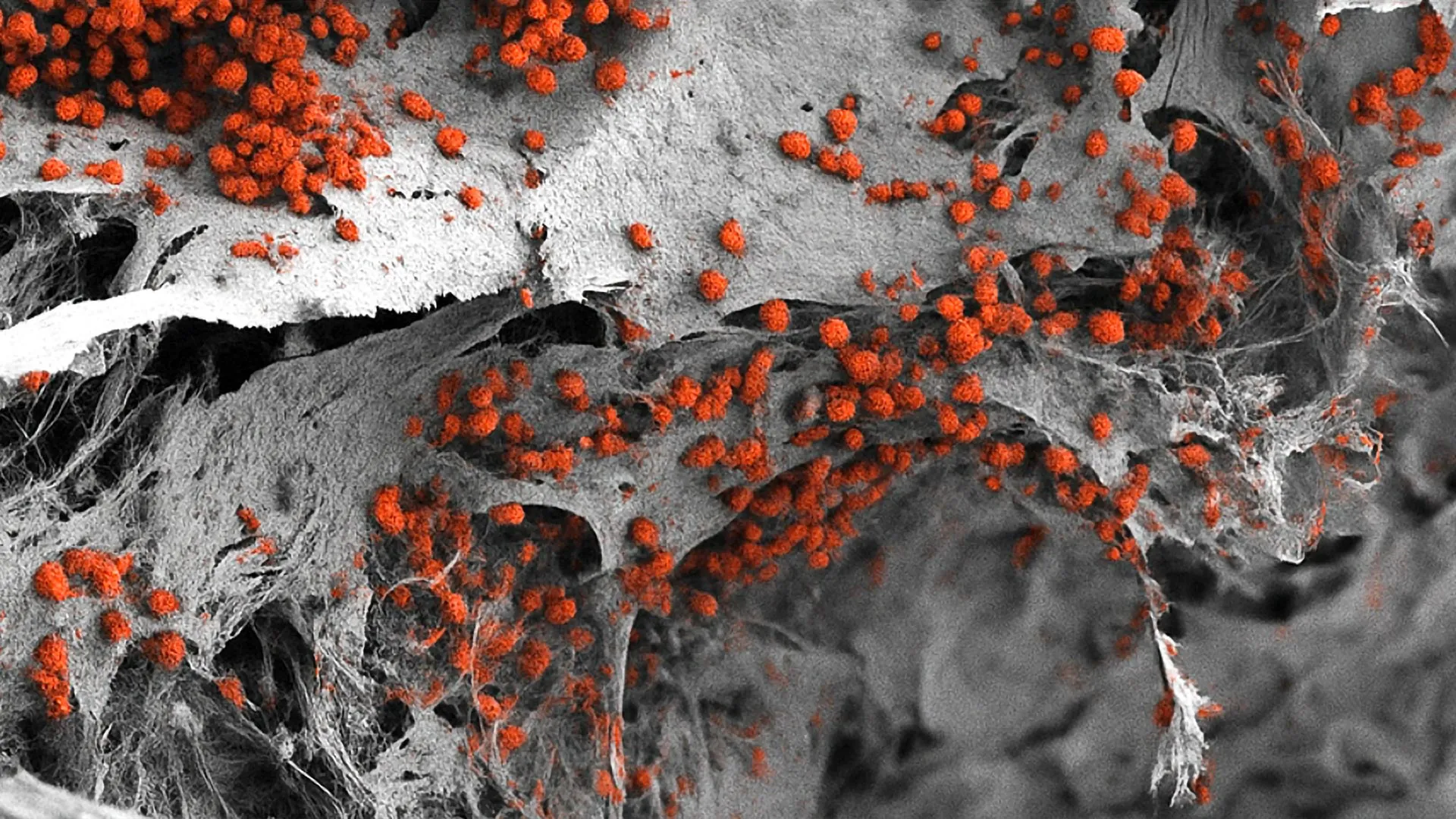
The study’s key finding is that breast cancer cells do not merely exist alongside these stem cells; they form direct, physical connections. Using advanced imaging and proteomic analysis, the researchers discovered the presence of "tumor-stroma tunnels" facilitated by a protein called Connexin 43 (CX43). These tunnels allow for a direct exchange of biological material between the two cell types.
"We discovered that the breast cancer cells require direct contact with mesenchymal stem cells," explained Dr. Gary Luker. "The cancer cells physically borrow molecules—proteins and messenger RNA—directly from the mesenchymal stem cells. Essentially, the mesenchymal stem cells act as very generous neighbors in donating things that make the cancer cells more aggressive and drug resistant."
This "borrowing" process—which Dr. Ghosh likened to "smuggling"—induces profound changes in the cancer cells. In laboratory experiments, the team observed that contact with MSCs triggered alterations in hundreds of different proteins within the breast cancer cells, effectively reprogramming them for survival and resistance.
Identifying the Role of GIV in Chemoresistance
Among the hundreds of proteins transferred or upregulated during this interaction, the researchers identified a specific protein called GIV (also known as Girdin) as a primary culprit in the cancer’s newfound aggression. GIV is a signal-transducer that has been previously linked to increased invasiveness and metastatic potential in various other forms of cancer.
In the context of ER+ breast cancer, the study found that GIV plays a critical role in neutralizing the effects of targeted therapies. Specifically, GIV helps the cancer cells bypass the inhibitory effects of drugs like Tamoxifen, which are designed to block the estrogen receptors that drive the tumor’s growth. By acquiring GIV and other supportive molecules from the bone marrow’s stem cells, the "sleeper" cancer cells transition from a dormant state to an active, highly resistant state.
This acquisition of an aggressive phenotype explains why a patient might remain cancer-free for a decade while taking endocrine therapy, only to have the cancer return as a metastatic force that no longer responds to those same drugs. The bone marrow acts as a "training ground" where the cancer cells, protected by their "generous neighbors," evolve into a more dangerous version of themselves.
Chronology of the Research and Methodology
The investigation followed a multi-stage chronology that combined clinical observation with rigorous laboratory modeling:
- Clinical Observation: The team began by analyzing the clinical reality of ER+ recurrence, noting the high frequency of bone marrow involvement and the shift toward drug resistance in recurrent cases.
- Microenvironment Modeling: Researchers created co-culture models in the lab to simulate the interaction between human ER+ breast cancer cells and human mesenchymal stem cells.
- Mechanism Identification: Through high-resolution microscopy, the team identified the formation of CX43-related gap junctions and tunneling nanotubes connecting the two cell types.
- Proteomic Mapping: Using mass spectrometry and other proteomic tools, the researchers mapped the changes in the cancer cells’ protein expression following contact with MSCs, leading to the discovery of the GIV protein’s involvement.
- Functional Validation: The team then tested whether blocking these tunnels or inhibiting the GIV protein could restore the cancer cells’ sensitivity to treatment.
This systematic approach allowed the researchers to move from a broad observation of "why does this happen?" to a specific molecular "how."
Expert Reactions and the Broader Impact on Oncology
The implications of this study have resonated throughout the oncological research community. Dr. Pradipta Ghosh emphasized the importance of the discovery for long-term patient monitoring. "Sleeper cells can be reawakened and cause estrogen receptor-positive breast cancers to relapse years—in some cases as long as a decade—after patients were believed to be in remission," she stated. "Since these cancer cells ‘borrow’ essential proteins from stem cells in the bone marrow through cellular tunnels, approaches for targeting the tunnels or proteins they smuggle could help prevent the relapse and metastasis."
Other experts in the field of the "tumor niche"—the study of the environment surrounding a tumor—suggest that this research validates the "seed and soil" hypothesis first proposed by Stephen Paget in 1889. While Paget posited that certain "seeds" (cancer cells) only grow in certain "soils" (organs), the Michigan and UCSD study proves that the "soil" (bone marrow) actually provides the "seeds" with the tools they need to become more resilient.
The discovery of the CX43-related tunnels provides a tangible target for future drug development. If a therapeutic agent can be developed to "close the tunnels" or disrupt the smuggling of GIV, it could theoretically keep the cancer cells in a permanent state of dormancy or make them vulnerable once again to standard endocrine therapies.
Future Directions and Clinical Implications
The research opens several new avenues for the treatment and prevention of metastatic breast cancer:
- New Drug Targets: Pharmaceutical research may now focus on CX43 inhibitors or GIV-blocking agents that could be administered alongside traditional hormone therapy to prevent the "smuggling" process from ever occurring.
- Diagnostic Markers: The presence of high levels of CX43 or GIV in bone marrow biopsies could serve as a predictive marker for patients at high risk of late-stage recurrence, allowing for more aggressive or tailored monitoring.
- Preventing "Reawakening": By understanding the triggers that cause these sleeper cells to transition from dormancy to active growth, researchers may develop strategies to keep these cells permanently "asleep."
While the current study was conducted in a laboratory setting using cell models, the clarity of the mechanism provides a strong foundation for future clinical trials. The goal is to move from treating metastatic disease once it appears to preventing the transition to metastasis while the cells are still localized in the bone marrow.
Conclusion
The study from the University of Michigan and UC San Diego represents a paradigm shift in how scientists view the dormancy of ER+ breast cancer. By revealing that the bone marrow is not just a passive storage site for cancer cells, but an active participant in their evolution toward drug resistance, the research provides a roadmap for future interventions. As the medical community continues to strive for a future where breast cancer is a manageable chronic condition rather than a recurring threat, the identification of "tumor-stroma tunnels" and the smuggling of the GIV protein marks a vital step toward that objective. For the thousands of women living in the shadow of potential recurrence, this understanding of the "sleeper cell" mechanism offers the first real hope of a permanent solution to late-stage relapse.












Leave a Reply