

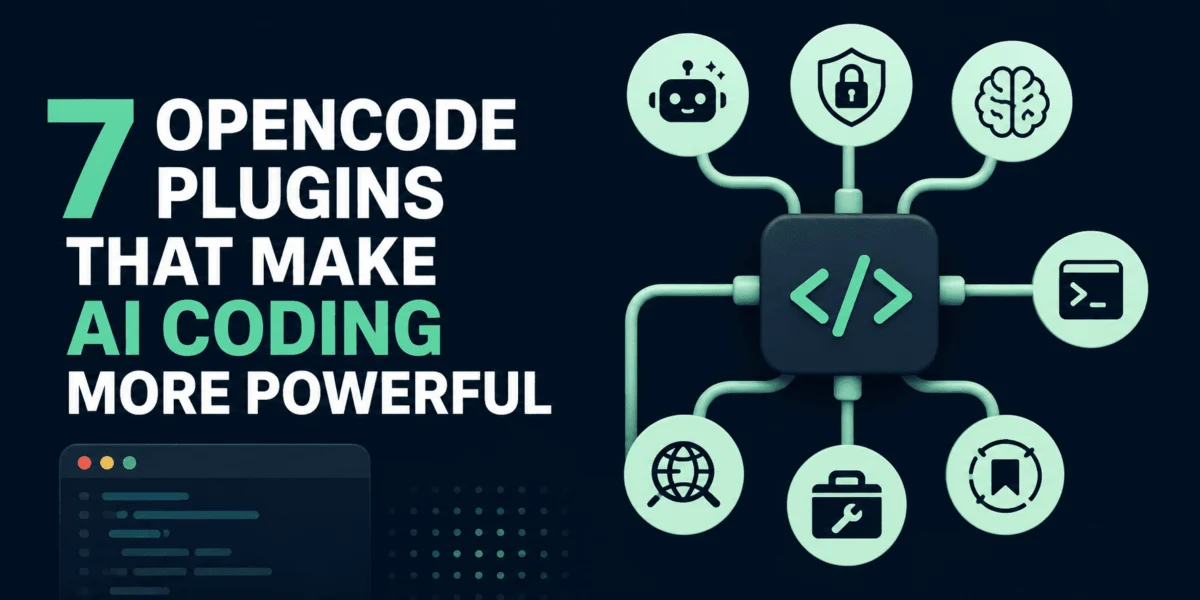
The rapid evolution of artificial intelligence has profoundly impacted numerous sectors, with software development emerging as a significant beneficiary. At the forefront of this transformation is the rise of AI coding agents designed to augment developer capabilities, streamline workflows, and accelerate project delivery. Among these, OpenCode stands out as a robust AI coding agent, distinguished not just by its core functionalities but by an expansive and dynamic plugin ecosystem. These add-ons are not mere embellishments; they are critical extensions that provide specialized tools, deep integrations, and significant workflow enhancements, fundamentally reshaping how developers interact with AI in their daily tasks. Features such as persistent memory, direct terminal access, cited web search capabilities, reusable skills, and advanced analytics underscore the profound impact these plugins have on customizing OpenCode for more sophisticated coding, research, and automation needs.
This article delves into seven prominent OpenCode plugins that exemplify the power and flexibility of this ecosystem. These selections are based on their utility, innovative features, and growing adoption within the developer community, collectively illustrating how plugins transform OpenCode into an even more powerful, adaptable, and practical tool for contemporary software engineering challenges.
The Evolving Landscape of AI in Software Development
The integration of artificial intelligence into the software development lifecycle has progressed rapidly over the past few years. Initially, AI tools primarily offered intelligent code completion and syntax highlighting, acting as sophisticated assistants. Projects like GitHub Copilot, launched in 2021, popularized the concept of AI pair programming, demonstrating the potential for AI to generate entire functions or code blocks based on natural language prompts. This marked a significant shift from mere assistance to active code generation.
Today, the market for AI in software development is projected to grow substantially, with reports indicating a compound annual growth rate (CAGR) exceeding 25% in the coming years, driven by increased demand for efficiency, automation, and innovation. Developers increasingly rely on AI to handle repetitive tasks, reduce boilerplate code, and even debug complex issues, freeing them to focus on higher-level architectural design and creative problem-solving. This shift has necessitated AI agents that are not only intelligent but also highly adaptable and extensible.
OpenCode emerged in this context as an AI agent designed for more autonomous interaction, moving beyond simple suggestions to actively participate in coding, testing, and even project management. Its open-source nature fosters a collaborative environment, allowing the community to build upon its core functionalities. This approach aligns with broader industry trends favoring modularity and extensibility, where core platforms provide a foundation, and specialized needs are met through a vibrant ecosystem of add-ons and integrations. The plugin architecture of OpenCode is a direct response to this need, enabling developers to tailor the agent to their specific domain, language, or project requirements without altering the core codebase.
OpenCode: A Platform for Programmable Intelligence
At its heart, OpenCode is an AI coding agent designed to be a programmable intelligence within a developer’s workflow. Unlike static code generation tools, OpenCode aims to understand context, engage in multi-turn conversations, and execute complex tasks. However, no single AI agent can inherently possess every conceivable tool or integration required by the vast array of development environments and methodologies. This is precisely where its plugin architecture becomes indispensable.
Plugins serve as modular extensions that allow OpenCode to interface with external services, introduce new capabilities, and adapt to niche requirements. This design philosophy prevents the core OpenCode agent from becoming bloated with features that might only be relevant to a segment of its user base. Instead, it empowers individual developers and teams to curate their OpenCode experience, activating only the functionalities they need. This extensibility is not merely about adding features; it’s about transforming OpenCode from a general-purpose AI assistant into a highly specialized, context-aware, and deeply integrated collaborator tailored to the user’s specific demands. The open-source model further accelerates this process, encouraging community contributions and rapid innovation, as evidenced by the diverse and powerful plugins now available.
Deep Dive: Seven Transformative OpenCode Plugins
The following plugins represent a cross-section of the innovation flourishing within the OpenCode ecosystem, each addressing distinct challenges and offering unique advantages to developers.
1. Oh My Openagent: The All-in-One Power Pack
Widely recognized as the most comprehensive and impactful plugin within the OpenCode ecosystem, Oh My Openagent is a veritable toolkit designed to supercharge advanced OpenCode workflows. Its prominence stems from its broad scope, integrating a suite of critical functionalities that collectively transform the agent into a significantly more capable and autonomous entity.
This plugin introduces "background agents," which allow OpenCode to manage and execute multiple tasks concurrently or asynchronously, moving beyond linear conversational interactions. This capability is crucial for complex development scenarios where an agent might need to monitor a process, analyze code, and interact with the user simultaneously. Furthermore, Oh My Openagent bundles pre-built tools for Language Server Protocol (LSP), Abstract Syntax Tree (AST) manipulation, and Model Context Protocol (MCP). LSP integration enables OpenCode to understand code semantics, offering intelligent code completion, navigation, and refactoring capabilities that mirror a human developer’s IDE experience. AST tools allow for deeper code analysis and transformation, enabling more sophisticated code generation and refactoring operations. MCP tools, on the other hand, enhance the agent’s ability to maintain and recall context across interactions, a common challenge in long-running AI conversations.
The inclusion of "curated agent packs" provides pre-configured setups optimized for specific programming languages, frameworks, or development methodologies, significantly reducing the initial setup burden for developers. Finally, its "Claude Code compatibility" ensures seamless interoperability with Anthropic’s Claude models, allowing developers to leverage the strengths of different large language models within their OpenCode environment. Developers frequently laud Oh My Openagent for its ability to significantly reduce setup time for complex environments and enhance the agent’s overall understanding and interaction with codebases, making it an indispensable component for serious OpenCode users aiming for maximum efficiency and depth.
GitHub: https://github.com/ohmyopencode/oh-my-opencode
2. Opencode Antigravity Auth: Unlocking Multi-Model Access
In an era where diverse large language models (LLMs) offer varying strengths and specializations, the ability to seamlessly switch between or integrate them within a single workflow is a significant advantage. The Opencode Antigravity Auth plugin addresses this need directly by enabling OpenCode to connect with Antigravity through OAuth. This integration allows users to leverage their existing Google credentials for authentication, simplifying access and enhancing security.
The primary benefit of this plugin is the unlocked access to a wider array of cutting-edge models, such as Gemini 3.1 Pro and Claude Opus 4.6 Thinking, directly within the OpenCode environment. This means developers are not confined to a single model’s capabilities but can dynamically choose the best AI for a given task—be it code generation, complex problem-solving, or nuanced natural language understanding. For instance, one model might excel at boilerplate code generation, while another might be superior for debugging intricate logical errors or providing creative architectural suggestions. This flexibility significantly broadens OpenCode’s utility, transforming it into a versatile hub for diverse AI intelligence. Industry observers suggest that such multi-model access through unified authentication mechanisms will become increasingly critical as the LLM landscape continues to fragment and specialize, offering developers unparalleled choice and power.
GitHub: https://github.com/NoeFabris/opencode-antigravity-auth
3. Opencode Supermemory: The Persistent Collaborator
One of the persistent challenges with many AI assistants is their stateless nature; they often "forget" previous interactions, requiring users to repeatedly provide context. The Opencode Supermemory plugin is a game-changer in this regard, fundamentally altering OpenCode’s behavior by giving it the ability to retain information across sessions and even different projects.
This persistence transforms OpenCode from a transactional assistant into a continuous collaborator. Imagine an AI agent that remembers your preferred coding style, specific project constraints, previously debugged issues, or even your personal quirks. This significantly reduces the cognitive load on the developer, eliminating the need to re-explain context or re-state preferences. For long-term projects or ongoing development efforts, Opencode Supermemory fosters a more natural and efficient interaction, making the AI feel less like a tool and more like an integral, remembering team member. Developers consistently express frustration with the lack of memory in AI tools, and this plugin directly addresses one of the most significant pain points, paving the way for truly personalized and cumulative AI assistance.
GitHub: https://github.com/supermemoryai/opencode-supermemory
4. Opencode Pty: Interactive Terminal Control
Modern software development heavily relies on terminal interactions for tasks ranging from running tests and compiling code to managing dependencies and deploying applications. While OpenCode can execute one-off shell commands, the Opencode Pty plugin elevates this capability by introducing interactive pseudoterminal (PTY) support.
This is a crucial distinction: PTY allows the AI agent to launch background processes, send follow-up inputs to active processes, and later read their outputs. This capability is far more powerful than simple command execution. For example, OpenCode can initiate a long-running build process, periodically check its status, interact with prompts that arise during installation, or monitor logs in real-time. This transforms OpenCode into an agent that can genuinely manage and interact with complex command-line workflows, mirroring a human developer’s ability to engage with an interactive shell. This plugin is particularly beneficial for tasks requiring continuous monitoring, multi-step operations, or interaction with CLI-based tools that expect dynamic input. It brings OpenCode closer to functioning as a fully integrated development environment, capable of handling intricate system-level tasks.
GitHub: https://github.com/shekohex/opencode-pty
5. Opencode Websearch Cited: Verifiable Research for Developers
In research-heavy development work, especially when exploring new libraries, APIs, or debugging obscure errors, access to accurate and verifiable information is paramount. The Opencode Websearch Cited plugin is designed precisely for this, adding a web search tool with robust citation support directly within OpenCode.
According to its repository, this plugin can generate inline citations and comprehensive source lists, a feature that significantly enhances the trustworthiness and accountability of information retrieved by the AI. This is critical for developers who need to ensure the accuracy of code snippets, best practices, or technical specifications provided by the AI. Furthermore, the plugin offers flexibility by supporting Google, OpenAI, or OpenRouter-backed search configurations, allowing users to choose their preferred search backend based on availability, cost, or specific search needs. This feature is invaluable for developers seeking to rapidly gather information, validate AI-generated solutions, or understand complex technical concepts with documented sources, thereby reducing the risk of incorporating erroneous or outdated information into their projects.
GitHub: https://github.com/ghoulr/opencode-websearch-cited
6. Opencode Wakatime: Measuring AI-Assisted Productivity
As AI-assisted coding becomes increasingly prevalent, understanding its impact on productivity and workflow is vital for both individual developers and development teams. The Opencode Wakatime plugin addresses this by tracking AI-assisted coding activity, time spent, and file changes, integrating seamlessly with the popular WakaTime dashboard.
WakaTime is a well-established service that provides detailed metrics on coding activity, helping developers and managers understand how time is being spent across different projects, languages, and tools. By plugging into this familiar workflow, Opencode Wakatime offers unprecedented visibility into how OpenCode is being utilized. This data can be instrumental in evaluating the return on investment (ROI) of AI tools, identifying productivity bottlenecks, and optimizing development processes. For example, teams can analyze whether AI assistance is genuinely accelerating coding tasks or if specific types of AI interactions lead to more efficient outcomes. This focus on measurement and visibility is crucial for continuous improvement in AI-driven development environments.
GitHub: https://github.com/angristan/opencode-wakatime
7. Opencode Agent Skills: Reusability and Standardization
Reusability is a cornerstone of efficient software development, and the Opencode Agent Skills plugin extends this principle to the AI agent itself. This plugin adds support for discovering and loading "agent skills" from various locations, including project folders, user directories, and Claude-compatible sources.
Agent skills can be thought of as pre-defined, complex actions or sequences of operations that OpenCode can execute. By enabling their discovery and loading, the plugin facilitates the creation of portable skill libraries. This is particularly useful for development teams that want to standardize specific AI-driven workflows, ensure consistency across projects, or share best practices. For instance, a team could define a skill for "setting up a new microservice" or "running a full test suite with specific parameters." The Claude-compatible aspect further enhances interoperability, allowing for the potential exchange of skills between different AI platforms that adhere to similar standards. This plugin fosters a more collaborative and efficient development environment by reducing redundant AI prompt engineering and promoting the systematic reuse of proven AI capabilities.
GitHub: https://github.com/joshuadavidthomas/opencode-agent-skills
Statements and Community Reactions
The robust growth of the OpenCode plugin ecosystem has been met with significant enthusiasm from the developer community. While specific official statements regarding market share are not always publicly disclosed, the sheer volume and diversity of community-contributed plugins speak volumes about the platform’s perceived value and extensibility.
An OpenCode community moderator, speaking on the impact of the plugin ecosystem, noted, "Our plugin ecosystem is a testament to the power of open collaboration. Developers aren’t just using OpenCode; they’re actively shaping its future, building tools that solve real-world problems. This collective innovation ensures OpenCode remains at the cutting edge of AI-assisted development."
Feedback from early adopters frequently highlights the transformative potential of these extensions. "Before Opencode Supermemory, I found myself constantly re-contextualizing the AI. Now, it genuinely feels like a persistent partner," remarked a senior software engineer on a popular developer forum. Another developer praised Opencode Antigravity Auth, stating, "Accessing multiple top-tier models through a single interface within OpenCode is a game-changer. It allows us to pick the best tool for each specific coding challenge without jumping between platforms." These sentiments underscore the tangible benefits developers are experiencing, moving beyond basic AI assistance to highly customized and integrated workflows.
The Broader Impact and Future Implications
The OpenCode plugin ecosystem exemplifies a broader trend in AI and software development: the shift towards highly customizable, modular, and open-source AI agents. The implications of this paradigm are far-reaching:
-
Enhanced Developer Productivity: By automating repetitive tasks, providing persistent context, facilitating robust research, and enabling complex terminal interactions, these plugins directly contribute to significant gains in developer productivity. Estimates suggest that AI coding assistants can reduce coding time by up to 30% for certain tasks, and comprehensive agents like OpenCode with specialized plugins are poised to push these figures even higher.
-
Customization and Specialization: The plugin model allows OpenCode to transcend being a generic AI tool. It can be specialized for specific programming languages, industries (e.g., finance, healthcare, gaming), or development methodologies (e.g., TDD, agile). This level of customization makes AI agents more relevant and effective for diverse user bases.
-
Democratization of Advanced AI: By providing easy access to sophisticated functionalities and integrating with powerful LLMs, the plugin ecosystem democratizes advanced AI capabilities. Developers who might not have the resources or expertise to build complex AI integrations from scratch can readily leverage community-contributed plugins.
-
Fostering Innovation through Open Source: The open-source nature of OpenCode and its plugins encourages rapid innovation. Developers can freely contribute, fork, and adapt existing plugins, leading to a vibrant ecosystem where new ideas are quickly implemented and shared. This collaborative model often outpaces the development cycles of proprietary solutions.
-
Addressing Evolving Needs: As new programming languages, frameworks, and development paradigms emerge, the plugin architecture ensures OpenCode can quickly adapt and integrate new tools and functionalities without requiring core platform updates. This agility is crucial in the fast-paced tech industry.
Looking ahead, the OpenCode plugin ecosystem is likely to continue its exponential growth. We can anticipate even more sophisticated integrations, potentially including plugins for advanced code security analysis, automated deployment pipelines, visual debugging tools, and deeper integrations with project management platforms. The trend towards interoperability between different AI models and tools will also likely accelerate, with plugins acting as crucial bridges.
In conclusion, OpenCode plugins are not merely optional extras; they are the bedrock upon which a highly flexible, powerful, and personalized AI coding experience is built. They address critical pain points in modern development, from memory retention and multi-model access to verifiable research and process automation. For any developer seeking to harness the full potential of AI in their workflow, engaging with this dynamic ecosystem is no longer an option but a strategic imperative. By starting with plugins that address immediate daily challenges and gradually expanding their toolkit, developers can truly transform OpenCode into an indispensable partner in their coding journey, propelling the future of AI-driven software development.













Leave a Reply