

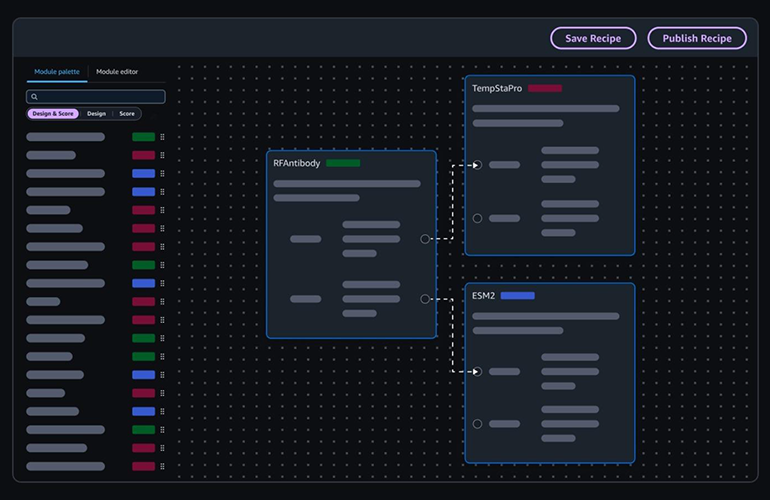
Amazon Web Services (AWS) has announced the launch of Amazon Bio Discovery, a sophisticated application designed to significantly accelerate the drug discovery process, particularly in the realm of antibody design. This new platform seamlessly integrates artificial intelligence (AI)-driven design capabilities with direct, automated handoffs to leading DNA synthesis and techbio firms, enabling a rapid feedback loop from computational design to physical testing and back. The initiative marks a pivotal moment in the application of generative AI and cloud computing to some of the most persistent challenges in pharmaceutical research and development.
The core functionality of Amazon Bio Discovery lies in its ability to route AI-designed antibody candidates directly to partners like Twist Bioscience for DNA synthesis and Ginkgo Bioworks for subsequent testing. Crucially, the results from these wet-lab experiments flow back into the same interface where the AI models generated the candidates, creating an agile, iterative optimization cycle previously unattainable at scale. This integrated approach bypasses numerous manual steps and traditional bottlenecks that have historically plagued drug discovery, offering a glimpse into a future where therapeutic development is dramatically compressed.
Unveiling the Platform: Early Adopters and Core Technology
AWS introduced Amazon Bio Discovery with an impressive roster of early adopters, including pharmaceutical giant Bayer, the renowned Broad Institute, Memorial Sloan Kettering Cancer Center (MSK), and biotechnology firm Voyager Therapeutics. These collaborations underscore the platform’s potential across diverse areas of biomedical research, from oncology to neurological disorders.
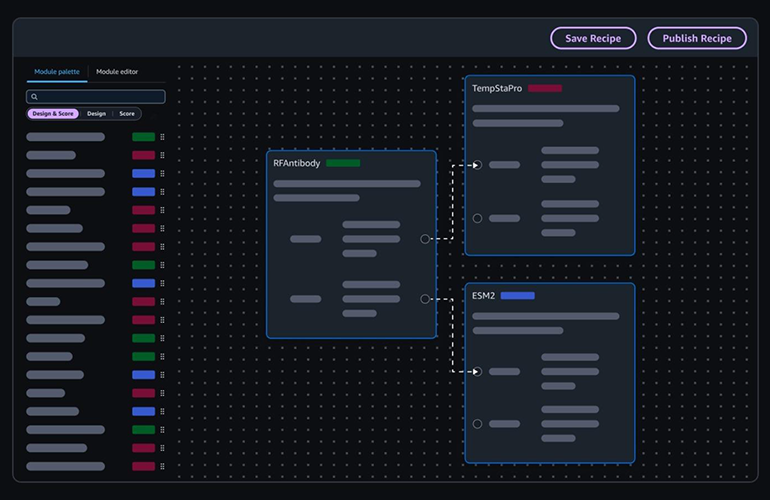
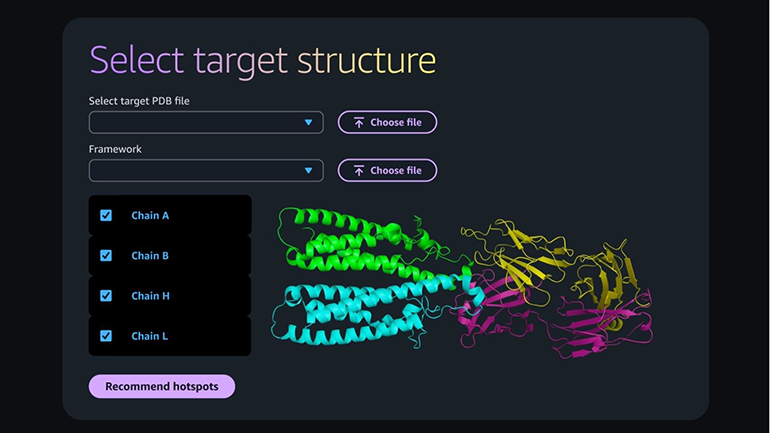
At the heart of Amazon Bio Discovery are several advanced technological components. The application pairs its integrated wet-lab handoff with a comprehensive catalog of biological foundation models (bioFMs). These are large AI models, analogous to large language models but trained specifically on vast and complex biological datasets. These datasets encompass genomic sequences, protein structures, chemical compounds, disease pathways, and experimental results, allowing bioFMs to generate and evaluate potential drug molecules with unprecedented accuracy and speed. Complementing these models is a natural-language agent, designed to assist researchers in experiment design, fine-tuning, and integrating proprietary lab data, thereby democratizing access to advanced computational biology tools. This agent acts as an intelligent co-pilot, translating complex research questions into actionable computational experiments and optimizing parameters based on real-world data.
The MSK Breakthrough: A Case Study in Accelerated Antibody Design
One of the most compelling early success stories highlights the transformative potential of Amazon Bio Discovery at Memorial Sloan Kettering Cancer Center. Researchers, under the guidance of Dr. Nai-Kong Cheung, M.D., Ph.D., Enid A. Haupt Chair in Pediatric Oncology, leveraged the platform to orchestrate multiple AI models. This orchestration led to the generation of nearly 300,000 novel antibody molecules, a scale unimaginable through traditional methods within a short timeframe. From this massive pool, the team identified and sent the top 100,000 candidates to Twist Bioscience for high-throughput testing.
AWS reported that this process, which traditionally could span up to a year, was compressed into a matter of weeks. The significance of this acceleration in pediatric oncology cannot be overstated. Dr. Cheung emphasized the critical need for speed, stating, "Patients come here with a clock. We need results sooner." This powerful statement underscores the human impact of these technological advancements, where faster discovery directly translates into earlier access to potentially life-saving treatments for children battling cancer. This particular antibody design project is a direct outgrowth of a broader, strategic collaboration between AWS and MSK, initially announced in February 2025, focused on accelerating AI-driven cancer innovation. The collaboration aimed to build a scalable, secure, and cost-effective cloud environment to power MSK’s research, and Amazon Bio Discovery represents a concrete manifestation of that vision.
Traditionally, antibody discovery is a painstaking and often serendipitous process. It involves screening vast libraries of potential binders, often through phage display or hybridoma technology, followed by extensive lead optimization to improve affinity, specificity, and developability. Each iteration of design, synthesis, and testing can take months, with a high attrition rate. The ability to computationally generate hundreds of thousands of diverse, high-potential candidates and rapidly funnel them into automated synthesis and testing pipelines represents a fundamental shift, moving from a largely empirical, trial-and-error approach to a more directed, AI-guided discovery paradigm.
AWS’s Strategic Expansion into Life Sciences: Beyond Bio Discovery
The launch of Amazon Bio Discovery is part of a broader, strategic push by AWS to embed its cloud infrastructure and AI capabilities deeply within the life sciences sector. Cloud providers recognize the immense data processing, storage, and computational power required for modern biomedical research, making this a natural extension of their enterprise services. In symposium materials shared with media, AWS also outlined several other significant initiatives:
1. AI-Powered Real-World Data Platform for Alzheimer’s Disease Research (Labcorp & Datavant):
AWS is collaborating with Labcorp, a leading global life sciences company, and Datavant, a health data linkage firm, to develop an AI-powered real-world data (RWD) platform specifically for Alzheimer’s disease research. This platform leverages Labcorp’s extensive portfolio of blood-based biomarker testing data, which the company asserts is the broadest available for Alzheimer’s and dementia. Labcorp’s proprietary lab data serves as the critical differentiator, providing longitudinal diagnostic records that are invaluable for understanding disease progression and treatment response.
AWS contributes its Bedrock agents and SageMaker analytics tools, providing the AI backbone for data processing, analysis, and insights generation. Datavant plays a crucial role in ensuring privacy-preserving linkage, connecting lab results with de-identified medical claims data. This integration allows researchers to build a comprehensive picture of patient health journeys, identifying patterns and correlations that are difficult to discern from fragmented data sources. Early use cases for this platform are centered on identifying precise patient cohorts for clinical trial recruitment—a persistent and costly bottleneck in Alzheimer’s drug development, often delaying trials and increasing costs. The Alzheimer’s version of the platform is expected to complete initial validation this spring, with ambitious plans for expansion in 2026 into other therapeutic areas, including inflammatory diseases, cardiometabolic conditions, women’s health, and oncology. Labcorp’s significant footprint in drug development, having supported over 85% of FDA drug approvals in 2025, underscores the potential impact of this RWD platform.
2. AI-Enabled Clinical Trial Site Selection (Merck & BCG):
Another key area of focus for AWS involves working with pharmaceutical giant Merck and consulting firm Boston Consulting Group (BCG) on AI-enabled clinical trial site selection. Selecting the right clinical trial sites is critical for efficient patient recruitment, data quality, and overall trial success. AI can analyze vast datasets, including patient demographics, disease prevalence, investigator expertise, and logistical factors, to identify optimal sites more rapidly and accurately than traditional manual processes. This initiative aims to reduce trial timelines, lower operational costs, and improve the probability of successful outcomes for new therapies.
3. Verily Workbench Generally Available for AWS Users:
AWS is also making Verily Workbench generally available for its users. Verily, an Alphabet company focused on life sciences, offers a secure and scalable platform for biomedical researchers to analyze complex datasets. By integrating Verily Workbench into the AWS ecosystem, researchers gain access to powerful tools for data curation, analysis, and collaboration, leveraging the robust infrastructure and security features of AWS. This move further solidifies AWS’s position as a comprehensive cloud partner for the life sciences community.
The Evolving Landscape of AI in Drug Discovery: A Competitive Arena
The advancements showcased by AWS with Amazon Bio Discovery are part of a broader, rapidly accelerating trend in the pharmaceutical and biotechnology industries: the pervasive adoption of AI agents and machine learning for drug discovery and development. The concept of "agents" – autonomous or semi-autonomous AI systems capable of perceiving their environment, making decisions, and taking actions – is becoming the preferred framework for AI applications in this complex field. These agents can manage workflows, integrate diverse data types, and even suggest experiments, acting as true "co-scientists."
Several other prominent players are making significant strides in this competitive landscape:
- Isomorphic Labs (Google DeepMind Spinout): This Google DeepMind spinout has made headlines with its large-scale drug-design partnerships, including deals with pharmaceutical giants Eli Lilly, Novartis, and Johnson & Johnson. These collaborations, announced in 2024, hold a potential value exceeding $3 billion, signaling strong industry confidence in Isomorphic’s AI-driven drug discovery capabilities, particularly in areas like protein structure prediction and molecular design.
- Insilico Medicine: A pioneer in AI-driven drug discovery, Insilico Medicine’s Pharma.AI platform demonstrated remarkable efficiency with its lead candidate, Rentosertib. This compound progressed from preclinical candidate stage to completing a Phase IIa trial in idiopathic pulmonary fibrosis (IPF) in just 18 months, with results published in Nature Medicine in 2025. This rapid advancement from AI-generated hypothesis to human clinical trials is a testament to the power of integrated AI platforms.
- NVIDIA’s BioNeMo: Graphics processing unit (GPU) powerhouse NVIDIA has also entered the fray with its BioNeMo platform, which pitches a similar "co-scientist architecture." BioNeMo provides a framework for developing, customizing, and deploying AI models for drug discovery, leveraging NVIDIA’s powerful computing infrastructure to accelerate simulations and generative model training.
- Anthropic’s Acquisition of Coefficient Bio: In early April, AI safety-focused company Anthropic reportedly acquired Coefficient Bio, an eight-month-old drug design startup, for $400 million in stock. The acquisition of such a nascent company, staffed by computational biologists from prestigious organizations like Evozyne, Genentech, and Prescient Design, underscores the intense competition for top talent and innovative AI approaches in drug discovery. This move signals Anthropic’s deeper push into the biomedical domain, recognizing the strategic importance of this application area for advanced AI.
These developments collectively illustrate a profound shift in the drug discovery paradigm, moving from a labor-intensive, often serendipitous process to one that is increasingly data-driven, computationally optimized, and accelerated by advanced AI.
Implications and Future Outlook
The launch of Amazon Bio Discovery and AWS’s broader engagement in life sciences carries significant implications for the future of medicine.
Accelerated Drug Development: The most immediate impact is the dramatic reduction in drug discovery timelines. Cutting antibody design from a year to weeks, as demonstrated with MSK, means potential therapies can reach preclinical and clinical testing phases much faster. This acceleration is crucial for patients, particularly those with aggressive diseases, and can also reduce the overall cost of R&D, potentially leading to more affordable treatments.
Democratization of Research: By providing cloud-based, accessible platforms like Amazon Bio Discovery, AWS is democratizing access to cutting-edge AI and computational biology tools. Researchers at institutions that may not have the in-house supercomputing capabilities or specialized AI teams can now leverage these powerful resources, fostering innovation across a wider scientific community.
Enhanced Precision and Success Rates: Biological foundation models, trained on vast datasets, can identify novel molecules with higher specificity and better therapeutic profiles. This precision could lead to more effective drugs with fewer side effects, and potentially increase the success rates of molecules progressing through clinical trials, which historically have been very low.
Ethical Considerations and Data Privacy: As AI becomes more deeply integrated with real-world health data, the importance of robust ethical frameworks and stringent data privacy measures becomes paramount. Platforms like the one developed with Labcorp and Datavant highlight the need for privacy-preserving linkage technologies and responsible AI development to ensure patient trust and data security.
New Discovery Frontiers: The ability to rapidly generate and test vast numbers of novel molecules could unlock entirely new therapeutic modalities and targets that were previously too complex or time-consuming to explore. This could lead to breakthroughs in treating currently incurable diseases.
AWS’s strategic investments and collaborative partnerships position it as a critical enabler in this new era of AI-driven drug discovery. By providing the foundational infrastructure, advanced AI services, and integrated platforms, AWS is not just supporting the life sciences industry; it is actively shaping its future, promising a revolution in how medicines are discovered, developed, and delivered to patients worldwide. The journey has only just begun, but the initial results suggest a transformative period ahead for healthcare.











Leave a Reply