

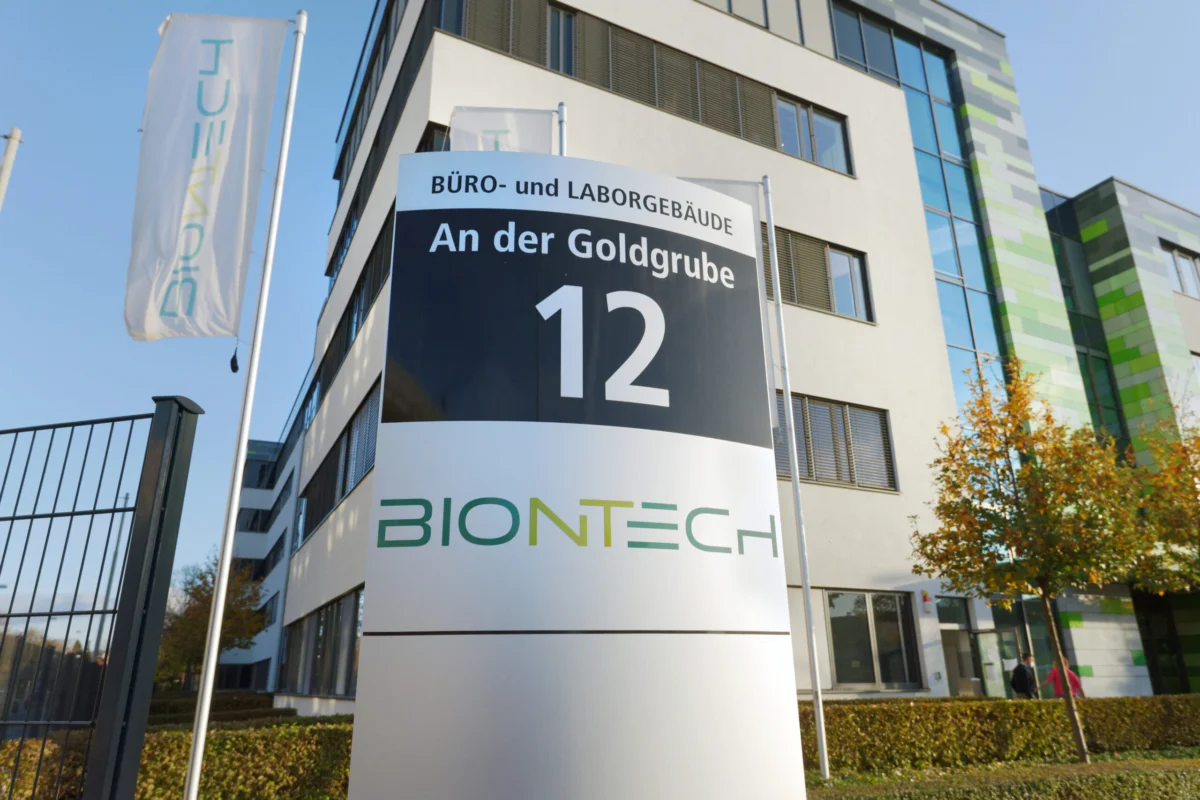
The German biotechnology firm BioNTech, once a beacon of innovation and a financial titan thanks to its pioneering mRNA COVID-19 vaccine, Comirnaty, is undergoing a profound strategic transformation. After generating an astounding €19 billion in revenue in 2021, the company reported a stark drop to a mere €118 million in the first quarter of 2026. This precipitous decline in fortunes has necessitated a significant restructuring, including the elimination of 1,860 jobs and a strategic divestment from most infectious disease programs. With a substantial cash reserve of €16.8 billion, BioNTech is now making a "bet-the-company" pivot, redirecting its formidable resources and scientific prowess back to its foundational roots in oncology, with an ambitious plan to launch 15 Phase 3 trials by year-end and anticipate seven late-stage data readouts in 2026.
The Meteoric Rise of Comirnaty: A Pandemic Success Story
BioNTech’s ascent to global prominence was nothing short of extraordinary. Founded in 2008 by scientists Uğur Şahin and Özlem Türeci, the company initially focused on developing individualized immunotherapies for cancer. Its expertise in messenger RNA (mRNA) technology, however, positioned it uniquely when the SARS-CoV-2 genetic sequence became public in January 2020. Recognizing the urgency, BioNTech swiftly launched "Project Lightspeed," a rapid development program for a COVID-19 vaccine. This initiative was significantly bolstered by a €375 million grant from the German government, aimed at accelerating both development and production capabilities.
A pivotal alliance was forged with the American pharmaceutical giant Pfizer. While Pfizer notably declined direct U.S. government research and development funding from Operation Warp Speed to maintain scientific independence, the U.S. government nonetheless placed a substantial advance-purchase order of $2 billion for 100 million doses in July 2020, with options for hundreds of millions more. This crucial purchase guarantee, combined with the unprecedented speed of emergency use authorization granted by regulatory bodies in December 2020, paved the way for Comirnaty (BNT162b2) to become one of the most successful pharmaceutical products in history. The vaccine’s efficacy and rapid deployment during a global crisis led to staggering financial returns, generating approximately €36 billion in BioNTech revenue across 2021 and 2022, and cementing mRNA technology’s place in the public consciousness. This period marked a peak for BioNTech, transforming it from a niche biotech firm into a global pharmaceutical powerhouse.
The Post-Pandemic Reality: A Sharp Decline in Demand
As the global COVID-19 pandemic transitioned into an endemic phase and vaccine saturation increased, demand for Comirnaty began to wane dramatically. The urgency that had characterized the initial rollout diminished, leading to a steep decline in sales. The company’s revenue plummeted from its 2021 high of €19 billion to a mere €118 million in the first quarter of 2026, signaling a profound shift in market dynamics. This "freefall" in demand was not unexpected by industry analysts, who had long predicted that the extraordinary revenues generated during the peak of the pandemic were unsustainable in the long term. Governments scaled back their bulk purchasing, and public interest shifted from mass vaccination campaigns to more targeted booster shots and variant-specific adaptations, further impacting sales.
Political Headwinds and a Shifting Policy Landscape
Compounding the market-driven challenges, BioNTech and the broader mRNA sector faced significant political headwinds, particularly in the United States. In August 2025, a major policy shift occurred when HHS Secretary Robert F. Kennedy Jr. announced the termination of 22 BARDA (Biomedical Advanced Research and Development Authority) mRNA vaccine development investments. This decision, which effectively rejected the mRNA platform for certain applications, sent shockwaves through the industry. The wind-down impacted numerous companies and institutions, including contract terminations for Emory University and Tiba Biotech, and de-scoping of mRNA work with Luminary Labs, ModeX, and Seqirus. Pre-award proposals from major players like Pfizer, Sanofi Pasteur, CSL Seqirus, and Gritstone were also rejected.
Secretary Kennedy justified the decision by stating that data indicated mRNA vaccines "fail to protect effectively against upper respiratory infections like COVID and flu." This conclusion, however, was met with strong disagreement from leading research institutions. Researchers at Johns Hopkins, Harvard, and the National Academy of Medicine publicly contested these assertions, emphasizing the proven efficacy of mRNA vaccines in preventing severe disease, hospitalization, and death, even if their protection against milder upper respiratory infections was less durable. The policy shift, occurring under what the original article refers to as "Trump 2.0" administration, represented a significant reversal from the prior administration’s Operation Warp Speed, which had actively supported and funded the development and procurement of mRNA vaccines. This redirection of federal dollars away from the technology created an uncertain regulatory and funding environment for mRNA-focused companies, pressuring them to diversify or consolidate.
Strategic Consolidation and Painful Divestment
Against this backdrop of waning demand and political uncertainty, BioNTech initiated strategic moves to consolidate its position and streamline its operations. In June 2025, the company announced the acquisition of CureVac, another German mRNA specialist, for $1.25 billion in an all-stock deal. CureVac had experienced its own pandemic challenges; its first-generation COVID-19 vaccine candidate showed only 48% efficacy in a Phase 3 trial in 2021, leading the company and its partner Bayer to abandon COVID-19 development efforts as more effective rivals entered the market. CureVac subsequently refocused on next-generation mRNA platforms, partnering with GSK. BioNTech’s acquisition was seen as a strategic play to bolster its intellectual property portfolio, gain access to CureVac’s advanced mRNA technologies, and potentially consolidate manufacturing capabilities. Fierce Biotech notably described CureVac’s research and manufacturing site in Tübingen as a "major prize."

However, just five months after the CureVac deal closed, BioNTech announced a dramatic restructuring that included the closure of the Tübingen site, along with facilities in Idar-Oberstein, Marburg, and Singapore. This move will result in the elimination of approximately 1,860 jobs, a significant workforce reduction that will undoubtedly have a substantial impact on the affected employees and their communities. In a further strategic shift, BioNTech is entirely exiting in-house COVID vaccine manufacturing, entrusting all future production to its long-standing partner, Pfizer. These closures and outsourcing efforts are projected to generate annual savings of €500 million by 2029, underscoring the company’s commitment to optimizing its cost structure amidst its strategic pivot. The decision to close facilities acquired so recently highlights the rapid and sometimes brutal rationalization processes common in the biotech industry when market conditions change drastically.
The Oncology Rebirth: A Bet-the-Company Pivot
Despite the significant financial downturn and workforce reductions, BioNTech maintains a formidable financial position, boasting €16.8 billion in cash reserves. This substantial capital is now being entirely leveraged for a "bet-the-company" pivot back to its original mission: oncology. The company has laid out an aggressive plan, aiming for 15 Phase 3 trials in its oncology pipeline by the end of the year, with an expectation of seven late-stage data readouts in 2026. While the company projects zero oncology revenue for the current year, this massive investment signals a long-term commitment to becoming a leading player in cancer therapeutics.
The shift is evident in BioNTech’s clinical pipeline. As recently as March 2025, the company’s pipeline included nine infectious disease programs beyond Comirnaty, such as a next-generation COVID vaccine, a COVID-influenza combination with Pfizer, a standalone influenza vaccine, an HSV vaccine, tuberculosis and malaria vaccines funded by the Gates Foundation, an mpox vaccine funded by CEPI, and a shingles vaccine in collaboration with Pfizer, alongside a protein-based therapeutic for bacterial vaginosis. Today, its public pipeline page lists only a single infectious disease program: an mpox vaccine, notably funded externally by the Coalition for Epidemic Preparedness Innovations (CEPI). This stark reduction underscores a near-complete exit from its infectious disease portfolio.
Conversely, the oncology pipeline has expanded dramatically. The live site now features more than 25 Phase 2 and Phase 3 clinical trials, complemented by over 10 novel-novel combination studies. The centerpiece of this renewed oncology focus appears to be Pumitamig (BNT327), a bispecific PD-L1/VEGF-A immunomodulator developed in collaboration with Bristol Myers Squibb. This promising candidate is undergoing active trials across a wide range of challenging cancers, including lung cancer, triple-negative breast cancer, colorectal cancer, gastric cancer, hepatocellular carcinoma, and glioblastoma. In 2025 alone, BioNTech invested a substantial €2.1 billion in research and development, a clear indication of its commitment to fueling this oncology expansion.
Financial Strategy and Future Leadership
During the Q1 2026 earnings call, the shift in focus was palpable. Analyst questions revolved almost exclusively around oncology: inquiries about trial endpoint changes, previews of ASCO (American Society of Clinical Oncology) data, and strategies for ADC (Antibody-Drug Conjugate) combinations. The topic of COVID-19, which had dominated previous calls, was notably absent, symbolizing the company’s complete redirection.
Amidst this ambitious strategic overhaul and the announcement of significant layoffs, BioNTech’s board also approved a $1 billion share buyback program. This move, often seen as a way to return value to shareholders and signal confidence in the company’s future prospects, could be interpreted in various ways. For some, it might be a reassuring sign of financial stability despite the current challenges, while for others, it could raise questions about resource allocation during a period of job cuts and intensive R&D investment.
CFO Ramón Zapata articulated the company’s vision, describing BioNTech as being in "an investment phase as we are building BioNTech into a commercial stage, multi-product oncology company by 2030." This statement clearly outlines the long-term ambition and the significant capital deployment required to achieve it. To lead this transformation, the supervisory board is actively searching for a new CEO. The ideal candidate will possess extensive experience in late-stage development and, crucially, in the commercialization of pharmaceutical products at scale. This reflects the recognition that the skills required to rapidly develop and distribute a pandemic vaccine differ significantly from those needed to navigate the complex, competitive, and long-cycle market of oncology therapeutics.
Implications for BioNTech and the Biotech Landscape
BioNTech’s dramatic pivot represents a full circle for the company, returning to its foundational identity as a cancer immunotherapy innovator. This strategic redirection carries both immense potential and significant risks. The oncology market is highly competitive, with numerous established players and a constant stream of novel therapies. Success requires not only scientific breakthroughs but also robust clinical trial execution, effective regulatory navigation, and sophisticated commercialization strategies.
For the broader mRNA industry, BioNTech’s experience serves as a crucial case study. While mRNA technology proved its unprecedented speed and efficacy in infectious disease, the commercial realities post-pandemic, coupled with political challenges, highlight the need for diversified applications. Other companies may draw lessons from BioNTech’s decisive shift, underscoring that while mRNA offers revolutionary potential, sustainable growth often requires a broad portfolio and adaptability to evolving market and political conditions. The company’s substantial cash reserves provide a critical buffer and enable this bold strategic gamble. The coming years will be pivotal in determining whether BioNTech can successfully translate its pandemic-era success into a sustainable and profitable future as a leader in oncology.












Leave a Reply