

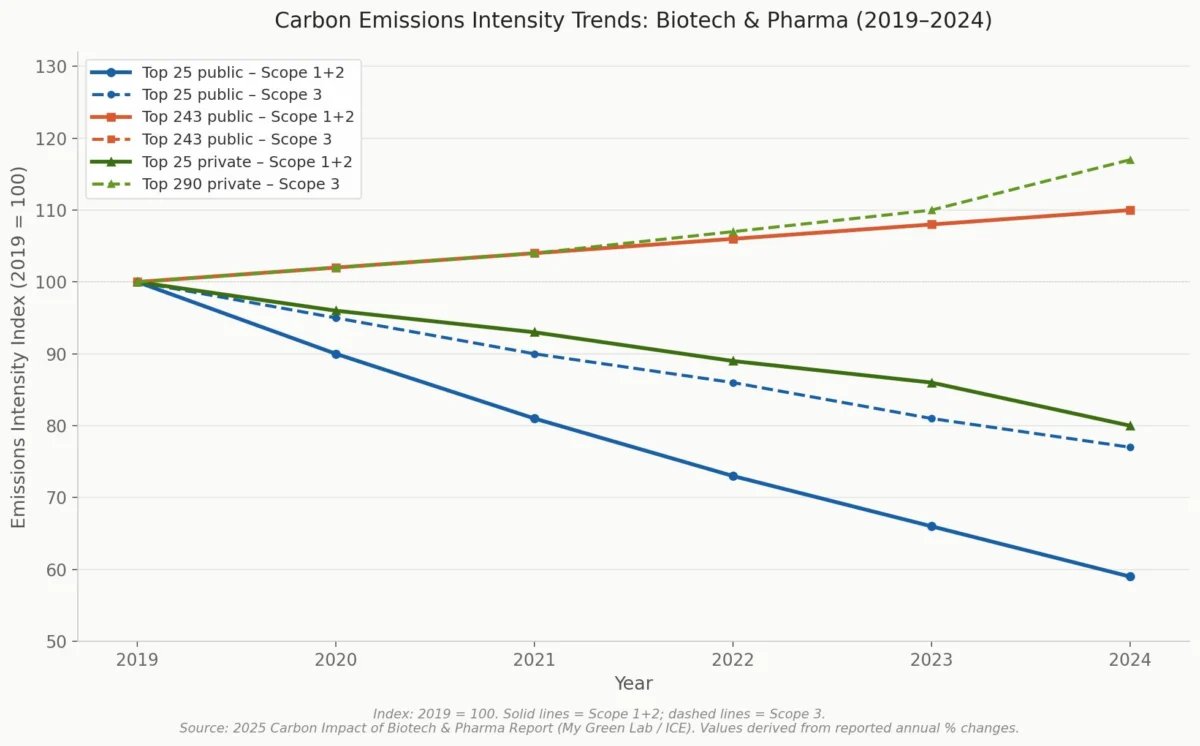
The global pharmaceutical and biotechnology sectors, integral components of the broader healthcare industry, are grappling with a significant environmental paradox: while leading companies increasingly commit to ambitious sustainability targets, the sector’s overall carbon footprint continues its upward trajectory. This escalating environmental impact poses a formidable challenge to an industry dedicated to human health, raising questions about the efficacy of current strategies and the urgent need for more comprehensive action, particularly concerning indirect emissions.
The healthcare industry as a whole is a substantial contributor to global climate change, accounting for an estimated 4.4% of total global emissions annually. A significant proportion of this, approximately 71%, originates from the sprawling healthcare supply chain, encompassing everything from raw material extraction and pharmaceutical manufacturing to distribution and disposal. Within this intricate network, medicines themselves contribute a substantial 20% to 55% of healthcare’s total carbon footprint, stemming from corporate operations, the production of Active Pharmaceutical Ingredients (APIs), and complex manufacturing processes.
The Resource-Intensive Nature of Pharmaceutical Production
Pharmaceutical manufacturing is inherently resource-intensive and energy-demanding. The synthesis of active drug compounds often generates a disproportionate amount of chemical waste, with estimates indicating a staggering 25 to 100 kilograms of waste for every single kilogram of active drug produced. A major contributor to this inefficiency is the pervasive use of solvents, which typically constitute 80% to 90% of the total mass in pharmaceutical processes. This reliance on solvents significantly inflates the Process Mass Intensity (PMI) – a metric reflecting the ratio of total materials used to the mass of the final product. The median PMI in the pharmaceutical sector ranges from 168 to 308, figures substantially higher than those observed in many other chemical sectors, underscoring the industry’s significant material footprint.
Beyond carbon emissions and waste generation, the environmental impact of pharmaceuticals extends to the presence of drug residues in natural ecosystems. These residues enter the environment through multiple pathways, including patient excretion, emissions from manufacturing plants, and the improper disposal of unused or expired medicines. While current exposure levels of pharmaceuticals in drinking water are generally considered to pose a low direct risk to human health, there are growing concerns about potential long-term ecological effects on aquatic life and microbial communities. A particularly alarming concern is the contribution of antibiotic residues in manufacturing effluents to the global crisis of antibiotic resistance, fostering the development of "superbugs" that defy conventional treatments. This aspect highlights a critical intersection between environmental health and public health, where industrial practices can directly undermine the efficacy of life-saving medicines.
Ambitious Pledges Amidst Growing Demand
In recognition of these pressing environmental challenges, many leading pharmaceutical companies have voluntarily adopted ambitious sustainability goals and initiatives. Companies such as AstraZeneca, Johnson & Johnson, and Novartis have publicly committed to achieving carbon neutrality, with targets set for the 2040s. These commitments reflect a growing corporate awareness of environmental, social, and governance (ESG) factors, driven by investor pressure, regulatory foresight, and a broader societal demand for corporate responsibility.
The My Green Lab 2025 Carbon Impact Report provides a snapshot of this evolving landscape, indicating a notable surge in sector alignment with the critical 1.5-degree Celsius global warming trajectory, a benchmark established by the Paris Agreement. This alignment increased significantly from 30% in 2024 to 52% in 2025, suggesting a stronger commitment to climate action across the industry.
Individual corporate reports offer glimpses into the progress being made. AstraZeneca, for instance, has reported being on track to achieve a remarkable 98% reduction in its operational emissions (Scope 1 and 2) by 2026. Furthermore, in 2025, the company reported a 23% reduction in water usage and a 13% decrease in waste production, demonstrating tangible improvements in direct operational efficiency. Sanofi has also made considerable strides, reporting in 2024 that it is on track to achieve carbon neutrality by 2030, having already reduced its emissions by 47% compared to its 2019 baseline. Sanofi’s ambitions also extend to environmental stewardship, with a goal for 100% of its manufacturing sites to implement robust monitoring and management plans to control pharmaceutical residues in the environment. These examples illustrate that significant progress is indeed achievable in reducing direct operational impacts.
The Persistent Challenge: Rising Absolute Emissions and the Scope 3 Conundrum
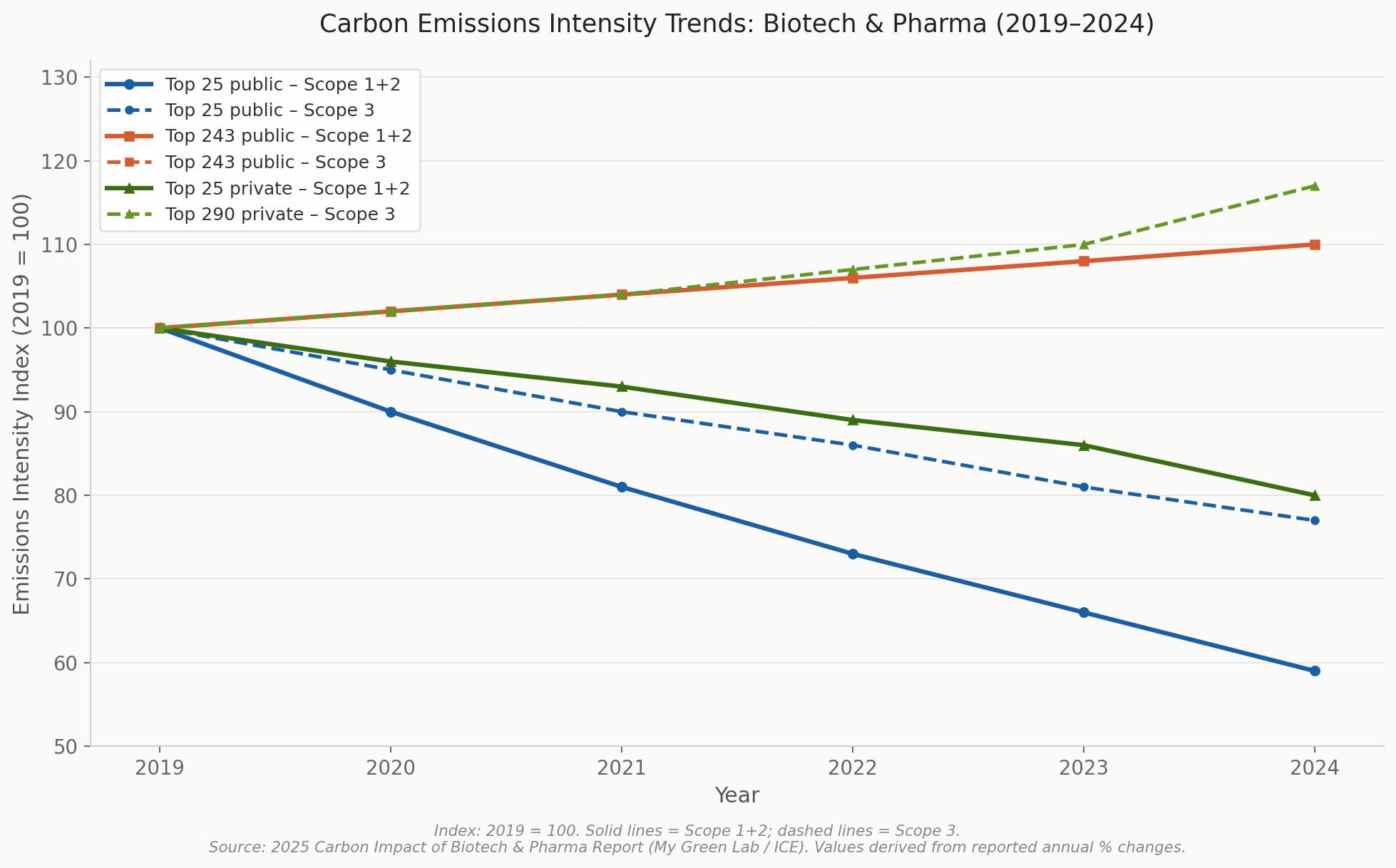
Despite these commendable individual corporate efforts and the increasing alignment with global climate targets, the overarching trend reveals a troubling reality: the rapid scale-up of pharmaceutical production, often driven by increasing global health demands and market expansion, frequently outpaces the gains made through sustainability initiatives, leading to an overall increase in absolute emissions.
This dynamic is evident in reports from major industry players. Novo Nordisk, for example, reported a 19% increase in its total emissions between 2024 and 2025. This surge was attributed primarily to the acquisition of new production sites and a corresponding increase in energy consumption to meet rising demand, particularly for its popular diabetes and obesity medications. Similarly, while AstraZeneca reported significant reductions in its operational emissions, its absolute Scope 3 emissions — which represent the vast majority of its total footprint — grew by 24% from its 2019 baseline. Eli Lilly presents an even starker illustration, with its Scope 3 emissions escalating from approximately 2.99 million metric tons in 2021 to a substantial 5.14 million metric tons in 2023, reflecting a nearly 72% increase in just two years.
These figures underscore a critical distinction in carbon accounting, as defined by the Greenhouse Gas (GHG) Protocol. The industry categorizes its carbon output into three scopes:
- Scope 1: Direct emissions from sources owned or controlled by the company (e.g., manufacturing facilities, company vehicles).
- Scope 2: Indirect emissions from the generation of purchased energy (e.g., electricity, heat, steam).
- Scope 3: All other indirect emissions that occur in a company’s value chain, both upstream and downstream. This includes emissions from purchased goods and services, capital goods, upstream and downstream transportation and distribution, waste generated in operations, business travel, employee commuting, and the use and end-of-life treatment of sold products.
While many of the top 25 public pharmaceutical companies have successfully reduced their Scope 1 and 2 emissions through investments in renewable energy, energy efficiency, and cleaner operations, the overall carbon intensity of the sector continues to rise. This increase is largely attributable to the cumulative impact of smaller and private firms, which may have fewer resources or less stringent sustainability mandates, and, most critically, to the pervasive and often intractable challenge of Scope 3 emissions. Scope 3 emissions alone represent an overwhelming 82% of the pharmaceutical industry’s total carbon footprint, making them the primary driver of the sector’s increasing environmental impact.
Unpacking the Complexity of Scope 3 Emissions
The sheer breadth and complexity of Scope 3 emissions make them particularly difficult to measure, manage, and mitigate. For pharmaceutical companies, key components of Scope 3 emissions include:
- Purchased Goods and Services: This is often the largest source, encompassing emissions from the synthesis of Active Pharmaceutical Ingredients (APIs), raw material sourcing (e.g., chemicals, excipients, packaging), and outsourced manufacturing processes.
- Capital Goods: Emissions associated with the construction and maintenance of facilities, laboratories, and manufacturing equipment.
- Upstream and Downstream Transportation and Distribution: The emissions generated from the global logistics networks involved in moving raw materials, intermediate products, and finished pharmaceuticals.
- Use of Sold Products: Emissions related to the energy consumption during the use phase of certain medical devices or drug delivery systems.
- End-of-Life Treatment of Sold Products: Emissions from the disposal or recycling of pharmaceutical products and their packaging.
For the pharmaceutical industry specifically, emissions from API synthesis, the sourcing of diverse raw materials, and outsourced manufacturing activities frequently constitute the single largest source of carbon emissions. These processes are often conducted by third-party suppliers located globally, making direct oversight and control challenging. The intricacies of global supply chains, including varying environmental regulations, energy mixes, and operational efficiencies across different regions, further complicate efforts to reduce Scope 3 impacts.
The Broader Implications and Path Forward
The continued rise in the pharmaceutical sector’s emissions carries significant implications, not only for the environment but also for the industry’s long-term viability and public trust. Regulatory bodies worldwide are increasingly scrutinizing corporate environmental performance, and investor communities are integrating ESG metrics into their decision-making processes. Companies failing to address their full carbon footprint face potential regulatory penalties, reputational damage, and difficulty attracting capital. Moreover, as climate change exacerbates health crises globally, an industry dedicated to health cannot credibly ignore its own contribution to environmental degradation.
Addressing the Scope 3 challenge requires a multi-faceted and collaborative approach. Pharmaceutical companies must extend their sustainability efforts beyond their direct operations and actively engage with their entire value chain. Key strategies include:
- Supplier Engagement and Incentivization: Implementing robust supplier codes of conduct that mandate sustainability performance, requiring suppliers to set their own science-based targets, and offering incentives for transitioning to renewable energy sources and adopting greener manufacturing processes.
- Green Chemistry and Process Innovation: Investing in research and development to adopt green chemistry principles that reduce waste, minimize hazardous substance use, and improve energy efficiency in API synthesis and manufacturing. This includes exploring novel catalysts, continuous manufacturing techniques, and solvent reduction strategies.
- Sustainable Logistics: Shifting away from high-emission air freight to lower-carbon transportation modes such as sea or road freight where feasible, and optimizing logistics networks for efficiency.
- Circular Economy Principles: Designing products for recyclability, minimizing packaging waste, and exploring take-back programs for unused medicines or medical devices to ensure responsible end-of-life management.
- Collaboration and Data Transparency: Fostering industry-wide collaboration through initiatives like My Green Lab or the Pharmaceutical Supply Chain Initiative (PSCI) to share best practices, develop standardized measurement methodologies for Scope 3 emissions, and improve data transparency across the supply chain.
The journey towards true sustainability for the pharmaceutical industry is complex and arduous. While the commitment to ambitious goals by leading companies is a positive step, the data unequivocally demonstrates that these efforts are currently being overshadowed by the relentless growth in production and the pervasive challenge of Scope 3 emissions. Achieving a substantial dent in the industry’s environmental footprint will necessitate a fundamental shift in how pharmaceutical companies interact with their entire value chain, demanding innovation, collaboration, and a sustained, unwavering commitment to environmental stewardship alongside their core mission of improving human health. The imperative is clear: the health of the planet and the health of its people are inextricably linked, and the pharmaceutical industry has a critical role to play in safeguarding both.














Leave a Reply