

The human brain, an organ of immense complexity and high metabolic demand, generates a significant amount of cellular waste that must be efficiently cleared to maintain cognitive health and physiological function. For decades, the mechanism behind this clearance remained one of the most elusive mysteries in neuroscience. However, a groundbreaking study published in the journal iScience by a research team at the Medical University of South Carolina (MUSC) has provided the first direct evidence in humans of a previously unknown control point within the brain’s drainage network. The study identifies the middle meningeal artery (MMA) as a central structure in the lymphatic system of the brain, functioning not merely as a blood vessel but as a primary conduit for the removal of cerebrospinal and interstitial fluids.
This discovery, led by Onder Albayram, Ph.D., an associate professor in the Department of Pathology and Laboratory Medicine at MUSC, marks a significant departure from traditional anatomical understanding. By utilizing sophisticated imaging technology developed in collaboration with NASA, the research team was able to observe the real-time movement of fluids deep within the meningeal layers, uncovering a "cleanup system" that behaves quite differently from the circulatory system. These findings offer a new lens through which to view neurodegenerative diseases, traumatic brain injuries, and the fundamental process of cerebral aging.
The Evolution of Neuro-Lymphatic Understanding
For over a century, the prevailing scientific consensus was that the brain was "immune privileged" and lacked a traditional lymphatic system. It was believed that the blood-brain barrier and the surrounding meninges—the three protective membranes (dura mater, arachnoid mater, and pia mater) enveloping the brain and spinal cord—served as a wall, isolating the central nervous system from the body’s broader waste-management and immune networks.
This perspective began to shift dramatically in the mid-2010s with the rediscovery of lymphatic vessels in the dural sinuses of rodents and, subsequently, humans. Researchers began to hypothesize that the brain utilized a specialized "glymphatic" system—a term combining "glia" and "lymphatic"—to flush out metabolic byproducts such as beta-amyloid and tau proteins during sleep. Dr. Albayram’s career has been at the forefront of this evolution. In 2022, his team published a pivotal study in Nature Communications that helped visualize these meningeal lymphatic vessels in humans for the first time. The latest research in iScience builds upon that foundation, transitioning from static visualization to the observation of dynamic fluid flow in living human subjects.
NASA Technology and Real-Time MRI Visualization
The catalyst for this breakthrough was the application of advanced real-time magnetic resonance imaging (MRI) tools. These imaging sequences were not originally designed for clinical pathology but were developed through a collaborative effort with NASA to address the health challenges faced by astronauts. During long-duration spaceflight, many astronauts experience "Spaceflight-Associated Neuro-ocular Syndrome" (SANS), a condition characterized by vision changes and structural alterations in the eye, believed to be caused by fluid shifts in the brain due to microgravity.
To study these shifts, NASA required imaging that could track slow-moving fluids with extreme precision. Dr. Albayram’s team adapted these tools to monitor five healthy volunteers over a six-hour period. Unlike standard MRI scans that provide snapshots of anatomy, this real-time technology allowed the researchers to track the velocity and direction of cerebrospinal fluid (CSF) and interstitial fluid (ISF) along the trajectory of the middle meningeal artery.
The data revealed a striking phenomenon. While blood moves through the MMA with the rapid, pulsatile force of the heartbeat, the researchers detected a secondary, much slower movement of fluid surrounding the vessel. This fluid moved at a steady, rhythmic pace, distinct from the turbulence of the circulatory system. This "slow-flow" signature is a hallmark of lymphatic drainage, confirming that the MMA serves as a structural scaffold or "gateway" for the brain’s waste clearance.
Biological Verification through High-Resolution Analysis
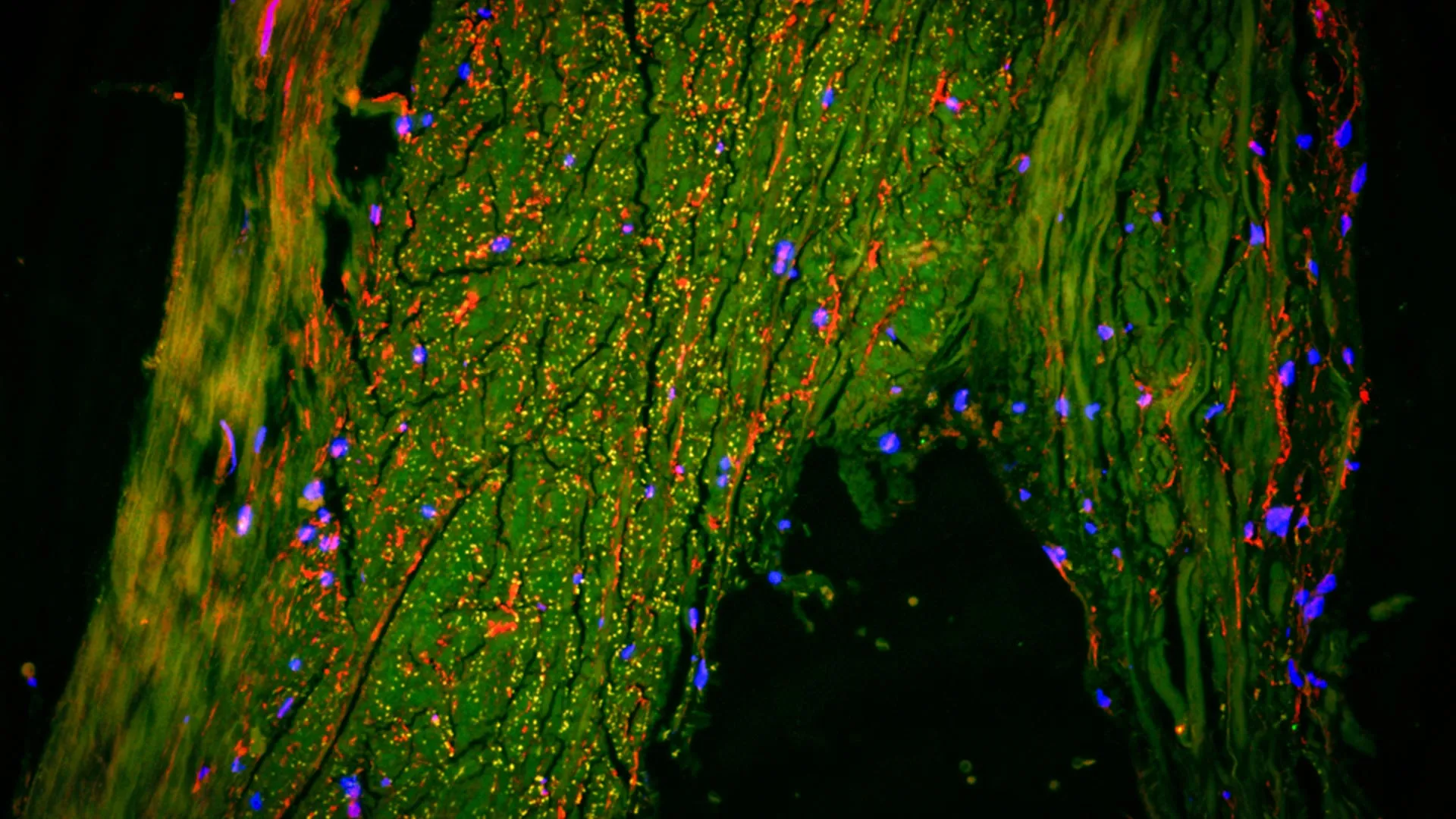
To ensure that the MRI observations were not artifacts of imaging but represented true biological structures, the MUSC team collaborated with researchers at Cornell University to perform ultra-high-resolution tissue analysis. This phase of the study involved examining human dural tissue using multiplexed imaging techniques that allow for the simultaneous visualization of multiple cell types.
The analysis focused on the perivascular space—the area immediately surrounding the blood vessels. The team discovered that the region enveloping the middle meningeal artery was densely populated with lymphatic endothelial cells (LECs). These cells are the building blocks of lymphatic vessels and are characterized by specific protein markers, such as PROX1 and LYVE1. The presence of these cells in high concentrations around the MMA provided the "ground truth" necessary to link the MRI data to physical anatomy.
This dual-method approach—combining live human imaging with cellular-level tissue verification—effectively proved that the MMA is a dual-purpose structure. While it carries oxygenated blood to the meninges, its exterior serves as a critical pathway for the drainage of waste-laden fluid out of the cranium and into the cervical lymphatic nodes in the neck.
Chronology of Research and Key Milestones
The identification of the MMA as a lymphatic control point is the result of a decade of accelerating discoveries in the field of neuro-anatomy:
- 2012: Discovery of the "Glymphatic System" in mice, suggesting that astrocytes facilitate the clearance of interstitial waste from the brain parenchyma.
- 2015: Identification of functional lymphatic vessels in the dural membranes of mice, challenging the long-held belief that the brain was isolated from the lymphatic system.
- 2017-2019: Initial human studies using contrast agents suggest the presence of similar pathways in the human brain, though direct visualization remains difficult.
- 2022: Dr. Albayram and colleagues publish findings in Nature Communications providing high-resolution evidence of lymphatic vessels in the human meninges.
- 2024: The current iScience study utilizes NASA-derived MRI technology to prove real-time fluid flow along the MMA in healthy humans, establishing a baseline for future clinical research.
Comparative Dynamics: Differentiating Blood and Lymph
The study’s data highlights the vast difference between the brain’s two primary fluid systems. According to the research findings, blood flow within the MMA is characterized by high velocity and high pressure, dictated by the cardiac cycle. In contrast, the lymphatic flow observed along the same vessel is approximately 10 to 100 times slower.
This slow-moving drainage is essential for the delicate environment of the brain. Rapid fluid shifts could potentially disrupt the balance of intracranial pressure or damage sensitive neural tissues. The steady "ooze" of the lymphatic system allows for the continuous filtration of the brain’s extracellular environment. By establishing the MMA as a control point, the study suggests that the "narrowing" or "clogging" of these lymphatic channels could result in a backup of toxic metabolites, much like a blocked drainage pipe in a domestic plumbing system.
Implications for Neurodegeneration and Mental Health
The medical implications of identifying a primary drainage control point are profound. The accumulation of metabolic waste is a known factor in several of the most devastating neurological conditions.
In Alzheimer’s disease, the brain fails to clear beta-amyloid plaques and tau tangles. If the MMA-associated lymphatic pathway becomes less efficient with age or due to genetic factors, it could accelerate the onset of these protein-based pathologies. Similarly, in Parkinson’s disease, the buildup of alpha-synuclein might be linked to a failure in this same clearance mechanism.
Furthermore, the study sheds light on traumatic brain injury (TBI). Following a head impact, the brain often experiences significant swelling and an influx of inflammatory markers. A functioning lymphatic system is vital for resolving this edema. If the MMA pathway is compromised during an injury, it may explain why some individuals suffer from long-term "brain fog," chronic inflammation, and an increased risk of dementia later in life.
Psychiatric conditions, including severe depression and post-traumatic stress disorder (PTSD), are also increasingly being viewed through the lens of neuro-inflammation. Dr. Albayram noted that understanding how the brain "cleans" itself could lead to new therapeutic interventions that focus on enhancing lymphatic flow rather than just targeting the symptoms of these disorders.
A New Baseline for Healthy Aging
A unique aspect of the MUSC research is its focus on healthy individuals. Most neurological studies begin with a disease state and look for abnormalities. By establishing a clear baseline of how the lymphatic system functions in a healthy 20- to 40-year-old brain, scientists can now accurately identify the subtle "early warning signs" of drainage failure.
"A major challenge in brain research is that we still don’t fully understand how a healthy brain functions and ages," Dr. Albayram explained. "Once we understand what ‘normal’ looks like, we can recognize early signs of disease and design better treatments."
The data suggests that as humans age, the lymphatic vessels may become more rigid or less permeable, leading to a gradual decline in waste clearance efficiency. This "clogging" may be a natural part of aging, but it is also a modifiable risk factor. Future research may explore whether lifestyle interventions—such as exercise, specific sleep positions, or even pharmacological agents—could "flush" the system and maintain brain health into old age.
Future Research and Clinical Outlook
The discovery of the MMA’s role in lymphatic drainage opens several new avenues for clinical exploration. Dr. Albayram is already moving forward with studies involving patients diagnosed with neurodegenerative conditions. By comparing their MRI "flow maps" to the healthy baseline established in this study, the team hopes to develop a diagnostic tool that can predict the progression of diseases like Alzheimer’s years before cognitive symptoms appear.
Additionally, the NASA connection remains a vital part of the story. Understanding how gravity—or the lack thereof—affects the MMA drainage point will be crucial for the safety of astronauts on future missions to Mars. If the lymphatic system cannot drain properly in microgravity, it may lead to permanent neurological damage, a hurdle that must be overcome for long-distance space travel.
In conclusion, the identification of the middle meningeal artery as a lymphatic conduit represents a landmark achievement in human anatomy. It bridges the gap between the brain and the body’s immune system, providing a physical pathway for waste clearance that was once thought not to exist. As this research progresses, it promises to transform the field of neurology, moving from a reactive model of treating brain damage to a proactive model of maintaining the brain’s internal environment. The "cleanup system" of the brain is no longer a theoretical concept; it is a visible, measurable, and potentially treatable reality.




















Leave a Reply