Dark matter, despite constituting roughly 85 percent of all matter in the observable universe, remains one of the most elusive enigmas in modern physics. It does not emit, absorb, or reflect light, rendering it entirely invisible to traditional astronomical instruments that rely on the electromagnetic spectrum. For decades, its existence has been inferred only through its gravitational influence on visible stars and galaxies. However, a groundbreaking study led by researchers at the Massachusetts Institute of Technology (MIT) and several European institutions suggests that the key to unlocking the secrets of this invisible substance may lie in the ripples of spacetime itself. By analyzing the gravitational waves produced by colliding black holes, scientists have developed a sophisticated new method to detect the subtle "fingerprints" that dark matter leaves behind during some of the universe’s most violent events.
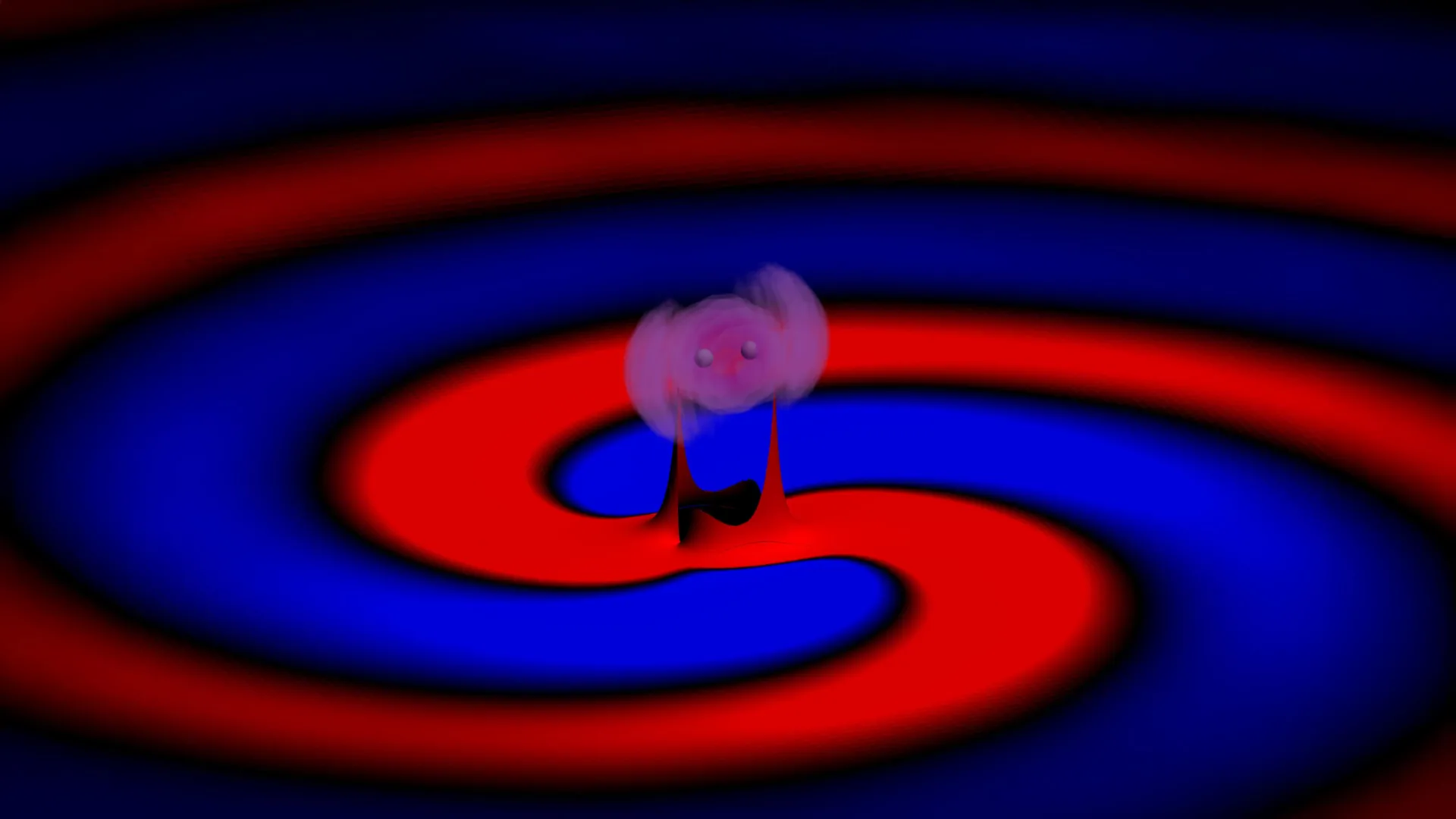
The research, recently published in the prestigious journal Physical Review Letters, details how dense environments of dark matter could alter the signals of gravitational waves as they travel across the cosmos. These waves, first predicted by Albert Einstein’s General Theory of Relativity in 1915 and first detected directly in 2015, are generated when massive objects—most notably black holes or neutron stars—spiral toward one another and eventually merge. The international team of physicists believes that if these mergers occur within a "cloud" of dark matter, the resulting gravitational wave signal will deviate from the patterns expected in a vacuum.
The Elusive Nature of Dark Matter and the Search for Light Scalars
The scientific community has long struggled to define the composition of dark matter. While various candidates have been proposed, from Weakly Interacting Massive Particles (WIMPs) to primordial black holes, one compelling theory involves "light scalar" particles. These are extremely low-mass particles that, according to quantum field theory, can behave more like waves than individual points of matter.
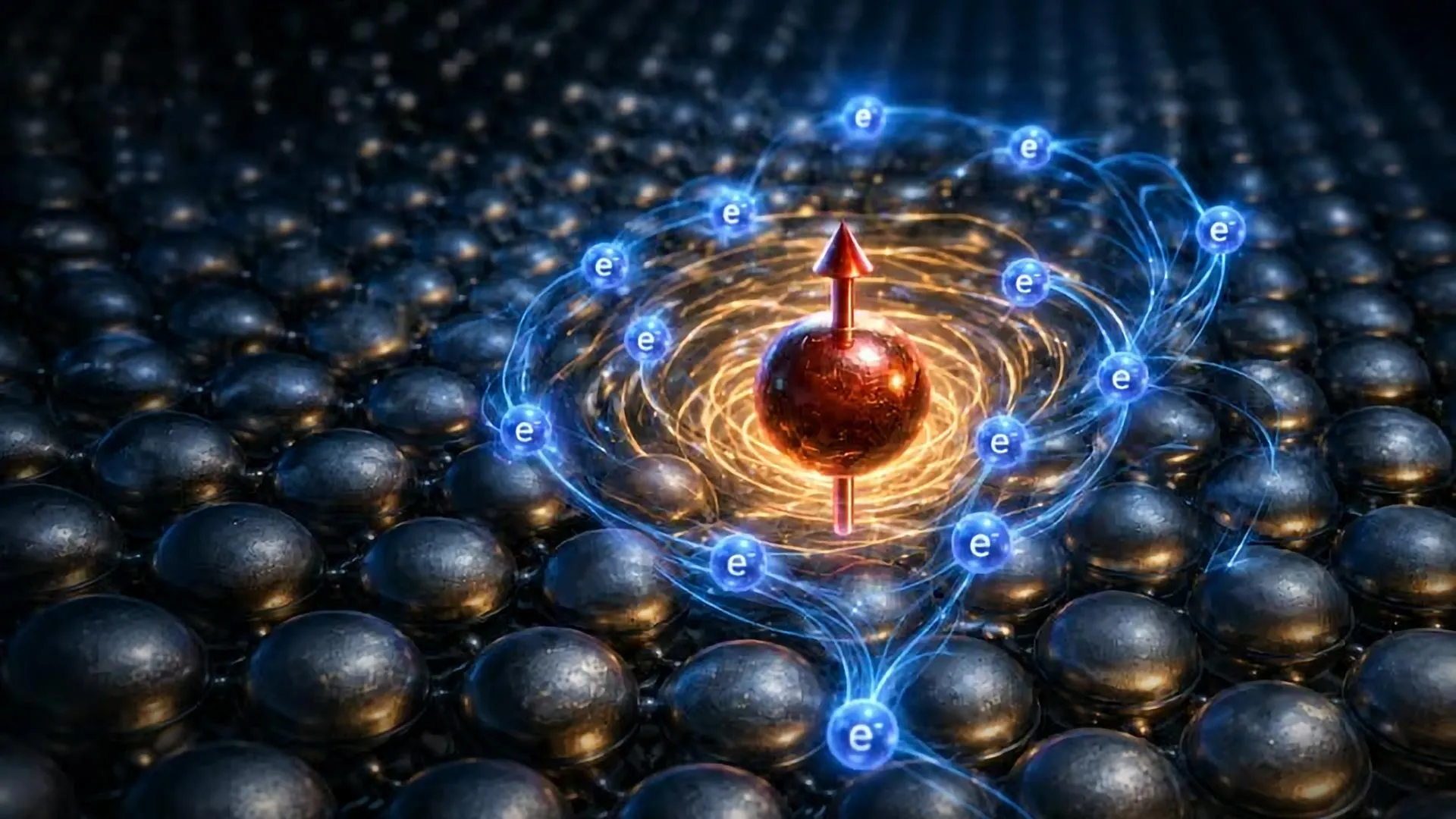
When these light scalar particles encounter a rapidly spinning black hole, a phenomenon known as "superradiance" can occur. This process is essentially a transfer of energy: the rotational energy of the black hole is siphoned off into the surrounding dark matter field. This interaction causes the dark matter to "clump" and reach incredibly high densities, creating what researchers describe as a "gravitational atom." In this analogy, the black hole acts as the nucleus, while the dense cloud of dark matter particles orbits it like electrons.
The presence of such a dense cloud creates a form of "dynamical friction" or "gas drag" on any other massive object—such as a second black hole—moving through it. This drag subtly changes the speed and trajectory of the spiraling black holes, which in turn alters the frequency and phase of the gravitational waves they emit. Until now, identifying these minute changes required a level of precision and theoretical modeling that remained out of reach.
Methodology: Simulations and the LVK Data Review
To search for these signals, the research team, including lead author Josu Aurrekoetxea of MIT and Soumen Roy of the Université Catholique de Louvain, utilized data from the LIGO-Virgo-KAGRA (LVK) collaboration. The LVK network consists of several highly sensitive ground-based interferometers: the two Laser Interferometer Gravitational-Wave Observatory (LIGO) detectors in the United States, the Virgo detector in Italy, and the KAGRA detector in Japan.
The researchers focused their analysis on 28 specific gravitational wave events identified during the LVK’s first three observing runs (O1, O2, and O3). These events were selected for their signal clarity and high signal-to-noise ratios. The team then compared the actual data from these events against a massive library of computer simulations. These simulations modeled black hole mergers under various conditions, including different black hole masses, spins, and—crucially—varying densities of surrounding dark matter.
By using high-performance computing to simulate how gravitational waves would evolve as they traversed millions of light-years of space filled with dark matter, the team established a baseline for what a "dark matter-influenced" signal should look like. This allowed them to move beyond general theory and into the realm of empirical testing.
The Case of GW190728: A Potential Breakthrough
Of the 28 events analyzed, 27 were found to be perfectly consistent with black holes merging in a vacuum, or at least in an environment where dark matter was not dense enough to leave a detectable mark. However, one signal stood out: GW190728.
Detected on July 28, 2019, GW190728 was produced by the merger of two black holes with a combined mass approximately 20 times that of our Sun. While previous analyses of this event classified it as a standard merger, the new MIT-led study found that the signal’s waveform showed a statistically interesting alignment with their dark matter models. Specifically, the "chirp"—the characteristic increase in frequency as the black holes draw closer—appeared to have been slightly modified in a way that suggests the black holes were plowing through a dense medium.
Despite the excitement surrounding GW190728, the researchers remain cautious. Josu Aurrekoetxea emphasized that the findings do not yet constitute a "discovery" of dark matter. The statistical significance of the deviation in GW190728 is not high enough to meet the rigorous "five-sigma" threshold typically required for a formal discovery in physics. "The statistical significance of this is not high enough to claim a detection of dark matter, and further checks should be performed by independent groups," Aurrekoetxea stated. He noted, however, that the primary value of the study is the validation of the method itself.
Implications for the Standard Model and New Physics
The potential detection of dark matter through gravitational waves has profound implications for our understanding of the universe. If dark matter is indeed composed of light scalar particles that interact with black holes via superradiance, it would force a significant revision of the Standard Model of particle physics. This would provide the first non-gravitational evidence (in the sense of direct interaction with a specific particle type) of dark matter’s properties.
Furthermore, this method allows scientists to probe the universe at scales and in environments that are otherwise inaccessible. Traditional dark matter searches often involve massive underground vats of liquid xenon, designed to catch a rare collision between a dark matter particle and ordinary matter. While these experiments are vital, they rely on dark matter interacting with the "weak force." The gravitational wave method, by contrast, relies purely on gravity and the density of matter, making it a more direct way to "see" the invisible.
Rodrigo Vicente of the University of Amsterdam, a co-author who developed the analytical model of the signal, noted the unique scale of this research. "Using black holes to look for dark matter would be fantastic," Vicente said. "We would be able to probe dark matter at scales much smaller than ever before." This refers to the high-density regions immediately surrounding a black hole, where the laws of physics are pushed to their absolute limits.
Chronology of Gravitational Wave Astronomy and Future Outlook
The evolution of gravitational wave astronomy has been rapid. Since the first detection in 2015 (GW150914), the LVK collaboration has moved from detecting single, isolated events to cataloging dozens of mergers in each observing run.
- 2015: First direct detection of gravitational waves, confirming a century-old prediction by Einstein.
- 2017: First detection of a neutron star merger (GW170817), observed in both gravitational waves and light.
- 2019: The detection of GW190728, the event now under scrutiny for dark matter traces.
- 2023-2024: The fourth observing run (O4) began, with upgraded sensitivity expected to detect events even further away and with greater precision.
As the LVK detectors continue to improve their sensitivity, the volume of space they can "hear" increases exponentially. Future detectors, such as the Laser Interferometer Space Antenna (LISA)—a space-based observatory led by the European Space Agency—and the proposed Einstein Telescope in Europe, will be even more sensitive to the low-frequency ripples that could carry dark matter signatures.
Soumen Roy, who led the data analysis for the MIT study, expressed optimism about the data yet to come. "We now have the potential to discover dark matter around black holes as the LVK detectors keep collecting data in the coming years," Roy said. "It is an exciting time to search for new physics using gravitational waves."
Conclusion: A New Lens on the Cosmos
The research conducted by Aurrekoetxea and his colleagues represents a shift in how astrophysicists approach the dark matter problem. Rather than waiting for dark matter to interact with a detector on Earth, they are looking at the largest "detectors" in the universe: black holes and the fabric of spacetime itself.
While the signal from GW190728 remains a tantalizing hint rather than a confirmed fact, the methodology established by this study provides a roadmap for future research. If even a small fraction of the hundreds of black hole mergers expected to be detected in the next decade show similar anomalies, the mystery of dark matter may finally be solved. For now, the scientific community looks toward the next set of data from the LVK, hoping that the next ripple in spacetime will provide a clear and definitive answer to what 85 percent of our universe is actually made of.
The study was a collaborative effort involving MIT, the Université Catholique de Louvain, the University of Amsterdam, Queen Mary University of London, and Oxford University. It received support from the U.S. National Science Foundation and various European research councils, signaling a unified international front in the quest to map the invisible universe.