The biotechnology sector is experiencing a significant resurgence, marked by a robust recovery in public markets and an explosion in mergers and acquisitions (M&A) activity, setting the stage for a transformative period in drug discovery and development. The SPDR S&P Biotech ETF (XBI), a key indicator of investor confidence in the sector, has climbed approximately 69% over the past year, signaling a broad return of optimism. This financial uplift has translated into unprecedented M&A volumes within the global life sciences landscape, reaching an astonishing $240 billion in 2025 – an 81% increase from the previous year. A report by EY further underscored this trend, identifying a record $2.1 trillion in deal capacity, while Goldman Sachs anticipates a sharp rise in broader M&A volume throughout 2026, extending beyond the life sciences.
This renewed vigor in biotech largely commenced in the final quarter of the previous year, according to Dr. Christiana Bardon, Managing Partner of MPM BioImpact, a Boston-based biotech investment firm overseeing roughly $3 billion. "It really wasn’t until Q4 of last year that we started to see a rebound," Dr. Bardon noted, expressing hope for "the return of the generalist investor to the biotech sector." This sentiment is corroborated by the revival of biotech initial public offerings (IPOs). For instance, Aktis Oncology, a portfolio company of MPM BioImpact, went public in January 2026, with its offering reportedly 18 times oversubscribed. This intense demand highlights a strong appetite for high-quality, de-risked assets, particularly those demonstrating significant clinical promise.
However, the flow of capital is not uniformly distributed across the biotech ecosystem. A discernible trend shows investment increasingly concentrating on clinical-stage assets that have already navigated early-stage risks, often referred to as "de-risked" opportunities. Data from J.P. Morgan indicates a notable contraction in early-stage funding, tracking just 50 seed and Series A investments totaling $2.3 billion in Q1 2026. This figure represents a decline from 60 investments amounting to $3.7 billion a year earlier, placing first-time biotech financings on track for their lowest year since before the pandemic. Concurrently, the pharmaceutical industry has undergone significant restructuring, with large pharma companies shedding over 22,000 jobs in 2025, a trend that has persisted into the first half of 2026. This strategic realignment suggests a focus on maximizing efficiency and prioritizing investments in late-stage, high-potential projects as companies brace for looming patent cliffs and increased competition.
Despite the industry-wide headcount reductions, the capital that remains is increasingly channeled into oncology research and development. Oncology now commands a dominant share of biotech venture investment, accounting for approximately 32% of deal value, a substantial rise from 23% in 2020. This intense focus on cancer therapy is prominently displayed this week as the global oncology community converges on Chicago for the 2026 ASCO Annual Meeting. As the world’s largest gathering dedicated to oncology, ASCO serves as a critical platform for unveiling groundbreaking research, clinical trial results, and future directions in cancer treatment. This year, three pivotal storylines are capturing the attention of researchers, clinicians, and investors alike: a revolutionary RAS inhibitor that has demonstrated unprecedented survival benefits in metastatic pancreatic cancer, a Chinese-developed bispecific antibody poised to challenge the multi-billion-dollar PD-1 inhibitor market, and a wave of strategic acquisitions signaling a shift towards making advanced cell therapies more accessible and scalable.
A Paradigm Shift in Pancreatic Cancer Treatment: The RAS Inhibitor Breakthrough
For many decades, the RAS family of oncogenes represented one of oncology’s most formidable challenges. Responsible for driving approximately 90% of pancreatic cancers, these proteins proved notoriously recalcitrant to therapeutic intervention, earning them the infamous moniker of "undruggable." The inherent hydrophobicity and lack of discernible binding pockets on the RAS protein made it an elusive target for drug developers, leading to a long history of therapeutic failures and only incremental advancements in pancreatic cancer survival rates. Dr. Bardon succinctly captured this historical difficulty, stating, "Scientists have long called KRAS the ‘greasy ball,’ because the protein is hydrophobic with no obvious pockets for a drug to bind to."
This seemingly intractable problem began to change dramatically in April 2026, with the announcement from Revolution Medicines regarding their novel oral RAS(ON) multi-selective inhibitor, daraxonrasib. In the Phase 3 RASolute 302 trial, daraxonrasib achieved a milestone previously thought impossible: it nearly doubled the median overall survival in patients with previously treated metastatic pancreatic cancer. Patients receiving daraxonrasib demonstrated a median overall survival of 13.2 months, significantly outperforming the 6.7 months observed in the standard chemotherapy arm (Hazard Ratio [HR] 0.40, p < 0.0001). This statistically and clinically profound outcome has generated immense excitement across the oncology community.
The U.S. Food and Drug Administration (FDA) recognized the groundbreaking potential of daraxonrasib by granting it Breakthrough Therapy Designation, an expedited review pathway reserved for drugs that demonstrate substantial improvement over available therapies for serious conditions. The full, eagerly awaited results of the RASolute 302 trial are scheduled for presentation in a plenary session at ASCO on May 31, 2026.
This monumental achievement is the culmination of decades of foundational research. Key contributions include the work of UCSF’s Kevan Shokat, who in 2013 first identified a druggable pocket on mutant KRAS, thereby cracking open the "undruggable" enigma. Equally critical were the efforts of Frank McCormick, who spearheaded the National Cancer Institute’s (NCI) RAS Initiative, fostering collaborative research to tackle this complex oncogene. Dr. Bardon emphasized the transformative nature of this breakthrough, drawing parallels to previous advancements in lung cancer: "We’ve never had a breakthrough before in pancreatic cancer; all we’ve had is mostly failure and very incremental contributions. It’s kind of like in lung cancer when we figured out EGFR therapies and developed drugs like Tagrisso." The implications are vast, offering a new beacon of hope for patients facing one of the most aggressive and historically treatment-resistant cancers.
The Rise of Ivonescimab: A Bispecific Antibody Challenging PD-1 Dominance
For the past decade, immune checkpoint inhibitors, particularly those targeting PD-1 (Programmed Cell Death Protein 1), have fundamentally reshaped cancer immunotherapy. Drugs like Merck’s Keytruda (pembrolizumab) and Bristol Myers Squibb’s Opdivo (nivolumab) have become the backbone of treatment across numerous cancer types, collectively generating over $50 billion in annual revenue and extending the lives of countless patients. However, the landscape of cancer immunotherapy is constantly evolving, and a new challenger has emerged from China, poised to potentially redefine treatment paradigms.
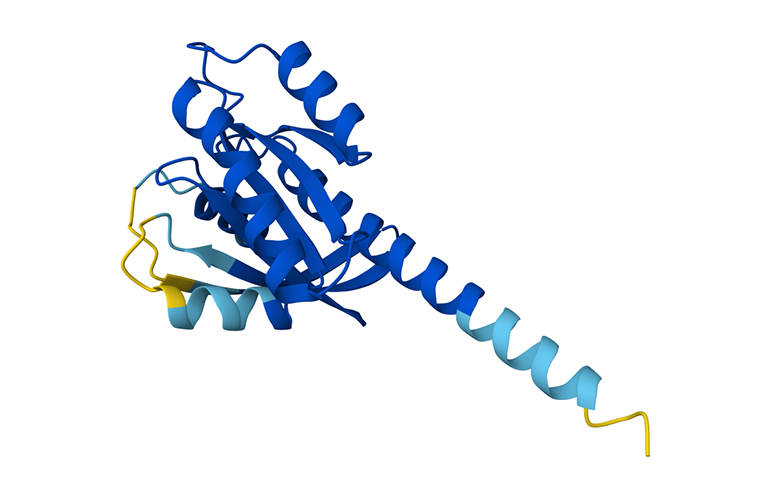
Ivonescimab, a novel bispecific antibody, represents this next wave of innovation. It simultaneously targets and blocks two critical pathways: PD-1 and Vascular Endothelial Growth Factor (VEGF). The rationale behind this dual inhibition is compelling: while PD-1 blockade unleashes the immune system to attack cancer cells, VEGF inhibition targets the blood supply that fuels tumor growth, potentially creating a more potent anti-tumor response.
Initially met with skepticism by some Western investors due to its unconventional mechanism and origin, ivonescimab’s rapid accumulation of robust clinical data in China quickly turned heads. Dr. Bardon admitted, "I don’t think I would have invested in a company starting this kind of molecule because we had no idea it would work. It was only because these drugs are generating clinical data very easily in China that we saw the data and were literally floored."
Summit Therapeutics, a partner in the global development of ivonescimab, submitted a Biologics License Application (BLA) to the FDA for its use in combination with chemotherapy for the treatment of patients with EGFR-mutated non-small cell lung cancer (NSCLC) post-TKI therapy. The FDA accepted the BLA for filing in January 2026, setting a Prescription Drug User Fee Act (PDUFA) date of November 14, 2026, indicating an expedited review.
The pinnacle of ivonescimab’s presentation at ASCO 2026 will be the release of overall survival (OS) data from the Phase 3 HARMONi-6 trial. This pivotal study compares ivonescimab plus chemotherapy against a standard PD-1 inhibitor plus chemotherapy in patients with first-line squamous NSCLC. The OS data will be presented in a highly anticipated plenary session, given that ivonescimab has already demonstrated strong progression-free survival (PFS) data against a PD-1-based regimen in previous studies.
If the HARMONi-6 overall survival data prove positive, the implications for the broader oncology landscape are profound and extend far beyond lung cancer. Dr. Bardon posited that ivonescimab could prove superior across many of the indications where PD-1 inhibitors are currently approved. The industry is already reacting to this potential shift. At this year’s AACR pharma partnering event, there was a noticeable surge in companies developing PD-1/VEGF bispecifics. "Last year, when the ivonescimab data first hit, nobody had a PD-1/VEGF in their pipeline. Surprise, surprise, this year they do," Dr. Bardon observed. She concluded with a stark assessment: "If this trial is positive, no pharma company, especially ones with PD-1s like Merck and BMS, can afford not to have a PD-1/VEGF." This suggests a major re-evaluation of treatment standards and a potential new era for immune-oncology.
Navigating the Patent Cliff: Keytruda’s Future and the Dual Threat
Merck & Co.’s Keytruda (pembrolizumab) has been an undeniable titan in oncology, generating an astonishing $31.7 billion in revenue in 2025. This success has cemented its position as one of the best-selling drugs in pharmaceutical history, approved across 38 solid tumor indications. However, the looming expiration of Keytruda’s core U.S. patent in 2028 casts a long shadow, representing what is anticipated to be the largest single patent cliff event in pharmaceutical history.
In anticipation of this monumental challenge, Merck has strategically pursued lifecycle management initiatives. A prime example is the approval of Keytruda Qlex (pembrolizumab and berahyaluronidase alfa-pmph injection) in September 2025. This subcutaneous formulation allows for administration in as little as one minute, a significant improvement over the 30-minute intravenous (IV) infusion required for the original Keytruda. This move aims to migrate prescribers and patients to a new, patent-protected version before a wave of biosimilars can launch against the original IV formulation.
The biosimilar threat is indeed substantial. At least seven companies, including major players like Samsung Bioepis, Sandoz, Celltrion, and Amgen, are actively developing pembrolizumab biosimilars, with FDA submissions expected as early as 2026. Merck CEO Rob Davis has publicly expressed confidence in the company’s ability to manage this transition, framing it as a "manageable" challenge: "I’m quite confident that we will be in a position at a minimum to go through a very shallow period post the LOE, returning in a few years to growth." This confidence is likely predicated on the success of the Qlex formulation, strategic pricing, and the strength of Merck’s broader pipeline.
However, the competitive landscape for Keytruda is now evolving to include not just biosimilars but also novel therapeutic approaches like ivonescimab. Analysts at RBC Capital Markets noted in April 2026 that "market optimism is building" around ivonescimab’s potential. They suggested that positive results could "lead to accelerated FDA approval and begin to erode Merck’s dominance in first-line lung cancer," a key indication for Keytruda.
Dr. Bardon articulated the gravity of this dual threat: "The LOE will dramatically affect Merck because of the huge revenue that drug generates." But she then highlighted the potentially even larger paradigm shift presented by ivonescimab: "But the next chapter of that drug may be PD-1/VEGF. Imagine $25 billion to $50 billion of aggregate revenue across all PD-1s, and now imagine that all being replaced with a new drug targeting PD-1/VEGF. That’s why this is so huge." This scenario suggests that the competitive challenge for Merck and other PD-1 giants will not merely be about pricing against biosimilars but about defending market share against potentially superior, next-generation therapies.
Making Cell Therapy Ordinary: The Dawn of In Vivo CAR-T
While innovations like Keytruda Qlex offer significant improvements in convenience for existing therapies, transforming a 30-minute infusion into a one-minute injection, the field of advanced cell therapies for blood cancers continues to grapple with fundamental challenges in accessibility and scalability. For the nearly 200,000 Americans diagnosed annually with blood cancers such as leukemia, lymphoma, and myeloma, the most potent therapeutic options, like CAR-T cell therapies, remain incredibly difficult to deliver.
Traditional autologous CAR-T cell therapies, which involve extracting a patient’s own T-cells, genetically engineering them to recognize and attack cancer, and then reinfusing them, have demonstrated remarkable durable remissions in specific blood cancers. However, this personalized approach comes with significant hurdles: the manufacturing process is lengthy, expensive, and highly complex, requiring specialized academic medical centers for administration. This limits patient access, particularly in community settings or regions without advanced facilities. Dr. Bardon described this as "personalized autologous CAR-T can cure patients, but the cost is high, manufacturing is slow, and only sophisticated academic medical centers can administer it."
The industry’s first attempt to overcome these limitations involved allogeneic cell therapy, using donor cells to create "off-the-shelf" CAR-T products. However, this "second chapter," as Dr. Bardon termed it, "turned out to be very difficult and not very effective," largely due to issues like graft-versus-host disease and rejection.
This has propelled the field directly into what Dr. Bardon identifies as "chapter three": programming cells inside the patient’s body, known as in vivo CAR-T therapy. This revolutionary approach seeks to eliminate the need for ex vivo (outside the body) cell extraction, genetic modification, and reinfusion. Instead, therapeutic agents are delivered directly to the patient, instructing their own cells to become CAR-T cells in situ.
The industry has rapidly invested in this transformative concept. In February 2026, Eli Lilly made a significant move by acquiring Orna Therapeutics for up to $2.4 billion. Orna is at the forefront of this new paradigm, utilizing engineered circular RNA paired with lipid nanoparticles to generate CAR-T cells directly within a patient’s body. MPM BioImpact, Dr. Bardon’s firm, was an early investor in Orna. "They use lipid nanoparticles to deliver circular RNA to a cell and make it a CAR-T inside the patient," Dr. Bardon explained. "This is utterly transformative because it would be off-the-shelf and could be used by community physicians."
Orna’s acquisition is not an isolated event but part of a broader trend of strategic investments in in vivo cell therapy. Other major pharmaceutical companies have made similar high-profile acquisitions, signaling a collective bet on this technology: AbbVie’s $2.1 billion purchase of Capstan Therapeutics, BMS’s $1.5 billion acquisition of Orbital Therapeutics, and AstraZeneca’s $1 billion deal for EsoBiotec. Each of these companies is pursuing innovative methods to deliver genetic instructions directly to cells within the body, aiming to create functional therapeutic cells like CAR-T cells without the logistical and cost burdens of current approaches.
The promise of in vivo CAR-T therapy is immense. By making cell therapies "off-the-shelf" and amenable to administration in ordinary clinics by community physicians, it could dramatically expand access to life-saving treatments, reduce healthcare costs, and improve patient outcomes on a global scale. This shift represents a fundamental re-imagining of how advanced cellular medicines are developed, delivered, and utilized, truly making them "ordinary" rather than extraordinary.
Conclusion: A New Era of Oncology Innovation
The 2026 ASCO Annual Meeting stands as a testament to the accelerating pace of innovation in oncology. From the long-awaited breakthrough in targeting "undruggable" RAS mutations in pancreatic cancer, to the emergence of novel bispecific antibodies challenging established immunotherapies, and the transformative potential of in vivo cell therapies, the field is undergoing a profound evolution. These advancements, fueled by a recovering biotech market and strategic investments, promise to redefine standards of care, improve patient survival, and make advanced treatments more accessible. The implications extend beyond individual drugs, signaling a shift towards more precise, potent, and patient-friendly cancer therapies that will shape the future of oncology for decades to come.