A multidisciplinary research team led by Yale University has successfully mapped the molecular architecture of a biological mechanism that prevents sperm cells from successfully fertilizing an egg. This breakthrough, achieved through high-resolution structural analysis, reveals how a specific naturally occurring antibody disrupts the fundamental "handshake" between reproductive cells. By uncovering the precise geometry of this interaction, the study provides a foundational blueprint for two divergent but equally significant medical frontiers: the development of non-hormonal contraceptives and the creation of targeted treatments for immune-based infertility.
The findings, recently published in the journal Proceedings of the National Academy of Sciences (PNAS), represent a culmination of decades of curiosity surrounding the OBF13 antibody. While the existence of this antibody has been known to the scientific community for forty years, its specific mode of action remained an enigma until the Yale-led team utilized advanced X-ray crystallography to visualize the molecular battleground where fertilization is either won or lost.
The Molecular Handshake: Understanding IZUMO1 and JUNO
To appreciate the significance of the discovery, one must first understand the primary mechanism of mammalian fertilization. At the center of this process are two critical proteins: IZUMO1, located on the surface of the sperm, and JUNO, a receptor found on the membrane of the egg. The name IZUMO1 is derived from a Japanese shrine dedicated to marriage, reflecting its role as the essential bridge between the two gametes.
When a sperm cell approaches an egg, IZUMO1 must bind specifically and securely to JUNO. This binding triggers the fusion of the two cell membranes, allowing the sperm’s genetic material to enter the egg. If this connection is weak, misaligned, or blocked, fertilization cannot occur. In the United States, reproductive health remains a significant public concern; data from the National Institutes of Health (NIH) indicates that approximately 9% of men and 11% of women of reproductive age encounter fertility challenges. A subset of these cases is attributed to "immuno-infertility," a condition where the body’s own immune system produces antibodies that mistakenly target and neutralize reproductive proteins, effectively acting as a biological barrier to conception.
The Forty-Year Mystery of OBF13
The central focus of the Yale study is an antibody known as OBF13. First discovered four decades ago at Osaka University in Japan, OBF13 was identified as a potent inhibitor of fertilization in rodent models. For years, researchers observed that when OBF13 was present, sperm cells—despite appearing healthy and motile—were unable to adhere to or fuse with the egg.
Despite its known effects, the "how" and "where" of OBF13’s interference remained speculative. The recent research, spearheaded by Steven Tang, an assistant professor of molecular biophysics and biochemistry at Yale’s Faculty of Arts and Sciences, finally provides the visual evidence. Using the high-intensity X-ray beams at the SLAC National Accelerator Laboratory in California, the team captured the crystal structure of the IZUMO1 protein at the moment of its interaction with the OBF13 antibody.
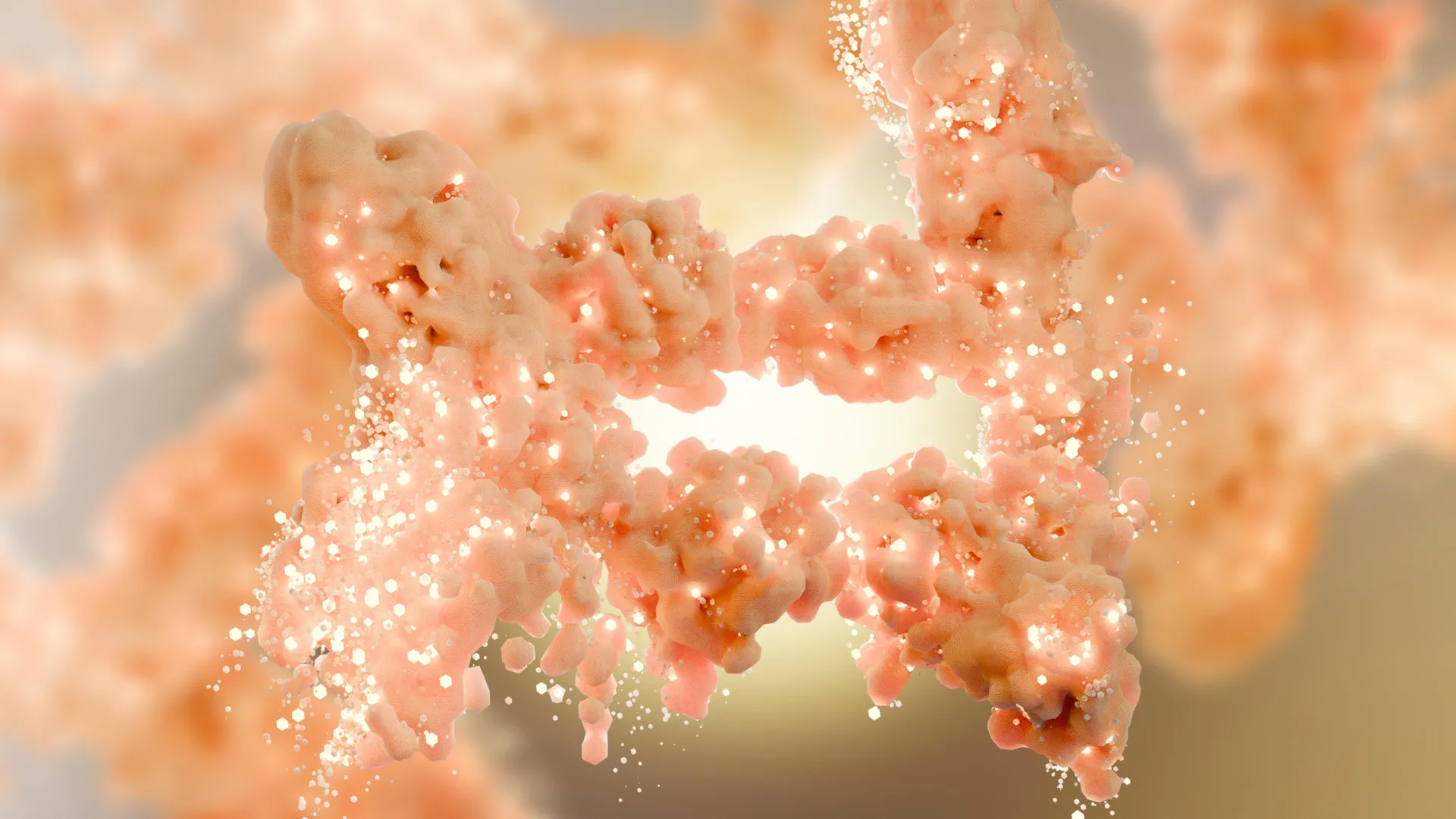
The analysis revealed that OBF13 does not simply "sit" on the sperm cell; it attaches itself to IZUMO1 in a way that physically reconfigures the protein’s docking site. By binding to a specific epitope (a part of the protein recognized by the immune system), the antibody creates a "steric hindrance"—essentially a physical blockage—that prevents the JUNO receptor on the egg from gaining access. Furthermore, the researchers identified a high-affinity variant of OBF13 that bonds so tightly to the sperm that it renders the fertilization mechanism completely inert.
Chronology of Reproductive Protein Discovery
The journey to this discovery is built upon a timeline of major milestones in reproductive biology over the last twenty years:
- 2005: Researchers in Japan first identify the IZUMO1 protein on sperm cells, establishing it as the first known essential factor for sperm-egg fusion.
- 2014: A team at the Wellcome Trust Sanger Institute discovers the JUNO receptor on the egg, completing the "lock and key" model of mammalian fertilization.
- 1980s–2020s: OBF13 is studied as a mysterious inhibitor, used primarily in laboratory settings to prevent fertilization without a clear understanding of its structural dynamics.
- 2024: The Yale and Osaka University collaboration publishes the first high-resolution structure of the OBF13-IZUMO1 complex, bridging the gap between historical observation and modern molecular engineering.
Technical Methodology and the Role of SLAC
The precision required to map these proteins is immense. Proteins are far too small to be seen with traditional microscopes. To overcome this, the researchers used X-ray crystallography, a technique where biological molecules are grown into crystals and then bombarded with X-rays. The way the X-rays scatter provides a diffraction pattern that scientists use to reconstruct the three-dimensional shape of the molecule down to the individual atom.
The research utilized the Stanford Synchrotron Radiation Lightsource (SSRL) at the SLAC National Accelerator Laboratory. This facility, operated by Stanford University for the U.S. Department of Energy, provides the ultra-bright X-ray light necessary to see the fine details of the IZUMO1-OBF13 interface. This high-resolution data allowed the team to identify not just where the antibody binds, but also the specific amino acid sites on the JUNO receptor that are critical for binding. Interestingly, the team found that if these specific amino acid sites are accessed, fertilization can still occur, suggesting that there are "vulnerable" and "protected" zones on the protein surface.
Dual Implications: Infertility and Contraception
The findings have profound implications for two opposite ends of the reproductive medicine spectrum.
1. Addressing Immuno-Infertility
For couples struggling with unexplained infertility, the discovery offers a diagnostic and therapeutic roadmap. If a patient’s infertility is caused by the presence of antibodies similar to OBF13, doctors may eventually be able to design "decoy" molecules or small-molecule inhibitors that prevent these antibodies from blocking the IZUMO1-JUNO interaction. By understanding the "keyholes" that the antibodies plug, scientists can work on ways to keep those keyholes open, allowing natural fertilization to proceed.
2. Developing Next-Generation Contraceptives
On the other hand, the study opens a new door for "immuno-contraception." Most modern contraceptives rely on hormones (like estrogen and progestin) to prevent ovulation or thicken cervical mucus. While effective, hormonal methods can carry side effects ranging from mood changes to increased risks of blood clots.
The Yale research suggests that a non-hormonal contraceptive could be developed by mimicking the action of OBF13. A drug—either a topical cream or a systemic medication—could be designed to temporarily block the IZUMO1 protein on sperm, preventing them from recognizing the egg. Because this method targets a protein specific only to the reproductive process, it would theoretically have fewer systemic side effects than hormonal alternatives.
Official Responses and Collaborative Efforts
The study’s lead authors emphasized the collaborative nature of this breakthrough. "In this work, we are reporting the first anti-sperm antibody-antigen complex structure," said Steven Tang. "We provide high-resolution information that will open avenues for discovering IZUMO1 regulators, guide antibody and small-molecule inhibitor design, and support drug screening for contraceptive development."
The research was a global effort, featuring first author Yonggang Lu and co-author Masahito Ikawa, both from Osaka University. This partnership highlights the importance of international cooperation in solving long-standing biological mysteries. The work was supported by a diverse array of prestigious organizations, including the National Institutes of Health (NIH), the Japan Society for the Promotion of Science, and the Japan Agency for Medical Research and Development. Notably, it also received a David Sokal Innovation Award from the Male Contraceptive Initiative, a group dedicated to expanding reproductive options for men.
Analysis of Broader Impacts
The social and economic impact of this research cannot be overstated. Infertility treatments, such as In Vitro Fertilization (IVF), are often prohibitively expensive and emotionally taxing. By identifying the molecular basis of immune-related fertilization failure, this research could lead to simpler, less invasive interventions.
Furthermore, the global demand for male-centered contraception is rising. For decades, the burden of contraception has fallen disproportionately on women. The mapping of IZUMO1 provides a specific, high-affinity target for male contraceptive research that does not interfere with testosterone levels or sperm production, but rather focuses on the "final mile" of the fertilization process.
As the scientific community moves forward, the focus will likely shift toward drug screening. With the structural map provided by Tang and his colleagues, researchers can now use computer modeling to test thousands of small molecules to see which ones can mimic OBF13’s blocking effect or, conversely, which ones can prevent OBF13 from binding.
The study of OBF13, once a niche observation in a Japanese laboratory forty years ago, has now become a cornerstone of modern reproductive science. By turning the "invisible" interactions of proteins into a visible, high-definition map, the Yale-led team has provided the world with a new set of tools to navigate the complex journey of human life, from its prevention to its creation.