The seemingly counterintuitive impact of a warming planet on hailstorms, a phenomenon that has recently caused widespread destruction in areas like Springfield, Missouri, is the subject of a groundbreaking new study published in the journal Nature. On April 28, a severe hailstorm unleashed ice projectiles the size of baseballs and even grapefruits, causing extensive damage to vehicles, homes, and tragically, injuring both people and animals. This event serves as a stark reminder of the destructive potential of these atmospheric occurrences, which a new study suggests could become more potent and frequent in certain parts of the world due to climate change. While it might intuitively seem that warmer air would lead to less hail, the research indicates a more complex reality: hailstones may actually grow larger and inflict greater damage in many regions, although the specific risks are predicted to vary geographically.
Understanding Hail Formation in a Changing Climate
Hail forms within powerful thunderstorms when updrafts carry moisture high into the frigid upper reaches of clouds. In these supercooled environments, water droplets freeze around microscopic particles, accumulating layers of ice. As these hailstones grow, they eventually become too heavy for the updrafts to sustain, causing them to fall. The intensity of these updrafts, the amount of available moisture, and the temperature profile of the atmosphere all play critical roles in determining the size and destructive potential of hailstones.
To investigate how these factors might shift in a warming climate, researchers at Peking University in Beijing developed a sophisticated computer simulation. This model meticulously estimates hailstone growth within clouds by analyzing key atmospheric conditions, including temperature, humidity, and wind speeds. To validate their model, the team subjected it to a rigorous test, simulating over 14,000 real-world hailstorms that occurred globally between 2014 and 2021. Following this validation, the researchers employed the refined model to project how these storm dynamics might evolve under various future climate scenarios.
Competing Forces: Warmer Air and Increased Melting
The study’s projections reveal a concerning trend: large hailstones are anticipated to become more prevalent, consequently increasing the damaging capacity of hailstorms. This apparent paradox stems from two opposing effects influenced by a warming atmosphere. On one hand, warmer air possesses a greater capacity to hold water vapor, providing hailstones with more material to accrete as they grow. This enhanced moisture availability could, in theory, lead to larger ice formations.
On the other hand, as the atmosphere warms, hailstones must traverse a deeper layer of air that is warm enough to melt them before reaching the ground. This presents a challenge for smaller hailstones, which are more susceptible to complete melting and transforming into raindrops. However, larger hailstones, while still subject to some melting, are more robust. The research indicates that these larger chunks of ice are more likely to survive the descent and reach the surface as substantial, damaging projectiles. "Large hailstones melt too, but they can still reach the ground as sizable chunks of ice," explains Qinghong Zhang, a meteorologist at Peking University and the lead author of the study. "Smaller hailstones are affected more. They may melt completely and turn into raindrops."
Regional Disparities in Hail Risk
A crucial finding of the study is that the projected increase in hail hazard is not uniform across the globe. The research suggests that regions farther from the equator may face a heightened risk of severe hail, while hail damage in tropical and subtropical zones could potentially decrease. This geographical divergence is attributed, in part, to the projected warming patterns. By the end of this century, higher latitudes are expected to experience more significant temperature increases compared to equatorial regions.
This amplified warming at higher latitudes can, paradoxically, strengthen the updrafts within storm clouds. Stronger updrafts are a key ingredient for forming larger hailstones, as they can keep ice particles suspended in the updraft for longer, allowing them to accumulate more ice. "As the atmosphere warms, temperatures are expected to rise more sharply at higher latitudes," notes Shiyi Zhang, another meteorologist at Peking University involved in the research. "The extra warming can strengthen updrafts inside storm clouds, allowing hailstones to grow larger."
Expert Perspectives and Methodological Considerations
The findings of this study have garnered attention from the scientific community. Climatologist Davide Faranda of the French National Center for Scientific Research in Paris commented on the significance of the research, stating, "The study provides an interesting and timely contribution to understanding how climate change may affect hail hazards. It combines physical reasoning with climate model projections." He further acknowledged the study’s contribution to quantifying potential hail hazards on a global scale, a novel aspect of the research.
However, Faranda also expressed some reservations regarding the quantitative projections and regional forecasts, emphasizing the inherent complexities of hail phenomena. "Hail is an extremely local phenomenon," he stated. "Global climate models cannot explicitly resolve hailstorms." This limitation means that studies relying on broader weather patterns, while valuable, inherently carry a degree of uncertainty.
Qinghong Zhang acknowledged these uncertainties, noting that global climate models operate at coarser resolutions than are ideal for explicitly simulating individual hailstorms. Nevertheless, she highlighted that the research team conducted rigorous tests of their model’s results against historical hailstorm data from China and the United States, spanning several decades. These validation checks suggest that the uncertainties, while present, are considered manageable within the context of the study’s broader conclusions.
Implications and Future Outlook
The study’s overarching conclusion presents a clear and urgent warning: if global temperatures continue to rise as projected, the threat posed by larger and more destructive hailstorms is likely to escalate in many regions. This has significant implications for infrastructure, agriculture, insurance industries, and public safety. The increasing frequency of extreme weather events, including severe hailstorms, underscores the critical need for adaptation and mitigation strategies in the face of a changing climate.
The research team’s work represents a significant step forward in understanding the nuanced ways in which climate change might influence severe weather phenomena. While hail remains a notoriously difficult phenomenon to predict with pinpoint accuracy at the local level, this study provides valuable insights into the broader trends and regional vulnerabilities. As the planet continues to warm, the prospect of more frequent and devastating hailstorms serves as a powerful reminder of the interconnectedness of our climate system and the far-reaching consequences of human activity. Further research and enhanced monitoring systems will be crucial in refining these projections and preparing communities for the challenges ahead. The study, published on May 27 in Nature, is a testament to the ongoing scientific effort to unravel the complex tapestry of climate change impacts.
A Timeline of Understanding Hail and Climate Change
The study’s findings build upon decades of scientific research into atmospheric physics and climate modeling. The fundamental understanding of hail formation dates back to the early to mid-20th century, with significant advancements in the latter half of the century leading to more sophisticated theories of storm dynamics. The development of advanced radar technology and computer simulations in the late 20th and early 21st centuries allowed scientists to observe and model hailstorms with increasing fidelity.
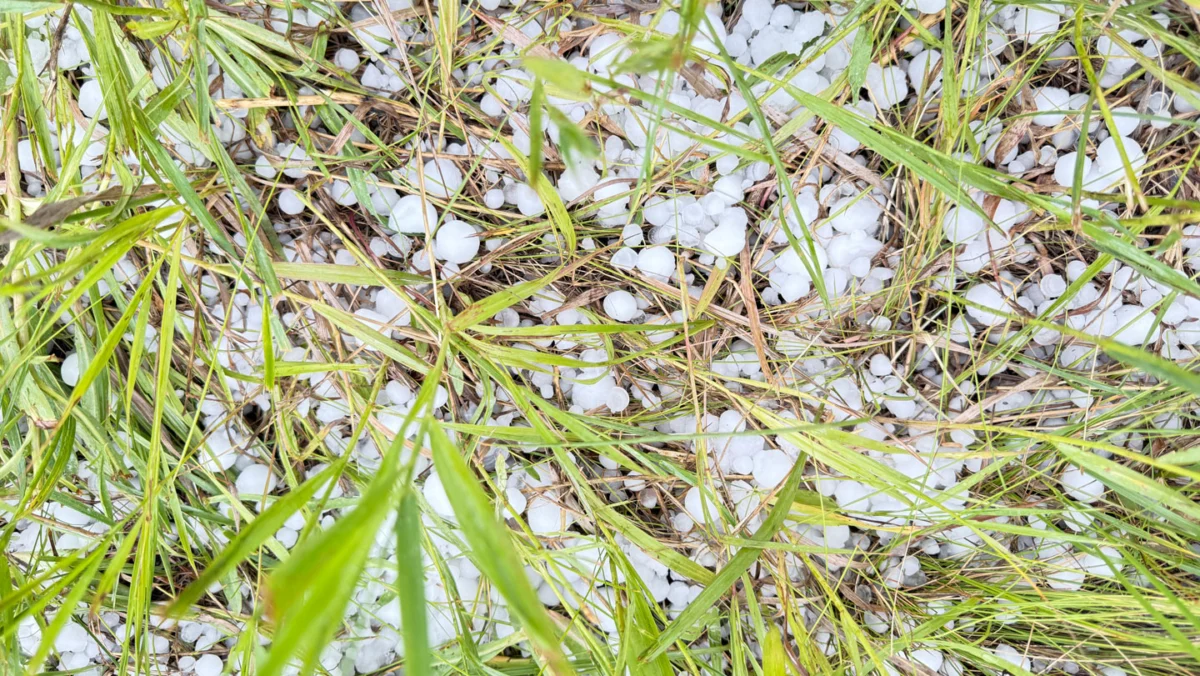
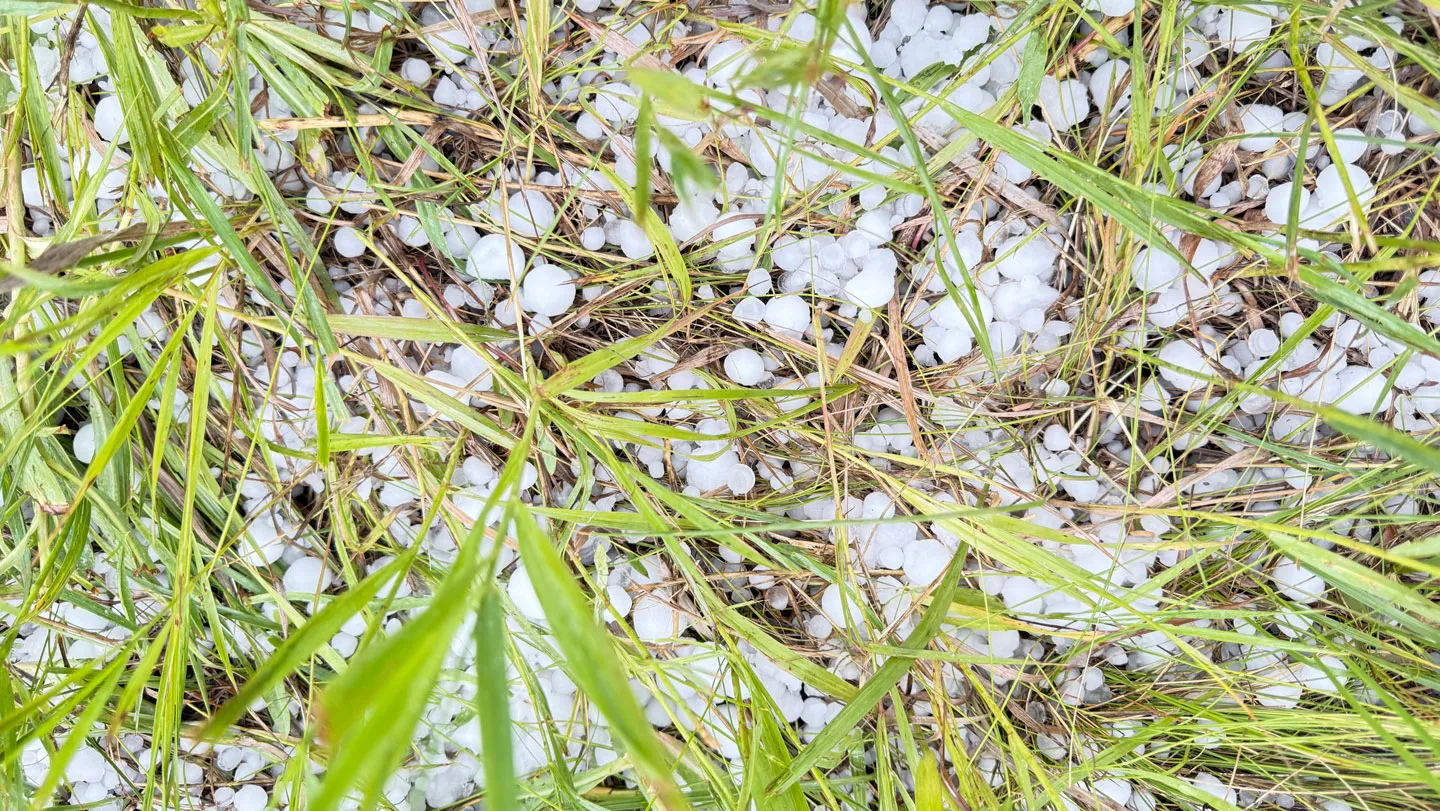
The period from 2014 to 2021, utilized in the Peking University study, represents a recent era of intensified data collection on hailstorms globally, aided by advancements in satellite technology and ground-based observation networks. The National Science Foundation’s In Situ Collaborative Experiment for the Collection of Hailstones in the Plains (ICECHIP) field campaign, which captured images of hailstones in North Dakota on June 27, 2025, exemplifies this ongoing effort to gather direct evidence of hail characteristics. The publication of the Nature study in May 2026 marks a significant milestone, translating this accumulated data and advanced modeling into concrete projections about future hail risks under climate change scenarios.
Broader Societal and Economic Impacts
The implications of more frequent and destructive hailstorms extend beyond the immediate damage to property. The agricultural sector is particularly vulnerable, with crops susceptible to significant damage or complete destruction from large hailstones. This can lead to substantial economic losses for farmers and ripple effects throughout the food supply chain, potentially impacting food prices and availability.
The insurance industry also faces increasing challenges in underwriting risks associated with severe weather events. As hailstorms become more damaging, insurance premiums are likely to rise, potentially making coverage less accessible for homeowners and businesses in high-risk areas. This can create financial burdens and exacerbate existing vulnerabilities.
Furthermore, the increased frequency of severe weather events necessitates greater investment in disaster preparedness and response. Communities will need to develop more robust infrastructure, implement effective warning systems, and enhance emergency response capabilities to mitigate the impacts of increasingly volatile weather patterns. The study’s findings underscore the importance of proactive planning and adaptation strategies to build resilience in the face of a changing climate.
Conclusion: A Call for Vigilance and Action
The research from Peking University offers a critical, albeit concerning, glimpse into the future of hailstorms under a warming climate. While the precise scale of future hail events remains subject to ongoing scientific refinement, the fundamental trend towards potentially larger and more destructive hailstones in many regions is a significant warning. The study’s emphasis on regional disparities highlights the need for localized risk assessments and tailored adaptation measures. As scientists continue to unravel the complexities of climate change impacts, the message from this latest research is clear: enhanced vigilance, continued scientific inquiry, and decisive global action to curb greenhouse gas emissions are paramount in mitigating the escalating risks posed by extreme weather events like severe hailstorms.