In a significant move bridging artificial intelligence and biotechnology, BioMarin Pharmaceutical has forged a strategic research collaboration with Emeryville-based tech innovator Profluent. The partnership aims to leverage cutting-edge protein language models to design and optimize novel enzyme therapies, fundamentally reshaping how BioMarin approaches its internal drug development pipeline. By combining Profluent’s generative AI platform with BioMarin’s extensive legacy in metabolic and enzyme replacement therapies, the two companies hope to slash the time and resources required to identify viable drug candidates for patients suffering from severe genetic and metabolic disorders.
The core of the agreement centers on the deployment of Profluent’s proprietary suite of protein language models. Traditional protein engineering is notoriously slow, iterative, and resource-intensive, often requiring years of trial-and-error laboratory screening to modify naturally occurring enzymes or build functional alternatives. Under the new pact, Profluent will bypass traditional bottlenecks by utilizing generative AI to design entirely new potential drug candidates from scratch. BioMarin will then step in to screen and evaluate these computational outputs, vetting the molecules for target activity, stability profiles, and safety parameters before selecting the most promising candidates to advance into preclinical testing.
The Mechanics of Generative Protein Design
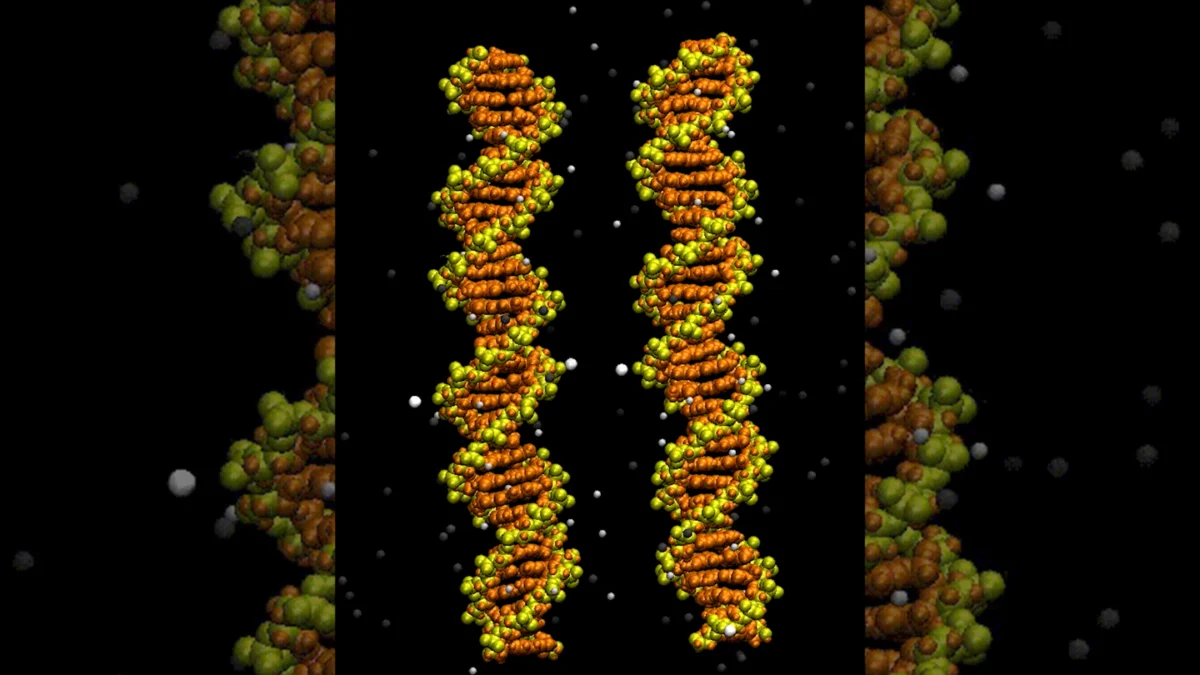
The collaboration relies heavily on the scale and sophistication of Profluent’s technological infrastructure. At the heart of the computational work is the Profluent Protein Atlas, an expansive repository containing more than 115 billion unique protein sequences. Recognized in the biotechnology sector as the world’s largest protein sequence database, this vast reservoir serves as the foundational training ground for Profluent’s AI models.
By training foundational models on billions of evolutionary examples, Profluent’s AI learns the hidden grammar and structural rules of proteins. This allows the system to engage in de novo design—creating functional protein structures that do not necessarily exist in nature but are specifically tailored to execute therapeutic functions. BioMarin intends to utilize these models to rapidly simulate and assess alternative protein structures in silico, narrowing down millions of theoretical possibilities before committing physical resources to laboratory synthesis and evaluation.
For BioMarin, integrating these computational workflows represents a natural evolution in its research and development strategy. Pooja Agarwal, Vice-President and Head of Metabolic Conditions Research at BioMarin, emphasized the strategic value of incorporating external technological breakthroughs into the company’s established R&D framework.
"Profluent’s AI models represent the kind of external innovation that can complement our own capabilities and help us move promising science forward faster," Agarwal stated. "By combining Profluent’s approach to de novo protein design and optimisation with BioMarin’s decades of expertise in enzyme therapies, we have an opportunity to identify promising candidates more efficiently for people with significant unmet need."
A Strategic Synergy in Biotech
The partnership brings together two entities operating at the top of their respective fields. Founded in 2022 and headquartered in Emeryville, California, Profluent has quickly emerged as a prominent player in biological foundation models. The company’s innovative approach has attracted substantial backing from prominent venture capital firms and tech luminaries, including AIX Ventures, Air Street Capital, Bezos Expeditions, Altimeter Capital, Insight Partners, Convergent Ventures, and Spark Capital. Profluent’s broader mission focuses on developing AI applications capable of solving complex biological challenges across medicine, agriculture, and industrial biotechnology.
Ali Madani, Chief Executive Officer of Profluent, highlighted the historical context of BioMarin’s contributions to medicine and expressed enthusiasm for augmenting the pharmaceutical giant’s pipeline.
"BioMarin has one of the most credible track records in enzyme therapies, spending decades successfully advancing drugs through the clinic to improve the lives of patients," Madani noted. "We’re excited to accelerate BioMarin’s drug discovery pipeline and unlock new medicines by combining the strengths of our latest foundation models for protein design with their deep track record of getting therapies to patients."
The collaboration underscores a broader industry-wide shift. Over the past several years, pharmaceutical companies have increasingly moved away from internal-only discovery models, recognizing that artificial intelligence and machine learning can drastically reduce the timelines associated with early-stage drug discovery. While traditional drug discovery can take upwards of a decade from initial target identification to clinical trials, AI-driven platforms aim to compress the initial design phase into a matter of weeks or months.

Contextualizing BioMarin’s Pipeline and Recent Corporate Moves
This technological collaboration occurs against a backdrop of aggressive corporate and scientific expansion for BioMarin Pharmaceutical. The company has long been a pioneer in the commercialization of enzyme replacement therapies (ERTs) for rare genetic diseases, successfully bringing multiple breakthrough treatments to global markets.
The partnership with Profluent also arrives closely on the heels of major structural developments within BioMarin. In April, BioMarin completed a massive corporate acquisition, acquiring Amicus Therapeutics in an all-cash transaction representing a total equity value of nearly $4.8bn. This blockbuster deal significantly bolstered BioMarin’s portfolio in rare metabolic disorders, integrating additional commercial assets and clinical-stage programs into its operations.
By coupling the operational scale achieved through the Amicus integration with cutting-edge computational discovery tools from partners like Profluent, BioMarin is signaling a two-pronged strategy for future growth: expanding its immediate commercial footprint while simultaneously investing in next-generation platforms designed to populate its long-term pipeline with novel, highly optimized therapies.
Implications for the Future of Enzyme Engineering
Enzyme therapies have revolutionized the management of numerous rare, life-threatening conditions, particularly lysosomal storage disorders and other metabolic diseases where patients lack specific functional enzymes. However, naturally occurring enzymes often face significant pharmacological limitations. They can be unstable in circulation, susceptible to rapid degradation by the body’s immune system, or inefficient at penetrating specific target tissues.
Overcoming these limitations traditionally required arduous cycles of directed evolution or site-directed mutagenesis, methods that are constrained by natural biological starting points. Generative AI fundamentally alters this paradigm. By designing proteins based on functional requirements rather than evolutionary history, companies like Profluent can engineer enzymes with enhanced thermal stability, resistance to proteolysis, optimized binding affinities, and reduced immunogenicity.
If successful, the collaboration between BioMarin and Profluent could yield a new generation of therapeutic enzymes that exhibit superior pharmacokinetic and pharmacodynamic profiles compared to their predecessors. For patients suffering from rare diseases with limited treatment options, even incremental improvements in enzyme stability and efficacy can translate into significantly reduced dosing frequencies, fewer side effects, and improved clinical outcomes.
Looking Ahead: From Computational Output to Preclinical Validation
While the initial announcement establishes the framework of the partnership, the true test of the collaboration will lie in the transition from computational design to empirical validation. Profluent’s AI models will generate the theoretical sequences, but these digital constructs must ultimately prove their worth in the laboratory and animal models.
BioMarin will be responsible for screening the computational libraries, synthesizing the selected candidates, and conducting rigorous in vitro and in vivo assays. Only molecules that successfully demonstrate the desired target activity, stability, and safety profiles will be advanced into formal preclinical testing, setting the stage for future Investigational New Drug (IND) applications.
As artificial intelligence continues its rapid integration into the pharmaceutical sector, partnerships like the one between BioMarin and Profluent serve as testing grounds for the viability of generative biology. By pairing Profluent’s billions-strong protein database and advanced generative architecture with BioMarin’s deep-rooted translational expertise, the collaboration exemplifies how traditional biotech wisdom and modern computational science can converge to tackle some of medicine’s most stubborn and complex challenges.