Microsoft Unveils Topological Quantum Chip, Promising a New Era of Error Resilience
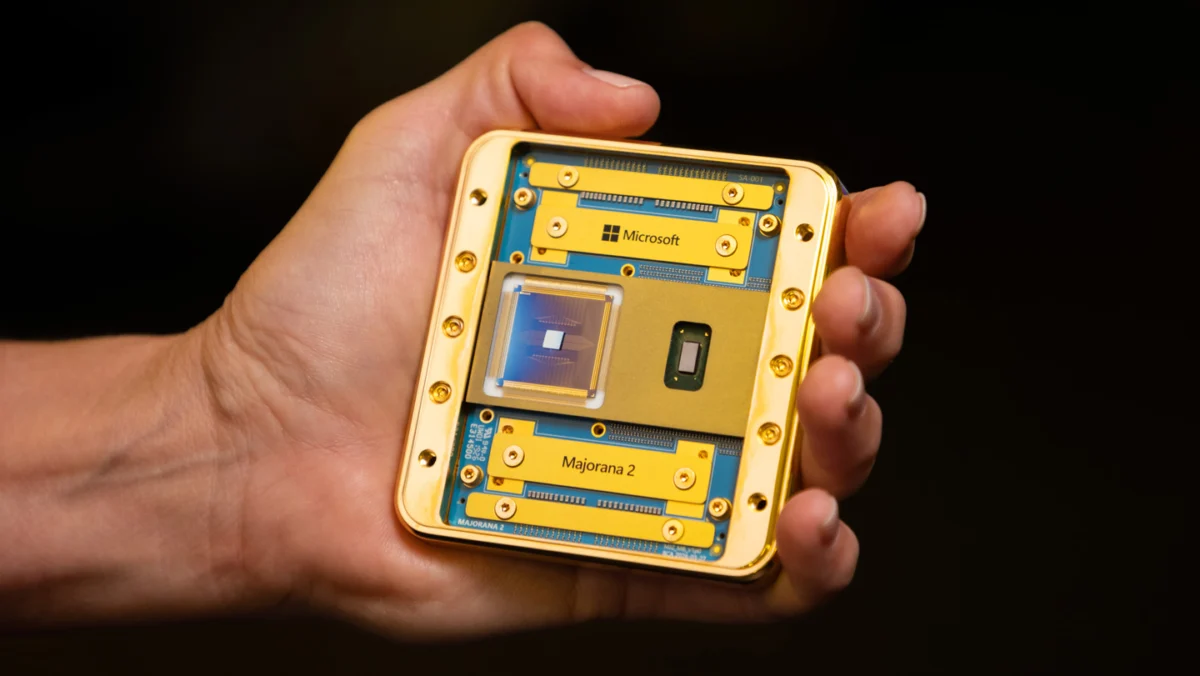
Microsoft has introduced its latest quantum computing chip, the "Majorana 2," which the company claims could revolutionize the field by addressing one of the most persistent challenges: quantum errors. The new chip, developed by Microsoft’s quantum computing division, leverages the principles of topology, a branch of mathematics concerned with the properties of geometric objects that are preserved under continuous deformations, to create qubits that are inherently more stable and resistant to the decoherence that has plagued previous quantum computing efforts. This development, if validated, could represent a significant leap forward in the quest for fault-tolerant quantum computers capable of tackling problems currently intractable for even the most powerful supercomputers.
The inherent fragility of qubits, the fundamental units of quantum information, is a well-documented hurdle in quantum computing. Unlike classical bits, which exist in a definitive state of either 0 or 1, qubits can exist in a superposition of both states simultaneously. This quantum phenomenon, while powerful, makes them extremely susceptible to environmental noise and interference. Even the slightest perturbation – a stray vibration, a minor temperature fluctuation, or electromagnetic radiation – can cause a qubit to lose its quantum state, a process known as decoherence, leading to calculation errors. These errors accumulate rapidly, often rendering the results of complex quantum computations unreliable and necessitating sophisticated, often computationally expensive, error correction protocols.
Microsoft’s approach, known as topological quantum computing, aims to sidestep this problem by encoding quantum information in the "topological properties" of exotic quantum states. Rather than storing information in the state of a single particle, topological qubits are designed to store information in the collective behavior of multiple particles. Specifically, the Majorana 2 chip is based on the theoretical concept of Majorana fermions, particles that are their own antiparticles and are predicted to exhibit non-abelian statistics. When these fermions are arranged in specific configurations, their braiding (exchanging their positions in a particular manner) can perform quantum operations. The crucial aspect of this topological encoding is that the information is protected by the overall structure and arrangement of these particles, making it robust against local disturbances. If a single particle is perturbed, the overall topological state remains intact, thereby preserving the encoded information.
The journey to this point has been a long and arduous one for Microsoft and the broader quantum computing community. The concept of topological quantum computing was first proposed in the early 2000s, with significant theoretical work by physicists like Alexei Kitaev. Microsoft has been a prominent proponent of this approach, investing heavily in research and development for over a decade. Early milestones included experimental evidence for Majorana zero modes – the fundamental building blocks of topological qubits – in superconducting nanowires. However, definitively proving the existence and controllability of these elusive particles has been a significant scientific challenge, with several research groups reporting progress and debate over experimental results. The development of the Majorana 2 chip represents a potential culmination of these years of theoretical and experimental investigation, moving from fundamental research to a tangible hardware prototype.
A Timeline of Topological Quantum Computing Research and Development
The pursuit of topological quantum computing has been characterized by incremental advances and significant theoretical underpinnings.
- Early 2000s: Theoretical frameworks for topological quantum computing are developed, notably by Alexei Kitaev, proposing the use of non-abelian anyons and their braiding for fault-tolerant quantum computation.
- Mid-2000s to Early 2010s: Experimental efforts begin to focus on finding and manipulating the exotic particles predicted to support topological quantum states, particularly Majorana zero modes in condensed matter systems.
- 2012: A team led by Leo Kouwenhoven at Delft University of Technology reports the first experimental evidence for Majorana zero modes in a semiconductor-superconductor nanowire system. This finding ignites widespread excitement and further research.
- Subsequent Years: Several research groups, including those at Microsoft, continue to investigate Majorana modes. Challenges arise in unambiguously confirming their presence and demonstrating the non-abelian braiding statistics required for computation. Debates and refinements of experimental techniques become common.
- 2018: Microsoft announces a significant breakthrough, claiming to have achieved a critical milestone in creating and controlling Majorana zero modes.
- Present: Microsoft unveils the Majorana 2 chip, signaling a progression from fundamental discovery to a more integrated quantum computing hardware platform designed for topological qubit implementation.
Supporting Data and Theoretical Framework
The efficacy of topological quantum computing hinges on the properties of non-abelian anyons. Unlike bosons and fermions, which obey Bose-Einstein or Fermi-Dirac statistics, respectively, anyons exhibit braiding statistics that depend on the order in which they are exchanged. Non-abelian anyons are particularly crucial because their braiding operations do not commute, meaning the order in which they are performed matters, allowing for universal quantum computation.
The Majorana 2 chip is designed to host and manipulate these anyons. The underlying physics involves creating and controlling quasiparticles that behave as Majorana bound states at the ends of topological superconductors. Quantum gates are then realized by physically moving these quasiparticles around each other – a process known as braiding. The topological protection ensures that small imperfections in the braiding path do not alter the outcome of the computation. This is in stark contrast to conventional qubits, where a single bit flip due to noise can propagate and corrupt the entire computation.
While specific performance metrics for the Majorana 2 chip have not been fully disclosed, the theoretical advantage is substantial. Current quantum computers often require thousands of physical qubits to create a single, stable logical qubit through error correction. Topological qubits, in principle, offer a much higher degree of inherent fault tolerance, potentially requiring far fewer physical qubits to achieve the same level of computational reliability. This could drastically reduce the complexity and resource requirements for building powerful quantum computers.
Official Responses and Industry Reactions
Microsoft has been characteristically cautious in its pronouncements, emphasizing that this is a significant step in a long development process. A spokesperson for Microsoft Quantum stated, "The Majorana 2 chip represents a pivotal moment in our pursuit of topological quantum computing. By harnessing the inherent robustness of topological states, we are moving closer to building quantum computers that are intrinsically resistant to errors. This advancement has the potential to unlock the full promise of quantum computation for a wide range of scientific and industrial applications."
The broader quantum computing community has reacted with cautious optimism. While acknowledging the theoretical promise of topological quantum computing, many researchers await independent verification of the chip’s performance and the precise mechanisms by which it achieves error resilience. Dr. Anya Sharma, a theoretical physicist specializing in quantum information at the Quantum Institute of Technology, commented, "Microsoft’s work on topological quantum computing has always been theoretically compelling. If the Majorana 2 chip indeed demonstrates the expected level of error protection, it would be a game-changer. However, the experimental realization of these concepts has historically been fraught with challenges, so rigorous validation will be key."
Competitors in the quantum computing space, such as IBM and Google, have largely focused on superconducting qubit architectures and different error correction strategies. While they acknowledge the potential of topological approaches, their immediate efforts are directed at scaling and improving their existing technologies. The success of Microsoft’s topological approach could, however, spur increased investment and research into similar avenues by other players in the long term.
Broader Impact and Implications
The successful implementation of fault-tolerant topological quantum computing, as envisioned by Microsoft’s work, could have profound implications across numerous scientific and industrial sectors.
- Drug Discovery and Materials Science: Quantum computers are expected to revolutionize the design of new pharmaceuticals and materials by accurately simulating molecular interactions. Topological quantum computers could accelerate this by enabling more complex and reliable simulations.
- Financial Modeling: Advanced financial algorithms, risk analysis, and portfolio optimization could be significantly enhanced, leading to more sophisticated and potentially more stable financial markets.
- Cryptography: While quantum computers pose a threat to current encryption methods (leading to the development of post-quantum cryptography), they could also enable new forms of secure communication.
- Artificial Intelligence: Complex machine learning models and optimization problems could be tackled with unprecedented speed and efficiency, potentially leading to breakthroughs in AI capabilities.
- Fundamental Science: The ability to simulate complex quantum systems could unlock new discoveries in fields like particle physics, cosmology, and condensed matter physics.
The development of the Majorana 2 chip, even at its current stage, signifies a crucial step in overcoming the fundamental obstacle of quantum decoherence. If Microsoft can translate this hardware advancement into a scalable and reliable computing platform, it would not only validate years of theoretical research but also usher in a new era of quantum computing, bringing the transformative power of this technology closer to widespread realization. The scientific community will be closely watching as further details and experimental results emerge, assessing the true potential of this topologically protected approach to quantum computation.