The intersection of art history and natural science has long been viewed as a peripheral academic curiosity, yet recent interdisciplinary research is revealing that historical canvases serve as untapped archives of ecological data. For centuries, artists have functioned as de facto field observers, documenting species interactions, habitat distributions, and behavioral patterns long before the formal establishment of modern ecology. By applying rigorous scientific scrutiny to these visual records, researchers are now uncovering “hidden” biological insights that predate modern scientific observation by hundreds, and in some cases, thousands of years.
A Chronology of Artistic Observation
The historical timeline of scientific documentation often begins in the 18th or 19th centuries, following the rise of the Enlightenment and the formalization of taxonomic biology. However, works from the 17th-century Dutch Golden Age and earlier Renaissance periods provide a significant, if underutilized, dataset.
In 1611, the Flemish master Jan Brueghel the Elder completed his seminal work, Air. Within the composition’s complex allegorical framework, he depicted a greater noctule bat (Nyctalus lasiopterus) clutching a songbird in its jaws. For 400 years, this was dismissed by most art historians as a fantastical or mythological inclusion, common in the symbolic landscape of the era. It was not until the early 2000s that modern biological research, aided by molecular analysis of fecal samples, confirmed that greater noctule bats do, in fact, hunt birds. In 2025, researchers finally provided definitive, real-time audio and visual confirmation of this behavior, proving that Brueghel’s "allegory" was grounded in empirical observation.
This discovery prompted a wider inquiry. Pedro Romero-Vidal, an ecologist at the Doñana Biological Station in Seville, Spain, led a systematic analysis of historical art to determine if other ecological truths were hidden in plain sight. His team has since identified more than 1,500 paintings containing specific fauna—notably parrots and non-native monkeys—that provide clues about the history of animal trade, species distribution, and the limitations of 17th-century menageries.
The Methodology of Ecological Art Analysis
To extract valid scientific data from art, researchers must distinguish between accurate biological observation and "artistic license." This process requires a sophisticated synthesis of art history and evolutionary biology.

Art historians, such as Christopher Atkins of the Museum of Fine Arts in Boston, employ comparative analysis to verify the intent of the artist. By examining sketches, preparatory drawings, and comparing repeated motifs across an artist’s body of work, historians can differentiate between an attempt at objective representation and the use of symbolic or idealized imagery.
When researchers like Harvard biologist Charles Davis analyze these works, they focus on morphological accuracy. In the case of the works of Rachel Ruysch, a master of 17th-century floral still life, the scientific utility lies in the granular details. Ruysch’s depictions of botanical specimens are so precise that they reveal the identity of specific species and their origins within Dutch colonial territories. By mapping these depictions, scientists can gain insights into the botanical knowledge of the period and the movement of species through trade routes.
Scientific Discrepancies and "Ecological Errors"
The value of historical art to science is not limited to accurate depictions; errors are often equally instructive. Charles Davis, while reviewing Ruysch’s work, identified a famous still life that depicted a carrion flower alongside a swallowtail butterfly (Papilionidae).
Biologically, this is an impossibility. Carrion flowers rely on a foul odor to attract flies for pollination, rather than the visual allure that attracts butterflies. This "error" allows scientists to conclude that the artist likely worked from specimens found in botanical gardens—where species were clustered for display—rather than observing the plant within its native, specialized ecosystem. Such discrepancies provide researchers with a roadmap of how scientific knowledge, or the lack thereof, influenced the perception of nature in the 1700s.
The Role of Maria Sibylla Merian
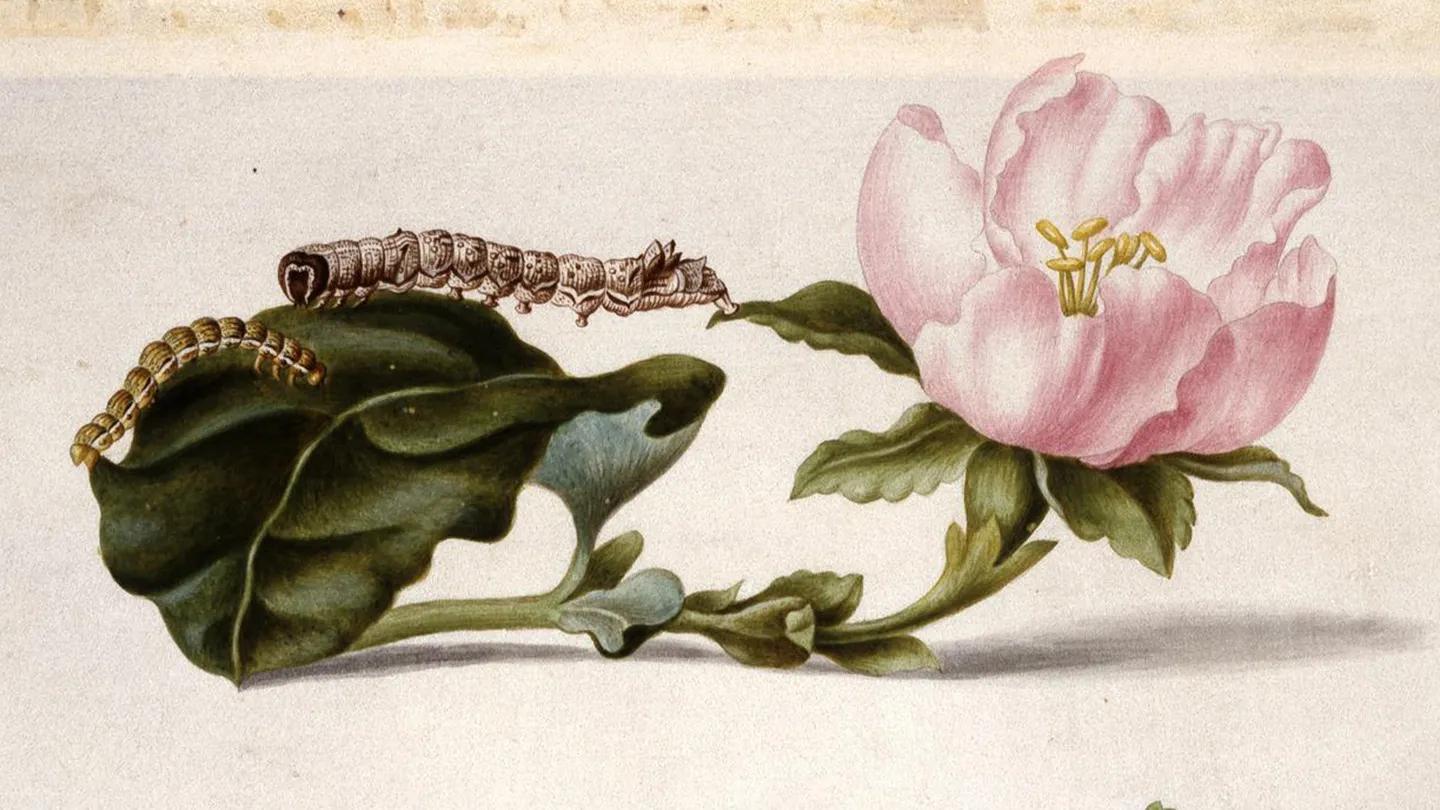
The work of German-born naturalist and artist Maria Sibylla Merian serves as the bridge between art and early ecology. Active in the late 17th and early 18th centuries, Merian was among the first to move away from the static, encyclopedic representation of individual species. Instead, she painted insects in relation to their host plants, documenting the lifecycle of metamorphosis—a revolutionary concept at the time.
Her influence on the scientific community was profound. Carl Linnaeus, the father of modern taxonomy, relied heavily on her observations to develop his own classifications. Knaap and other historians argue that Merian was not merely an artist painting flowers; she was an experimental scientist whose work corrected contemporary misconceptions about insect life cycles. Her ability to match insects to their specific host plants demonstrates a level of ecological literacy that was arguably centuries ahead of the established scientific consensus of her era.

Broader Implications for Modern Science
The implications of this interdisciplinary approach are significant for fields such as conservation biology, climate change research, and historical ecology. As biodiversity declines, historical paintings offer a baseline for species presence in specific regions. By analyzing thousands of artworks, scientists can create a "long-term monitoring program" that stretches back to the Renaissance.
Data derived from these works include:
- Species Range Shifts: Tracking the presence of exotic animals in paintings can help reconstruct the history of human-assisted migration and the expansion of trade-linked species.
- Phenology: The specific stages of flowering and insect activity depicted in seasonal paintings can provide clues about historical temperature patterns and the timing of biological events.
- Extinction Records: Art may contain the only visual record of animal populations or behaviors that have since been altered or lost due to environmental changes.
Future Collaborations and Official Responses
The successful 2025 exhibition of Rachel Ruysch’s works at the Museum of Fine Arts stands as a benchmark for this collaborative model. By intentionally bringing together biologists and curators, the museum allowed for a multi-layered interpretation of the pieces.
"Where it gets really exciting is when the two sides come together and share their expertise," says Christopher Atkins. The museum’s approach underscores a shift in how institutions view their collections. No longer seen as purely aesthetic, these artifacts are being re-indexed as scientific records.
However, experts caution that this is not a panacea. The primary challenge remains the potential for misinterpretation of an artist’s intent. Without the written records of the artists, scientists must rely on the expertise of historians to provide the context of the work. The "side quest" nature of this research, as described by Pedro Romero-Vidal, highlights that while art can supplement scientific knowledge, it must be cross-referenced with fossil records, historical climate data, and modern biological field studies to ensure accuracy.
Conclusion: A New Frontier in Data
As the integration of art history and natural science matures, it promises to redefine how we view the history of human understanding of the natural world. The "scientific" artist was not a rare exception, but rather a recurring archetype in Western art. By recognizing the brushstrokes of a master as a legitimate data point, the scientific community is recovering lost information from the archives of human creativity. These canvases, once relegated to the walls of galleries, are now being viewed as vital pieces of the puzzle in understanding the complex, enduring relationship between humanity and the environment. As more data is analyzed, we may find that the answers to some of our most pressing questions about the natural world have been hanging in plain sight for centuries.