At its recent annual Science Day, biotechnology giant Moderna signaled a profound strategic expansion beyond its highly successful infectious disease vaccine and rare disease franchises, unveiling ambitious new programs in in vivo CAR-T therapy and solid tumor oncology. The company also introduced an advanced AI-driven research platform, codenamed "Lucy," which it asserts will dramatically accelerate the pace of drug discovery and development across its burgeoning pipeline. This pivotal event underscores Moderna’s determination to leverage its proprietary mRNA technology and lipid nanoparticle (LNP) delivery system to tackle some of the most challenging therapeutic areas, positioning itself as a diversified biotech powerhouse rather than solely a vaccine developer.
Moderna’s Strategic Pivot: Beyond Vaccines
Moderna’s commercial foundation was unequivocally built upon a singular, groundbreaking modality: lipid nanoparticle-delivered mRNA for infectious disease vaccines, most notably its rapid development and deployment of the COVID-19 vaccine, SPIKEVAX®. This unprecedented success not only cemented mRNA’s viability as a therapeutic platform but also propelled Moderna into the global spotlight, generating substantial revenue and invaluable clinical data. However, the company has long articulated a vision extending far beyond vaccines. The recent Science Day announcements are a concrete manifestation of this long-held ambition, indicating a concerted effort to replicate the infrastructure and manufacturing logic refined during its vaccine triumphs across the complex landscapes of oncology and autoimmune diseases. The core argument underpinning this diversification is that the inherent properties that enabled mRNA vaccines to be developed and scaled so rapidly—flexibility, speed, and manufacturing efficiency—can be effectively translated to different, more intricate disease categories. The company’s decade-plus of human clinical data, accrued through a vast array of trials, is touted as a significant learning advantage, providing insights that later entrants into the mRNA therapeutic space cannot easily replicate.
The AI Engine: Lucy Powers Discovery
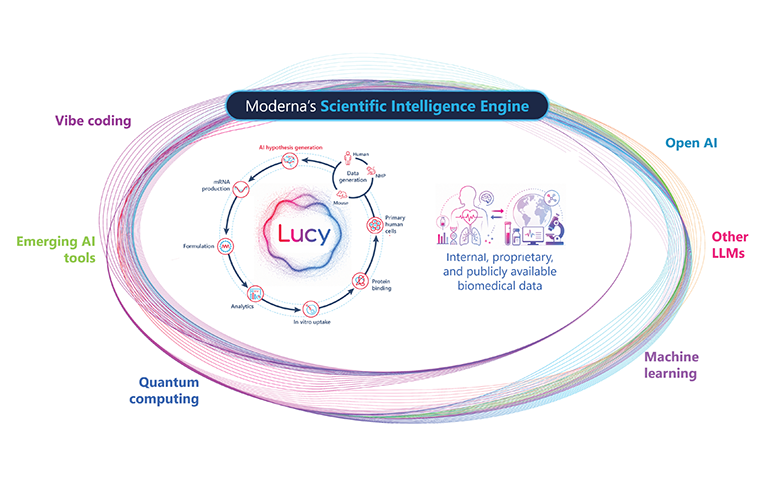
A cornerstone of Moderna’s accelerated discovery ambitions is its newly revealed machine learning platform, "Lucy." This sophisticated AI system is designed to integrate data seamlessly from myriad sources, including lab notebooks, experimental results, and clinical trial data, into a continuously improving, self-learning ecosystem. Lucy is central to a closed-loop automation platform operating within Moderna’s state-of-the-art laboratories, where it runs experimental cycles, generates hypotheses using advanced AI algorithms, and even executes subsequent experiments with minimal to no human intervention between cycles.
The scale and efficiency Lucy brings to the drug discovery process are formidable. Moderna claims the platform can test hundreds of thousands of molecular iterations per learning cycle. This includes multiplexed in vivo screening in animal models, such as mice and primates. Lucy employs advanced barcoding systems, enabling the simultaneous assessment of up to one thousand different candidate molecules within a single animal. The platform then deconvolutes the intricate results on the back end, meticulously evaluating each candidate’s performance and contributing to the system’s iterative learning.
Crucially, Lucy has access to the entirety of Moderna’s extensive human mRNA clinical trials data, as well as real-time information from ongoing studies. This proprietary dataset, unparalleled in its breadth for mRNA therapeutics, provides Lucy with a unique and powerful training ground. To further augment its capabilities, Moderna has forged a partnership with OpenAI, allowing Lucy to incorporate public-domain datasets alongside its proprietary clinical information. This hybrid approach aims to create a more comprehensive and robust predictive engine. David Huss, Moderna’s Chief Technology Officer for Research, emphasized Lucy’s unprecedented ability to vary mRNA design, LNP formulation, or even run combinatorial approaches to simultaneously optimize both aspects at a scale previously deemed impossible, thereby compressing development timelines and enhancing the likelihood of success.
Redefining Cell Therapy: In Vivo CAR-T with mRNA-6007
One of the most significant revelations at Science Day was Moderna’s foray into in vivo Chimeric Antigen Receptor T-cell (CAR-T) therapy with its program mRNA-6007. This therapy targets B-cell-mediated autoimmune diseases, with systemic lupus erythematosus (SLE) identified as the initial focus. The program is slated to enter clinical trials in 2027, marking a pivotal moment in the evolution of cell therapy.
Traditional CAR-T therapies, known as ex vivo approaches, involve extracting a patient’s T-cells, genetically engineering them in a specialized laboratory to express a CAR, expanding these modified cells, and then reinfusing them back into the patient. While incredibly effective, particularly in certain hematological cancers, ex vivo CAR-T carries significant limitations: it is patient-specific, requires weeks of complex manufacturing, is exorbitantly expensive, and often necessitates chemotherapy-induced lymphodepletion, which carries its own set of risks and side effects.
Moderna’s mRNA-6007 represents a paradigm shift. Instead of ex vivo manipulation, mRNA-6007 aims to reprogram immune cells directly inside the body (in vivo) using targeted LNPs. This in vivo approach leverages a multiplexed mRNA strategy, delivering the genetic instructions for the CAR directly to the patient’s cells, thereby eliminating the need for cell extraction, external engineering, and reinfusion. The goal is to achieve deep B-cell depletion with transient CAR expression, potentially leading to an "immune reset" without the logistical and clinical burdens of conventional CAR-T.
A key differentiating factor for mRNA-6007 is its dual-CAR approach. Unlike single-CAR strategies that target only B cells, mRNA-6007 encodes two CARs designed to target both the full B-cell lineage and plasma cells. Moderna believes this dual targeting could achieve a broader and more durable immune reset, which is critical for complex autoimmune conditions like lupus where both B cells and plasma cells contribute to pathology. The promise of an off-the-shelf, injectable mRNA product for CAR-T therapy—one that could be as efficacious as ex vivo therapies but free from lymphodepletion and complex manufacturing—is transformative for patients and the healthcare system.
The in vivo CAR-T space is nascent but highly competitive. Several academic groups have published promising preclinical and early clinical data for in vivo CD19 CAR-T using LNP-mRNA approaches in lupus patients. Commercial players are also rapidly advancing: Capstan Therapeutics (now part of AbbVie) is conducting a Phase 1 study for CPTX2309, an anti-CD19 in vivo CAR-T candidate. CREATE Medicines has already dosed over 50 patients across its in vivo CAR programs. Cartesian Therapeutics recently licensed its in vivo CAR-T technology to WestGene Biopharma for autoimmune diseases, with a clinical trial expected this year. Kernal is also active in the preclinical stage for multiple sclerosis. Moderna’s entry, particularly with its multiplexed design and vast mRNA expertise, introduces a significant player into this rapidly evolving field. Preclinical studies in mice and non-human primates have shown safety, tolerability, and evidence of response, although this data awaits formal publication.
Tackling Solid Tumors: mRNA-2151’s Novel Approach
Beyond autoimmune diseases, Moderna also detailed its commitment to oncology with the public unveiling of mRNA-2151, a multiplexed T-cell engager aimed at solid tumors, specifically ovarian cancer. This marks the first time the program has been named and detailed publicly, highlighting its strategic importance.
T-cell engagers are bispecific antibodies or molecules designed to bridge T-cells with tumor cells, activating the T-cells to destroy the cancer. While they have demonstrated remarkable success in liquid tumors (blood cancers), their efficacy in solid tumors has been significantly more challenging. Only two T-cell engagers, tarlatamab and tebentafusp, have received FDA approval for solid tumors, underscoring the high bar for success. The primary hurdles in solid tumors include an immunosuppressive tumor microenvironment, poor T-cell infiltration, and T-cell exhaustion, where T-cells lose their killing ability due to chronic stimulation.
mRNA-2151 addresses these challenges with a sophisticated, multiplexed mRNA approach. It is designed to encode two "kill" T-cell engagers, targeting two clinically validated tumor-associated antigens relevant to ovarian cancer (the specific antigens remain undisclosed). Crucially, it also encodes a co-stimulatory molecule. This co-stimulatory addition is what differentiates mRNA-2151 from earlier T-cell engager candidates, such as Moderna’s own mRNA-2808, and is central to its therapeutic hypothesis. In preclinical mouse xenograft models, T-cell engagers alone could control tumor growth, but the addition of the co-stimulatory molecule led to complete responses and more durable tumor control. This suggests that providing a co-stimulatory signal alongside the kill signal can reinvigorate T-cells and help them retain their cytotoxic ability even in the hostile microenvironment of solid tumors.
Ovarian cancer remains a disease with significant unmet needs, often diagnosed at advanced stages with high recurrence rates. Moderna is betting that its ability to deliver a precisely engineered, multiplexed mRNA product that includes a vital co-stimulatory signal will overcome some of the historical limitations of T-cell engagers in this challenging indication. The company stated that mRNA-2151 is moving towards early development in ovarian cancer, with its advancement supported by encouraging early clinical results from mRNA-2808, another T-cell engager program.
A Robust and Diversifying Pipeline
Moderna’s pipeline is indeed expansive, encompassing some three dozen programs that span multiple therapeutic areas. While respiratory vaccines (COVID-19, RSV, Flu) remain a strong commercial and developmental focus with products like SPIKEVAX®, mNEXSPIKE®, mRESVIA®, and the recently FDA advisory committee-backed mCOMBRIAX and mRNA-1010 (flu vaccine) nearing market, the company’s diversification is evident.
The pipeline includes a robust slate of latent-virus vaccines (CMV, EBV, HIV), bacterial vaccines (Lyme disease), and public health initiatives (Nipah, Mpox). In oncology, beyond the newly announced mRNA-2151, Moderna continues to advance its partnership with Merck on mRNA-4157 (Intismeran Autogene), a personalized cancer vaccine being studied across numerous indications including adjuvant melanoma, non-small cell lung cancer (NSCLC), renal cell carcinoma (RCC), and bladder cancer. Other cancer antigen therapies like mRNA-4359 and mRNA-4106 are also in various phases of clinical development. Rare disease therapeutics, such as mRNA-3927 for Propionic Acidemia (PA) and mRNA-3705 for Methylmalonic Acidemia (MMA), along with a collaboration with Vertex for Cystic Fibrosis (mRNA-3692), demonstrate the company’s commitment to addressing genetically defined diseases. The new forays into in vivo CAR-T and multiplexed T-cell engagers represent the cutting edge of its therapeutic ambition.
Market Reaction and Analyst Perspectives
Moderna’s stock experienced significant upward momentum leading into Science Day. Shares had climbed approximately 48% in the weeks prior, largely fueled by the FDA advisory committee’s unanimous vote in favor of mRNA-1010, its investigational flu vaccine, a week earlier. This positive sentiment continued unabated after the Science Day revelations. Shares closed at $59.75 on June 25, the day of the event, then surged by nearly 15% the following day as investors absorbed the pipeline disclosures, particularly the ambitious plan to move mRNA-6007 into the clinic by 2027. The rally persisted into early July, with the stock touching a 52-week high of $85.60. As of midday July 7, it traded near $80, reflecting a roughly 75% increase from its early-June low, despite a slight daily dip.
Analyst commentary reflected a mix of optimism and lingering caution. William Blair analyst Myles Minter noted in a report that FDA briefing documents for mRNA-1010 revealed "no major deficiencies," significantly boosting confidence in the flu vaccine’s approval prospects. Leerink Partners’ Mani Foroohar, in a separate note, characterized the FDA’s analysis as indicative of a "less-harsh regulatory stance" for mRNA vaccines generally. The Science Day pipeline disclosures provided further impetus, leading Piper Sandler to raise its price target for Moderna to $77 from $69, while maintaining an "Overweight" rating. This upgrade specifically cited the company’s progress in cancer antigen therapy and the promising in vivo CAR-T programs as key drivers.
Despite this recent surge and the positive reactions to specific programs, Wall Street’s broader sentiment remains largely cautious. The majority of investment firms continue to rate Moderna’s stock as "Hold" or "Sell." The average 12-month price target across analysts sits in the mid-$40s, with Piper Sandler’s $77 being among the most bullish. The fact that the stock was trading near $80—above every published analyst target at the time—highlights a significant divergence between investor enthusiasm and the more conservative outlook of many financial institutions. This gap suggests that while investors are keenly anticipating the success of Moderna’s diversified pipeline, analysts are likely factoring in the inherent risks associated with early-stage therapeutic development and the competitive landscape.
The Road Ahead: Challenges and Opportunities
Moderna’s Science Day represents a critical inflection point, marking a clear and ambitious strategic pivot beyond its vaccine legacy. By leveraging its core mRNA and LNP delivery expertise, coupled with advanced AI capabilities, the company aims to establish itself as a leader in challenging therapeutic areas like oncology and autoimmune diseases. The in vivo CAR-T program (mRNA-6007) and the multiplexed T-cell engager (mRNA-2151) exemplify this bold expansion, promising to address significant unmet medical needs with potentially transformative therapies.
However, the road ahead is fraught with challenges. Translating the success from infectious disease vaccines to complex therapeutic modalities in cancer and autoimmune conditions involves navigating intricate biological pathways, overcoming significant regulatory hurdles, and competing in highly innovative and rapidly evolving fields. The preclinical data, while encouraging, must be validated in rigorous human clinical trials, which often involve unforeseen complexities. Furthermore, while the AI platform Lucy promises unprecedented acceleration, its real-world impact on clinical success rates will be closely watched.
Moderna’s decade-plus of mRNA experience and accumulated human clinical data provide a formidable advantage, offering insights into the platform’s safety and immunogenicity that newcomers lack. The company’s commitment to innovation, underpinned by substantial investment in R&D and strategic partnerships like that with OpenAI, positions it as a significant force in the future of medicine. The coming years will reveal whether Moderna’s audacious bet on mRNA’s "second act" will yield another wave of groundbreaking medicines, solidifying its place as a multi-modal biotechnology leader.