

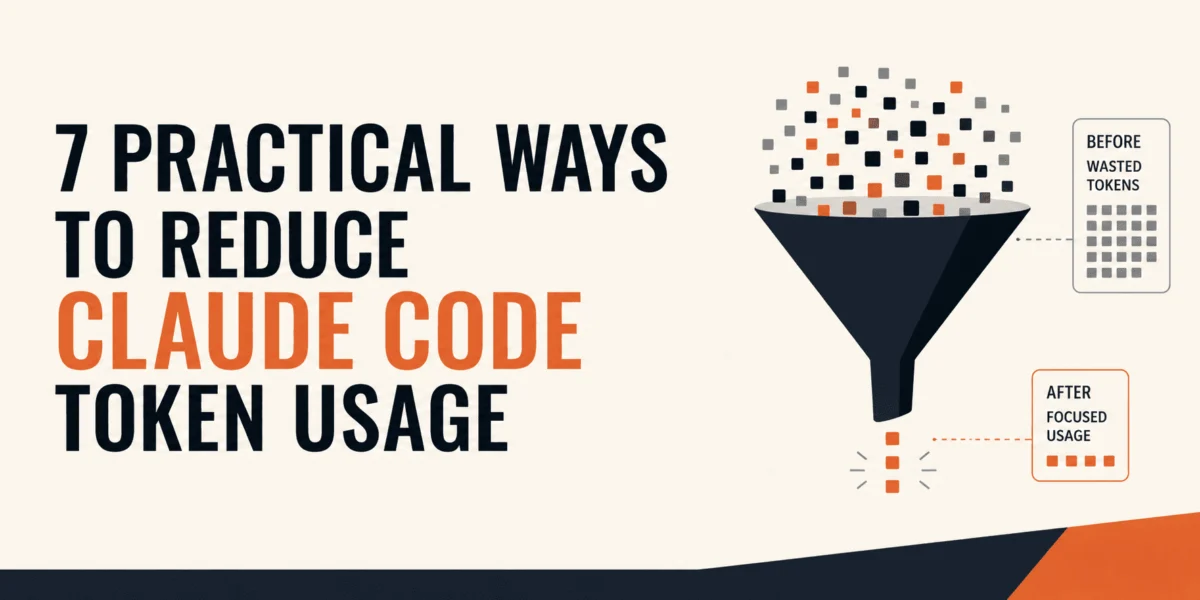
The integration of artificial intelligence into software development workflows, exemplified by tools like Anthropic’s Claude Code, has revolutionized productivity and innovation. However, this power comes with a significant operational consideration: token usage, which directly correlates with computational cost. While often perceived as a simple matter of prompt length, the true drivers of expense in large language model (LLM) interactions, particularly in complex coding environments, lie in the management of "context." Developers frequently underestimate that their payment extends far beyond the immediate query, encompassing an entire session’s history, loaded files, tool outputs, memory files such as CLAUDE.md, and underlying instructions. This accumulated data, often referred to as "messy context," is the primary culprit behind escalating token consumption.
Generic advice like "keep conversations short" falls short of providing actionable strategies. A more effective approach necessitates a deep understanding of how Claude Code constructs and maintains its operational context, identifying elements that persist across interactions, and pinpointing workflow inefficiencies that silently inflate costs. This article delves into seven practical methodologies designed to optimize Claude Code usage, ensuring efficiency without constant budgetary concerns. These strategies pivot on the concept of "context architecture," shifting focus from individual prompts to the holistic management of the AI’s operational environment.
The Evolving Landscape of AI in Software Development and the Token Economy
The advent of sophisticated AI code assistants marks a pivotal moment in software engineering. From early autocomplete features to generative AI capable of writing, debugging, and refactoring complex code, these tools have become indispensable. Anthropic’s Claude Code, part of the broader Claude family, stands out for its robust reasoning capabilities, particularly in code-centric tasks. However, the economic model underlying these LLMs is built on "tokens"—chunks of text or code that represent the fundamental unit of processing. Every input, every output, and every piece of information held within the AI’s active memory consumes tokens, directly impacting billing in API-based scenarios or depleting quota windows in subscription models.
This token economy necessitates a strategic approach to interaction. As LLMs become more integrated into development pipelines, managing token usage is not merely a cost-saving measure but a critical aspect of sustainable and scalable AI adoption. Industry analysts consistently highlight context management as a key factor in achieving optimal performance and cost-efficiency, emphasizing that a well-structured context can dramatically reduce the computational load on the model and, consequently, the financial burden on users.
Strategic Model Selection: A Tiered Approach to Task Complexity
One of the most straightforward yet frequently underutilized methods for token optimization involves dynamically switching between Claude models based on the complexity of the task at hand. Anthropic offers a spectrum of models—Haiku, Sonnet, and Opus—each designed with varying levels of intelligence, speed, and cost. For instance, on API billing, Claude 3 Opus, the most capable model, can cost up to five times more per token than Claude 3 Sonnet, which offers a balance of intelligence and speed, while Claude 3 Haiku is the fastest and most cost-effective.
- Claude 3 Sonnet: Often serves as the default for day-to-day coding tasks. This includes writing unit tests, performing simple code edits, explaining code snippets, or routine refactoring. Its balanced capabilities make it ideal for the majority of development activities that do not demand extreme reasoning depth.
- Claude 3 Opus: Reserved for highly complex tasks. This tier is appropriate for multi-file architectural decisions, debugging intricate cross-system issues, or undertaking extensive code transformations where deep analytical reasoning is paramount. The higher cost is justified by its superior performance in nuanced problem-solving.
- Claude 3 Haiku: Best suited for quick, mechanical operations. Tasks such as code lookups, simple formatting adjustments, variable renaming, or other repetitive actions benefit from Haiku’s speed and low cost, where extensive reasoning is not required.
A recommended best practice, echoed by leading AI practitioners, is to initiate every session with Sonnet. Developers should only escalate to Opus when the task genuinely demands its advanced analytical prowess. Conversely, for mechanical or highly localized operations, downgrading to Haiku can yield significant savings. Furthermore, Claude Code provides the /effort command, which allows users to directly control the computational budget the model allocates to a task. For straightforward requests, lowering the effort level can reduce output tokens, directly translating to cost savings. This tiered approach, akin to selecting the right tool for the job, is fundamental to intelligent resource allocation in AI-assisted development.
The CLAUDE.md Blueprint: Static Instructions for Dynamic Sessions
The CLAUDE.md file represents a powerful yet often mismanaged tool for context optimization. Its primary function is to serve as a persistent set of instructions or project rules that load into Claude’s context before any other information—code, task descriptions, or conversation history. This persistence means that its content is included in the context window for the entire duration of a session and is never lazy-loaded or evicted. While incredibly useful for maintaining consistency and reducing repetitive prompting, this mechanism carries a direct token cost: a 5,000-token CLAUDE.md will incur a 5,000-token charge on every single turn, regardless of the number of messages exchanged.
Therefore, the strategic use of CLAUDE.md is paramount. It should be populated with stable, foundational instructions that apply throughout the project lifecycle. Examples include guidelines for running tests, preferred package managers, specific code formatting rules, crucial architectural constraints, and directories Claude should explicitly avoid modifying. By centralizing these core directives, developers eliminate the need to re-type them in every new chat, significantly reducing repeated prompt overhead across sessions.
Conversely, CLAUDE.md should be kept lean. It is not an appropriate repository for transient information such as meeting notes, design history documents, or lengthy implementation guides. Its optimal use is as a concise lookup table of essential, unchanging project parameters rather than a sprawling knowledge base. Maintaining a compact and highly relevant CLAUDE.md ensures that its benefits—consistent guidance and reduced repetitive prompting—are realized without incurring unnecessary, persistent token costs.
Leveraging Subagents for Context Isolation and Efficiency
Subagents offer a sophisticated mechanism for managing context growth by isolating verbose operations. These are essentially independent Claude instances that operate within their own dedicated context windows. When a subagent is tasked with a specific operation—such as extensive file searches, log analysis, or multi-step reasoning—all its detailed output remains confined to its isolated environment. Only a concise summary of the subagent’s findings or actions is then returned to the main conversation thread. This approach significantly declutters the primary context, preventing it from becoming overloaded with intermediate processing details.
However, the application of subagents requires careful consideration. Unlike a common misconception, subagents are not inherently cheaper for all tasks. Community testing and expert analysis indicate that for smaller, less complex operations, particularly simple shell commands or quick Git interactions, the overhead introduced by the subagent architecture can negate any potential savings. This overhead includes the tokens consumed by initiating the subagent, defining its tools, and the additional round trips required for tool calls.
The practical guideline for subagent deployment is therefore nuanced: utilize subagents when the value of preventing main-context clutter significantly outweighs the inherent startup overhead. They are most effective for tasks that generate substantial intermediate output, such as analyzing large log files, exploring complex directory structures, or performing iterative debugging where detailed steps would otherwise flood the main conversation. For straightforward actions, direct execution within the main context often proves more efficient.
Precision in Instruction: Minimizing LLM Exploration Costs
A significant source of token waste stems from vague or overly broad instructions, which compel Claude to engage in extensive and often costly exploration. When asked to "look around the repo" for an issue, the model may spend a considerable number of tokens opening multiple files, investigating irrelevant code paths, and attempting to reconstruct context that could have been provided directly. This exploratory behavior, while sometimes necessary, is computationally intensive.
Consider the difference between:
- Original (Vague): "Look through the auth code and tell me what is wrong."
- Better (Precise): "Compare
src/auth/session.tslines 30 to 90 withsrc/api/login.tslines 10 to 60 and explain the mismatch."
The precise instruction directs Claude immediately to the relevant sections, eliminating the need for costly self-discovery. This approach leverages the developer’s human insight to pre-filter information, allowing the AI to focus its processing power on analysis rather than context acquisition.
Another critical technique for minimizing token waste is the proactive use of "plan mode," typically toggled with Shift+Tab. In plan mode, Claude formulates a step-by-step execution plan for a given task without actually implementing any changes. Developers can then review this plan, identify and remove any unnecessary or potentially wasteful steps, and only then switch back to normal mode for execution. This eliminates the largest source of token consumption: trial-and-error execution, where Claude attempts actions, encounters errors, and iterates—each iteration incurring additional token costs. By validating the plan beforehand, developers ensure a more direct and efficient path to the solution.
Proactive Context Compaction with /compact
Claude Code offers the ability to automatically compact a session’s context, and users can also manually trigger this process using the /compact command. However, the timing of compaction is crucial for its effectiveness. As a session progresses, especially after Claude has inspected multiple files, executed commands, and explored various leads, the context window often accumulates a substantial amount of material that is no longer directly relevant to the current task. This is the opportune moment to compact the session. By doing so, developers reduce the accumulated context to its essential components, allowing the conversation to continue with a significantly lighter, more focused memory footprint.
A common pitfall is delaying the use of /compact until Claude begins to exhibit signs of context overload, such as "forgetting" earlier details or issuing context warnings. At this juncture, the session is already bloated, and the resulting summary may be less accurate or comprehensive due to the sheer volume of information the model has to process. Proactive compaction, executed when the session is still "healthy" and key information is clearly identifiable, yields a much cleaner and more useful summary. This strategy ensures that only critical information is retained, extraneous noise is discarded, and unnecessary tokens are prevented from being carried forward into subsequent interactions, thereby optimizing both cost and performance.
Diagnosing Context Bloat with /context Before Optimizing
Before embarking on significant workflow changes or making assumptions about token waste, developers should leverage the diagnostic power of the /context command. Many instances of escalating token usage remain mysterious until a systematic inspection of the active context is performed. The expensive elements may not be the visible prompts, but rather large files read earlier, accumulated tool outputs, heavy memory files, or the overhead associated with additional tooling.
The /context command provides a transparent view into what is actually being loaded or repeatedly re-sent with each turn. This diagnostic step is analogous to performance profiling in traditional software development, allowing users to pinpoint the exact sources of inefficiency. Often, the most significant improvements in token efficiency do not arise from sophisticated prompting techniques but from identifying and addressing a single "quiet offender" – an overlooked file or a persistent piece of data that has been riding along in every interaction. Therefore, a data-driven approach is essential: first, inspect the context to understand its composition, and then strategically remove or reduce the parts that are genuinely contributing to bloat. Blind optimization can lead to wasted effort and suboptimal results.
Streamlining Tooling for Lean Operations
Claude Code’s capability to integrate with numerous external tools and data sources is a powerful feature, extending its utility across a wide range of development tasks. However, this power also introduces potential context overhead. The more tools or helpers connected and active, the greater the likelihood that the model will drag along additional overhead beyond what the immediate task requires. This overhead can stem from tool definitions, API call structures, and the processing of tool outputs, all of which consume tokens.
A lean tooling setup is therefore crucial for efficient operation. Developers should adopt a minimalist approach, integrating only those tools that address a genuine, recurring problem within their workflow. The temptation to enable every available skill or integration simply because it is possible should be resisted. Each additional connection adds complexity and potential token cost. By maintaining a streamlined environment, developers ensure that Claude Code’s processing power is directed towards the core task rather than managing an unnecessarily complex array of integrations. This targeted approach to tooling not only optimizes token usage but also enhances the overall clarity and focus of the AI’s interactions.
Broader Implications and the Future of AI-Assisted Development
The strategies outlined above underscore a fundamental shift in how developers must interact with advanced AI code assistants. The era of simply "prompting" an AI is giving way to a more sophisticated discipline of "context architecture." This paradigm recognizes that the most effective and cost-efficient use of LLMs in development hinges not on babysitting individual prompts but on meticulously designing the workflow such that the AI only ever processes the information it genuinely needs. The largest gains in efficiency are realized through deliberate control of automatic context accumulation, precise narrowing of search scopes, and proactive prevention of noisy, extraneous information from contaminating the main session.
For businesses and individual developers, the financial implications of unmanaged token usage can be substantial, transforming a powerful productivity tool into a budget drain. Conversely, by adopting these context management principles, organizations can unlock the full potential of Claude Code, maximizing developer productivity while maintaining predictable and sustainable operational costs. This proactive approach to context architecture is not merely about saving money; it is about fostering a more intelligent, efficient, and scalable integration of AI into the core of software development, ensuring that these transformative technologies can be leveraged responsibly and effectively for years to come. The future of AI-assisted development lies in mastering not just what we ask, but how we frame the world for our intelligent partners.













Leave a Reply