For nearly a century, the scientific understanding of magnetism was built upon a binary foundation, recognizing only two primary classifications of magnetic materials. The first, ferromagnets, are ubiquitous in modern life, providing the force behind refrigerator magnets, hard drives, and electric motors. The second, antiferromagnets, possess internal magnetic structures that cancel each other out, making them invisible to the naked eye but highly prized by physicists for their potential in high-speed computing. However, a paradigm shift is currently underway following the theoretical discovery of a third branch: altermagnets. While these materials were first proposed within the last decade, their elusive nature has made them difficult to study. Now, a team of physicists at the University at Buffalo (UB) has unveiled a sophisticated quantum sensing approach that promises to identify these materials with unprecedented precision, potentially clearing the path for a revolution in energy-efficient electronics and spintronics.
The proposed methodology, detailed in a recent publication in the journal Physical Review Letters, utilizes the principles of quantum mechanics to detect the subtle signatures of altermagnetism. By leveraging microscopic defects within diamonds, researchers believe they can observe the "hidden" magnetic properties of these materials without the invasive interference required by previous experimental setups. As the global demand for faster and more sustainable technology grows, the ability to harness altermagnets could prove to be the missing link in the development of next-generation hardware.
The Evolution of Magnetism: From Ancient Stones to Quantum States
To understand the significance of the UB proposal, one must look at the historical timeline of magnetic discovery. For millennia, ferromagnetism was the only known form of magnetism. Ancient civilizations used naturally occurring magnetite (lodestones) for navigation, and by the 20th century, the alignment of electron spins in the same direction became the standard model for permanent magnets. In ferromagnets, the collective alignment of spins creates a macroscopic magnetic field that can be easily manipulated, making them ideal for data storage.
In the 1930s, French physicist Louis Néel introduced the concept of antiferromagnetism, a discovery that eventually earned him the Nobel Prize in Physics in 1970. In these materials, neighboring electron spins point in opposite directions, effectively canceling out any external magnetic field. While this makes them difficult to use in traditional applications like compasses, it makes them incredibly stable and capable of switching states at terahertz speeds—much faster than the gigahertz speeds of current silicon-based technology.
The third category, altermagnets, was only identified as a distinct theoretical possibility in 2019. Researchers at the Johannes Gutenberg University of Mainz, led by Libor Šmejkal and Jairo Sinova, noticed that certain materials exhibited a unique combination of traits. Calculations on ruthenium dioxide ($RuO_2$) showed that while it had no net magnetization (like an antiferromagnet), it behaved like a ferromagnet when subjected to an electric current. This hybrid behavior suggested a new phase of matter where the crystal symmetry of the material allowed for "spin-splitting"—a phenomenon previously thought to be exclusive to ferromagnets—while maintaining a net-zero magnetic field.
The UB Quantum Sensing Methodology: Diamonds as Detectors
Identifying an altermagnet in a laboratory setting is notoriously difficult because its primary characteristic is the absence of a macroscopic magnetic field. Standard magnetometers often fail to distinguish an altermagnet from a standard antiferromagnet. To solve this, Jamir Marino, PhD, an assistant professor in the UB Department of Physics, and his colleagues developed a technique involving Nitrogen-Vacancy (NV) centers in diamonds.
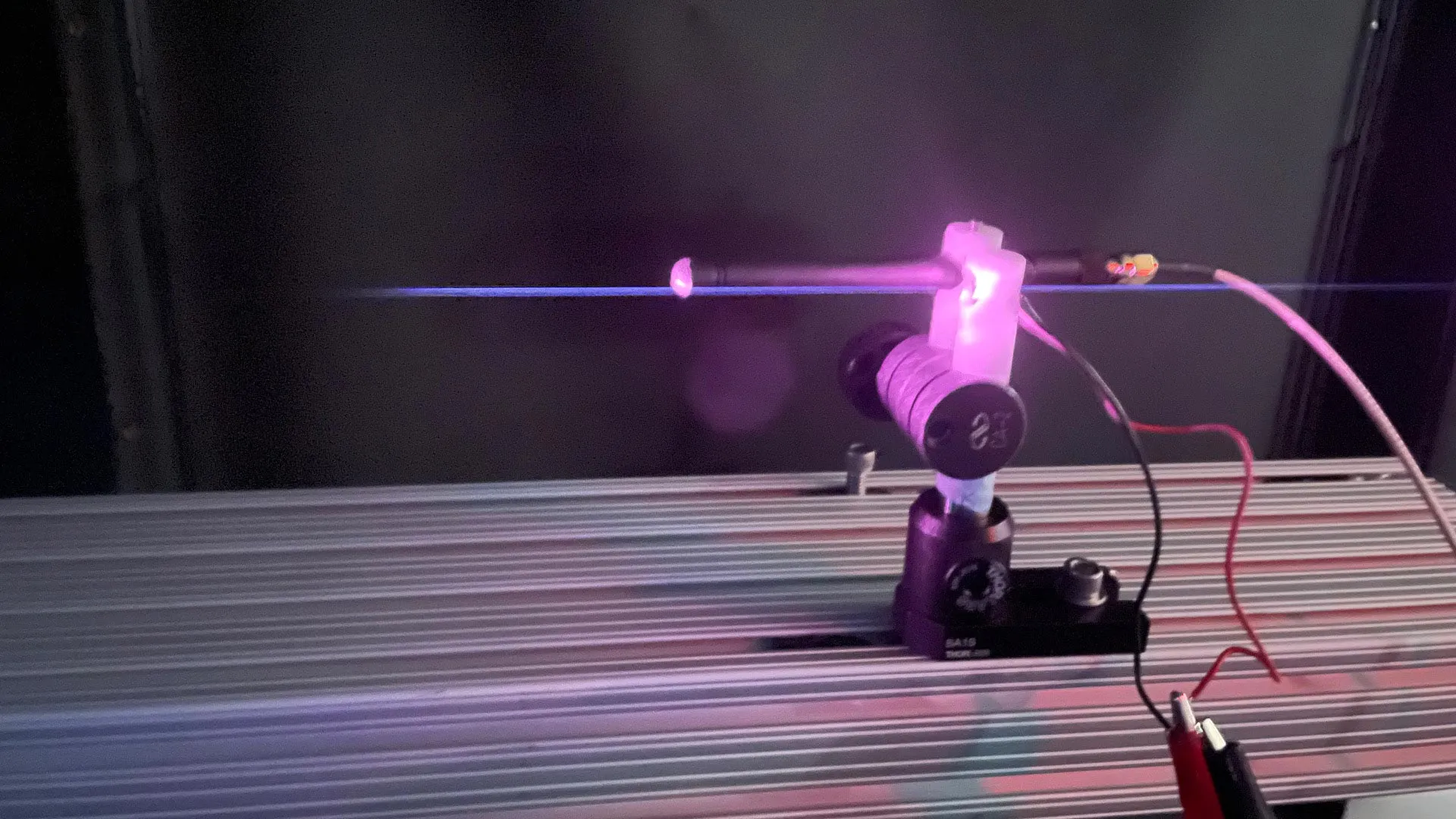
An NV center is a point defect in a diamond’s crystal lattice where a nitrogen atom replaces a carbon atom, leaving an adjacent spot vacant. This defect behaves like a single atom trapped in a solid, and its electronic spin is highly sensitive to the surrounding magnetic environment. In the UB team’s proposed experiment, a diamond containing an NV center would be placed in close proximity to a candidate altermagnetic material.
The core of the sensing technique involves "spin relaxation." Researchers would use lasers and microwaves to orient the spin of the NV center in a specific direction and then monitor how long it takes for that spin to return to its equilibrium state. Because of the unique internal symmetry of altermagnets, the magnetic fluctuations they produce are "anisotropic," meaning they vary depending on the direction. If the NV center’s spin relaxes faster when pointed in one direction versus another, it provides a definitive "fingerprint" of altermagnetism.
"This could be the first building block of a new generation of experiments that determine whether a material is an altermagnet," says Marino. "Altermagnets could completely revolutionize the way we transport information, but to confirm if this elegant theory is true, we need experiments that identify altermagnets and confirm they behave the way scientists predict."
Supporting Data and the Scope of Altermagnetic Materials
The theoretical framework for altermagnetism is not limited to a handful of exotic substances. In fact, subsequent studies following the 2019 discovery suggest that altermagnetism may be quite common in nature. Computational screening of material databases has indicated that over 200 materials could potentially be classified as altermagnets. This is a staggering figure, considering it is more than double the number of known ferromagnetic materials.
The potential candidates include common compounds such as manganese telluride ($MnTe$) and certain types of iron-based superconductors. The diversity of these materials suggests that altermagnets could be integrated into various manufacturing processes, provided they can be accurately identified and characterized.
The UB study’s co-authors include Libor Šmejkal and Jairo Sinova, the very researchers who pioneered the concept. Their involvement underscores the importance of the UB proposal in bridging the gap between theory and application. Sinova noted that this sensing technique offers a distinct advantage over conventional methods like neutron scattering or photoemission spectroscopy. While those methods are powerful, they often require massive facilities or can disturb the delicate magnetic state of the sample. The diamond-based quantum sensor, by contrast, is non-invasive and highly localized.
Technical Implications: Solving the Heat and Speed Dilemma
The drive to identify altermagnets is fueled by a looming crisis in the semiconductor industry: the "heat wall." As transistors in silicon chips become smaller and more densely packed, the heat generated by moving electrons becomes increasingly difficult to manage. This heat limits the processing speed and energy efficiency of modern computers and data centers.
Altermagnets offer a two-fold solution through the field of spintronics. In traditional electronics, information is carried by the charge of an electron. In spintronics, information is carried by the electron’s "spin" (its intrinsic angular momentum).
- Energy Efficiency: Because altermagnets do not have a macroscopic magnetic field, they do not produce "stray fields" that interfere with neighboring components. This allows for much tighter packing of memory and logic units without the risk of magnetic crosstalk.
- Switching Speed: Altermagnets inherit the high-speed switching capabilities of antiferromagnets. They can transition between states at speeds roughly 1,000 times faster than the ferromagnets currently used in MRAM (Magnetoresistive Random-Access Memory).
- Control: Unlike antiferromagnets, which are notoriously difficult to manipulate with electric currents, altermagnets possess electronic properties that allow for easier control of spin currents. This "best of both worlds" scenario makes them the "holy grail" for future hardware designers.
Official Responses and Collaborative Research
The research conducted at the University at Buffalo was a collaborative effort involving international institutions, reflecting the global interest in this field. Co-authors included Hossein Hosseinabadi, a former graduate student in Marino’s lab now at the Max Planck Institute for the Physics of Complex Systems, and V.A.S.V. Bittencourt from the University of Strasbourg. The research received significant support from the German Research Foundation (DFG), highlighting the strategic importance European and American institutions place on quantum materials.
The scientific community has reacted with cautious optimism to the UB proposal. While the sensing system currently exists as a theoretical model based on sophisticated quantum dynamics simulations, the physics community views it as a necessary roadmap for experimentalists. "Efficiently identifying altermagnetic materials is a crucial step toward one day actually using them in electronics," Marino emphasized. "It would make transport of information radically more efficient, allowing technology to scale down and consume less power."
Analysis: The Path to Commercialization
While the UB sensing technique provides a clear path forward, several hurdles remain before altermagnetic devices reach the consumer market. First, the theoretical proposal must be validated in a laboratory setting using known candidate materials. This will require high-precision equipment and the growth of ultra-pure material samples.
Second, the integration of altermagnets into existing CMOS (Complementary Metal-Oxide-Semiconductor) fabrication processes will be a significant engineering challenge. However, because many candidate altermagnets are insulators or semi-metals that are already used in various industrial applications, the transition may be smoother than that of other "wonder materials" like graphene.
The broader implications of this research extend into the realm of quantum computing as well. The sensitivity of NV centers used in the sensing technique is itself a cornerstone of quantum metrology. By refining these sensors to detect altermagnets, researchers are simultaneously advancing the tools needed for broader quantum information science.
In conclusion, the work led by Jamir Marino and his colleagues at the University at Buffalo represents a pivotal moment in condensed matter physics. By turning a diamond defect into a window into the hidden world of altermagnetism, they have provided the scientific community with a compass to navigate the third branch of magnetism. If successful, this venture will not only validate a decade of theoretical physics but also lay the groundwork for a new era of high-speed, low-power computing that could define the technology of the 21st century.