A collaborative research team from Hiroshima University and Mitsubishi Materials Hardmetal Corporation has pioneered a novel additive manufacturing (AM) technique for Tungsten Carbide-Cobalt (WC-Co), a material renowned for its extreme hardness and durability but notoriously difficult to shape. This breakthrough, which utilizes hot-wire laser irradiation, addresses the long-standing inefficiencies of traditional powder metallurgy, offering a path toward more sustainable and cost-effective production of high-performance industrial tools. The findings, which detail the successful fabrication of defect-free cemented carbide structures, were recently published in the International Journal of Refractory Metals and Hard Materials and are slated for inclusion in the journal’s April 2026 print edition.
The Industrial Significance of Tungsten Carbide-Cobalt
Tungsten carbide-cobalt, often referred to as cemented carbide, is a "cermet"—a composite material consisting of ceramic particles (tungsten carbide) bonded by a metallic matrix (cobalt). This combination yields a material that possesses the hardness of a ceramic and the toughness of a metal. It is the backbone of the global tooling industry, essential for the production of drill bits, end mills, mining equipment, and wear-resistant components in the automotive and aerospace sectors.
Despite its utility, WC-Co presents a formidable manufacturing challenge. Because of its extreme hardness, it cannot be easily machined or forged using conventional metalworking techniques. For decades, the industry has relied on powder metallurgy (PM). In the PM process, fine powders of tungsten carbide and cobalt are mixed, pressed into a "green" compact under immense pressure, and then subjected to liquid-phase sintering at temperatures exceeding 1,400 degrees Celsius.
While effective, powder metallurgy is inherently wasteful. Shaping the final product often requires diamond-grinding, a slow and expensive process that generates significant material loss. Given that tungsten and cobalt are classified as critical raw materials with volatile pricing and complex supply chains, the ability to minimize waste is not merely a technical goal but an economic and environmental imperative.
Limitations of Traditional Manufacturing and the Shift to 3D Printing
The global manufacturing sector has increasingly looked toward additive manufacturing, or 3D printing, as a solution for material-intensive processes. By building components layer-by-layer, AM allows for "near-net-shape" production, where the material is deposited only where it is required. This drastically reduces the need for subtractive finishing and allows for the creation of internal geometries—such as complex cooling channels—that are impossible to achieve through traditional pressing and sintering.
However, applying 3D printing to WC-Co has proven difficult. Standard laser powder bed fusion (LPBF) often leads to rapid heating and cooling cycles that cause thermal cracking, porosity, and the unwanted decomposition of tungsten carbide into brittle phases. To overcome these barriers, the Hiroshima University team turned to hot-wire laser irradiation, a technique more commonly associated with high-speed welding but repurposed here for the precision fabrication of superhard materials.
The Innovation: Hot-Wire Laser Irradiation
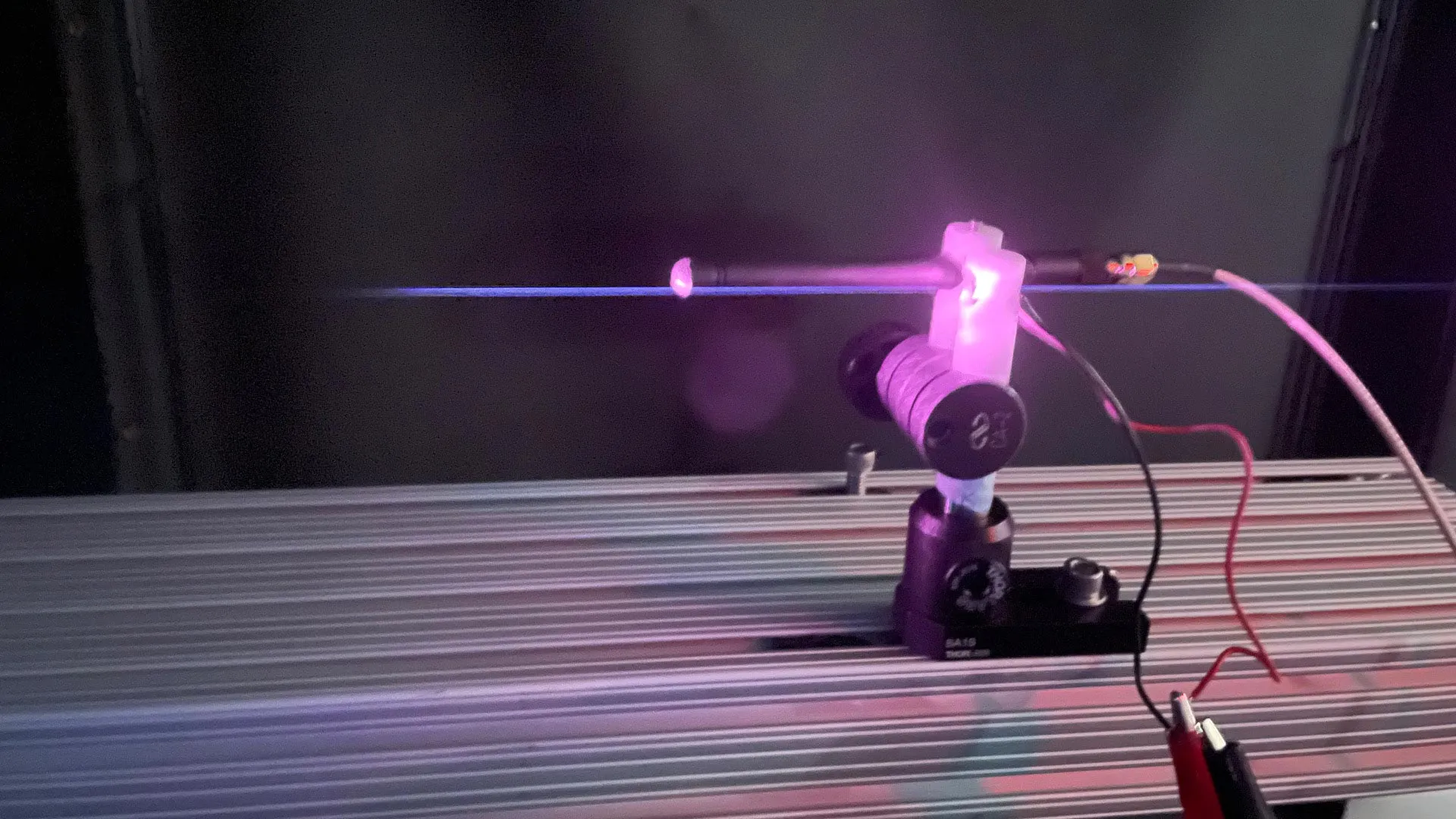
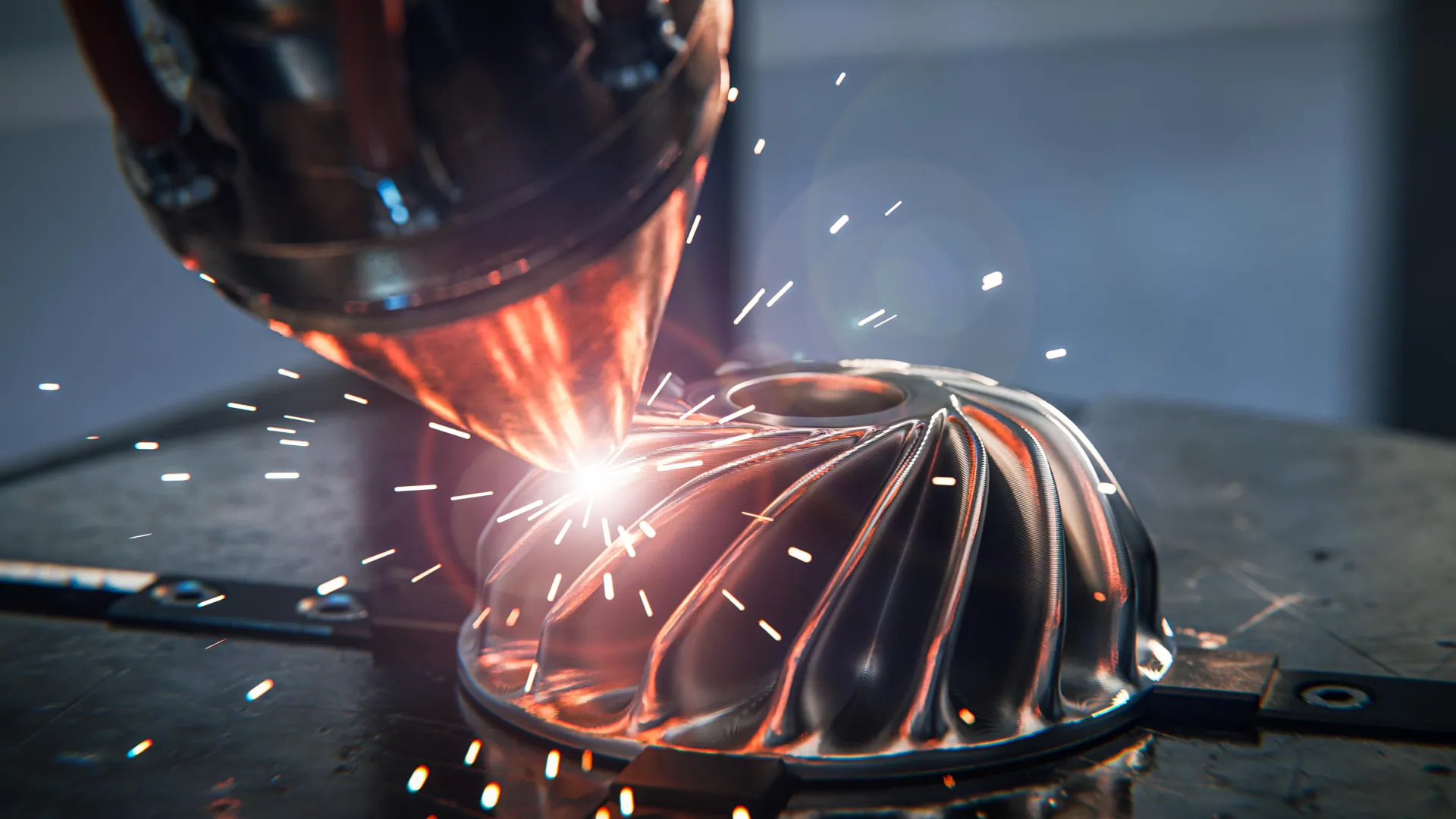
Hot-wire laser irradiation, also known as laser hot-wire welding, involves the simultaneous application of a laser beam and a filler wire that is pre-heated by an electrical current. In this specific study, the filler material was a cemented carbide rod.
The primary advantage of this method is its energy efficiency. By pre-heating the rod, the laser energy required to soften the material is significantly reduced. This allows for a more controlled deposition rate and a more stable thermal gradient during the build process. Unlike traditional AM methods that may fully melt the material—leading to the "boiling off" of cobalt or the degradation of the carbide structure—this approach focuses on softening the material to a state of high plasticity.
"The approach of forming metal materials by softening them rather than fully melting them is novel," stated Keita Marumoto, an assistant professor at Hiroshima University’s Graduate School of Advanced Science and Engineering and the study’s corresponding author. "It has the potential to be applied not only to cemented carbides but also to other difficult-to-process materials."
Experimental Methodology and Strategy Comparison
The research team investigated two distinct fabrication strategies to determine the optimal configuration for material integrity:
- Rod-Leading Strategy: In this configuration, the cemented carbide rod leads the direction of movement. The laser beam is directed at the top portion of the rod.
- Laser-Leading Strategy: In this setup, the laser leads the process, directing energy primarily at the interface between the bottom of the carbide rod and the base material (in this case, iron).
The results revealed a significant difference in material quality between the two methods. The rod-leading technique resulted in the decomposition of tungsten carbide near the top of the build, likely due to excessive direct laser exposure. This decomposition created structural defects that compromised the material’s integrity. The laser-leading method, while better at preserving the carbide, initially struggled to achieve the uniform hardness required for industrial tools.
Achieving Industrial-Grade Hardness: The Nickel Solution
The most critical challenge in 3D printing WC-Co onto a foreign substrate (like iron) is the difference in the coefficient of thermal expansion (CTE). As the deposited carbide cools, it shrinks at a different rate than the base material, leading to catastrophic cracking at the interface.
To solve this, the researchers introduced an intermediate layer based on a nickel alloy. Nickel serves as an excellent "buffer" material because its thermal properties sit between those of the iron base and the WC-Co deposit. Furthermore, nickel is metallurgically compatible with the cobalt binder used in cemented carbides.
By combining this nickel interlayer with rigorous temperature control—maintaining a thermal environment above the melting point of cobalt but below the threshold that triggers rapid grain growth—the team successfully produced a defect-free cemented carbide structure. The resulting material achieved a Vickers hardness of over 1400 HV. To put this in perspective, standard hardened steel typically measures between 700 and 900 HV. A rating of 1400 HV places the 3D-printed material in the same echelon as conventionally manufactured high-grade tools, just below super-hard materials like sapphire and diamond.
Supporting Data and Technical Specifications
The study provided detailed microstructural analysis to validate the success of the hot-wire laser method. Key data points include:
- Hardness Profile: The material maintained a consistent hardness of 1400+ HV across the deposited layers, indicating a uniform distribution of the tungsten carbide particles within the cobalt matrix.
- Phase Stability: X-ray diffraction (XRD) analysis confirmed that the "softening" approach successfully prevented the formation of the brittle "eta phase" ($W_3Co_3C$), which often plagues laser-processed carbides.
- Deposition Efficiency: The hot-wire method demonstrated a significantly higher deposition rate compared to traditional laser-cladding techniques, suggesting its viability for large-scale industrial production.
Chronology of Research and Development
The development of this technique follows a multi-year trajectory of innovation in material science:
- Early 2010s: Initial experiments with laser cladding of WC-Co powders show promise but suffer from high porosity and cracking.
- 2018-2022: Hiroshima University and Mitsubishi Materials begin exploring hot-wire technologies to improve deposition rates in welding applications.
- 2023: The team pivots to using hot-wire laser irradiation specifically for additive manufacturing of cemented carbides.
- 2024: Successful fabrication of defect-free rods and layers is achieved; the paper is submitted for peer review.
- 2025-2026: Further refinement of the process to enable complex 3D shapes, culminating in the formal publication in the International Journal of Refractory Metals and Hard Materials.
Collaborative Efforts and Industry Reaction
The research was a joint effort between academia and industry, featuring contributions from Motomichi Yamamoto of Hiroshima University and a team of specialists from Mitsubishi Materials Hardmetal Corporation, including Takashi Abe, Keigo Nagamori, Hiroshi Ichikawa, and Akio Nishiyama.
While official statements from the broader tool-making industry are pending the full April 2026 release, industry analysts suggest that this technology could be a "game-changer" for the custom tool market. "The ability to 3D print tungsten carbide with industrial-grade hardness would drastically reduce the lead time for specialized cutting tools in the aerospace and medical device sectors," noted one independent manufacturing consultant. "Currently, a custom carbide mold can take weeks to produce; with this AM technique, that could be reduced to days."
Broader Impact and Future Implications
The success of this research extends beyond the tool-making industry. The "softening vs. melting" philosophy represents a paradigm shift in additive manufacturing. By operating in the "mushy zone" of the material’s phase diagram, researchers can process materials that were previously thought to be "unweldable" or "unprintable" due to their high melting points or thermal sensitivity.
Economic Impact
The reduction in material waste is perhaps the most immediate benefit. Tungsten is primarily mined in a few specific regions globally, making it a geopolitical flashpoint. By using AM to deposit carbide only where it is needed—such as on the cutting edge of a larger, cheaper steel tool—manufacturers can reduce their reliance on expensive raw material imports by up to 50% or more.
Environmental Sustainability
Traditional powder metallurgy is an energy-intensive process involving high-pressure compaction and long furnace cycles. The hot-wire laser approach, by contrast, is a localized process that consumes energy only at the point of deposition. This aligns with global manufacturing trends toward "green" production and lower carbon footprints.
Future Directions
Professor Marumoto and his team have identified several areas for future improvement. While they have achieved defect-free structures, the current process is optimized for relatively simple geometries. The next phase of research will focus on:
- Complex Geometries: Adapting the hot-wire feed system to handle intricate 3D paths for complex tool shapes.
- Cracking Mitigation: Further refining the thermal cycles to eliminate micro-cracking in larger-volume builds.
- Material Expansion: Testing the hot-wire laser technique on other superhard composites and high-temperature alloys used in jet engines and nuclear reactors.
In conclusion, the development of a viable additive manufacturing process for tungsten carbide-cobalt marks a significant milestone in material science. By bridging the gap between the extreme properties of cemented carbides and the flexibility of 3D printing, the team at Hiroshima University and Mitsubishi Materials has laid the groundwork for a new era of high-efficiency, high-performance industrial manufacturing. As the industry moves toward the 2026 implementation of these findings, the focus will shift from laboratory proof-of-concept to the factory floor, where these "unshapable" materials will finally be tamed.