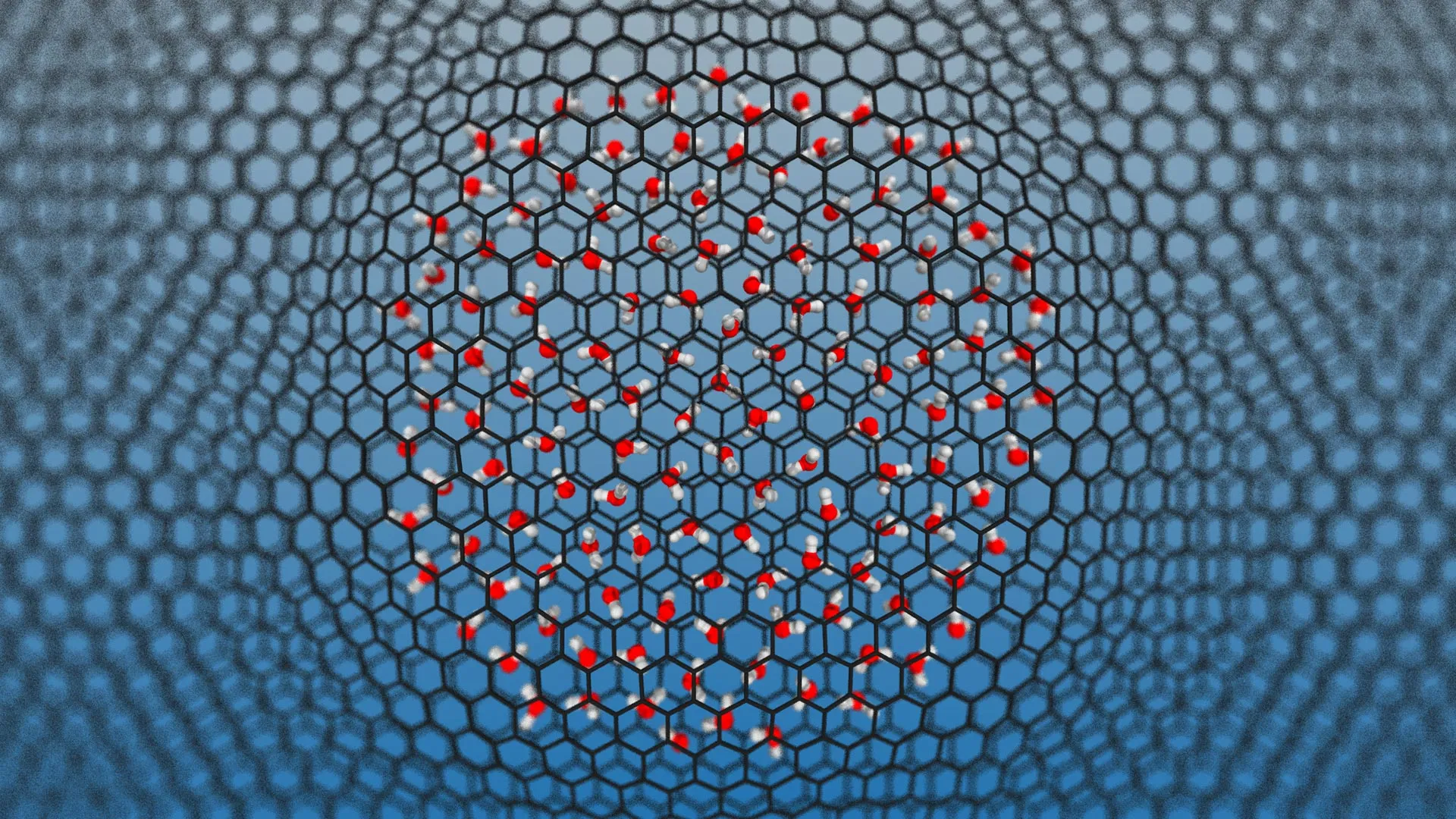
For over a century, water has remained the most scrutinized substance in the scientific world, yet its behavior when restricted to the smallest scales of existence has continued to baffle the global research community. The fundamental question—what happens to the chemistry of water when it is squeezed into spaces only a few molecules wide—has sparked intense debate and a series of seemingly contradictory experimental results over the last decade. A landmark study published in the journal Science Advances has finally provided a definitive answer, revealing that the perceived changes in water’s reactivity are not an inherent property of confinement itself, but rather a complex interplay of pressure, thermodynamics, and surface chemistry.
The research, led by a team from the University of Cambridge’s Yusuf Hamied Department of Chemistry and the Cavendish Laboratory, suggests that the "mysterious" properties of nanoconfined water can be explained through classical thermodynamic principles once all variables are correctly accounted for. This breakthrough not only resolves a long-standing academic dispute but also provides a practical blueprint for engineering the next generation of energy technologies, from high-efficiency fuel cells to advanced water desalination membranes.
The Fundamental Problem of Water Splitting
To understand the significance of this discovery, one must first look at the basic chemical identity of water. While commonly represented as $H_2O$, water is in a constant state of flux. One of its most defining characteristics is the ability to undergo auto-ionization, where a water molecule splits into two charged particles: the hydronium ion ($H_3O^+$) and the hydroxide ion ($OH^-$).
This process is the bedrock of acid-base chemistry. The concentration of these ions determines the pH of a solution, which in turn dictates the rate of biological reactions, the efficiency of industrial catalysts, and the performance of electrochemical cells. In bulk water—the water we see in a glass or an ocean—this splitting is well-understood. However, when water is trapped in nanoscale pores, such as those found in biological cell membranes or the pores of a lithium-ion battery electrode, scientists observed that the chemistry seemed to change radically.
For years, experiments yielded conflicting data. Some studies suggested that nanoconfinement significantly enhanced the acidity of water, while others found the opposite or no change at all. The inability to reconcile these findings created a bottleneck in the development of nanofluidic devices.
A Decade of Conflict: The Chronology of Nanofluidics
The journey toward this discovery began in the early 2010s, following the rise of two-dimensional materials like graphene. As researchers began to experiment with "nanofluidic" channels—conduits so small that they could only hold a few layers of molecules—they noticed that water exhibited "anomalous" properties.
Between 2014 and 2018, several high-profile papers suggested that the dielectric constant of water dropped sharply in confinement and that its dissociation constant (the rate at which it splits into ions) could increase by several orders of magnitude. These findings suggested that confinement "intrinsically" altered the quantum mechanical landscape of the water molecule.
However, by 2020, a second wave of research began to emerge. Using different materials and experimental setups, other teams found that water remained relatively stable. The scientific community was divided: was the material of the container causing the change, or was it the mere act of being squeezed? The Cambridge study, led by Xavier R. Advincula, was designed specifically to untangle this web of variables.
The Role of Machine Learning in Quantum Chemistry
The primary challenge in studying nanoconfined water is the scale. Traditional experimental techniques often struggle to capture the behavior of a single layer of molecules without the surrounding environment interfering with the signal. Conversely, traditional computer simulations were either too small to be realistic or too computationally expensive to run for long enough to see chemical reactions occur.
The Cambridge team overcame this by utilizing machine learning-driven molecular dynamics. These simulations use "neural network potentials" trained on high-level quantum mechanical data. This allowed the researchers to simulate the behavior of thousands of water molecules with the accuracy of quantum mechanics but at a fraction of the computational cost.
By simulating water trapped between sheets of graphene and hexagonal boron nitride (hBN), the team could observe the exact moment water molecules split and, more importantly, track the thermodynamic conditions—such as pressure and chemical potential—that led to those events.
The Hidden Driver: Gigapascal Pressures
The most startling revelation of the study is the sheer magnitude of pressure that develops naturally at the nanoscale. The researchers found that water droplets trapped between atomically thin layers of graphene or hBN experience internal pressures of several gigapascals (GPa). To put this into perspective, one gigapascal is roughly 10,000 times the atmospheric pressure at sea level, similar to the pressures found deep within the Earth’s mantle.
Crucially, this pressure is not applied by an external machine. It is generated by van der Waals forces—the weak attractive forces that exist between all atoms. While these forces are negligible in our daily lives, they become incredibly powerful when two large, flat surfaces (like graphene sheets) are separated by only a few nanometers. The sheets are pulled together with such force that they compress the water trapped between them.
The simulations proved that it is this intense pressure, rather than the "confinement" itself, that drives the increased splitting of water molecules. When the researchers compared the confined water to bulk water subjected to the same extreme pressures, the chemical behavior was nearly identical.
"The contradictions in the literature were largely because scientists were comparing systems at different effective pressures or densities without realizing it," explained Xavier R. Advincula, the study’s lead author. "When we compared systems under equivalent thermodynamic conditions—specifically at the same chemical potential—the effect of confinement largely disappeared."
Surface Chemistry: The hBN vs. Graphene Distinction
While pressure is the primary driver, the study also highlighted that the "container" still plays a vital role through its surface chemistry. The team compared two materials that are structurally almost identical: graphene (made of carbon) and hexagonal boron nitride (hBN).
Despite their structural similarities, their chemical interactions with water are vastly different. In the hBN simulations, the researchers observed that when a water molecule split, the resulting hydroxide ions ($OH^-$) would form weak chemical bonds with the boron atoms in the wall. This "stabilization" of the ions lowered the energy barrier for the reaction to occur, effectively making the water more reactive.
In contrast, graphene is chemically inert. It does not interact with the ions, meaning that the only factor affecting water reactivity in a graphene channel is the pressure. This distinction explains why previous experiments using different materials yielded such wildly different results.
Expert Reactions and Analysis
The publication of these findings has drawn significant interest from the broader scientific community. While not involved in the study, experts in nanofluidics have noted that the research provides a "unifying theory" for the field.
"For years, we have treated nanoconfined water as a ‘black box’ where the laws of bulk chemistry seemed to break down," says one independent chemical engineer. "What this study shows is that the laws haven’t broken; we just weren’t looking at the right variables. By identifying pressure and surface stabilization as the two key levers, the Cambridge team has turned a mystery into an engineering problem."
The study’s senior author, Professor Angelos Michaelides, emphasized the simplifying power of their findings. "What surprised us most was how much of the apparent confinement effect could be explained by thermodynamics. Once pressure and chemical potential are properly accounted for, a great deal of the complexity simply falls into place."
Engineering the Future: Implications for Technology
The ability to predict and control the reactivity of water at the nanoscale has profound implications for several "green" technologies:
- Hydrogen Fuel Cells: The efficiency of a fuel cell depends on how quickly protons (derived from water splitting) can move through a membrane. By tailoring the material and the pressure within these membranes, engineers can potentially double the ion transport rate.
- Battery Technology: In many high-performance batteries, water molecules can become trapped in the electrode structure, leading to unwanted side reactions that shorten battery life. This study provides the framework to suppress those reactions by choosing inert materials or adjusting pore sizes to manage internal pressure.
- Desalination and Water Purification: Understanding how water interacts with hBN and graphene-like pores is essential for creating membranes that allow water to pass through while blocking salts and contaminants with minimal energy loss.
- Catalysis: The study suggests that we can use nanoconfined environments as "nano-reactors." By choosing materials that stabilize specific ions, scientists could trigger chemical reactions that are impossible in bulk water.
Next Steps: Moving Toward Real-World Complexity
Despite the breakthrough, the researchers acknowledge that there is more work to be done. The current study focused on "ideal" surfaces—perfectly flat sheets of graphene and hBN. In real-world applications, materials have defects, edges, and impurities that can further complicate the chemistry.
The team is already moving forward with several follow-up projects:
- Defect Engineering: Studying how cracks or "dangling bonds" on the surface of 2D materials affect ion stabilization.
- Material Screening: Using their machine learning model to screen thousands of other 2D materials (such as MXenes or transition metal dichalcogenides) to find the "perfect" environment for specific chemical reactions.
- Experimental Verification: Collaborating with experimental physicists to use advanced spectroscopy to measure the gigapascal pressures predicted by the simulations.
"More importantly, the work offers a practical design principle for engineering nanoscale chemical environments," said Dr. Christoph Schran of the Cavendish Laboratory. "Rather than focusing solely on the size of pores or channels, we can tailor water reactivity by choosing a confining material whose surfaces interact with the products of water dissociation."
As the world moves toward a future powered by hydrogen and advanced electrochemical storage, the ability to "tune" the most basic properties of water may prove to be the key that unlocks the next era of sustainable energy. The mystery of the tiny space has been solved, and in its place, a new field of nanofluidic engineering is beginning to take shape.