In a revelation that challenges decades of established biological dogma, researchers at Stanford Medicine have identified that glucose—the primary sugar found in the blood and the fundamental fuel for nearly all living cells—serves a secondary, "undercover" role as a master regulator of tissue differentiation. This process, by which unspecialized stem cells transform into the specific functional cells that constitute the body’s various organs and tissues, was previously thought to be governed primarily by complex protein signaling pathways and genetic switches. The study, published in the journal Cell Stem Cell, demonstrates that glucose does not merely provide the energy for this transformation but actively dictates the process by which it occurs.
The traditional understanding of glucose centers on catabolism, the metabolic process where the sugar is broken down to release chemical energy stored in its bonds. However, the Stanford team, led by Paul Khavari, MD, PhD, the Carl J. Herzog Professor in Dermatology and chair of the Department of Dermatology, found that glucose influences cellular behavior in its intact, non-metabolized form. By binding directly to specific proteins that control gene expression, glucose acts as a structural signaling molecule, effectively telling the cell when and how to mature.
A Paradigm Shift in Cellular Biology
The discovery was so unexpected that the research team spent several years conducting exhaustive follow-up experiments to verify the validity of their findings. The initial hypothesis in cellular biology has long been that as cells mature and prepare to stop dividing—a state known as senescence—their energy requirements drop, and consequently, their glucose intake should decrease.
"At first we just didn’t believe it," said Dr. Khavari, who also serves as a member of the Stanford Cancer Institute. "But the results of extensive follow-up experiments were clear: Glucose interacts with hundreds of proteins throughout the cell and modulates their function to promote differentiation."
The implications of this "double life" for glucose are profound. It suggests that the sugar levels in our bodies are not just a reflection of metabolic health but are active participants in the structural maintenance and regeneration of our tissues. This finding provides a new lens through which to view chronic conditions like diabetes and complex diseases like cancer, where cellular differentiation is often severely disrupted.
The Chronology of a Serendipitous Discovery
The journey toward this discovery began not with a focus on glucose, but with a broad search for the various molecules that drive the maturation of human skin. Dr. Khavari and lead author Vanessa Lopez-Pajares, PhD, a research scientist at Stanford, utilized a sophisticated combination of mass spectrometry and high-throughput screening. This allowed them to monitor the fluctuations of thousands of different biomolecules as human skin stem cells transitioned into mature keratinocytes—the cells that form the protective outer layer of the skin.
The researchers operated on a logical premise: any molecule that significantly increases in concentration during the differentiation process is likely a driver of that transition. Upon analyzing the data, they identified 193 "suspect" molecules. While many of these were known proteins and enzymes already associated with cellular growth, the second-most elevated molecule on the list was glucose.
This finding contradicted the expected metabolic trajectory. "We had expected glucose levels to decrease during differentiation because the cells begin to divide less rapidly, and their energy requirements are less," Khavari explained. Instead, the data showed that as epidermal stem cells moved toward becoming differentiated keratinocytes, internal glucose levels spiked significantly.
To confirm this anomaly, the team employed several advanced verification methods:
- Fluorescent and Radioactive Analogs: They tracked the uptake of glucose-like molecules that glow or emit radiation, confirming that the cells were actively pulling more sugar from their environment.
- Biological Sensors: They engineered cells with internal sensors that change color (glowing red or green) in response to specific concentrations of glucose.
- Cross-Tissue Analysis: To ensure this wasn’t a phenomenon unique to skin, they tested developing fat cells, bone cells, and white blood cells, as well as genetically engineered mice. In every instance, the pattern held: glucose levels rose as cells differentiated.
The Mechanism: Glucose as a "Broadcast Signal"
The most critical phase of the research involved determining how the glucose was being used. Through additional experiments, the team discovered that the increase in internal glucose was a result of two factors: a boost in the production of transport proteins that pull glucose into the cell and a simultaneous decrease in the proteins that export it.
Surprisingly, this accumulation was not accompanied by an increase in metabolic byproducts. To prove that the energy-generating function of glucose was irrelevant to this specific process, the researchers grew "skin organoids"—engineered tissues that mimic native skin—in a medium containing a glucose analog that cells cannot break down for energy. Even though the cells could not "eat" this sugar, they differentiated perfectly.
"That was really the biggest shock," Khavari noted. "These glucose analogs support differentiation just as well as regular glucose."
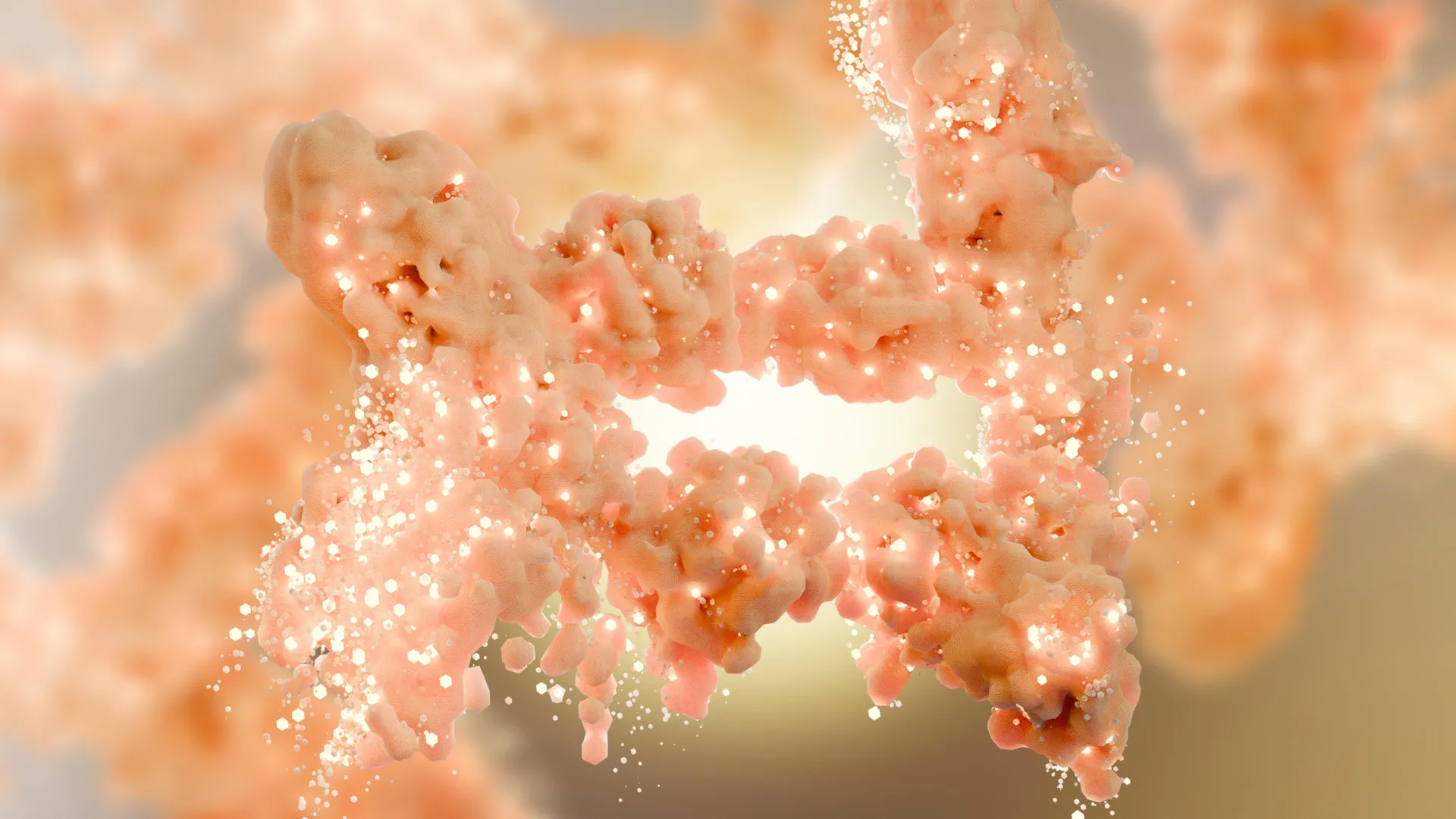
Further molecular "digging" revealed the specific mechanism. Once inside the cell, the intact glucose molecules bind to a variety of proteins. One such protein is IRF6, a known regulator of gene expression. When glucose binds to IRF6, it alters the protein’s physical shape (conformation). This structural change modifies the protein’s ability to interact with the genome, effectively switching on the genes required for the cell to mature.
Khavari likened this process to a "broadcast signal." While most cellular signals are highly targeted, like a single telephone call between two people, glucose acts like a fire alarm. When levels rise, the signal reaches every part of the cell simultaneously, triggering a coordinated response across hundreds of different proteins.
Supporting Data and Quantitative Impact
The study’s data highlights the massive scale of glucose’s influence on the cellular landscape. By observing the genetic response to low glucose environments, the researchers found that the expression of over 3,000 genes was affected. A significant portion of these genes are those responsible for encoding the proteins that build and maintain the skin’s barrier.
The 193 molecules initially identified in the high-throughput screen provided the first statistical evidence that the metabolic environment of a stem cell is far more dynamic than previously recorded. The fact that glucose sat at the very top of this list—second only to a known differentiation protein—underscores its central role in tissue biology.
Furthermore, the study’s observation of glucose uptake across different tissue types (adipose, osteoblast, and hematopoietic) suggests that this is a universal biological principle rather than a specialized skin function. This universality points toward a fundamental evolutionary mechanism where nutrient availability is directly coupled with the body’s ability to repair and regenerate itself.
Implications for Diabetes and Cancer Treatment
The Stanford study provides a potential explanation for several long-standing medical mysteries. In patients with diabetes, chronically high blood sugar levels are known to cause significant issues with wound healing and tissue regeneration. If glucose is a "broadcast signal" for differentiation, then excessively high or fluctuating levels may "jam" the signal, preventing stem cells from correctly maturing to repair damaged skin or blood vessels.
In the realm of oncology, the discovery offers a new perspective on the nature of tumors. Cancer is often described as a disease of "failed differentiation," where cells remain in a primitive, rapidly dividing state and refuse to mature into functional tissue. Many aggressive cancers are known to consume vast amounts of glucose (the Warburg Effect). While this has traditionally been viewed purely as a way for the cancer to fuel its growth, the Stanford findings suggest that the way cancer cells handle glucose might also be a way to subvert the signals that would otherwise force them to differentiate and stop dividing.
There is also a direct link to current pharmaceutical research. Several glucose analogs are currently in clinical and preclinical trials as anticancer agents. Historically, these drugs were designed to "starve" the tumor. However, these new findings suggest that these drugs might actually be working by mimicking the signaling role of glucose, thereby forcing immature cancer cells to differentiate into less harmful, mature cells.
Future Directions and Scientific Reception
The research, funded by the National Institutes of Health and the U.S. Department of Veterans Affairs, is being hailed as a "springboard" for a new field of study. It shifts the focus from what molecules become (metabolites) to what they do in their original form.
"This finding is a springboard for research on dysregulation of glucose levels, which affects hundreds of millions of people," Khavari said. He emphasized that the scientific community must now pay closer attention to other small biomolecules that were previously dismissed as "passive" metabolic fuel.
The scientific reception of the paper has been one of cautious excitement. By identifying the specific protein-binding action of glucose, the Stanford team has provided a concrete biochemical pathway that other researchers can now target. Future studies are expected to investigate whether other sugars, such as fructose or galactose, have similar signaling roles, and how dietary interventions might directly influence tissue-level "broadcast signals."
As the medical community continues to grapple with the global rise of metabolic disorders, the realization that blood sugar is a master architect of human tissue provides a vital new roadmap for both prevention and therapy. The "undercover" life of glucose is now a matter of public record, fundamentally changing the way we understand the relationship between the food we eat and the cells we are made of.