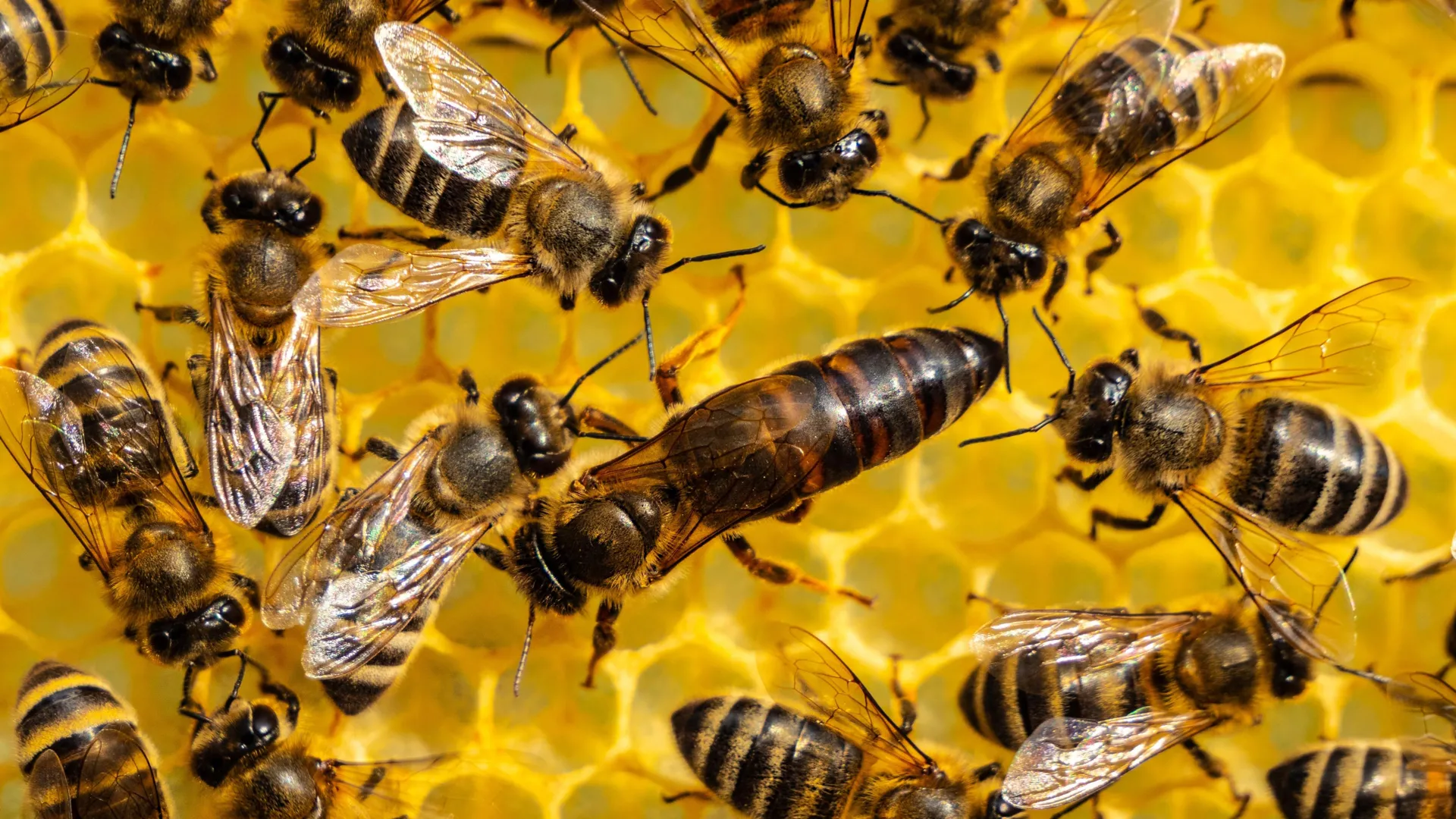
For decades, the prevailing scientific understanding of how a honeybee colony produces its sole reproductive female—the queen—centered on a single, seemingly potent ingredient: royal jelly. This rich, milky secretion, produced by worker bees, was believed to be the magic elixir, transforming an ordinary larva into the colony’s monarch. However, groundbreaking new research is challenging this long-held notion, revealing a far more intricate and sophisticated process involving specialized construction, unique materials, and a dedicated cadre of worker bees. The findings, published in the esteemed journal Nature, suggest that the development of a queen bee is not solely a matter of diet, but a meticulously engineered environmental outcome.
The Long-Held Belief: Royal Jelly as the Sole Catalyst
The traditional view posited a relatively simple pathway for queen bee development. Upon discovering a potential queen larva—often an egg destined to be a worker but designated for queenhood by the colony—worker bees would relocate it to a specially constructed cell. This cell, known as a queen cell, would then be continuously provisioned with royal jelly. This nutrient-dense substance, significantly richer in proteins and sugars than the pollen and nectar mixture fed to worker larvae, was thought to contain all the necessary developmental cues. The remarkable differences between queens and workers—larger size, longer lifespan, distinct reproductive capabilities—were attributed primarily to this specialized diet. Queens can live for several years, laying thousands of eggs daily, a stark contrast to the short, non-reproductive lives of worker bees, which typically last only a few weeks to months. This stark divergence in destiny from nearly identical genetic starting points made royal jelly the unquestioned hero of queen bee metamorphosis.
A New Paradigm: Engineered Environments and Specialized Builders
The recent study, spearheaded by researchers from the Center for Integrative Bee Research (CIBER) at the University of California, Riverside, and collaborators, has meticulously dismantled this simplified model. Their investigation reveals that the queen cell itself is a marvel of biological engineering, far exceeding its role as a mere protective casing. These specialized chambers are not haphazardly constructed; they are deliberately designed environments that provide a unique microclimate crucial for a larva’s successful transition into a queen.
The research team identified a previously unrecognized group of young worker bees, aptly termed "queen cell builders." These individuals appear to possess specialized physiological and behavioral adaptations for their singular task. Unlike generalist foragers or brood tenders, these builders are dedicated to the creation and maintenance of these critical royal nurseries. Their involvement suggests a level of social organization and task specialization within the hive that is far more complex than previously appreciated.
"The old idea was relatively simple: take an egg, move it into a queen cell, feed it royal jelly, and you get a queen," explained Boris Baer, entomologist and director of CIBER, whose laboratory was instrumental in this research. "What we found is that there’s an entire machinery behind this process. It’s much more sophisticated than we imagined." This sentiment underscores the paradigm shift the study represents, moving from a singular dietary explanation to a holistic, environmentally driven one.
The Anatomy of a Royal Nursery: More Than Just Wax
The physical characteristics of queen cells are distinct from the familiar hexagonal cells that house worker and drone brood. Queen cells are typically larger, elongated, and often described as resembling a peanut or an acorn. However, the differences extend far beyond mere shape.
Through advanced techniques, including thermal imaging, behavioral monitoring, materials science, and chemical analysis, the researchers uncovered significant disparities in the wax composition and thermal properties of queen cells compared to standard brood comb. The wax used in queen cells is not simply the same wax from which worker cells are constructed. Instead, it is a modified material exhibiting unique physical and chemical signatures.
Key Discoveries Regarding Queen Cell Construction:
- Unique Wax Composition: The wax utilized in queen cells is less dense and more flexible than that used for worker brood. This enhanced flexibility likely allows for the characteristic elongated shape and provides a more adaptable structure.
- Superior Thermal Regulation: The modified wax possesses superior heat and moisture retention capabilities. This is critical, as developing queen larvae require stable, warmer temperatures to achieve optimal growth and development. Thermal imaging revealed that queen cells consistently maintained a higher and more stable temperature than adjacent worker brood cells.
- Chemical Signatures: Analysis of the wax revealed differences in its fatty acid profiles and the presence of specific chemical signals. These subtle but significant chemical variations may play a direct role in influencing the larva’s developmental pathways, potentially acting as epigenetic triggers.
To empirically validate the importance of these structural and material differences, the research team conducted a crucial experiment. They deliberately raised queen larvae in cells constructed from either the specialized "queen wax" or standard worker wax. The results were stark and compelling: larvae housed in worker wax cells, even when provided with identical royal jelly sustenance, exhibited a significantly higher mortality rate. Those that did survive often developed into smaller, less robust queens. This experiment directly demonstrated that the environmental context provided by the queen cell is as critical to successful queen development as the nutritional input.
The Dedicated Queen Cell Builders: A Specialized Workforce
The discovery of the "queen cell builders" adds another layer of sophistication to the process. These are not just any worker bees; they are a specialized contingent within the hive, distinguished by their youth and their physiological adaptations. The study observed that these builders maintain higher body temperatures while engaged in their task, a characteristic that likely contributes to the elevated temperatures within the queen cells. Furthermore, they exhibit physiological changes suggestive of heightened metabolic activity and specialized wax production pathways.
The researchers also employed an ingenious method to trace the origin and modification of the wax used in queen cells. By introducing trace amounts of graphite into the hive’s general honeycomb, they were able to observe darkened wax appearing within the newly constructed queen cells. This indicated that the queen cell builders were not merely utilizing existing wax reserves but were actively collecting, processing, and modifying materials from elsewhere in the hive to create the bespoke environment for queen development. Their bodies, therefore, act as miniature processing plants, transforming raw materials into the specialized substance required for royal nurseries.
This meticulous material sourcing and modification suggests a level of foresight and planning within the colony that transcends simple instinct. The queen cell builders are not just passively following instructions; they are actively engineering a specific environment. The faster development of queens, reaching maturity in approximately 16 days compared to the 21 days required for workers, is likely a direct consequence of this optimized, warmer, and chemically distinct environment. This accelerated development is crucial for colony survival, especially in situations where a queen may have died prematurely or the colony is preparing to swarm.
A Royal Court Analogy: The Hive’s Sophisticated Reproduction Strategy
The coordinated effort involved in queen rearing has led researchers to draw compelling analogies to human societal structures. Baer likens the process to the meticulous operations of a royal palace, where a dedicated staff ensures the well-being and proper development of its most important figure.
"You can think of it as something like Buckingham Palace," Baer remarked. "There is a dedicated group of bees focused entirely on raising the queen, and if they don’t get it right, the colony cannot reproduce." This analogy highlights the immense pressure and precision involved. The success of the entire colony hinges on the successful maturation of a single queen.
The prevalence of this sophisticated queen-rearing strategy across both Asian ( Apis cerana) and European ( Apis mellifera) honeybee species suggests that this is a deeply ingrained, evolutionarily conserved behavior. It points to a long evolutionary history of optimizing reproductive success through complex social engineering.
The multidisciplinary nature of this research, bringing together experts in behavior, physiology, chemistry, materials science, and genomics, exemplifies a modern approach to understanding complex biological systems. The collaboration, led by former UCR postdoctoral researchers Yu Fang and Yahya Al Naggar, underscores the power of interdisciplinary science in unraveling intricate natural phenomena.
Broader Implications: Environment as a Developmental Driver
The implications of this discovery extend far beyond the realm of apiculture and entomology. It offers a profound insight into the fundamental principles of biological development. For years, the narrative of queen bee development served as a seemingly straightforward case study: a special diet leads to a special insect. This research reframes that narrative, emphasizing the critical role of the physical and social environment in shaping an organism’s destiny.
This study provides compelling evidence that development is not solely dictated by genetic blueprints or nutritional inputs alone. The immediate surroundings, the materials an organism is encased in, and the social behaviors of its caretakers all play significant, and in this case, indispensable roles. It suggests that for many organisms, the intricate interplay between genetics, nutrition, and environment is the true determinant of developmental outcomes.
The findings also illuminate the remarkable capacity of social insects to act as integrated biological systems. Honeybee colonies are not merely collections of individual insects; they are highly organized entities capable of complex decision-making, resource management, and environmental engineering. Their ability to meticulously construct and maintain specialized environments for reproduction demonstrates an advanced form of collective intelligence and adaptation.
In conclusion, the revelation that queen bees are not merely a product of royal jelly but the result of an elaborate, engineered nursery, meticulously constructed and maintained by specialized workers, fundamentally alters our understanding of honeybee reproduction. It underscores the profound complexity inherent in even seemingly simple biological processes and highlights the extraordinary adaptive strategies employed by social insects to ensure the continuity of their colonies. This research opens new avenues for understanding developmental biology, social insect behavior, and the intricate dance between organism and environment.