

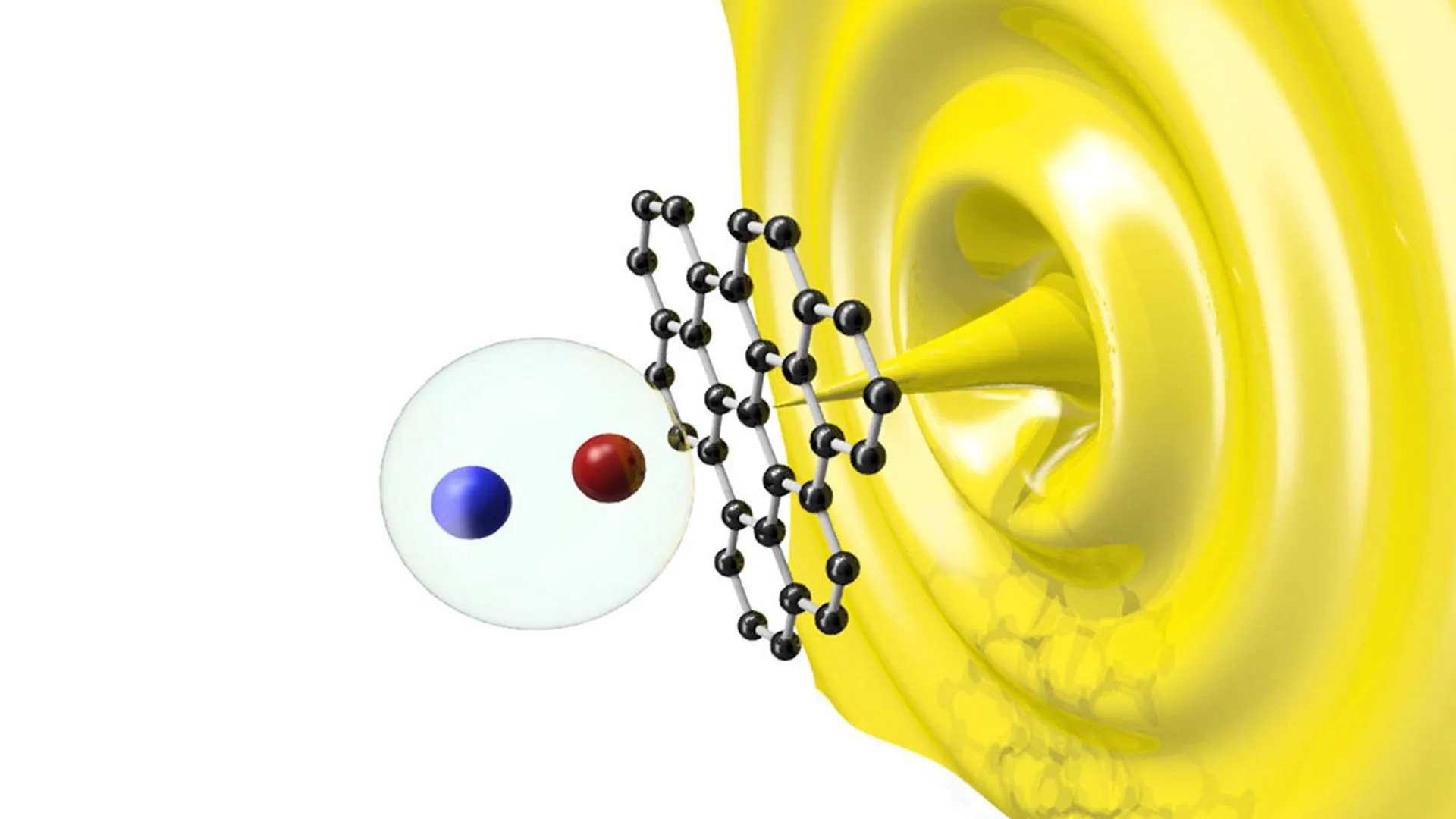
The landscape of quantum mechanics has been fundamentally altered by a landmark experiment conducted at the Tokyo University of Science, where researchers have successfully observed matter-wave diffraction in a beam of positronium for the first time. This achievement, led by Professor Yasuyuki Nagashima and his colleagues, marks the culmination of decades of theoretical anticipation and experimental refinement. By demonstrating that a bound system of an electron and its antimatter counterpart, the positron, can exhibit interference patterns similar to those of single particles or larger atoms, the team has provided definitive proof of wave-particle duality in one of the universe’s most elusive and short-lived atomic systems.
The discovery, recently detailed in the journal Nature Communications, serves as a significant milestone in the study of exotic atoms. Positronium is a unique "atom" consisting of an electron and a positron orbiting a common center of mass. Unlike standard hydrogen, which features a heavy central proton, positronium is composed of two particles of equal mass, making it a purely leptonic system. Because it lacks a nucleus, it serves as a perfect laboratory for testing the principles of quantum electrodynamics (QED) and the fundamental symmetries of nature.
The Historical Context of Matter-Wave Duality
To appreciate the magnitude of this discovery, one must look back to the early 20th century, a period of radical transformation in physical science. In 1924, French physicist Louis de Broglie proposed a revolutionary hypothesis: if light waves could behave like particles (photons), then particles of matter should also possess wave-like properties. He suggested that any moving particle has an associated wavelength, now known as the de Broglie wavelength, which is inversely proportional to its momentum.
This theory was first confirmed in 1927 through the Davisson-Germer experiment, where electrons fired at a nickel crystal produced a diffraction pattern. This proved that electrons, previously thought of only as solid points of mass, could interfere with themselves like ripples on a pond. In the subsequent decades, physicists expanded this observation to increasingly complex entities. Neutrons were shown to diffract in the 1930s, followed by helium atoms and eventually large, complex molecules like "buckyballs" (C60) in 1999.
Despite these successes, positronium remained a "missing link" in the experimental catalog of matter waves. Its inherent instability—positronium typically annihilates into gamma rays in less than 142 nanoseconds—and its neutrality made it exceptionally difficult to manipulate into a coherent beam capable of producing a clear diffraction pattern.
The Challenge of the Positronium System
Positronium exists in two primary states: para-positronium, which has a lifetime of only 125 picoseconds, and ortho-positronium, which lasts about 142 nanoseconds in a vacuum. For researchers, the primary hurdle has always been the creation of a beam that is both "bright" enough (dense with particles) and "coherent" enough (particles moving at uniform speeds) to be measured before the system destroys itself through matter-antimatter annihilation.
Furthermore, because positronium is an equal-mass system, its internal dynamics differ significantly from those of a standard atom. In a hydrogen atom, the heavy proton acts as a stationary anchor. In positronium, both the electron and the positron are in constant, equal motion around their shared center. Physicists have long speculated whether such a balanced, two-body system would diffract as a single unified wave or if its internal components would interfere with the process. The Tokyo University of Science experiment has now provided a clear answer: the system acts as a single quantum entity.
Experimental Methodology and the Role of Graphene
The breakthrough achieved by Professor Nagashima’s team relied on a sophisticated multi-stage experimental setup. The first challenge was the generation of a high-quality beam. The researchers began by creating negatively charged positronium ions ($Ps^-$), which consist of one positron and two electrons. By using ions, the team could use electromagnetic fields to accelerate and focus the particles, a feat much harder to achieve with neutral positronium.
Once the $Ps^-$ ions were accelerated to the desired energy levels, the team employed a precisely timed laser pulse to perform "photodetachment." The laser stripped away the extra electron, leaving behind a neutral beam of ortho-positronium traveling at high speeds. This method allowed the team to produce a beam with a very narrow energy spread and high directional coherence, essential for observing delicate quantum interference.
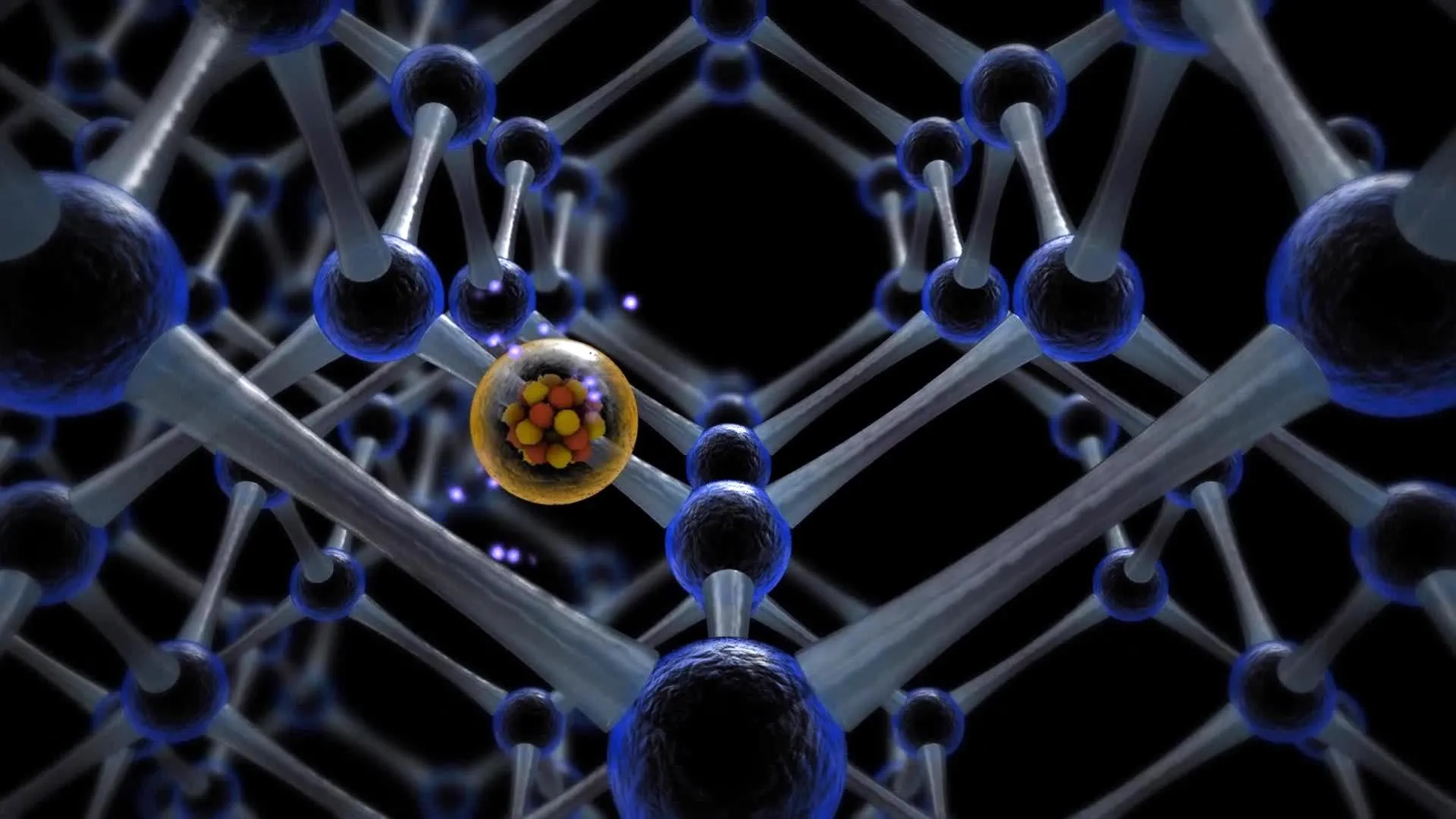
The beam was then directed toward a target consisting of two to three layers of graphene. Graphene, a single layer of carbon atoms arranged in a hexagonal lattice, served as the ultimate diffraction grating. The spacing between the carbon atoms in the graphene lattice is roughly 0.24 nanometers, which closely matched the de Broglie wavelength of the positronium atoms at the specific energies used in the experiment (up to 3.3 keV).
As the positronium atoms passed through the graphene, they did not simply bounce off or pass through like tiny bullets. Instead, their quantum wave-functions interacted with the periodic potential of the carbon lattice. This interaction caused the waves to interfere, creating a pattern of constructive and destructive interference that was captured by a sensitive detector located behind the target.
Analyzing the Data: Evidence of a Unified Quantum Object
The results were unequivocal. The detector recorded a distinct diffraction pattern consisting of a central peak surrounded by secondary maxima, exactly as predicted by the wave equations of quantum mechanics. This pattern confirmed that the positronium beam was undergoing matter-wave diffraction.
One of the most significant findings of the study was the confirmation that positronium behaves as a unified quantum object. Even though it is composed of two distinct particles (an electron and a positron), the diffraction pattern showed no signs of the particles acting independently. The entire system—the lepton and the antilepton bound together—moved and interfered as a single wave.
Supporting data from the experiment highlighted the precision of the Tokyo team’s approach. The researchers conducted tests at various energy levels, ranging from 1.1 keV to 3.3 keV. They observed that as the energy (and thus the momentum) of the positronium increased, the diffraction angles decreased, perfectly adhering to the mathematical relationship established by de Broglie a century ago. The use of an ultra-high vacuum environment was also critical, as it prevented atmospheric gases from contaminating the graphene surface, which would have blurred the sensitive diffraction peaks.
Official Statements and Scientific Impact
Professor Yasuyuki Nagashima, the lead researcher, emphasized the fundamental nature of this achievement. "Positronium is the simplest atom composed of equal-mass constituents, and until it self-annihilates, it behaves as a neutral atom in a vacuum," Nagashima stated. "Now, for the first time, we have observed quantum interference of a positronium beam, which can pave the way for new research in fundamental physics."
Associate Professor Yugo Nagata, a key member of the research group, noted the technical difficulty of the milestone. "This groundbreaking experimental milestone marks a major advance in fundamental physics. It not only demonstrates positronium’s wave nature as a bound lepton-antilepton system but also opens pathways for precision measurements involving positronium," Nagata said.
The scientific community has reacted with high interest, as this experiment fills a long-standing gap in our understanding of how antimatter systems behave at the quantum level. While the wave-particle duality of electrons (leptons) and positrons (antileptons) had been individually confirmed, their behavior as a bound pair in a diffraction experiment was a theoretical "given" that had lacked empirical proof until now.
Future Applications: From Materials Science to Gravity
The successful diffraction of positronium is not merely a victory for theoretical physics; it has practical implications for several fields of study. One of the most promising applications is in the realm of materials science. Because positronium is electrically neutral, it can be used to probe the surfaces of materials without the interference caused by the electrostatic charges of traditional electron or ion beams.
This makes positronium diffraction an ideal tool for studying insulators, thin films, and magnetic materials. Traditional electron microscopy can sometimes damage or charge the surface of an insulator, distorting the results. A beam of neutral positronium could, in theory, provide high-resolution structural data of a material’s surface with unprecedented delicacy.
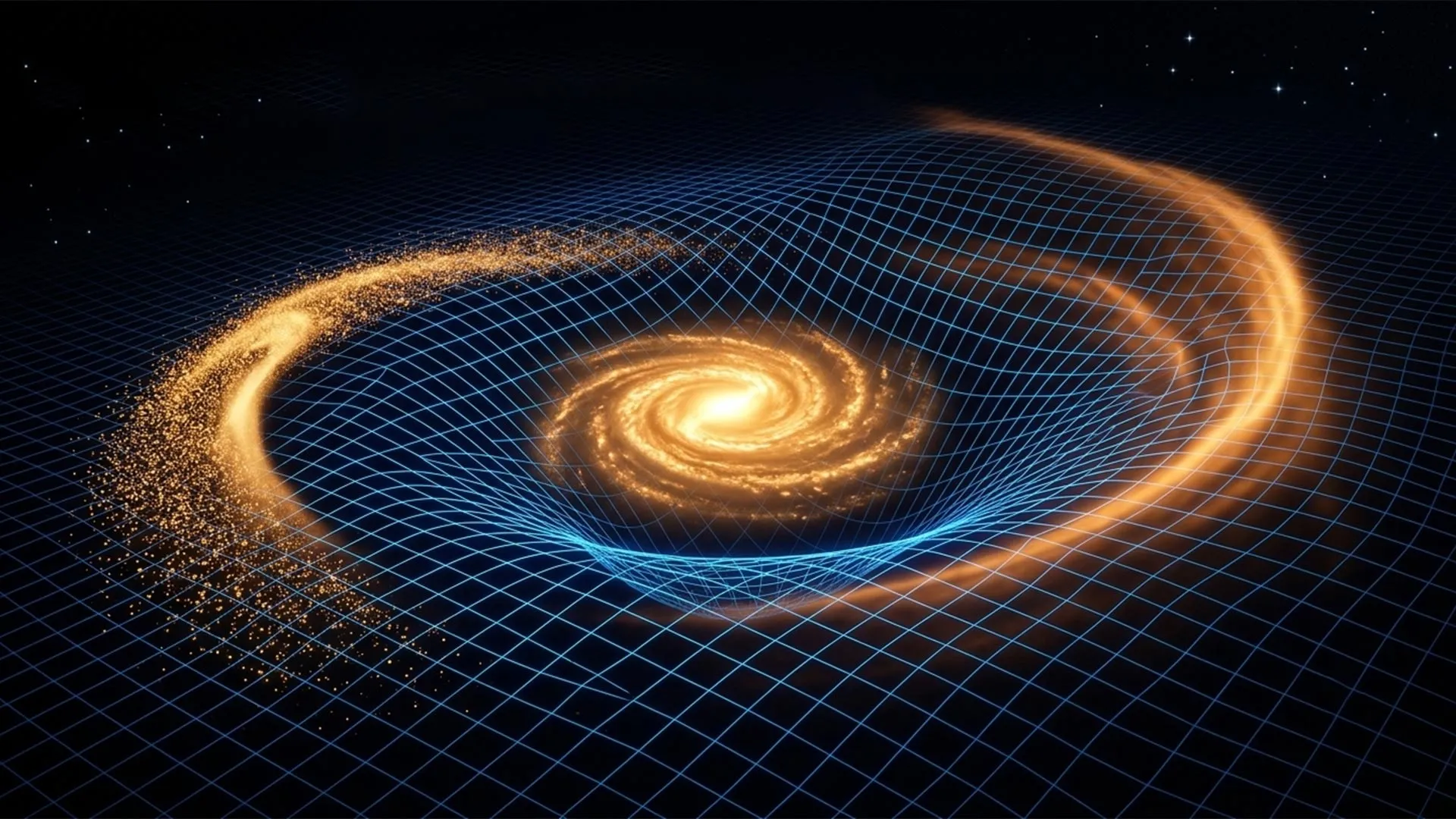
Perhaps even more exciting is the potential for this technology to solve one of the greatest mysteries in physics: the relationship between antimatter and gravity. While Einstein’s General Relativity suggests that gravity should act on matter and antimatter identically, this has been notoriously difficult to prove experimentally. Because gravity is such a weak force, any residual electric charge on a particle can overwhelm the gravitational signal.
Since positronium is neutral and its wave behavior is now controllable and measurable, researchers believe that positronium interferometry could be used to measure the gravitational acceleration of an antimatter-containing system. By observing how a positronium interference pattern shifts in a gravitational field, scientists might finally determine if antimatter "falls" at the same rate as ordinary matter.
Conclusion and Research Outlook
The work of the Tokyo University of Science team, supported by the Japan Society for the Promotion of Science (JSPS) KAKENHI grants, represents a triumph of experimental design. By successfully navigating the challenges of short particle lifetimes and the need for high-coherence beams, they have added a vital chapter to the story of quantum mechanics.
As the team continues to refine their methods, the focus will likely shift toward increasing the intensity of the positronium beams and exploring different types of diffraction targets. The ability to manipulate "exotic" matter with the same precision we apply to standard atoms suggests that we are entering a new era of antimatter research—one where the strange rules of the quantum world can be used to unlock the secrets of the universe’s most fundamental building blocks.














Leave a Reply