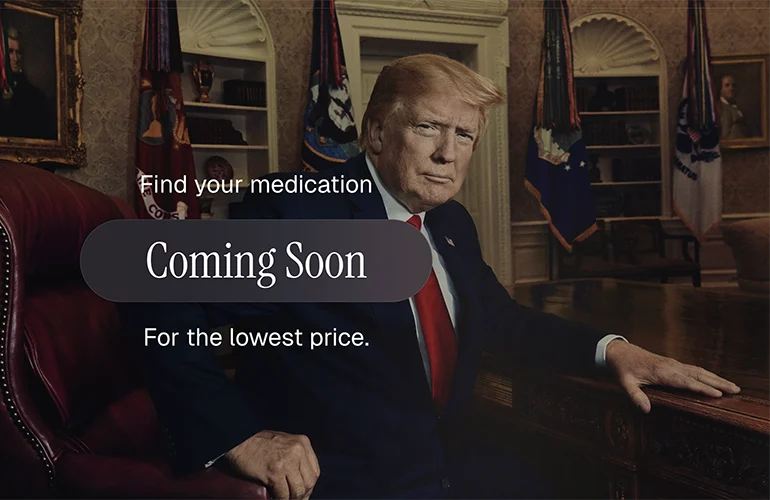
As of early February, TrumpRx.gov presents a starkly minimalist facade: a stylized Oval Office portrait of the president accompanied by the succinct, anticipatory phrase, "Coming Soon." This digital placeholder belies the significant political and industry maneuvering that has propelled the initiative, and the profound questions it raises about drug access, pricing transparency, patient safety, and the evolving landscape of pharmaceutical distribution. The portal, conceived as a federal conduit to funnel patients directly to pharmaceutical manufacturers’ direct-to-consumer (DTC) drug programs, represents a bold, some argue controversial, pivot in the administration’s approach to healthcare and drug affordability.
The genesis of TrumpRx.gov can be traced to a series of strategic moves in early 2025, beginning with Donald Trump Jr.’s appointment to the board of BlinkRx, a digital pharmacy company. BlinkRx quickly distinguished itself by marketing a service designed to establish DTC drug programs for manufacturers in as little as 21 days—an unprecedented speed in a heavily regulated industry. Within months of this development, President Trump himself began actively pressuring major pharmaceutical companies to adopt precisely such direct-to-consumer channels. By the fall of that year, the White House officially unveiled TrumpRx.gov, signaling a federal endorsement and integration into this burgeoning distribution model.
Unpacking the TrumpRx.gov Model: Referral, Cash Payments, and Unforeseen Costs
At its core, TrumpRx.gov is designed to operate as a referral mechanism. It functions as a federal "front door," directing patients to the proprietary direct-to-consumer websites maintained by individual drugmakers. On these manufacturer-run platforms, patients are expected to pay cash prices for their medications, prices that the White House asserts have been negotiated directly with the pharmaceutical companies. The administration’s stated aim is to bypass traditional intermediaries, particularly pharmacy benefit managers (PBMs) and insurance companies, in a bid to lower out-of-pocket costs for consumers.
However, this model introduces a critical caveat: because these transactions occur outside the conventional insurance framework, the funds patients spend on medications purchased through TrumpRx-linked channels may not count toward their annual deductibles or out-of-pocket maximums. This structural bypass carries significant financial implications for patients, potentially exposing them to higher healthcare costs later in the year for other medical services, as their initial drug expenditures would not contribute to meeting their insurance thresholds. Healthcare policy experts have voiced concerns that while the immediate cash price might appear lower for certain drugs, the overall financial burden on patients—especially those with chronic conditions requiring multiple medications or frequent medical care—could paradoxically increase, undermining the very goal of affordability. The lack of transparency surrounding these "negotiated cash prices" further complicates the picture, leaving patients uncertain if they are truly receiving the best available rate compared to what their insurance might cover, even with a deductible.
A Detailed Chronology: From Board Appointments to Postponed Summits
The rapid unfolding of events leading to the TrumpRx.gov initiative highlights a concerted effort to reshape pharmaceutical distribution:
- Early 2025: Donald Trump Jr. joins the board of BlinkRx, a digital pharmacy company that specializes in expediting direct-to-consumer drug programs for manufacturers. This appointment sparks initial questions about potential conflicts of interest, given the subsequent administration actions.
- July 31, 2025: President Trump dispatches letters to the CEOs of 17 prominent pharmaceutical companies. The letters explicitly urge these industry leaders to establish and expand direct-to-consumer sales channels for their prescription medications. This presidential pressure sets the stage for the federal portal.
- One Week Later (Early August 2025): BlinkRx publicly launches "Operation Access Now," a service package explicitly designed to help drugmakers implement comprehensive direct-to-patient (DTP) programs in an ambitious timeframe of just 21 days. The timing, immediately following the President’s letters, suggests a synergistic alignment of corporate and governmental agendas. BlinkRx’s press release touts the initiative as a groundbreaking solution to enhance patient access and streamline distribution.
- July 2025 (Concurrent Scrutiny): Even as the administration and industry push for DTC expansion, a critical investigative report is released by Senators Dick Durbin, Bernie Sanders, Elizabeth Warren, and Peter Welch. This report, focusing on existing pharma-linked telehealth platforms like PfizerForAll and LillyDirect, details troubling findings related to prescribing practices, coining the term "virtual pill mills" to describe instances of unusually high prescribing rates and potentially inadequate patient consultations. This report, predating the TrumpRx.gov announcement, casts a shadow over the very model the federal portal aims to promote.
- Fall 2025: The White House formally announces the creation of TrumpRx.gov. The portal is presented as a transformative federal initiative aimed at reducing drug costs by fostering direct relationships between patients and manufacturers, leveraging the cash-price model. The announcement is met with a mixed reception, drawing praise from some industry proponents and strong criticism from consumer advocates and healthcare policy experts.
- December 2025: BlinkRx plans a high-profile "Future of Pharmaceuticals" summit in Washington D.C. Invitations are extended to senior administration officials, including FDA Commissioner Marty Makary and key figures within the Department of Health and Human Services (HHS) known to align with Robert F. Kennedy Jr.’s perspectives on health policy. The summit aims to convene stakeholders to discuss the evolving pharmaceutical landscape, presumably with a focus on DTC models.
- Late 2025: The planned BlinkRx summit is postponed. The stated reason for the delay is "scheduling challenges stemming from the late-2025 government shutdown," a period of significant political gridlock that impacted various federal operations and events. The postponement, however, fuels speculation about potential underlying issues or a need for strategic recalibration.
- Early February [Current Year]: TrumpRx.gov remains in its "Coming Soon" phase, displaying only a presidential portrait and the promise of future functionality. The delay raises questions about the technical complexities, regulatory hurdles, or perhaps political adjustments required before a full launch.
The Intensifying Scrutiny: "Virtual Pill Mills" and Financial Architectures
The direct-to-consumer machinery, particularly the telehealth components often integrated into these platforms, has come under significant fire, even before TrumpRx.gov’s full launch. The July 2025 investigative report by Senators Durbin, Sanders, Warren, and Welch serves as a crucial pre-emptive warning. Their findings on platforms like PfizerForAll and LillyDirect highlighted practices that they controversially likened to "virtual pill mills," characterized by a disturbing confluence of payment relationships between pharmaceutical companies and telehealth partners, alongside unusually high rates of prescription approval.
The report meticulously detailed the financial architecture underpinning these platforms. For instance, Eli Lilly was found to have paid its telehealth partners approximately $942,500, illustrating the significant financial incentives driving these direct relationships. Furthermore, one telehealth company reportedly charges its pharmaceutical clients, including Pfizer, between $510,000 and $2.45 million over the duration of a contract, underscoring the lucrative nature of these partnerships. The investigation also revealed that at least two providers working for Form Health, a telehealth partner of Eli Lilly, received 41 separate payments directly from the drugmaker. One of these providers reportedly generated over $230,000 in Medicare spending on a single Lilly product within a single year, raising red flags about potential influence on prescribing patterns.
These financial ties and incentives are central to the "virtual pill mill" concern. Critics argue that when telehealth providers’ compensation or continued engagement is directly or indirectly linked to prescription volume for specific manufacturers’ products, it creates a powerful financial incentive to prescribe, potentially overshadowing objective clinical judgment.
"Rx in a Blink": Speed, Patient Choice, and Diagnostic Compromises
BlinkRx’s own marketing slogan, promising prescriptions "in a blink," epitomizes the rapid-fire approach that has drawn such intense scrutiny. Their August 2025 press release for "Operation Access Now" explicitly touted the ability to establish a direct-to-patient program in just 21 days—a timeline that, while impressive for market entry, raises serious questions about the depth and quality of medical oversight.
Evidence from job postings for UpScript, one of Pfizer’s telehealth partners, further illuminates the rapid pace of these consultations. These postings advertised that providers could complete six to ten "visits" per hour, a rate that allocates a mere six to ten minutes per patient. Crucially, the posting clarified that a "completed visit" encompassed both approving or denying a prescription request, leaving little room for comprehensive diagnostic evaluation, patient education, or in-depth discussion of alternatives and risks.
A significant concern highlighted by the senatorial investigation is the degree to which patients arrive at these virtual consultations having already pre-selected the drug they desire. Cove, a telehealth partner, acknowledged to investigators that patients are able to identify a specific medication prior to their consultation. Similarly, Populus explicitly prompts consumers to select the product they are interested in obtaining. In such scenarios, the virtual "visit" effectively transforms from a diagnostic encounter into a mere fulfillment step, where the provider’s role is reduced to validating a patient’s self-diagnosis and drug choice, often under severe time constraints. This paradigm shift raises profound ethical questions about informed consent, the integrity of the medical examination, and the potential for patients to receive inappropriate or even harmful medications.
Data Flow, "Steering," and Echoes of Past Warnings
Beyond the prescribing practices, the investigation also shed light on the extensive data flow from telehealth partners back to drug manufacturers. Eli Lilly, for instance, was found to receive up to 28 distinct data fields from its telehealth partners. This trove of patient information includes sensitive details such as Body Mass Index (BMI), A1C levels (a marker for diabetes), and the precise date a patient first filled a prescription for a specific product, like Zepbound. While companies often justify data collection for "patient care improvement" or "market analysis," the scope and detail of this data raise significant privacy concerns and questions about its potential use in targeted marketing or commercial strategies.
Furthermore, the senators flagged what they termed "steering" tactics. LillyDirect’s provider-finder tool, powered by HealthGrades, appeared to present a disproportionately narrow subset of physicians. Strikingly, some of these "recommended" providers were also found to perform paid work for Eli Lilly, even when hundreds of other qualified physicians were available through the same search run outside the LillyDirect platform. This selective presentation of providers suggests a potential conflict of interest, where patients might be directed towards practitioners who have financial ties to the drugmaker, rather than being given a truly objective choice.
These emerging patterns strongly echo warnings issued years earlier by federal investigators. In 2022, the HHS Office of Inspector General (OIG) published a report that specifically flagged telehealth arrangements exhibiting characteristics such as recruiting patients through aggressive advertising, limiting clinical contact, and directing providers towards preselected products. The senators’ January letter explicitly argues that the TrumpRx-linked platforms "appear to reflect many aspects of this 2022 warning," suggesting a persistent problem that the new federal portal could inadvertently exacerbate.
High-Risk Medications and Patient Safety Concerns
The potential for compromised clinical oversight in these rapid-fire DTC models becomes particularly alarming when considering medications that carry significant risks. A prime example cited in the investigation is Xeljanz, a Pfizer arthritis drug available through PfizerForAll. Xeljanz carries a "black box warning" from the FDA—the agency’s most serious safety alert—for increased risks of serious heart-related events, cancer, blood clots, and death. Clinical trials that prompted this warning revealed that patients on Xeljanz experienced a 3.4% rate of major cardiovascular events, compared to 2.5% in those using older alternative treatments.
While JAK inhibitors like Xeljanz can be highly effective for specific patients with inflammatory diseases, and rheumatology guidelines do include them as an option when other treatments fail or are not tolerated, the FDA mandates crucial pre-prescription screenings. These include comprehensive assessments for cardiovascular risk factors and latent tuberculosis, procedures that require thorough clinical evaluation and patient history. The prospect of such critical screenings being adequately performed within a six-to-ten-minute virtual consultation, especially when patients are already predisposed to a specific drug, raises profound patient safety concerns. Medical experts emphasize that overlooking these vital pre-screenings could expose vulnerable patients to life-threatening adverse events, undermining the foundational principle of "do no harm."
Statements, Reactions, and Broader Implications
The TrumpRx.gov initiative and the broader expansion of DTC pharmaceutical sales have elicited a spectrum of reactions from various stakeholders:
- The White House and Trump Administration: Officials have consistently framed TrumpRx.gov as a groundbreaking effort to enhance drug affordability and patient access. They emphasize the direct negotiation model as a means to circumvent what they describe as inflated costs imposed by insurance companies and PBMs, empowering patients with more choices and transparent pricing. They generally downplay concerns about conflicts of interest or safety, asserting that the new channels will operate under existing regulatory frameworks and that increased competition will ultimately benefit consumers.
- Pharmaceutical Companies: While publicly embracing the administration’s push for DTC, pharmaceutical companies often highlight the potential for greater patient convenience and adherence. They position these platforms as innovative solutions to modern healthcare challenges, asserting that patient safety and regulatory compliance remain paramount. They typically avoid direct commentary on the "virtual pill mill" accusations, instead focusing on the benefits of streamlined access.
- Senators and Critics: Lead critics like Senators Durbin, Sanders, Warren, and Welch have maintained their strong opposition, characterizing the TrumpRx model as potentially dangerous and riddled with conflicts of interest. They call for robust regulatory oversight, independent medical review, and greater transparency to protect patients from predatory prescribing and financial exploitation. They contend that bypassing insurance could leave patients financially vulnerable in the long run.
- Medical Professionals and Patient Advocacy Groups: Many medical organizations and patient advocacy groups express deep reservations. They voice concerns about the fragmentation of care, the erosion of the comprehensive doctor-patient relationship, the potential for over-prescribing, and the inadequacy of rapid virtual consultations for complex medical conditions. They stress the importance of integrated care, accurate medical histories, and the role of insurance in providing financial protection and managed care.
- BlinkRx: The company positions itself as a technological innovator simplifying the pharmaceutical supply chain, focusing on efficiency and patient convenience. They highlight their ability to quickly establish DTP programs, aiming to be a key enabler for manufacturers looking to engage directly with consumers.
The broader implications of TrumpRx.gov and the burgeoning DTC drug market are significant. This shift could fundamentally disrupt the traditional pharmacy model, alter the landscape of insurance coverage, and redefine the physician-patient relationship. Regulatory bodies like the FDA and FTC face the complex challenge of adapting existing guidelines and potentially developing new ones to oversee these rapidly evolving models, especially when they receive federal endorsement. Concerns about data privacy, informed consent, and the overall integrity of medical decision-making in a profit-driven, accelerated environment will continue to be central to the debate. The "Coming Soon" status of TrumpRx.gov may signify not only technical readiness but also ongoing deliberations about how to navigate these profound ethical, clinical, and financial complexities before unleashing a potentially transformative, yet deeply scrutinized, federal health initiative.