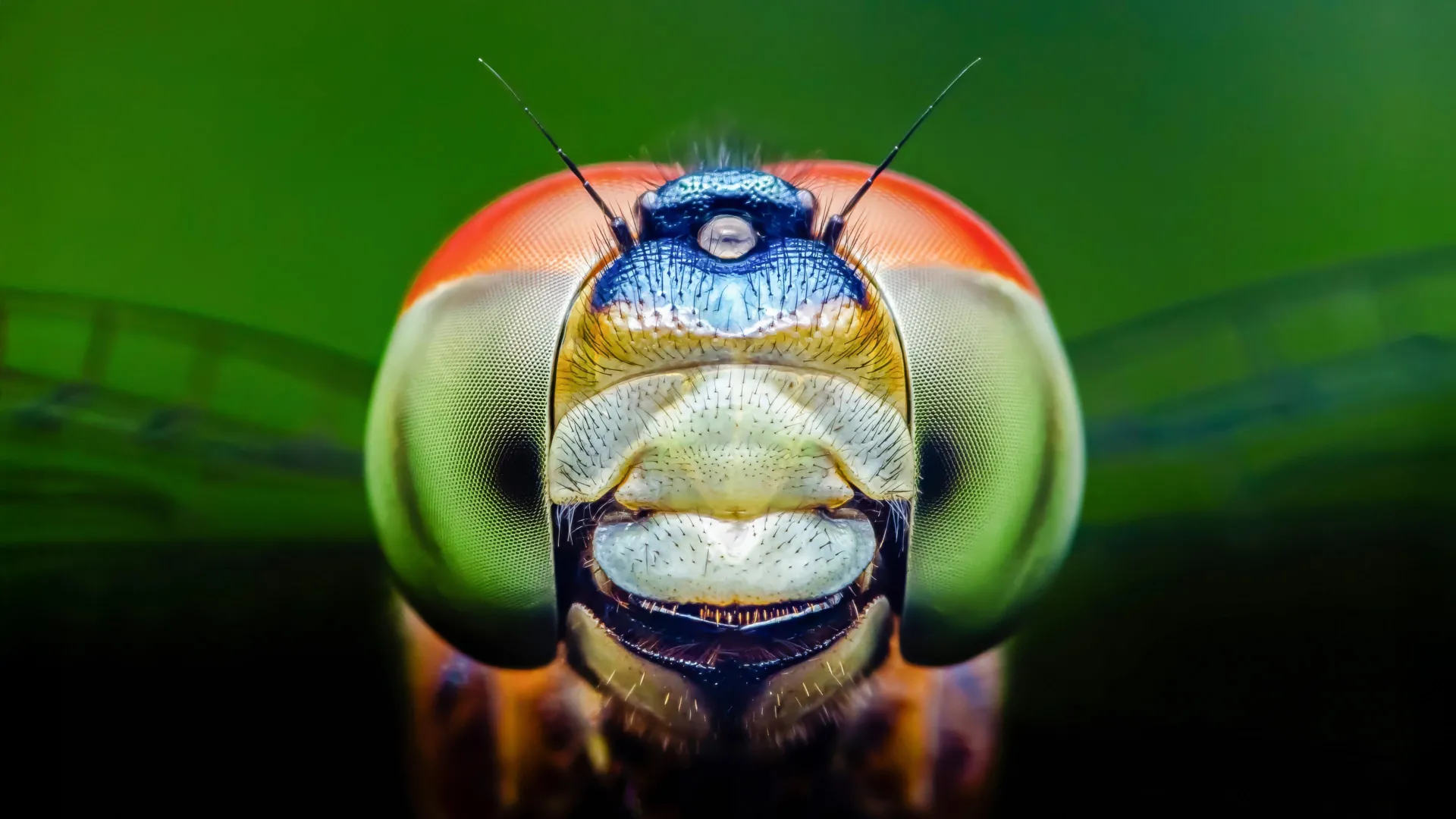
Researchers at Osaka Metropolitan University (OMU) have unveiled a groundbreaking discovery concerning the visual systems of dragonflies, revealing a striking instance of parallel evolution that mirrors the red-light detection mechanisms found in mammals, including humans. This unexpected finding, published in the prestigious journal Cellular and Molecular Life Sciences, not only deepens our understanding of insect biology but also holds significant promise for advancements in medical technologies, particularly in the burgeoning field of optogenetics. The research team, led by Professors Mitsumasa Koyanagi and Akihisa Terakita, has identified a specific opsin protein in dragonflies that exhibits an extraordinary sensitivity to red light, extending into wavelengths that are beyond the normal human visual spectrum.
The Foundation of Color Perception: Opsin Proteins
At the heart of vision for a vast array of organisms, from the simplest invertebrates to complex mammals, lies a class of light-sensitive proteins known as opsins. These molecules are embedded within the photoreceptor cells of the eye and undergo a conformational change when they absorb photons of light. This molecular event triggers a cascade of signals that ultimately leads to the perception of visual stimuli. In humans, our ability to perceive a rich spectrum of colors is attributed to the presence of three primary types of opsins, each specifically tuned to detect different wavelengths of light: blue, green, and red. This tripartite system allows for trichromatic vision, enabling us to differentiate subtle variations in hue.
While many insects possess sophisticated visual systems, their ability to perceive red light is often limited or entirely absent. This makes dragonflies, with their remarkable capacity to detect wavelengths at approximately 720 nanometers (nm), a notable exception. This wavelength is at the extreme end of the visible red spectrum for humans, and for many insects, it lies in the infrared range, invisible to them.
Unveiling the Dragonfly’s Red Sensitivity
The OMU research team’s pivotal discovery centers on a specific opsin identified in dragonflies that exhibits peak sensitivity around the 720 nm mark. This finding was the culmination of extensive molecular and physiological studies conducted by the scientists. Professor Akihisa Terakita, a senior researcher in the field of visual pigments, commented on the significance of this discovery, stating, "This is one of the most red-sensitive visual pigments ever found. Dragonflies can likely see deeper into red light than most insects." This enhanced red sensitivity suggests an evolutionary advantage for these predatory insects.
Evolutionary Significance: Why Deep Red Vision Matters for Dragonflies
The researchers hypothesized that this heightened sensitivity to deep red light plays a crucial role in the dragonfly’s mating behaviors and survival strategies. To investigate this, the team delved into the concept of reflectance – the property of a surface to reflect light. In the intricate visual world of dragonflies, the way individuals reflect light is paramount to their recognition and interaction.
Through meticulous measurements of reflectance patterns in dragonflies, the scientists observed distinct differences in how males and females reflect light in the red to near-infrared spectrum. These subtle variations are believed to be critical visual cues that enable male dragonflies to rapidly identify and pursue potential mates while in flight. This sophisticated visual discrimination, facilitated by their specialized opsin, underscores the adaptive significance of their unique spectral sensitivity.
A Remarkable Instance of Parallel Evolution
The most astonishing aspect of this research lies in the molecular mechanism employed by dragonfly opsin to detect red light. The OMU team found that this mechanism is, to an uncanny degree, identical to that of red opsin in mammals, including humans. This striking similarity, observed in organisms that diverged hundreds of millions of years ago, points to a powerful example of parallel evolution.
"Surprisingly, the mechanism by which dragonfly red opsin detects red light is identical to that of red opsin in mammals, including humans," stated first author Ryu Sato, a graduate student at OMU. "This is an unexpected result, suggesting that the same evolutionary process occurred independently in distantly related lineages." This phenomenon, where unrelated species independently evolve similar traits or solutions to environmental challenges, highlights the often convergent paths that evolution can take. The shared molecular strategy for sensing red light in both dragonflies and mammals suggests that this particular approach offers a highly efficient and robust solution to the problem of detecting these longer wavelengths.
Engineering Dragonfly Vision for Technological Innovation
Beyond its fundamental biological implications, the OMU research has unearthed a key detail that positions this discovery as a potent tool for technological and medical applications. The scientists identified a single, critical amino acid residue within the opsin protein that dictates its light sensitivity. By strategically altering this specific position, they were able to precisely tune the protein’s spectral response, shifting its sensitivity further towards longer wavelengths, approaching the infrared spectrum.
This ability to engineer the opsin’s light sensitivity opens up a new realm of possibilities. The researchers successfully created a modified version of the opsin protein that responds to even longer wavelengths. Crucially, they demonstrated that cells engineered to express this modified opsin could be reliably activated by near-infrared light. This breakthrough signifies a major step towards harnessing dragonfly vision for practical purposes.
The Promise of Optogenetics: Illuminating the Depths of Living Tissue
The implications of this engineered near-infrared-sensitive opsin are particularly profound for the field of optogenetics. Optogenetics is a revolutionary scientific discipline that employs light-sensitive proteins, like opsins, to control and study the activity of specific cells within living organisms. The advantage of using light as a control mechanism lies in its precision and non-invasiveness.
However, a significant challenge in optogenetics has been the limited penetration depth of visible light into biological tissues. Longer wavelengths of light, such as near-infrared, possess superior tissue penetration capabilities. Therefore, a protein that is activated by near-infrared light offers researchers the unprecedented ability to access and manipulate cells located deep within the body, which would otherwise be inaccessible with conventional optogenetic tools.
Professor Mitsumasa Koyanagi elaborated on this potential, stating, "In this study, we succeeded in shifting the sensitivity of a modified near-infrared opsin from Gomphidae dragonflies even further toward longer wavelengths and confirmed that the modified near-infrared opsin can induce cellular responses in response to near-infrared light. These findings demonstrate this opsin as a promising optogenetic tool capable of detecting light even deep within living organisms." This capability could revolutionize research in neuroscience, enabling precise control of neuronal circuits for studying brain function and dysfunction. It could also pave the way for novel therapeutic interventions, such as targeted gene therapy or cell activation in deep-seated tissues.
Broader Context and Future Directions
The OMU discovery emerges from a long history of research into the visual systems of insects and the molecular basis of light detection. Scientists have long been fascinated by the diversity of opsin genes and their evolutionary trajectories across different taxa. Previous studies had identified opsins responsible for UV, blue, and green light perception in various insect species. However, the precise molecular mechanisms underlying red light sensitivity, and its evolutionary convergence with mammals, remained a significant enigma.
The current research, conducted over several years with meticulous experimental design, builds upon this foundational knowledge. The timeline of this research likely involved initial observations of dragonfly behavior and spectral sensitivity, followed by extensive genetic sequencing, protein expression, and functional assays to pinpoint the specific opsin and its mechanism of action. The identification of the critical amino acid residue represents a significant milestone in the project.
The implications of this research extend beyond optogenetics. Understanding how different opsins evolve to detect specific wavelengths could inform the development of new sensors for a variety of applications, including environmental monitoring, agricultural technology, and even advanced imaging systems. The ability to engineer light sensitivity with such precision offers a powerful platform for future innovation.
While the immediate impact is in the realm of scientific research and potential medical applications, the discovery also serves as a potent reminder of the intricate and often surprising ways in which evolution shapes life on Earth. The shared molecular blueprint for sensing red light between a tiny insect and a human, separated by vast evolutionary distances, is a testament to the fundamental principles that govern biological adaptation.
The OMU team’s work is a significant contribution to our understanding of biological diversity and the power of evolutionary convergence. As they continue to explore the nuances of dragonfly vision and the potential of their engineered opsins, the scientific community eagerly anticipates further developments that could transform our ability to observe, understand, and interact with the biological world. The journey from the dragonfly’s keen eye to the potential for deep-tissue medical interventions highlights the profound and often unexpected connections that bind the tapestry of life.