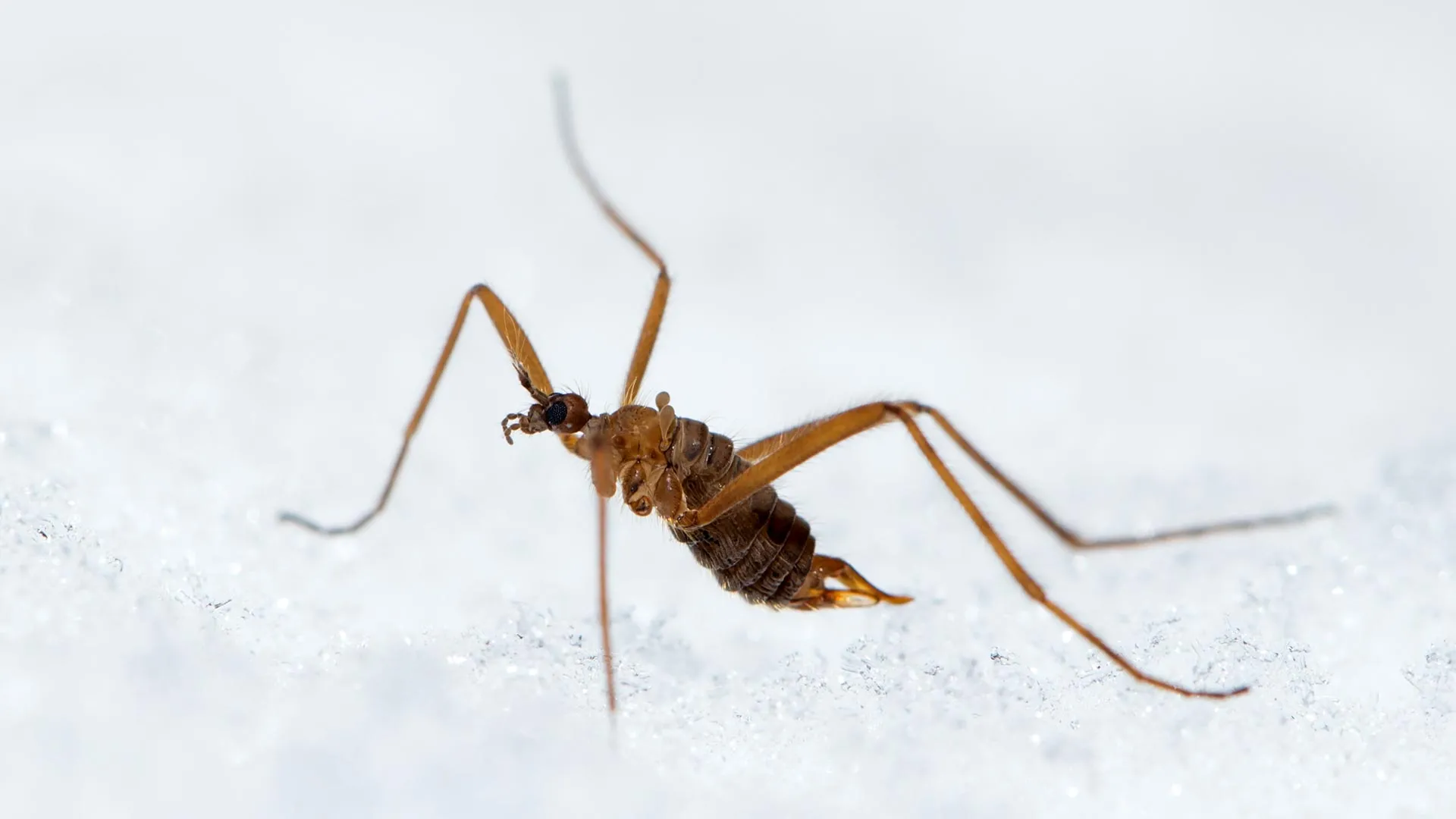
The seemingly unassuming snow fly, a small, wingless insect that navigates frigid landscapes, possesses a survival strategy so extraordinary it challenges fundamental assumptions about insect physiology. In a groundbreaking study published on March 24 in the journal Current Biology, scientists at Northwestern University have unveiled the intricate biological arsenal that allows these creatures to thrive in environments where most life forms would succumb. Their findings reveal a sophisticated interplay of self-generated heat, antifreeze proteins, and a dulled sensitivity to cold, painting a vivid picture of life’s remarkable capacity for adaptation.
A Biological Paradox: Thriving in the Deep Freeze
While the majority of insects are ectothermic, meaning their body temperature is dictated by their surroundings, the snow fly (Chionea alexandriana) defies this rule with a suite of adaptations that enable them to remain active at temperatures as low as -6 degrees Celsius (21.2 degrees Fahrenheit). This stark contrast to their insect brethren, which typically seek shelter and enter dormancy to survive freezing conditions, highlights a unique evolutionary path. Instead of retreating from the cold, snow flies actively seek out these subfreezing environments, only to retreat when the snow melts and temperatures rise.
This counterintuitive preference for extreme cold prompted the Northwestern University research team, led by Marco Gallio, the Soretta and Henry Shapiro Research Professor in Molecular Biology and professor of neurobiology, to delve into the molecular and physiological mechanisms at play. The study, co-led by Marcus Stensmyr, a biology professor at Lund University in Sweden, represents a significant leap in understanding how life can not only endure but actively flourish under conditions previously thought to be prohibitive.
Unraveling the Genetic Blueprint for Cold Resilience
The investigation commenced with a deep dive into the genetic makeup of the snow fly. Researchers embarked on the ambitious task of sequencing the snow fly genome, a crucial first step in comparing it with those of related insect species that lack cold tolerance. This comparative genomics approach, meticulously executed by Ph.D. student Richard Suhendra under the guidance of William Kath from Northwestern’s McCormick School of Engineering, aimed to pinpoint genes that are uniquely activated or altered in snow flies, particularly when exposed to freezing temperatures. RNA analysis was employed to identify actively transcribed genes, providing a dynamic snapshot of gene expression during cold stress.
The results of this genomic and transcriptomic analysis yielded startling discoveries. A significant portion of the genes identified in the snow fly’s cold-weather transcriptome lacked identifiable counterparts in existing genetic databases. This unusual finding led to initial bewilderment, with Gallio remarking, "We couldn’t find many of the genes within any database. Initially, I thought we must have sequenced some alien species. It’s very rare for an active gene, which makes a protein, to not have a match."
The Antifreeze Secret: A Molecular Shield Against Ice
Further investigation into these unique genes revealed their critical role in producing antifreeze proteins. These remarkable molecules function much like those found in Arctic fish, binding to nascent ice crystals and inhibiting their growth. This prevents ice from forming within the insect’s cells, a process that would otherwise lead to cellular damage and death. The structural similarity between some of these snow fly antifreeze proteins and those of Arctic fish suggests a compelling case of convergent evolution, where distinct organisms independently arrive at similar solutions to overcome environmental challenges.
"Remarkably, some of the antifreeze proteins we found are actually structurally related to those of Arctic fish," Gallio explained. "That suggests evolution came to the same solution for a common problem." This discovery underscores the elegance of natural selection, which can converge on effective biochemical strategies across vastly different taxa.
Internal Furnaces: Generating Heat in the Cold
Beyond their passive defense against ice formation, snow flies possess an active mechanism for generating their own body heat. The genomic analysis identified genes associated with energy metabolism and cellular processes known to produce heat in other organisms. Specifically, the researchers noted the presence of genes linked to mitochondrial thermogenesis, a process often observed in brown adipose tissue (brown fat) in mammals.
"We found genes that in larger animals are associated with mitochondrial thermogenesis in brown adipose tissue," Gallio stated. "Many animals like marmots and polar bears have brown fat, which is there to produce heat. When they go into hibernation, they burn this stored fat to produce heat rather than to produce chemical energy. So, in some ways, snow flies use a combination of the strategies used by polar bears and by Arctic fish."
This endogenous heat generation, even if modest, is critical for survival in extreme cold. It provides a vital buffer against plummeting external temperatures, allowing the snow fly to maintain essential metabolic functions and seek refuge.
Experimental Validation: Proving the Mechanisms
To rigorously test their hypotheses, the research team devised a series of ingenious experiments. In one crucial study, Ph.D. student Matthew Capek modified fruit flies, a common model organism, to express a specific snow fly antifreeze protein. These genetically engineered fruit flies were then subjected to freezing laboratory conditions. The results were compelling: the modified flies exhibited significantly higher survival rates compared to their unmodified counterparts, confirming the protective role of the snow fly protein in preventing ice propagation.
Further experiments focused on validating the heat generation hypothesis. Researchers meticulously measured the internal temperature of snow flies as the ambient temperature was gradually lowered below freezing. Consistently, the snow flies maintained an internal temperature a few degrees Celsius higher than expected for insects of their size and metabolic state, providing direct evidence of active thermogenesis.
"Other insects, like bees and moths, shiver to increase their heat," noted Stensmyr. "But we found no evidence of shivering. Snow flies instead likely produce heat at the cellular level, more similar to how mammals and even some plants generate heat." This cellular-level heat production, rather than gross muscular activity like shivering, represents a more subtle yet highly effective strategy for maintaining internal warmth. The slight elevation in body temperature can be the difference between life and death, providing precious moments to find a safe haven or complete essential activities like mating and egg-laying.
The Paradox of Pain: Reduced Sensitivity to Cold Stress
Perhaps one of the most intriguing findings is the snow fly’s apparent reduced sensitivity to the noxious stimuli associated with extreme cold. While humans and many other animals experience sharp, painful sensations upon contact with freezing temperatures, a response mediated by specialized sensory receptors, snow flies appear to possess a significantly dampened sensory apparatus for cold-induced pain.
The research team identified a key sensory protein, an irritant receptor, that is markedly less responsive in snow flies compared to species like mosquitoes and fruit flies. This reduced sensitivity means that snow flies can tolerate higher levels of cold-related cellular stress without triggering an overwhelming avoidance response. "It turns out that a specific irritant receptor is 30 times less sensitive in snow flies than in mosquitoes and fruit flies," Gallio reported. "So, they can cope with higher levels of noxious irritants produced by cold exposure." This adaptation allows them to remain active and functional in conditions that would incapacitate other insects, enabling them to exploit ecological niches unavailable to most.
Broader Implications and Future Frontiers
The implications of this research extend far beyond the fascinating biology of the snow fly. The discovery of novel antifreeze proteins and mechanisms for endogenous heat generation holds significant promise for various fields. In cryopreservation, the ability to protect cells, tissues, and even organs from cold damage is a persistent challenge. The antifreeze proteins identified in snow flies could pave the way for new cryoprotective agents, potentially revolutionizing organ transplantation and the long-term storage of biological materials.
Furthermore, understanding how snow flies generate heat at the cellular level could inform strategies for improving energy efficiency and developing novel thermogenesis techniques in other contexts, from industrial processes to biomedical applications.
The study, titled "Coordinated molecular and physiological adaptations enable activity at subfreezing temperature in the snow fly Chionea alexandriana," is set to be featured on the cover of the April 6th issue of Current Biology. This prestigious placement underscores the significance and impact of the findings. The research was made possible through substantial support from a consortium of funding bodies, including the National Institutes of Health, the Pew Scholars Program, the McKnight Foundation, the Paula M. Trienens Institute for Sustainability and Energy, the Crafoord Foundation, the National Science Foundation, the Simons Foundation, and NITMB. Collaborative efforts also involved the DNAzoo project and researchers Olga Dudchenko and Erez Lieberman Aiden from Rice University and Baylor College of Medicine.
Looking ahead, the Northwestern University team and their collaborators are poised to embark on further investigations. Future research will focus on a more in-depth exploration of the cellular mechanisms underlying snow fly thermogenesis and a comprehensive characterization of their full repertoire of antifreeze proteins. The ultimate goal is to uncover whether similar, yet undiscovered, strategies are employed by other organisms that inhabit extreme cold environments, further expanding our understanding of life’s extraordinary resilience.