University of Georgia researchers have officially identified and described two previously unrecognized species of black bass, Bartram’s bass and Altamaha bass, in a significant contribution to ichthyological science. The findings, published in the peer-reviewed journal Zootaxa, mark a crucial step in understanding the biodiversity of Southeastern freshwater ecosystems and highlight the ongoing need for comprehensive species identification and conservation efforts.
A Discovery Decades in the Making
The recognition of these distinct bass species is the culmination of decades of dedicated fieldwork and meticulous scientific analysis. While the formal classification is recent, the existence of these unique fish has been noted by observant anglers and researchers for many years. Ecologist Bud Freeman, lead author of the study and a senior public service associate emeritus at the UGA Odum School of Ecology, recounted a pivotal encounter in the 1980s. During a visit to the Broad River, Freeman was shown an unusual fish caught by a local couple. Realizing its potential scientific significance, he attempted to acquire the specimen, but the couple intended to consume it. "That would have been an important specimen," Freeman remarked, underscoring the serendipitous nature of some scientific discoveries and the challenges in preserving them.
Following this early realization, Freeman and his dedicated team embarked on a systematic effort to collect and document bass populations across the region. Over subsequent decades, samples were gathered from numerous locations, allowing for a comprehensive comparison of morphological and genetic characteristics. Bartram’s bass specimens were ultimately collected from 14 distinct sites within the Savannah and Saluda River basins. Concurrently, Altamaha bass were sampled from 14 locations across the Altamaha and Ogeechee River systems, establishing a robust dataset for formal species description.
Distinctive Traits and Definitive Genetic Evidence
The process of formally distinguishing Bartram’s bass and Altamaha bass involved a multi-faceted approach, combining detailed morphological examinations with cutting-edge genetic analysis. Previously, these fish were often grouped with the more widely recognized redeye bass, a classification that masked their unique evolutionary paths.
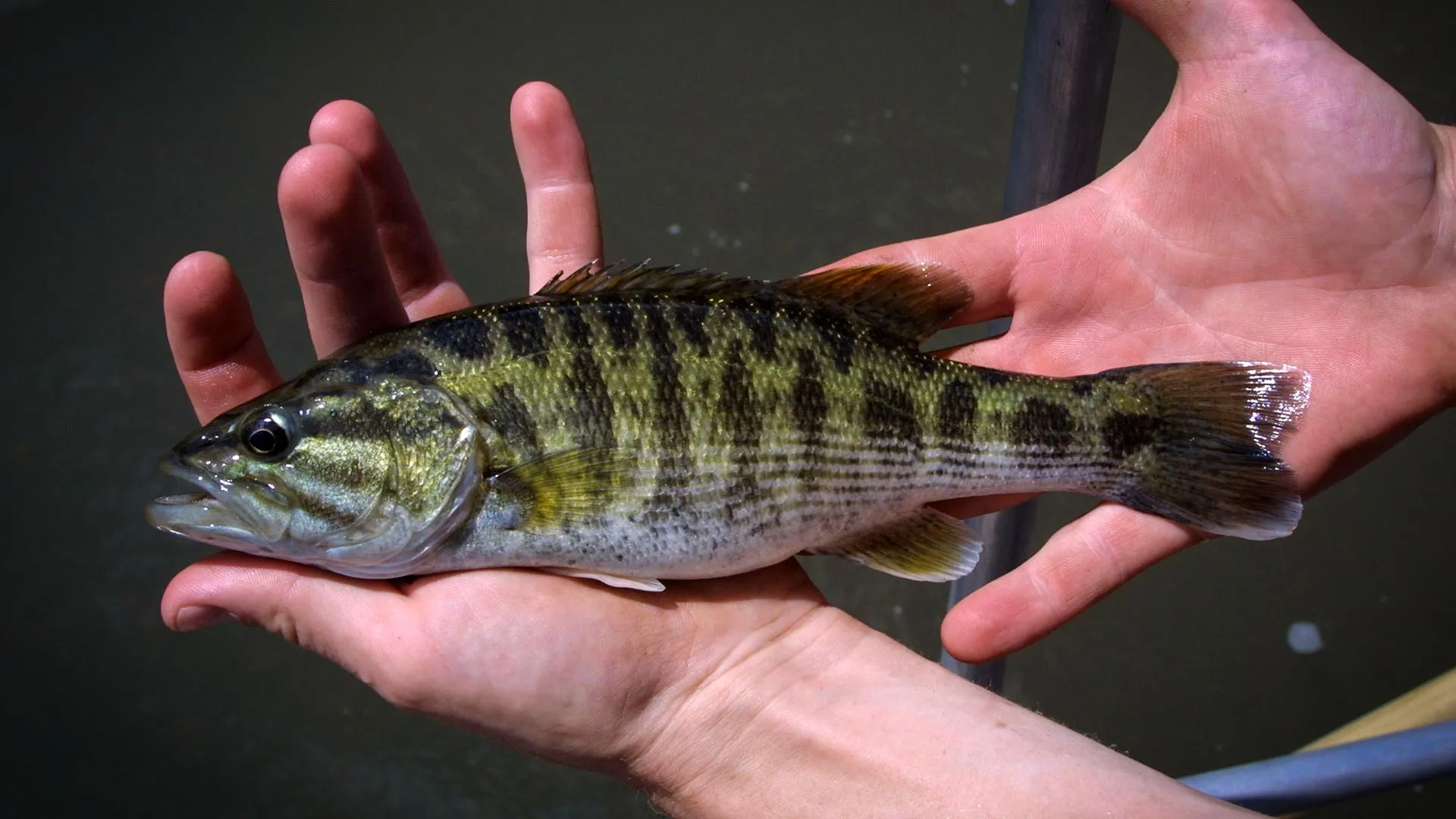
Bartram’s bass, now scientifically designated as Micropterus pucpuggy, exhibit a striking appearance. They are characterized by a light golden hue, interspersed with prominent dark brown blotches along their flanks. Their undersides possess a mottled pattern, and their fins are tinged with a rosy coloration. A key identifying feature is their oval tooth patch, located on the tongue. Perhaps most distinctive are their eyes, which are a vivid red, featuring a black pupil encircled by a thin, yet discernible, gold ring. These fish can grow to impressive lengths, reaching up to 15 inches.
Altamaha bass, formally named Micropterus calliurus, share some similarities with Bartram’s bass, including golden scales, but possess a more pronounced olive edging. Their lateral markings tend to be darker, and their fins are accented with a distinct orange hue. Morphologically, they differ in having a smaller oval tooth patch. Like their Bartram’s bass counterparts, Altamaha bass also display striking red eyes with a gold ring around the pupil. They typically grow to a length of approximately 14 inches.
Beyond these observable physical differences, the research team employed advanced genetic techniques to provide irrefutable evidence of the species’ distinctiveness. "It used to be that you’d have to go out and catch the fish, bring it in, count the scales, measure the tail, measure this and that, write a description, and you’re done," explained Mary Freeman, a co-author of the study and adjunct faculty at the Odum School. "Now there is also genetic characterization. In this case, there’s genetic characterization of every single individual used to describe that fish to prevent including hybrid specimens."
This rigorous genetic scrutiny involved the analysis of mitochondrial DNA, which provides insights into maternal lineage, and the utilization of sophisticated bioinformatics tools to examine small segments of nuclear DNA. This comprehensive approach ensures the accurate delineation of species boundaries, minimizing the risk of misclassifying hybrids as distinct species. The study formally defines the two new species using over 100 specimens, drawing from a broader analytical dataset that encompasses 570 fish from various Micropterus species, including smallmouth, largemouth, northern spotted, shoal, Tallapoosa, redeye, and Alabama bass. This extensive comparison provides a robust taxonomic framework for future research.
Historical Context and Naming Conventions
The naming of these newly identified species carries both scientific and historical significance. Bud Freeman first proposed the name Bartram’s bass in the 1990s. The scientific name, M. pucpuggy, pays homage to the Seminole-Creek people of Florida. The name derives from "Puc Puggy," a moniker bestowed upon the renowned naturalist William Bartram by a Seminole-Creek chief. Bartram, during his extensive explorations of the Southeastern United States between 1773 and 1776, documented numerous plants and animals unfamiliar to European settlers, traversing regions where Bartram’s bass is now known to reside. His meticulous journals provide invaluable early records of the region’s natural history.
The Altamaha bass, M. calliurus, received its scientific name later. The term "calliurus" is derived from ancient Greek words meaning "beautiful tail," a descriptor reflecting a characteristic observed in this species. The formal scientific publication in Zootaxa represents the culmination of years of dedicated research and collaboration among a multidisciplinary team.
Habitat Alterations and the Growing Threat of Hybridization
The ecological niches occupied by Bartram’s and Altamaha bass are primarily flowing river systems. They typically thrive in areas characterized by pools and swift currents adjacent to rocky shoals, environments crucial for their feeding and reproduction. However, these natural habitats have undergone substantial alterations over time, posing significant challenges to the long-term survival of these species.
Sedimentation, often exacerbated by agricultural and urban development, can degrade water quality and alter substrate composition, impacting spawning grounds and prey availability. Furthermore, the widespread construction of dams has fragmented riverine ecosystems. Dams act as physical barriers, impeding fish migration and gene flow between populations, leading to genetic isolation.
Compounding these habitat challenges is the increasing risk of hybridization. The introduction of non-native Micropterus species into waters outside their historical ranges, often through recreational stocking or accidental introductions, has led to interbreeding with native bass populations. This genetic mixing can dilute the unique genetic makeup of native species, potentially leading to a loss of fitness and adaptability. "These evolutionarily distinct lineages are important to name," emphasized Bud Freeman. "In recognizing these species, we recognize how quickly they are becoming lost as extrinsic barriers are breached by human activities." The formal recognition of Bartram’s and Altamaha bass serves as a stark reminder of the ongoing pressures on freshwater biodiversity and the urgent need for effective conservation strategies.
Broader Implications and Future Research
The formal description of Bartram’s bass and Altamaha bass carries significant implications for fisheries management, conservation biology, and our understanding of freshwater biodiversity. By establishing clear taxonomic boundaries, researchers can now develop more targeted conservation plans to protect these species and their habitats. This includes identifying critical habitats, monitoring population dynamics, and implementing measures to mitigate the threats posed by habitat degradation and hybridization.
The study’s co-author, Mary Freeman, highlighted the enduring value of this research: "You’re laying the baseline for the future. Hybridization may result in Bartram’s bass not existing as it has existed, but we’ll know what it was." This sentiment underscores the importance of documenting species diversity before it is irrevocably altered by environmental changes.
The research was supported by funding from a Competitive State Wildlife Grant awarded to the South Carolina Department of Natural Resources and the Georgia Department of Natural Resources, underscoring the collaborative efforts between state agencies and academic institutions in advancing conservation science. The full research team includes contributions from Kelly N. Petersen, Bryson G. Hilburn, and Mary C. Freeman of the Odum School of Ecology; John P. Wares of the Odum School and UGA Department of Genetics; Mark C. Scott of the South Carolina Department of Natural Resources; Natalia J. Bayona-Vásquez of Oxford College of Emory University; and Andrew T. Taylor of the University of North Georgia. Their collective expertise has provided a foundational understanding of these newly recognized bass species, paving the way for future research into their ecology, behavior, and conservation needs. The discovery serves as a potent reminder that even in well-studied regions, the natural world continues to reveal its hidden treasures, demanding our continued vigilance and commitment to scientific exploration and environmental stewardship.