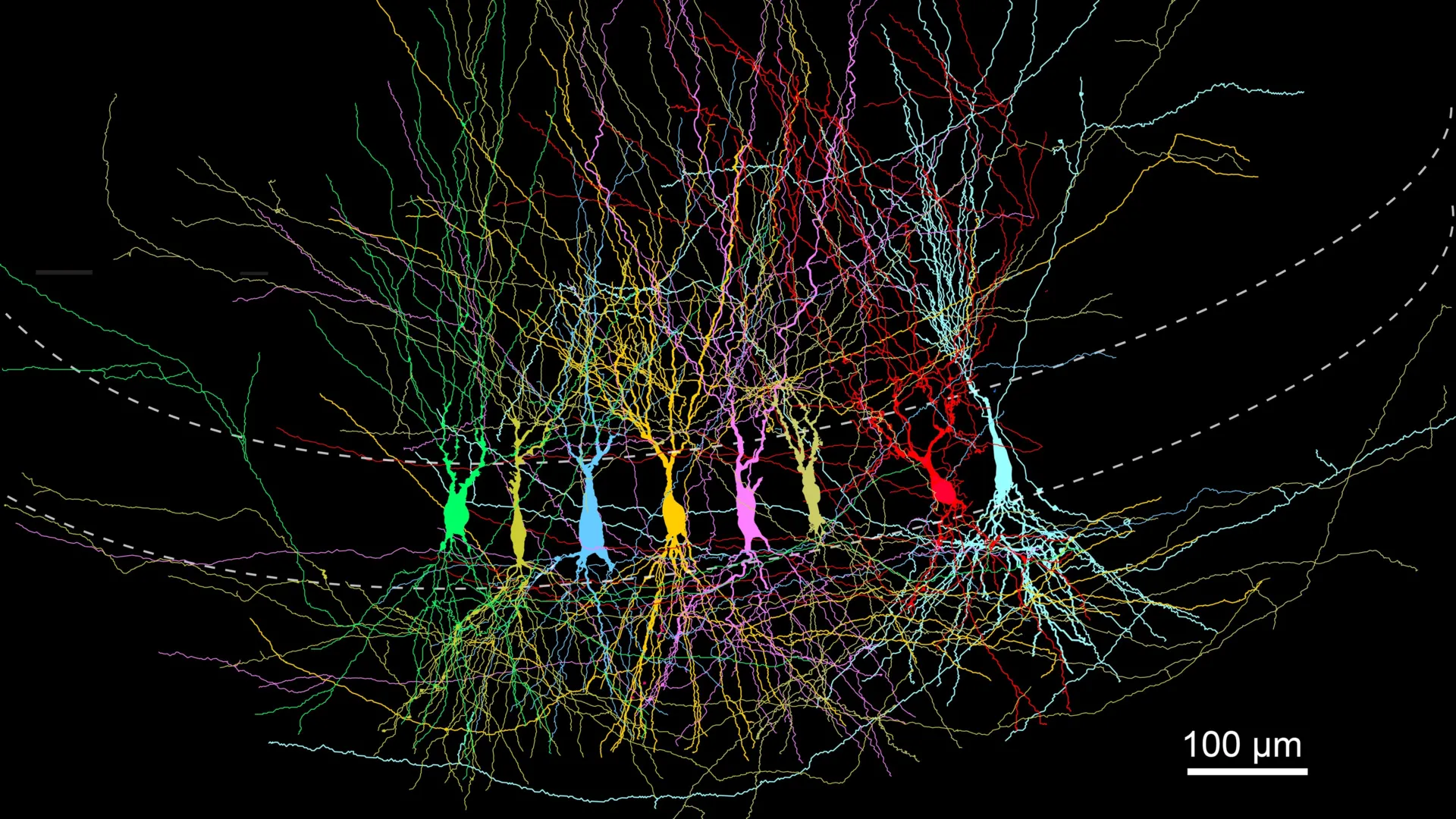
The human brain has long been compared to a blank slate, a "tabula rasa" upon which the experiences of life are gradually inscribed. However, a landmark study conducted by researchers at the Institute of Science and Technology Austria (ISTA) suggests that the biological reality of the brain’s most critical memory center is far more complex. Led by Professor Peter Jonas, the Magdalena Walz Professor for Life Sciences, and ISTA alumnus Victor Vargas-Barroso, the research team has demonstrated that the hippocampus begins its developmental journey not as an empty vessel, but as a "tabula plena"—a full slate of dense, exuberant, and somewhat random neural connections that are systematically refined and pruned as an organism matures.
This research, published in the prestigious journal Nature Communications, provides a fundamental shift in our understanding of how neural networks in the mammalian brain are organized during early life. By focusing on the CA3 region of the hippocampus, a circuit essential for memory storage and spatial navigation, the scientists have mapped a trajectory of development that prioritizes initial connectivity over initial efficiency, followed by a rigorous process of optimization.
The Philosophical and Biological Context of Neural Development
For centuries, the debate between "nature versus nurture" has centered on whether humans are born with innate structures or whether they are shaped entirely by their environment. In the realm of neuroscience, this debate translates into whether the brain’s synaptic architecture is genetically pre-programmed or if it emerges solely through the strengthening of connections via external stimuli and learning.
The "blank slate" model posits that neurons start with minimal connectivity, building specific pathways only when prompted by experience. Conversely, the "full slate" model suggests that the brain starts with a surplus of connections, many of which are redundant or random, and then uses experience to "carve out" the most efficient pathways. The findings from the Jonas laboratory strongly support the latter, suggesting that the "scaffolding" of memory is present from the earliest stages of postnatal life, albeit in a disorganized form.
The hippocampus is the ideal theater for this investigation. Known as the brain’s "GPS" and its "filing cabinet," the hippocampus is responsible for converting fleeting sensory perceptions into enduring long-term memories. Within this region, the CA3 (Cornu Ammonis 3) area is particularly vital. It is characterized by a high degree of "recurrent" connectivity, where neurons link back to themselves and their neighbors, creating a feedback loop that allows the brain to "complete" a memory from just a small fragment of information—a process known as pattern completion.
Methodology: Mapping the Microscopic Landscape
To uncover the secrets of hippocampal maturation, the ISTA research team employed a rigorous longitudinal approach, studying the brains of mice at three distinct developmental milestones: the early postnatal period (days 7-8), adolescence (days 18-25), and full adulthood (days 45-50). This timeline allowed the researchers to observe the transition from a developing sensory system to a fully functional cognitive apparatus.
The technical challenges of this study were significant. Measuring the electrical activity and physical connectivity of individual neurons requires extreme precision. Victor Vargas-Barroso utilized the "patch-clamp" technique, a gold-standard method in electrophysiology. This involves using a microscopic glass pipette to "clamp" onto the membrane of a single neuron or its even smaller components, such as presynaptic terminals and dendrites. By doing so, researchers can record the minute electrical currents that represent communication between cells.
Beyond electrical recording, the team integrated advanced imaging and laser-mediated stimulation. By using lasers to activate specific neurons with millisecond precision, the researchers could test the strength and reliability of connections between CA3 pyramidal neurons. This multi-pronged approach allowed them to see not just where the connections were, but how effectively they functioned.
The Findings: From Dense Chaos to Sparse Efficiency
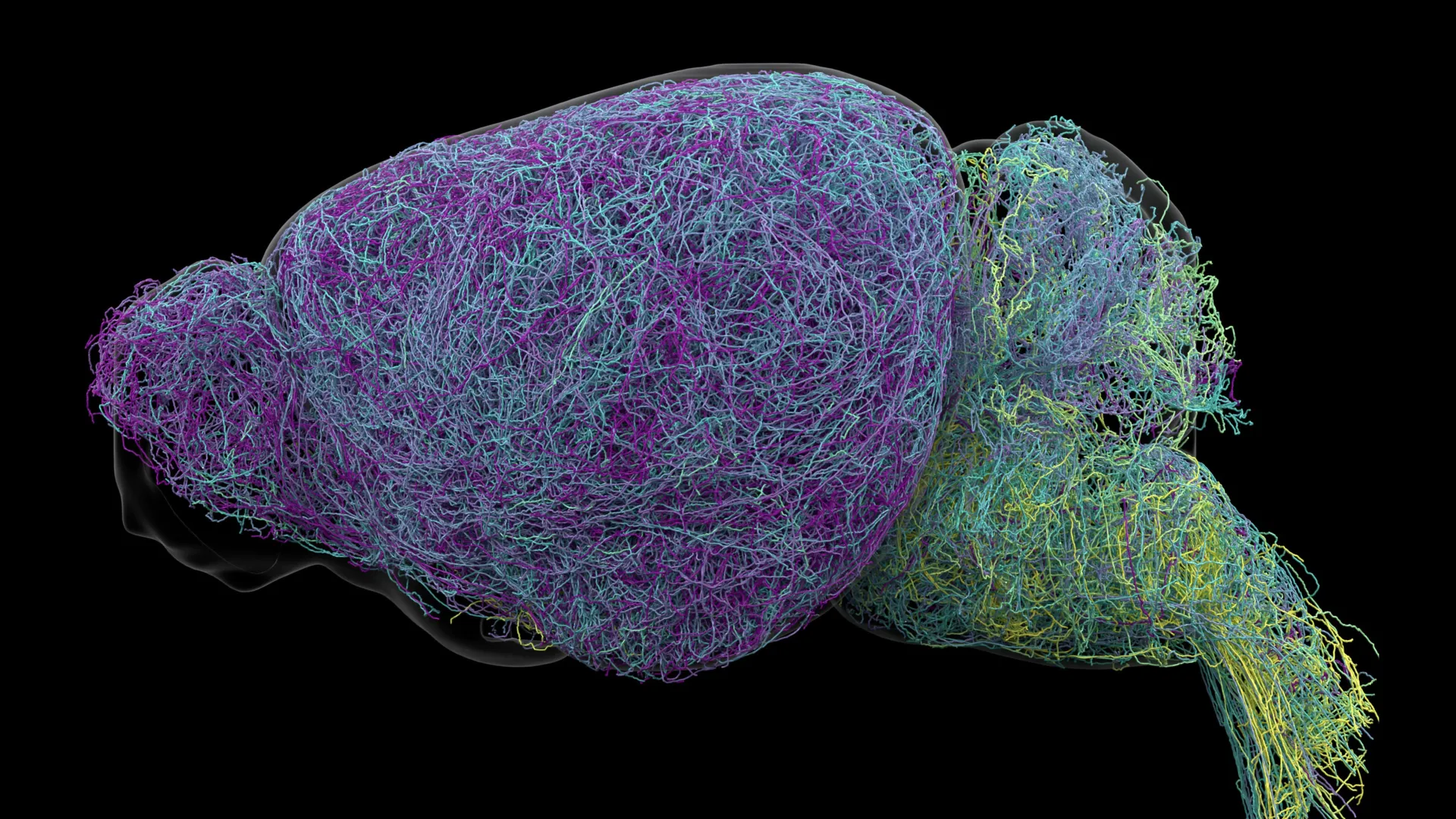
The results of the study challenged the intuitive assumption that a brain becomes more "connected" as it learns. Instead, the researchers found that the neonatal CA3 network is characterized by an overwhelming density of synapses. At postnatal days 7-8, the neurons were found to be highly interconnected in a manner that appeared largely random and non-selective.
"This discovery was quite surprising," Professor Peter Jonas noted during the dissemination of the findings. "Intuitively, one might expect that a network grows and becomes denser over time. Here, we see the opposite."
As the mice moved into adolescence and eventually adulthood, the data showed a significant reduction in the total number of connections. However, while the quantity of connections decreased, the quality and specificity of the remaining links increased. This process, known as synaptic pruning, transformed a "noisy" and crowded network into a streamlined, high-performance system. The researchers observed that in the adult brain, connections were fewer but more strategically placed and functionally robust, allowing for more efficient information processing and less energy expenditure.
The Evolutionary Logic of the "Full Slate"
The question remains: why would the brain expend the biological energy required to create an over-connected network only to dismantle much of it later? The ISTA team suggests that this "tabula plena" approach offers a significant evolutionary advantage in the context of the hippocampus.
The hippocampus’s primary task is multimodal integration—the merging of different sensory inputs (sight, sound, smell) into a single, cohesive episodic memory. For a neuron to successfully integrate these diverse streams of information, it must have access to a wide array of inputs. By starting with an "exuberant" level of connectivity, the brain ensures that every neuron has the opportunity to link up with its neighbors quickly.
If the brain began as a true blank slate, neurons would have to "search" for one another through the dense tissue of the brain, a process that could be slow and prone to error. By starting with a "full slate," the brain provides a massive pool of potential connections. As the animal begins to interact with its environment, the connections that are useful are reinforced, while those that represent "noise" are discarded. This allows for a rapid onset of memory functions that are essential for survival in the wild.
Chronology of Connectivity: A Summary of the Developmental Stages
The ISTA study provides a clear timeline of how the CA3 region of the hippocampus matures:
- Neonatal Stage (P7-P8): The network is at its most dense. Connectivity is high but lacks specificity. This stage represents the "Tabula Plena," where the foundation is laid through a surplus of synaptic links.
- Adolescent Stage (P18-P25): A transitional period where the brain begins to "edit" its connections. Environmental stimuli begin to dictate which pathways are essential. The randomness of the early stage begins to give way to more organized clusters.
- Adult Stage (P45-P50): The network reaches an "optimal sparse" state. The density of connections is lower than in the neonatal stage, but the system is far more efficient at pattern completion and memory retrieval.
Broader Implications for Neuroscience and Health
The implications of this research extend far beyond basic neurobiology. Understanding the "pruning model" of the hippocampus provides critical insights into neurodevelopmental and psychiatric disorders. Many conditions, including Autism Spectrum Disorder (ASD) and schizophrenia, have been linked to abnormalities in synaptic pruning.
In the case of ASD, some theories suggest that a failure to prune redundant connections leads to a "noisy" brain that is hypersensitive to stimuli and struggles to prioritize information. Conversely, excessive pruning during adolescence has been hypothesized as a contributing factor to the onset of schizophrenia. By establishing a baseline for how a healthy hippocampus matures from a "full slate" to a "refined slate," the work of Jonas and his team provides a vital reference point for medical researchers looking to intervene in these conditions.
Furthermore, the study has implications for the field of Artificial Intelligence (AI). Modern neural networks are often designed to "grow" connections, but some of the most efficient AI models use "dropout" techniques or "pruning" algorithms to remove unnecessary parameters, mirroring the biological process discovered at ISTA. This research reinforces the idea that "less is more" when it comes to sophisticated information processing.
Conclusion: A Paradigm Shift in Brain Growth
The research conducted at the Institute of Science and Technology Austria marks a significant milestone in our quest to understand the brain. By proving that the hippocampus starts as a richly connected "full slate" rather than an empty "blank slate," Peter Jonas and Victor Vargas-Barroso have redefined the narrative of neural development.
The study suggests that the complexity of human and animal cognition does not arise from simply adding more connections, but from the elegant and precise removal of the unnecessary. As we continue to explore the mysteries of the mind, this "pruning model" will likely serve as a cornerstone for future research into how we learn, how we remember, and how we become who we are. The brain, it seems, does not start with nothing; it starts with everything, and then spends a lifetime perfecting the art of selection.