The search for the fundamental building blocks of the universe has entered a new era as researchers leverage the power of machine learning to decode the mysteries of the cosmos. A pioneering study published in the Journal of Cosmology and Astroparticle Physics (JCAP) has demonstrated that a sophisticated artificial intelligence technique known as transfer learning can significantly accelerate the investigation of "new physics"—theories that seek to explain phenomena currently missing from our primary understanding of the universe. While the research offers a promising path toward reducing the massive computational costs associated with space exploration and theoretical modeling, it also issues a stark warning: the very intelligence designed to find new truths may be biased by its own education.
Led by researchers from the Flatiron Institute’s Center for Computational Astrophysics and Princeton University, the study explores the delicate balance between efficiency and accuracy in cosmological simulations. For decades, the scientific community has relied on the Lambda Cold Dark Matter (ΛCDM) model, often referred to as the "Standard Model of Cosmology." This framework has proven remarkably resilient, accurately predicting the expansion of the universe and the distribution of cosmic structures. However, as observational technology improves, cracks have begun to appear in the ΛCDM facade, leading scientists to search for more complex models that incorporate massive neutrinos, modified gravity, and dynamic dark energy.
The Computational Crisis in Modern Cosmology
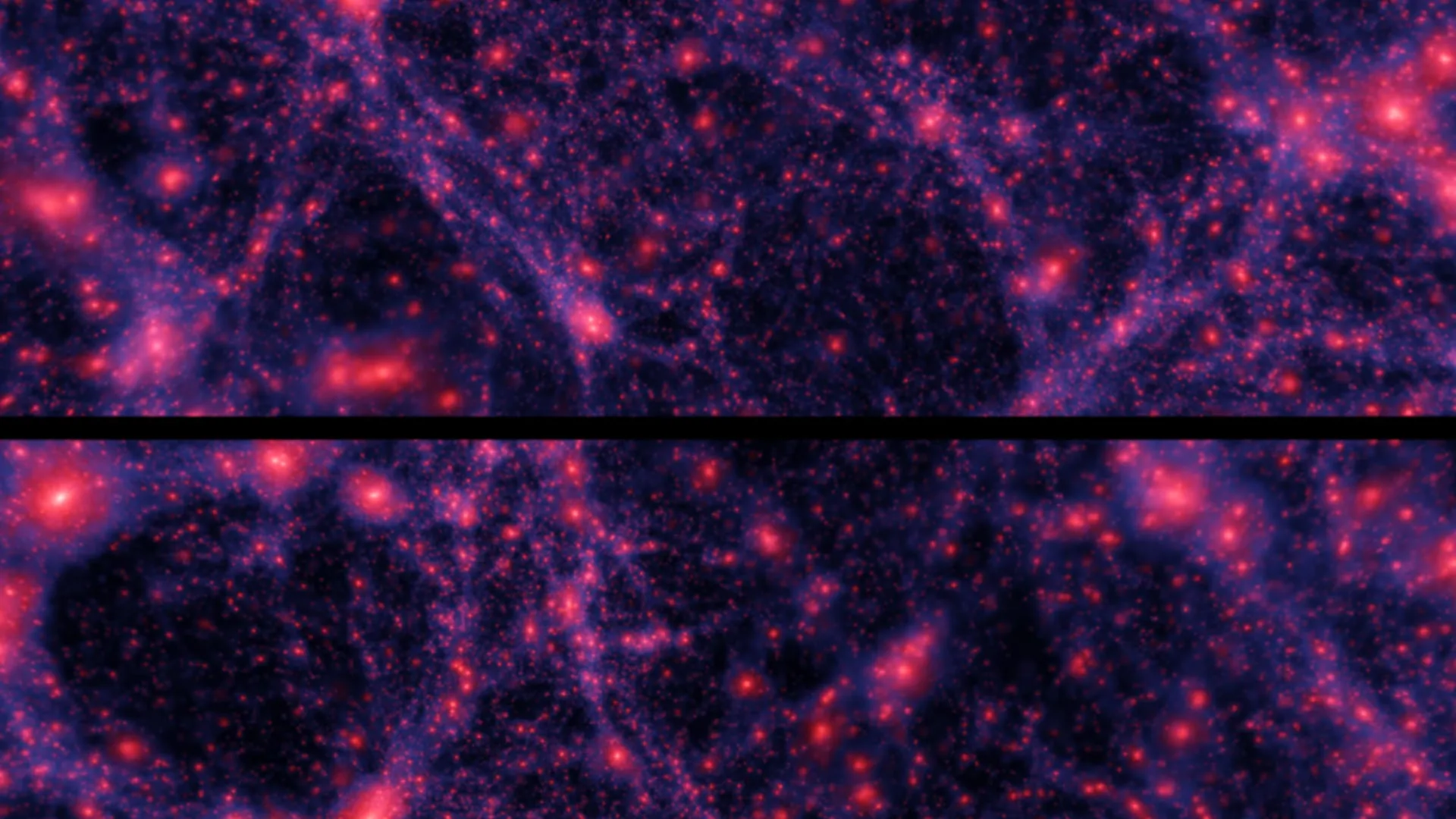
To understand the significance of this research, one must first grasp the sheer scale of the data involved in modern cosmology. Investigating theories beyond the standard model requires researchers to generate "virtual universes" through high-fidelity computer simulations. These simulations track the movement of billions of particles over billions of years, accounting for gravitational pull, gas dynamics, and the expansion of space itself.
Generating a single high-resolution simulation can require thousands of hours of supercomputing time. When scientists want to test a new theory—such as how the mass of neutrinos might affect the clustering of galaxies—they must run thousands of these simulations with varying parameters to see which one matches real-world observations. This creates a computational bottleneck that threatens to stall progress in the field.
Artificial intelligence has emerged as a potential solution to this crisis. By training neural networks to recognize patterns in existing data, researchers can create "emulators"—AI models that can predict the outcome of a complex simulation in a fraction of a second. However, training these AI models typically requires a vast amount of high-quality, expensive data, which brings the problem back to its starting point. This is where transfer learning enters the frame.
Breaking the Bottleneck: The Mechanics of Transfer Learning
Transfer learning is a methodology in machine learning where a model developed for one task is reused as the starting point for a model on a second, related task. In the context of the JCAP study, the researchers—including lead author Veena Krishnaraj and co-author Adrian Bayer—proposed a two-step training process designed to mimic human learning.
Instead of forcing an AI to learn the complexities of "new physics" from scratch using expensive data, the team first "pretrained" the neural network on a large volume of simpler, less computationally intensive simulations based on the standard ΛCDM model. These simulations are relatively easy to produce and provide the AI with a foundational understanding of cosmic structures, such as how gravity pulls matter into a cosmic web of filaments and voids.
Once the AI mastered the basics, the researchers introduced a smaller set of highly complex simulations that included advanced physical variables, such as the influence of massive neutrinos. This "fine-tuning" phase allowed the AI to adapt its foundational knowledge to the specific nuances of new physical theories.
The results of this approach were transformative. The research team found that transfer learning could reduce the amount of expensive training data required by more than an order of magnitude. In specific tests, the AI achieved the same level of accuracy with ten times fewer complex simulations than would have been required using traditional training methods. This represents a monumental shift in the feasibility of testing radical new theories about the origin and fate of the universe.
The Paradox of Prior Knowledge: Negative Transfer
Despite the efficiency gains, the study uncovered a significant cognitive hurdle for artificial intelligence: the phenomenon of "negative transfer." This occurs when the information learned during the pretraining phase interferes with the AI’s ability to accurately interpret new data.
In the world of cosmology, this problem is rooted in "physical degeneracies." A degeneracy occurs when two different physical processes produce nearly identical observational signatures. For example, the study highlighted a specific conflict between the mass of neutrinos and a cosmological parameter known as σ8 (sigma-eight).
The σ8 parameter measures the "clumpiness" of matter in the universe—how strongly galaxies and dark matter cluster together. Massive neutrinos, which move at nearly the speed of light, tend to "smooth out" the distribution of matter, effectively reducing the clumpiness. To a telescope or an AI model, the signature of a universe with massive neutrinos can look remarkably similar to a standard ΛCDM universe with a lower σ8 value.
Because the AI was pretrained extensively on ΛCDM data, it developed a "bias" toward interpreting data through that lens. When presented with the signatures of massive neutrinos, the AI initially struggled to recognize them as something new, instead attempting to explain the patterns using the standard parameters it had already mastered.
"The negative transfer is not random," noted Veena Krishnaraj. "It is driven by underlying physical degeneracies in the model." This finding suggests that while AI can make the search for new physics faster, it might also make the search more prone to "false negatives," where genuine discoveries are overlooked because they look too much like the status quo.
Chronology of AI Integration in Cosmological Research
The journey to this discovery has been a decade in the making. The integration of AI into cosmology has followed a distinct timeline:
- 2010–2015: The Emergence of N-body Simulations. Researchers perfected large-scale simulations like the Millennium and Bolshoi simulations, which provided the "ground truth" for cosmic structure but required massive supercomputing clusters.
- 2016–2018: First-Generation Emulators. Scientists began using simple machine learning models (such as Gaussian Processes) to interpolate between simulation results, though these models were limited in scope.
- 2019–2021: Deep Learning Revolution. Neural networks became the standard for analyzing cosmic microwave background (CMB) data and galaxy surveys. Projects like the Quijote simulations provided the massive datasets needed to train these networks.
- 2022–2024: Foundation Models and Transfer Learning. Inspired by Large Language Models (LLMs) like GPT-4, cosmologists began treating the "laws of physics" as a language that could be pretrained and then fine-tuned for specific tasks.
The current study represents a critical milestone in this timeline, moving from simply using AI as a calculator to treating it as an adaptable "foundation model" for the physical sciences.
Implications for Future Observational Surveys
The timing of this research is particularly critical given the upcoming "golden age" of observational astronomy. Over the next decade, several high-precision surveys will begin collecting data that could finally confirm or refute the standard model:
- The Euclid Space Telescope: Launched by the European Space Agency, Euclid is currently mapping the geometry of the dark universe.
- The Vera C. Rubin Observatory (LSST): This ground-based facility in Chile will conduct a 10-year survey of the southern sky, producing a massive "time-lapse" of the universe.
- The Nancy Grace Roman Space Telescope: NASA’s upcoming mission will provide a field of view 100 times greater than Hubble, specifically designed to study dark energy.
These missions will generate petabytes of data. Traditional analytical methods are simply too slow to process this information in real-time. Transfer learning offers a way to analyze this data almost instantly, but the risk of negative transfer means that scientists must remain vigilant. If the AI is too heavily weighted toward the standard model, it might "clean" the data of the very anomalies scientists are looking for.
Expert Analysis: Mitigating AI Bias in Science
The study concludes that the future of AI in cosmology requires a more nuanced approach to training. To mitigate negative transfer, researchers suggest that future AI models should be trained on a more diverse "curriculum" that includes a broader range of physical possibilities from the start, rather than relying too heavily on a single model.
Furthermore, the research highlights the need for "interpretable AI." If a neural network makes a prediction about new physics, scientists must be able to look "under the hood" to ensure the conclusion isn’t a result of pretraining bias. The use of "physics-informed neural networks" (PINNs), which incorporate the laws of physics directly into the AI’s loss function, is one potential avenue for ensuring the AI remains grounded in reality while searching for the unknown.
Conclusion
The study by Krishnaraj, Bayer, and their colleagues marks a definitive shift in how we approach the greatest questions of the universe. By proving that transfer learning can slash the costs of discovery by 90%, they have opened the door for a new generation of theorists to test ideas that were previously computationally impossible.
However, the discovery of negative transfer serves as a humbling reminder of the limits of technology. As we build increasingly complex machines to help us understand the cosmos, we must ensure that our tools do not become so focused on what we already know that they become blind to what we have yet to discover. The search for "new physics" remains a human endeavor, requiring the intuition to look beyond the shortcuts provided by artificial intelligence and the courage to question the very models that have served us so well for so long.