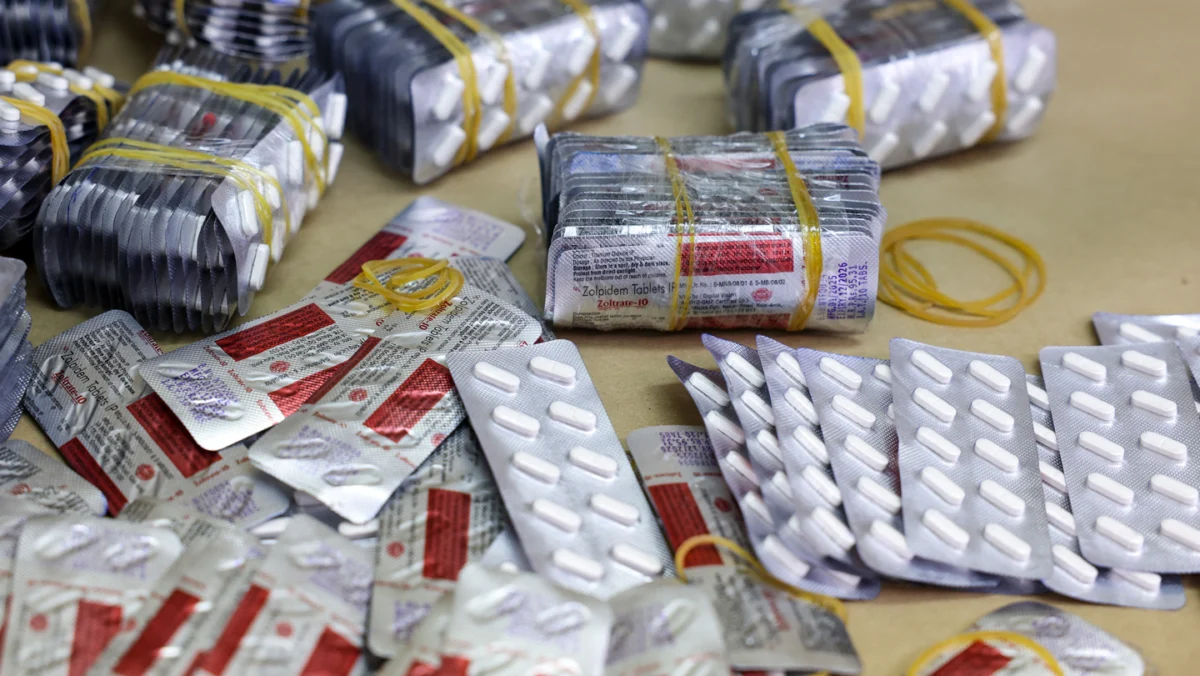
The relentless evolution of illicit fentanyl production presents a critical challenge for law enforcement and public health officials, with clandestine laboratories consistently synthesizing novel variations of the synthetic opioid at a pace that outstrips the capacity of forensic analysis. This ongoing arms race between drug manufacturers and the agencies tasked with identifying and combating these substances has led to an escalating crisis, fueled by the ease with which chemists can alter molecular structures to evade detection and circumvent existing legal controls. The implications are profound, impacting public safety, healthcare systems, and the very fabric of communities grappling with the opioid epidemic.
The Evolving Landscape of Fentanyl Synthesis
Fentanyl, a potent synthetic opioid originally developed for legitimate medical purposes such as pain management and anesthesia, has become a primary driver of the overdose crisis in many parts of the world. Its illicit production, however, has shifted dramatically in recent years. Instead of relying on established precursor chemicals and synthesis routes, underground laboratories are increasingly engaged in "designer drug" manufacturing. This involves creating fentanyl analogs—molecules with slight structural modifications—that are not yet specifically scheduled or regulated by law. These modifications can alter the drug’s potency, its pharmacological effects, and crucially, its detectability by standard forensic testing methods.
The primary motivation behind this rapid innovation is economic and strategic. By creating new, unregulated compounds, illicit producers can introduce them into the drug supply chain without immediate legal repercussions. This allows them to operate with relative impunity for a period, generating significant profits before law enforcement and regulatory bodies can identify, analyze, and schedule the new substances. This constant churn of novel fentanyls creates a persistent game of cat and mouse, where authorities are perpetually playing catch-up.
A Timeline of Adaptation and Evasion
The emergence of illicit fentanyl in the drug supply is not a recent phenomenon, but its evolution has accelerated significantly over the past decade.
- Early 2010s: The first wave of illicit fentanyl began to appear in the United States, often mixed with heroin to increase potency or sold as heroin itself. These early versions were typically based on the original fentanyl structure.
- Mid-2010s: The development of fentanyl analogs like acetylfentanyl and carfentanil became more prevalent. These modifications offered increased potency, making them even more dangerous and addictive.
- Late 2010s – Present: A more sophisticated approach emerged, with clandestine chemists producing a wider array of fentanyl derivatives. These often involved alterations to the chemical groups attached to the core fentanyl molecule, leading to compounds with names like sufentanil, remifentanil, and numerous others that are less widely known to the public but are actively circulating. The synthesis pathways are also becoming more diverse, utilizing a broader range of precursor chemicals, some of which may themselves be novel or less controlled. This allows for the creation of entirely new classes of fentanyl-like compounds.
The sheer volume of potential chemical modifications is staggering. For every known fentanyl analog that is identified and controlled, it is estimated that several more are synthesized and introduced into circulation. This dynamic makes it incredibly difficult for forensic laboratories to maintain comprehensive libraries of reference standards necessary for accurate identification using techniques like gas chromatography-mass spectrometry (GC-MS).
Supporting Data and the Scale of the Crisis
The impact of this evolving threat is starkly illustrated by overdose statistics. In the United States, the Centers for Disease Control and Prevention (CDC) has reported a dramatic increase in overdose deaths attributed to synthetic opioids, which include fentanyl and its analogs.
- 2015: Synthetic opioids were involved in an estimated 9,580 deaths.
- 2020: This figure surged to over 57,800 deaths.
- 2022: Preliminary data indicated over 75,000 deaths involving synthetic opioids, accounting for a substantial majority of all drug overdose fatalities.
These numbers do not always differentiate between specific fentanyl analogs, but the overall trend underscores the devastating and escalating impact of these potent substances. The challenge is compounded by the fact that many individuals who use drugs may be unaware they are consuming fentanyl or a potent analog, as it is frequently pressed into counterfeit pills designed to resemble legitimate prescription medications like oxycodone or Xanax, or mixed with other illicit drugs.
The potency of these substances is a critical factor. Fentanyl is approximately 50 to 100 times more potent than morphine. Some of its analogs, such as carfentanil, are even more powerful, with potency estimated to be thousands of times that of morphine. A dose as small as a few milligrams, equivalent to a few grains of salt, can be lethal.
The Strain on Forensic Capabilities
Forensic laboratories worldwide are struggling to keep pace with the rapid proliferation of novel fentanyl compounds. The traditional method of identifying unknown substances involves comparing their chemical signatures (obtained through techniques like GC-MS or infrared spectroscopy) against a database of known compounds. However, when a new, unscheduled analog appears, it is not present in these databases, rendering standard identification methods ineffective without the synthesis of a new reference standard.
Developing these reference standards is a complex and time-consuming process. It requires:
- Access to pure samples: Obtaining a pure sample of a novel fentanyl analog can be difficult, often requiring collaboration with law enforcement seizures or specialized research efforts.
- Chemical synthesis: Chemists must then synthesize the compound in a controlled laboratory setting, a process that requires expertise and specialized equipment.
- Characterization and validation: The synthesized compound must be thoroughly characterized to confirm its identity and purity using advanced analytical techniques.
- Database inclusion: Once validated, the data for the new compound can be added to forensic databases, which can take time for dissemination and integration into operational systems.
Each new analog discovered can necessitate repeating this entire cycle, creating a backlog and a significant delay in providing crucial identification information to law enforcement and the courts. This delay can have direct consequences, hindering investigations, slowing down prosecutions, and preventing the timely dissemination of public health warnings about newly identified threats.
Official Responses and Challenges
Law enforcement agencies and regulatory bodies are acutely aware of the escalating problem. In response, several strategies are being employed, though each faces significant hurdles.
- Legislation and Scheduling: Governments are attempting to proactively schedule classes of compounds rather than individual chemicals. For example, legislation might aim to control all fentanyl analogs that share a common structural backbone. However, the sheer diversity of possible modifications makes it challenging to create legislation that is both comprehensive and legally sound, without inadvertently criminalizing legitimate research chemicals or existing pharmaceuticals.
- International Cooperation: The illicit drug trade is global, necessitating strong international cooperation in intelligence sharing, precursor chemical control, and joint law enforcement operations. However, differences in legal frameworks and enforcement capacities across countries can create loopholes.
- Technological Advancements: Research is ongoing into more advanced analytical techniques that might be able to identify novel compounds based on broader chemical properties or predictive modeling, rather than solely relying on exact matches in a database. This could potentially speed up the identification process.
- Public Health Interventions: Alongside law enforcement efforts, public health initiatives focus on harm reduction, such as increasing access to naloxone (an opioid overdose reversal medication), promoting drug checking services, and providing addiction treatment and recovery support.
Broader Impact and Implications
The persistent emergence of novel fentanyls has far-reaching implications beyond the immediate public health crisis.
- Erosion of Trust: The presence of counterfeit pills, often containing potent and unknown fentanyl analogs, can erode public trust in the pharmaceutical supply chain and healthcare system.
- Strain on Emergency Services: Overdose calls place an immense burden on paramedics, emergency room staff, and law enforcement, diverting resources from other critical public safety needs.
- Economic Costs: The societal costs associated with the opioid crisis, including healthcare expenses, lost productivity, and criminal justice system expenditures, are astronomical. The continuous introduction of new, more potent substances exacerbates these costs.
- Challenges for Research and Development: The illicit market’s ability to rapidly create novel psychoactive substances can complicate legitimate pharmaceutical research and development, as new compounds might bear structural similarities to controlled substances, raising regulatory concerns.
The Path Forward: A Multifaceted Approach
Addressing the challenge of rapidly evolving fentanyl production requires a comprehensive and adaptive strategy that integrates law enforcement, public health, scientific research, and international collaboration.
One promising avenue being explored is the development of advanced analytical tools that can identify novel compounds more rapidly. This includes techniques that can provide more detailed structural information or utilize artificial intelligence to predict potential chemical structures based on partial data. Furthermore, creating a dynamic, AI-powered reference library that doesn’t solely rely on pre-measured, known molecules but can also predict and flag potential new structures based on chemical principles could significantly accelerate the identification process.
The ability for forensic labs to not just identify but also to rapidly characterize and share information about new analogs is paramount. This requires investment in advanced analytical instrumentation, ongoing training for forensic chemists, and robust systems for data sharing between national and international laboratories.
Ultimately, the cat-and-mouse game played in the realm of illicit fentanyl synthesis highlights a critical vulnerability in global drug control efforts. Without a fundamental shift in how novel psychoactive substances are identified, analyzed, and regulated, the underground laboratories will likely continue to innovate, leaving behind a trail of devastation and a constant struggle for those on the front lines of public safety and health. The continued development of sophisticated, predictive, and rapidly deployable analytical tools, coupled with proactive legislative measures and robust international partnerships, offers the most viable path to mitigating this persistent and deadly threat.