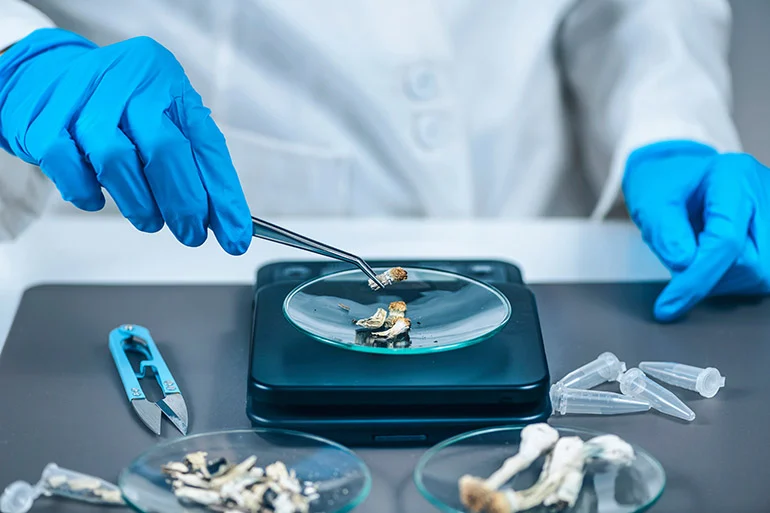
The fervent hope surrounding classic psychedelics as a revolutionary treatment for depression may be tempering, with recent data suggesting that their efficacy, while significant for certain populations, might offer gains more incremental than transformative for the majority of patients. This evolving understanding prompts a critical re-evaluation, drawing parallels to the trajectory of selective serotonin reuptake inhibitors (SSRIs), which similarly enjoyed initial widespread acclaim before real-world outcomes necessitated a more modest assessment.
The Echo of SSRI Hype and Reality
The narrative unfolding for psilocybin bears a striking resemblance to the early days of SSRIs. In the late 1980s and early 1990s, medications like fluoxetine (Prozac) were hailed as "wonder drugs" and "breakthroughs" for depression. New York magazine, in 1989, declared "Bye-bye blues: A new wonder drug for depression," and Newsweek featured Prozac on its cover in 1990, underscoring the immense public and medical enthusiasm. The prevailing theory of the era posited depression as a simple "chemical imbalance" in the brain, which SSRIs and later SNRIs were believed to correct by modulating serotonin levels. This simplistic yet compelling explanation resonated widely, driving massive adoption.
However, the real-world clinical record for SSRIs and SNRIs proved more modest than their pivotal trials initially suggested. The landmark Sequenced Treatment Alternatives to Relieve Depression (STARD) study, conducted between 2001 and 2006, represented the largest real-world investigation of antidepressant treatment effectiveness. Involving over 4,000 outpatients with major depressive disorder, STARD revealed that only about one-third of patients achieved remission with their first antidepressant medication. Subsequent treatment steps, involving switching or augmenting medications, were often required, with remission rates hovering around 28% to 33% even after multiple attempts. This extensive study underscored the complexity of treating depression and the limitations of a "one-size-fits-all" approach.
Further challenging the foundational premise, a systematic review published in Molecular Psychiatry in 2022 meticulously analyzed decades of research and concluded there was "no support for the hypothesis that depression is caused by lowered serotonin activity or concentrations." This finding fundamentally decoupled the perceived mechanism of action of SSRIs from the direct cause of depression, urging a more nuanced understanding of brain chemistry and mental illness. While SSRIs remain a cornerstone of depression treatment for many, their story serves as a cautionary tale against premature declarations of "cure" and oversimplified biological explanations.
Psilocybin’s Journey: From Transformative Claims to Measured Expectations
Against this backdrop, the re-emergence of psychedelics, particularly psilocybin, for mental health treatment has been met with both scientific rigor and significant public anticipation. After decades of being relegated to Schedule I status and largely inaccessible for research, a renewed interest began in the late 20th and early 21st centuries, spearheaded by institutions like Johns Hopkins University and Imperial College London. Early, smaller-scale trials reported astonishingly high response and remission rates, fostering a belief that psychedelics could represent a paradigm shift in psychiatry.
For instance, a 2021 Johns Hopkins study involving 24 patients with major depression reported a remarkable 71% response rate and 54% remission four weeks after just two psilocybin sessions. That same year, a head-to-head trial comparing psilocybin with the SSRI escitalopram reported psilocybin’s response rate near 70%. These figures fueled a wave of optimism, portraying psilocybin-assisted therapy as a potentially transformative, rapid-acting intervention, especially for treatment-resistant depression (TRD). The idea of a single or limited number of profound psychedelic experiences leading to sustained remission was a powerful draw for patients and clinicians alike, contrasting sharply with the daily regimen and often incremental benefits of conventional antidepressants.
However, as research progressed, involving larger patient cohorts and more rigorous methodologies, the initial "signal" of exceptional efficacy began to cool. Compass Pathways, a leading pharmaceutical company focused on psilocybin-based therapies, provided a crucial benchmark with its Phase 2b trial for TRD. While still demonstrating efficacy, the study showed a response rate of approximately 37% initially, which then slid to 20% by week 12. This trend of diminishing returns as trials expand in scope and rigor is not uncommon in drug development, often attributed to factors such as broader patient inclusion criteria, less intensive therapeutic support, and a reduced placebo effect in larger studies.
Real-World Insights from Zurich
A recent retrospective study, published in The Lancet Regional Health – Europe, offers an early "real-world" perspective on psilocybin’s effectiveness. Psychiatrists at the University Hospital of Psychiatry Zurich followed 19 patients suffering from severe treatment-resistant depression. These patients received psilocybin under Switzerland’s limited-medical-use exemption, a rare framework allowing the drug’s use outside of strictly controlled clinical trials. This unique setting provided valuable data on how psilocybin might perform in routine clinical conditions, rather than the highly controlled environment of a research study.
The findings indicated a significant reduction in depression scores, with MADRS (Montgomery-Åsberg Depression Rating Scale) scores falling from an average of 31 to 20, a statistically large effect. However, the rates of response (defined as a 50% reduction in MADRS score) and remission (MADRS score below 10) were more modest: approximately one-third of patients responded, and one-fifth achieved remission. The authors themselves noted that these figures sat at the "bottom of the trial literature" and were roughly comparable to the outcomes observed in the STAR*D trial for conventional antidepressants. Furthermore, the study suggested that the therapeutic benefit was largely "front-loaded" onto the first psilocybin session, with repeat dosing adding little additional improvement that could be definitively separated from chance in their small sample.
Dr. Rotem Petranker, who directs the Canadian Centre for Psychedelic Science and has extensively studied microdosing, expressed a tempered optimism regarding these results. "All the participants in this study had treatment-resistant depression, meaning nothing works," Petranker stated. "Imagine any disorder where nothing works, where every treatment we can give you is palliative, and then something works, even if it doesn’t work for everyone. I think that’s pretty cool." He emphasized the significance of any effective treatment for TRD, a patient population notoriously difficult to help. However, he also acknowledged that these real-world data points are "well short of the results that minted the hype," highlighting the ongoing discrepancy between early excitement and unfolding clinical evidence.
The Regulatory Landscape and Modest Phase 3 Outcomes
The cooling trend continued as psilocybin progressed through its pivotal Phase 3 trials. Compass Pathways reported successful achievement of primary endpoints in both its Phase 3 trials for COMP360 psilocybin in TRD, with results announced in 2025 (single dose) and early 2026 (two doses). While meeting statistical significance, the separation from the control group was modest, approximately 3.6 to 3.8 points on the MADRS scale. Notably, the company reportedly utilized a 25 percent response threshold for efficacy rather than the more conventional 50 percent, a detail that could influence the interpretation of clinical meaningfulness. Compass Pathways has indicated plans to file for FDA approval by the end of 2026.
The FDA’s review process for psychedelic-assisted therapies faces unique challenges, as illustrated by the recent trajectory of MDMA-assisted therapy for PTSD.
A Cautionary Tale: MDMA’s FDA Setback
The experience of MDMA-assisted therapy for post-traumatic stress disorder (PTSD) provides a crucial cautionary tale for the burgeoning psychedelic therapy field. Lykos Therapeutics, a public benefit corporation spun out of the Multidisciplinary Association for Psychedelic Studies (MAPS), submitted its MDMA-assisted therapy program to the FDA for approval based on two positive Phase 3 trials. However, in August 2024, the agency declined approval, requesting an additional Phase 3 trial. This decision led to significant restructuring at Lykos, including a reduction of roughly three-quarters of its staff.
Dr. Petranker commented on the MDMA outcome, suggesting it was "clear to everyone but MAPS that the FDA wouldn’t approve it, because their submission didn’t fit the requirements." He noted that "a lot of people learned from that. Now Compass and others really try to cross their t’s and dot their i’s when they submit."

A core issue identified was the inherent difficulty in separating the drug’s effect from the intensive psychotherapy component. As Petranker explained, "MDMA won’t work on its own; it requires a psychotherapy component." This bundled nature presents a challenge for regulatory bodies accustomed to evaluating the efficacy of a drug as a standalone intervention. Furthermore, the difficulty of blinding patients in psychedelic trials—where participants often discern whether they received the active drug due to its profound subjective effects—was a significant concern. In a January 2026 review in Neuropsychopharmacology, psychiatry researchers Philip Harvey and Charles Nemeroff highlighted that the FDA rejected the MDMA program "for reasons that could apply to clinical trials for classical psychedelics," including the blinding issue. This underscores that the regulatory path for psychedelic therapies is complex and demands meticulous trial design and data presentation.
Despite these challenges, some experts remain optimistic about psilocybin’s prospects. Dr. Sandeep Nayak, who directs the Johns Hopkins Center for Psychedelic and Consciousness Research, expressed confidence after the Phase 3 results that psilocybin treatment would clear the FDA, pointing to the trials’ design and durability data.
The Paucity of Data and the Call for Rigorous Science
A critical factor in understanding the current state of psychedelic research is the sheer volume of data, or lack thereof, compared to conventional treatments. Dr. Petranker observed, "Over the last 20 years, something like 1,500 people have been administered psilocybin in a clinical trial setting. Really not that many." To put this into perspective, the STAR*D trial alone evaluated approximately 2,900 patients in its initial treatment step, out of over 4,000 enrolled. This relative paucity of data necessitates continued, extensive research to establish psilocybin’s true efficacy, safety profile, and optimal application.
Petranker advocates for a cautious, evidence-based approach: "Almost everyone [in the field] says, ‘We know it works, we just need to show it,’ and I’m like, ‘That’s not science. Science is, let’s see if it works.’" He envisions a shift from "very large, bombastic statements, ‘we’ve cured depression, this is it,’ to ‘this is a new tool we’ll use in the psychiatric toolbox.’" This perspective reflects a growing maturity in the field, moving beyond revolutionary claims towards integrating psychedelics as valuable, albeit not universally curative, options.
Comparative Meta-Analyses: Challenging the Superiority Narrative
Recent meta-analyses have further supported the notion that psilocybin, despite its distinct mechanism of action, may not offer dramatically superior efficacy to existing standard treatment options.
A study published in JAMA Network Open by Hieronymus and colleagues found strikingly similar active-arm response rates across psilocybin, SSRIs, and esketamine (48%, 46%, and 52%, respectively). Interestingly, psilocybin control arms exhibited a lower response rate compared to SSRI or esketamine controls, suggesting that the profound subjective effects of psilocybin might make blinding more challenging, thereby amplifying the perceived difference between active drug and placebo.
Perhaps even more revealing was a meta-analysis published in JAMA Psychiatry by Williams, Barnett, and Szigeti. This study adopted a novel approach, treating psychedelic-assisted therapy trials as functionally "open-label" due to the inherent difficulty in blinding participants to the psychedelic experience. They then compared these trials with open-label antidepressant trials. Across 24 trials, the results were striking: psychedelic-assisted therapy and open-label antidepressants produced nearly identical improvement on the 17-item Hamilton Depression Rating Scale (HAM-D17), with a minuscule 0.3-point difference favoring antidepressants, and a confidence interval indicating no statistically significant difference (95% CI, -1.39 to 1.98; P = .73).
This outcome surprised lead researcher Balázs Szigeti, who told UCSF, "What I wanted to show is that even if you compare psychedelics to open-label antidepressants, psychedelics are still much better. Unfortunately, what we got is the opposite result, that they are the same, which is very surprising given the enthusiasm around psychedelics and mental health." These meta-analyses provide a powerful counterpoint to the early hype, suggesting that once methodological challenges like blinding are accounted for, the comparative efficacy might be less revolutionary than initially hoped.
Skepticism and the Placebo Effect
Dr. Petranker’s skepticism regarding inflated early results is rooted in years of observing clinical trial dynamics. Six years ago, he published a paper urging the field to slow down, warning, "you’re writing checks you won’t be able to cash." He anticipated that effects would naturally shrink as trials moved toward real-world conditions. "The 50 or 60 percent response rates we’ve seen in some clinical trials? I’m very skeptical of those," he explained. "If you look at SSRI trial results, the effects there are much bigger than what you see in real life. It probably has something to do with the placebo response. People are very optimistic, there’s a lot of expectancy." The potent subjective experience of psychedelics, coupled with widespread media attention and patient hope, can undoubtedly contribute to a significant expectancy effect, which can be difficult to disentangle from the drug’s specific pharmacological action.
The Microdosing Mirage
Petranker’s evolving perspective extends even to the realm of microdosing, where he was once more hopeful. In a 2020 interview, he cited survey data suggesting that individuals who microdosed "fare better than people who don’t," reporting common gains in mood, focus, and creativity. The appeal of sub-perceptual doses for enhancing well-being without the intensity of a full psychedelic experience resonated with many.
However, further rigorous data led Petranker to become more skeptical. His team conducted what has been described as the largest randomized trial of psilocybin microdosing for depression, administering two milligrams—a fraction of a standard psychedelic dose—to participants. The results, detailed in a preprint published earlier this year, showed that both the drug and placebo groups improved. Furthermore, over half of the participants correctly guessed which treatment arm they were in, indicating a significant unblinding effect. Crucially, the clearest signal of improvement appeared not on standard depression scales but on a measure of "dysfunctional attitudes," suggesting that any perceived benefits might be psychological or expectancy-driven rather than a direct antidepressant effect. "I used to think a dose so small it’s unnoticeable could still be effective," Petranker confessed. "I don’t really think that anymore."
Implications and Future Directions
The emerging data for psilocybin-assisted therapy, while undeniably positive for a segment of patients, signals a maturation of the field. The narrative is shifting from one of a "miracle cure" to a more grounded understanding of psilocybin as a potent therapeutic agent that, like other treatments, has its strengths and limitations. For patients with treatment-resistant depression, even incremental gains are profoundly meaningful, offering hope where conventional therapies have failed. The Zurich study, despite its small size, underscores this potential for individuals with severe, recalcitrant conditions.
The regulatory path remains challenging, particularly concerning the integral role of psychotherapy and the difficulties of blinding in psychedelic trials. Companies like Compass Pathways, by carefully navigating FDA requirements and demonstrating efficacy even with modest effect sizes, are paving the way for potential approval. However, the outcomes for MDMA-assisted therapy serve as a stark reminder that regulatory bodies prioritize robust, unambiguous evidence of drug efficacy.
The calls for "rigorous, slow science" by researchers like Petranker are paramount. Future research must focus on larger, more diverse patient populations, optimize dosing and therapeutic protocols, and develop innovative trial designs that address the unique challenges of psychedelic research, such as enhancing blinding fidelity. Understanding which specific patient populations respond best to psilocybin and why will be crucial for personalized psychiatric care.
Ultimately, the goal is not to declare psilocybin a universal panacea, but to integrate it thoughtfully and effectively into the existing "psychiatric toolbox." As Dr. Petranker aptly summarized, "No single study contains all the truth. The consensus seems to be that there’s something there. We don’t know whether the TRD response rate will be 30 percent of the population, 20, 40, 50, or 10, but it appears to be a novel, effective treatment for some mental health disorders, so it’s worth pursuing." The journey of psilocybin in mental health is far from over, but it is settling into a phase of measured optimism, driven by science, rather than unbridled hype.