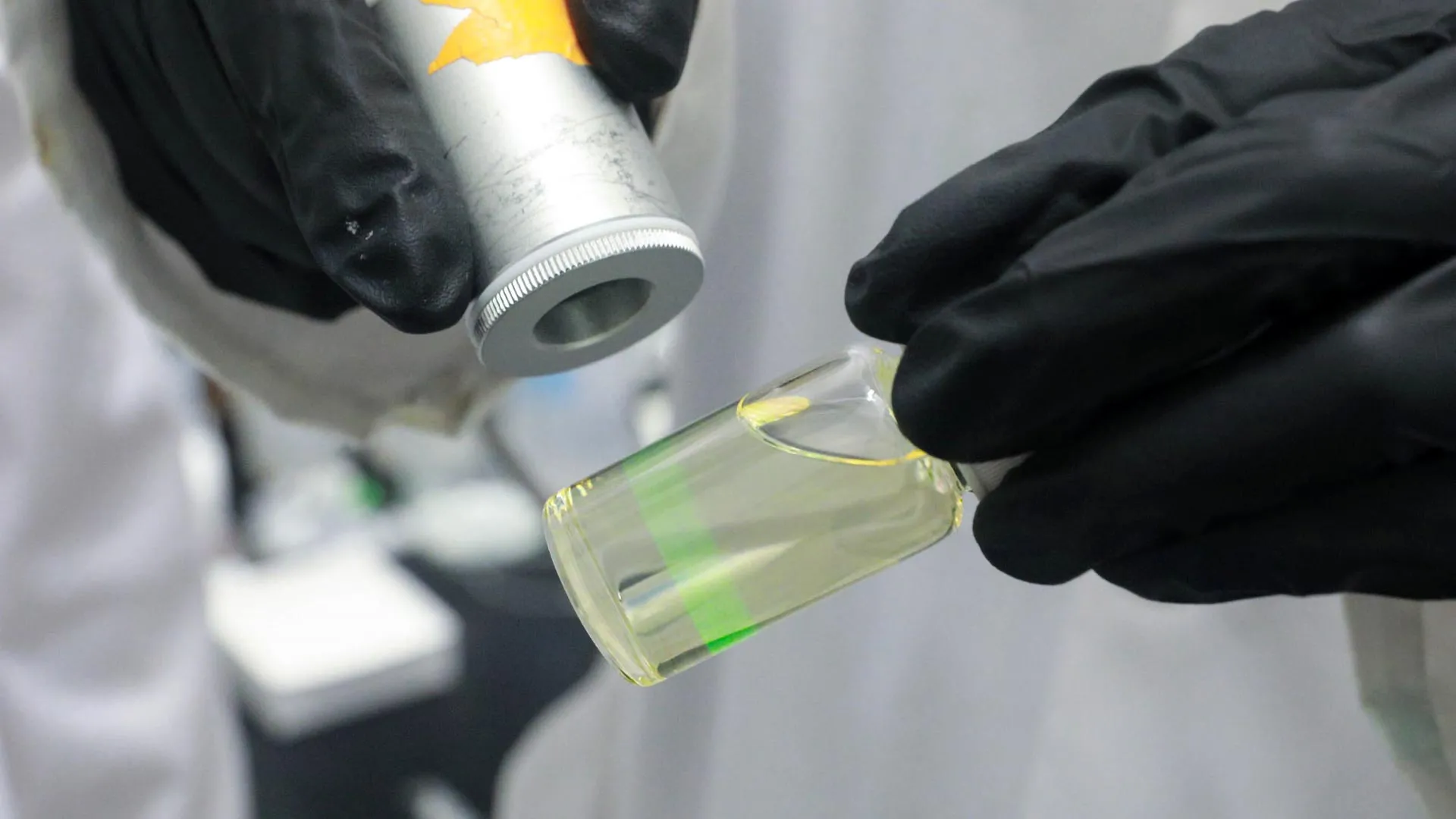
Researchers at Kyushu University have announced a significant advancement in material science with the creation of a new solid-state molecular material capable of transforming visible sunlight into high-energy ultraviolet (UV) light. This process, known as photon upconversion, was achieved under normal outdoor conditions, marking a pivotal step toward the practical application of light-conversion technologies. According to the study published on June 23 in the journal Nature Communications, the material demonstrates a photo upconversion efficiency of 1.9%, a figure that, while seemingly modest, represents a major milestone for solid-state systems operating under low-intensity natural light.
The development is the result of a 14-year research initiative led by Professor Emeritus Nobuo Kimizuka and Associate Professor Yoichi Sasaki of Kyushu University’s Faculty of Engineering. By manipulating the molecular structure of organic semiconductors, the team has successfully bypassed the traditional limitations of solid-state upconversion, which typically requires high-intensity laser light to function. This breakthrough opens the door to a wide array of solar-powered applications, ranging from environmental purification to advanced manufacturing.
Understanding the Mechanics of Photon Upconversion
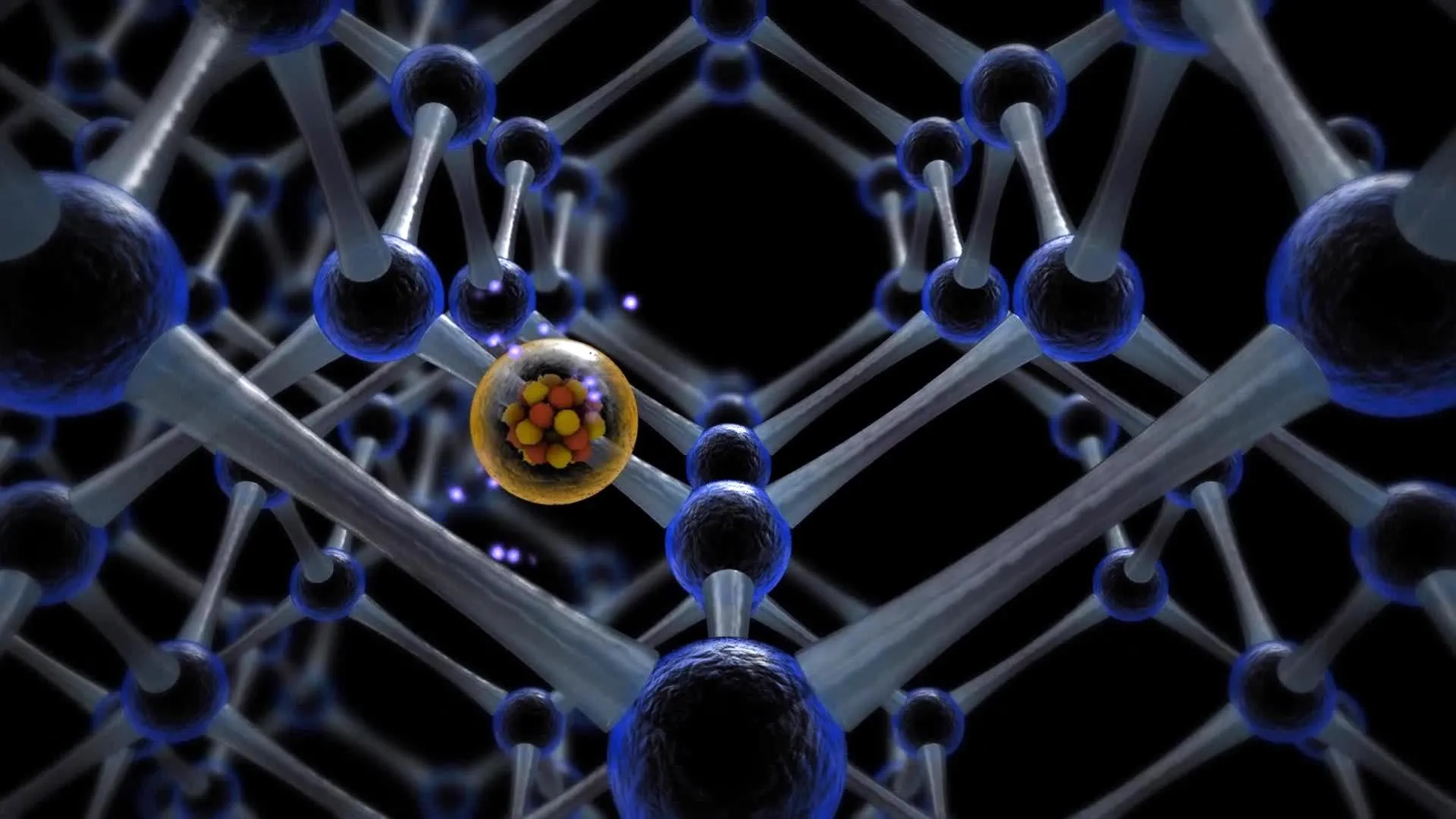
To understand the significance of this discovery, it is helpful to use an analogy from thermodynamics. In everyday life, mixing two cups of lukewarm water will never result in a single cup of boiling water; the laws of physics generally dictate that energy is dispersed or averaged. However, at the quantum level, the rules of energy exchange allow for a phenomenon where multiple low-energy particles of light, known as photons, can combine their energy to create a single photon of much higher energy.
In the context of the Kyushu University study, this process involves converting visible light—which makes up the bulk of the solar spectrum reaching Earth—into ultraviolet light. Ultraviolet radiation possesses shorter wavelengths and higher energy than visible light, making it a potent tool for driving chemical reactions and sterilized environments.
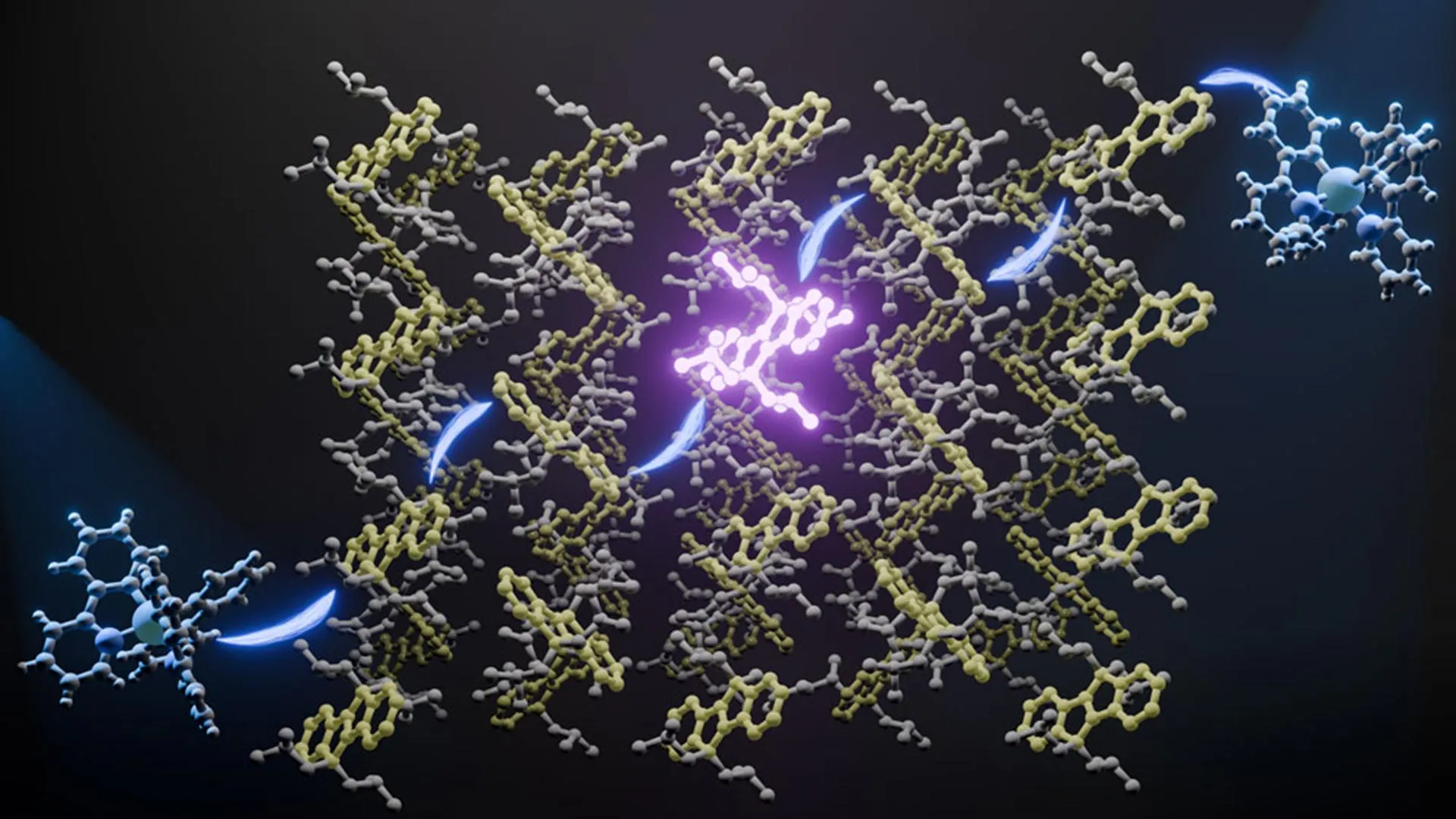
The specific mechanism employed by the researchers is known as triplet-triplet annihilation (TTA). This process begins when a "donor" molecule absorbs a visible light photon and enters an excited triplet state. This energy is then transferred to a nearby "acceptor" molecule. When two such excited acceptor molecules encounter one another, they undergo a specialized interaction where their energy is pooled, eventually being released as a single, high-energy UV photon.
The Technological Importance of Ultraviolet Light
While UV light is frequently discussed in the context of health risks such as skin damage and solar radiation, it is an indispensable component of modern industrial and medical technology. Its high energy level allows it to break chemical bonds and trigger reactions that visible light cannot facilitate.
Currently, UV light is utilized in several critical sectors:
- Air and Water Purification: UV-C radiation is highly effective at neutralizing pathogens, including bacteria and viruses, by disrupting their DNA.
- 3D Printing and Resin Curing: Many additive manufacturing processes rely on UV light to "cure" or harden liquid resins into solid structures with high precision.
- Medical and Dental Applications: UV light is used to harden gels in dental fillings and to treat various skin conditions under controlled medical supervision.
- Photocatalysis: UV energy is often required to trigger catalysts that produce hydrogen fuel or break down environmental pollutants.
Despite its utility, UV light is a scarce resource in natural sunlight. Only about 6% of the solar radiation that reaches the Earth’s surface falls within the ultraviolet spectrum. Furthermore, much of this is absorbed by the atmosphere or is of a wavelength that is not easily harnessed for technological use. The ability to "upconvert" the abundant visible light from the sun into usable UV light effectively expands the "energy budget" available for solar-powered technologies.
Overcoming the Solid-State Challenge
For decades, triplet-triplet annihilation has been known to work efficiently in liquid solutions. In a liquid state, molecules move freely, allowing donor and acceptor molecules to collide frequently and exchange energy. However, liquid-based upconversion systems face significant hurdles for commercial or outdoor use. They often require volatile or toxic organic solvents, are prone to leakage, and can degrade or evaporate over time.
To create a durable, practical device, researchers have long sought to transition this process into solid-state materials. However, solids present a different set of challenges. In a solid crystal or film, molecules are packed tightly together. When molecules are too close, their electronic "clouds"—specifically the pi-electron clouds that hover above and below molecular planes—can overlap too much. This overlap often leads to a phenomenon called quenching, where the excited energy is lost as heat before the molecules have a chance to undergo upconversion.
"Molecules must be close enough for energy to transfer but separated enough to prevent quenching of excitons," explains Associate Professor Yoichi Sasaki. Finding the "Goldilocks zone"—where molecules are perfectly spaced for energy migration without being so close that they neutralize each other—has been the primary obstacle in solid-state photonics.
The DHI Breakthrough: Molecular Engineering at the Nano-Scale
The Kyushu University team found their solution in a specific organic semiconductor called dihydroindenoindenedene (DHI). The breakthrough involved a sophisticated modification of the DHI molecule to control its physical spacing in a solid-state lattice.
The researchers attached alkyl chains to the sp3 carbon atoms of the DHI molecule. These carbon atoms have four bonds that point in fixed, three-dimensional directions, acting as rigid "scaffolding." By strategically placing these alkyl chains, the scientists were able to create a molecular structure that maintained a precise distance between neighboring DHI units.
This structural design allowed the material to achieve several critical properties:
- Controlled Energy Migration: The molecules were positioned closely enough to allow the "triplets" (excited states) to move through the material.
- High Fluorescence Quantum Yield: The material exhibited a solid-state fluorescence quantum yield of over 60%, indicating that it is highly efficient at handling light energy without losing it to heat.
- Suppressed Quenching: The physical spacers provided by the alkyl chains prevented the pi-electron clouds from overlapping in a way that would kill the excited states.
When this engineered DHI material was paired with a suitable donor molecule, the system achieved a 1.9% upconversion efficiency. While this number might seem low in isolation, its importance lies in the fact that it functions under low-intensity light. Most previous solid-state upconversion materials required concentrated lasers to work; the Kyushu material works using the intensity of natural sunlight.
A 14-Year Scientific Journey and the Legacy of Professor Kimizuka
The publication of this research marks the culmination of a journey that began in 2012. Professor Emeritus Nobuo Kimizuka, a pioneer in the field of molecular self-assembly, began exploring how molecules could be organized to perform complex functions like light conversion. His vision was to move away from bulky, inefficient hardware and toward "molecular systems chemistry," where the material itself performs the necessary work through its inherent structure.
Over the years, the Kimizuka lab experimented with various mediums, including liquid crystals and gels. While they saw steady improvements, the goal of a high-performance, air-stable solid-state material remained elusive until the recent discovery involving DHI.
The timing of the breakthrough was particularly poignant. The final data and the successful synthesis of the DHI-based system occurred in May 2024, just months before Professor Kimizuka’s scheduled retirement. The research team, including graduate students Naoyuki Harada, Hayato Shoyama, and Nutnicha Boonmong, worked alongside Sasaki and then-Assistant Professor Kiichi Mizukami to finalize the study.
"We handed the draft to Professor Kimizuka just 11 days before he left the lab," Sasaki noted. "For us, it felt like a heartfelt retirement gift, representing the final piece of a decade-long puzzle."
Future Implications and Industrial Potential
The researchers have already filed a patent application for the material, signaling its potential for commercialization. The advantages of the DHI-based material extend beyond its efficiency. It is synthesized from relatively inexpensive starting materials and the process is scalable, unlike many rare-earth-based upconversion materials which are costly and difficult to process.
The implications for this technology are broad:
- Solar-Powered 3D Printing: In remote areas or off-grid locations, 3D printers could potentially use upconverted sunlight to cure resins, enabling the manufacturing of tools or medical supplies without heavy electrical infrastructure.
- Passive Air Purification: Building materials or window coatings could incorporate this material to convert sunlight into UV light, which would then activate photocatalytic surfaces to break down indoor pollutants and volatile organic compounds (VOCs).
- Enhanced Solar Energy Harvesting: By converting visible light to UV, this material could be used in conjunction with specific solar cells that are more efficient at high energies, potentially pushing the boundaries of solar energy capture.
The team’s work demonstrates that organic molecular solids can compete with, and in some cases outperform, liquid systems. By solving the quenching problem through precise molecular architecture, Kyushu University has provided a blueprint for the next generation of light-sensitive materials.
Conclusion
The discovery of the DHI-based upconversion material marks a major milestone in photonics and molecular chemistry. By achieving 1.9% efficiency under natural sunlight, the Kyushu University team has proven that the "boiling water" analogy of quantum energy is not just a laboratory curiosity, but a viable path for future technology. As the world seeks more efficient ways to harness solar energy and reduce reliance on toxic solvents, solid-state photon upconversion stands out as a promising frontier. The 14-year quest led by Professor Kimizuka has not only resulted in a patented material but has also provided a profound contribution to the field of molecular self-assembly, ensuring that the legacy of this research will continue to influence material science for years to come.