In a significant advancement for the field of renewable energy and carbon capture, a research team at Osaka Metropolitan University (OMU) has developed a groundbreaking artificial photosynthesis system capable of producing solar fuel with unprecedented consistency. By integrating a self-regulating chemical component directly into the electrolyzer, the researchers have successfully eliminated the need for battery-based control equipment and complex electronic monitoring. This innovation addresses one of the most persistent hurdles in the commercialization of artificial photosynthesis: the high cost and systemic complexity associated with managing fluctuating solar energy inputs. Led by Associate Professor Yasuo Matsubara and Professor Yutaka Amao from the OMU Research Center for Artificial Photosynthesis, the project represents a collaborative triumph with Iida Group Holdings Co., Ltd., signaling a move toward decentralized, domestic energy production.
The Challenge of Intermittency in Solar Fuel Synthesis
Artificial photosynthesis is a chemical process that biomimics the natural ability of plants to convert sunlight, water, and carbon dioxide into energy-rich organic compounds. In a laboratory or industrial setting, this involves using electricity generated by solar cells to power an electrolyzer, which then facilitates the chemical reduction of CO2 into fuels such as formic acid (CH2O2). Formic acid is highly valued in the emerging green economy because it serves as an effective liquid carrier for hydrogen and can be stored and transported more easily than gaseous fuels.
However, the primary technical challenge for these systems has always been the inherent instability of sunlight. Solar intensity varies significantly throughout the day due to cloud cover, the angle of the sun, and atmospheric conditions. To maximize efficiency, traditional systems rely on Maximum Power Point Tracking (MPPT). MPPT is an electronic methodology that continuously adjusts the electrical load to ensure that solar cells operate at their peak power output regardless of environmental changes.
In conventional setups, MPPT requires a sophisticated suite of hardware, including DC-DC converters, sensors, and, most importantly, large battery arrays to buffer the energy flow. These components not only drive up the initial capital expenditure of the system but also introduce maintenance issues and reduce the overall lifespan of the technology due to the degradation of chemical batteries.
A Material-Based Solution to Electronic Complexity
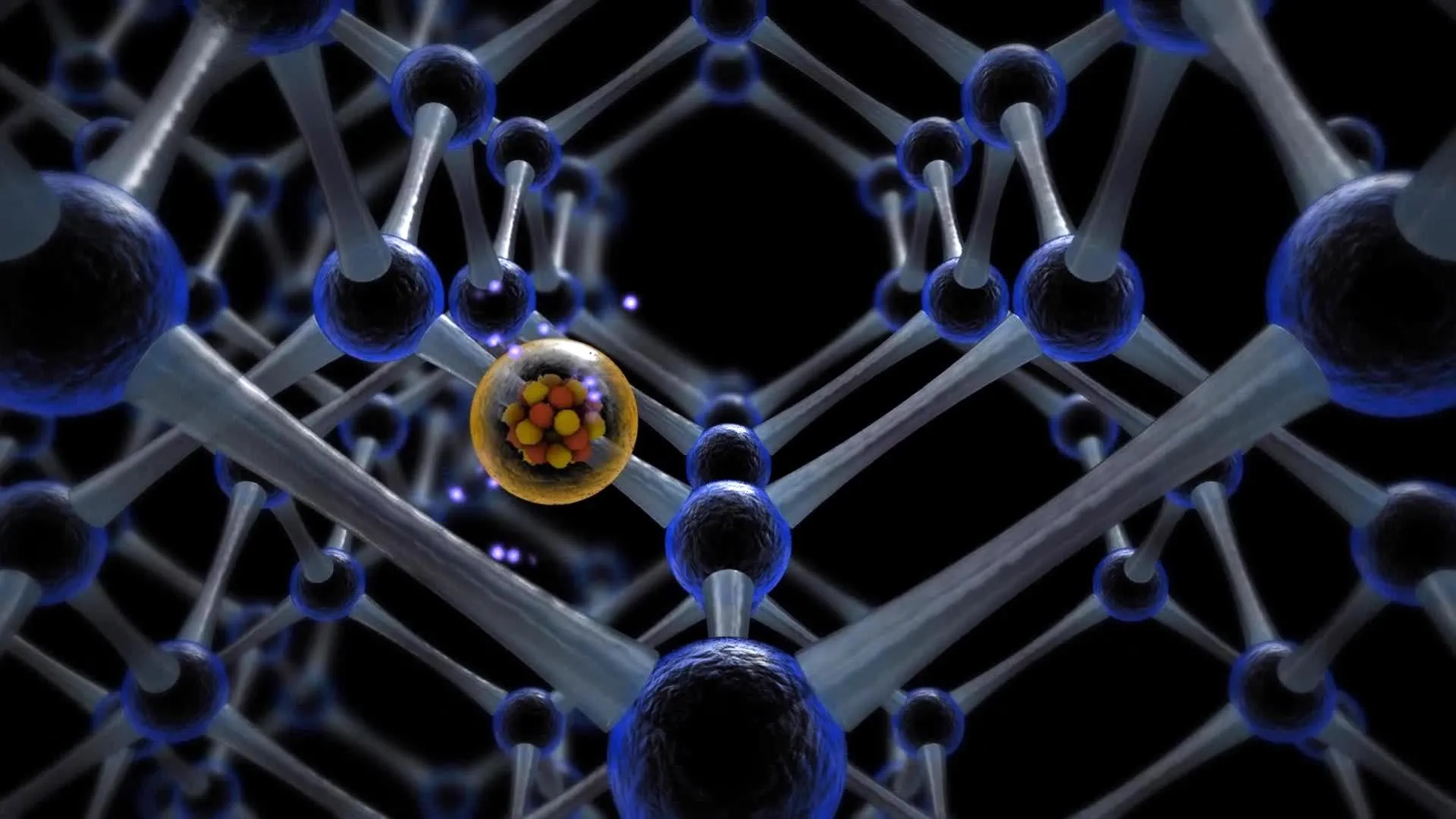
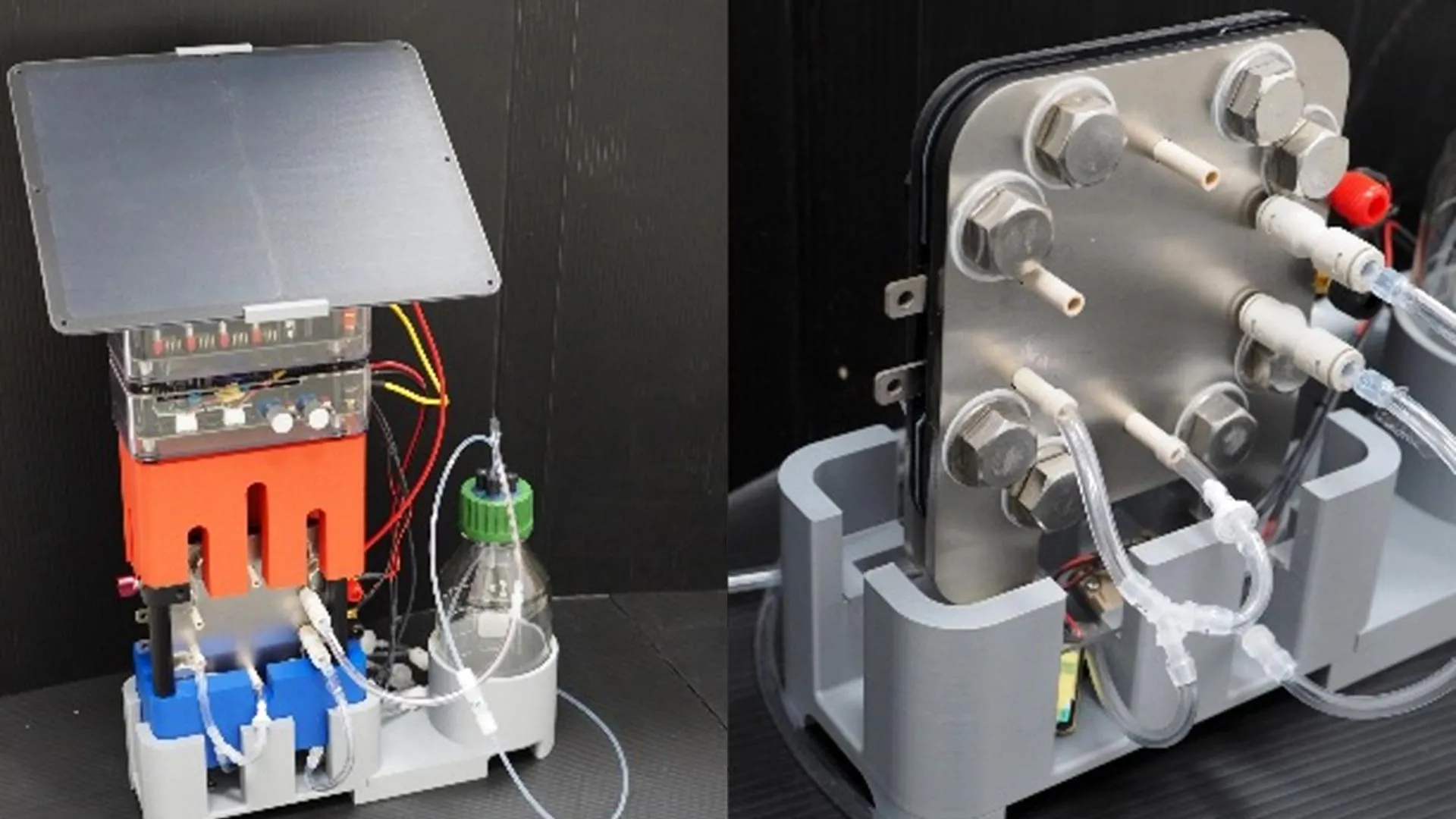
The OMU research team sought to bypass these electronic bottlenecks by redesigning the electrolyzer’s internal architecture. Rather than relying on external silicon-based controllers to manage power fluctuations, they developed a "self-regulating" electrolyzer. This was achieved by incorporating a specially designed solid electrolyte into the device that responds dynamically to thermal and electrical changes.
The breakthrough lies in the relationship between the electrolyzer’s impedance—its internal resistance to electrical flow—and the ambient heat generated by solar radiation. Under intense sunlight, traditional solar cells produce more current, which can often overwhelm a standard electrolyzer if not managed by external electronics. However, in the OMU system, as sunlight increases and the electrolyzer naturally warms up, the internal resistance of the solid electrolyte drops.
"The system is designed so that this warming causes the electrical resistance to drop, allowing electricity to flow more freely," explained Professor Yutaka Amao. "This makes the system automatically adjust its electrical behavior."
By aligning the device’s physical properties with the power curve of the solar cells, the researchers created a passive MPPT effect. This means the electrolyzer "tracks" the maximum power point through its own material physics rather than through a computer-controlled circuit. This simplification removes the need for converters and batteries, significantly reducing the "balance of system" costs and making the technology more robust for long-term outdoor use.
Chronology of Development and the Osaka Kansai Expo 2025
The journey toward this self-regulating system began several years ago at the OMU Research Center for Artificial Photosynthesis, one of Japan’s leading hubs for carbon-neutral technology. The team initially focused on the fundamental chemistry of CO2 reduction before partnering with Iida Group Holdings, a major player in the Japanese housing and construction industry. This partnership was strategic, aiming to move artificial photosynthesis from the laboratory into the residential sector.
A pivotal moment in the technology’s development occurred during the preparations for the "Joint Pavilion Iida Group × Osaka Metropolitan University" exhibition at the Osaka Kansai Expo 2025. Before the formal publication of their findings in the journal EES Solar, the researchers needed to prove the system could function in a real-world, high-stakes environment.
During the exhibition’s pilot phase, the team deployed a prototype of the self-regulating electrolyzer. The system was tasked with producing formic acid under actual outdoor sunlight to power a miniature diorama within the pavilion. The success of this demonstration provided the empirical proof required to validate their thermal-impedance model. It showed that even with the passing of clouds and the shifting of the sun, the system could maintain a steady output of formic acid without a single battery connected to the control loop.
Data Analysis: Efficiency and Formic Acid Production
The findings published in EES Solar detail the technical metrics that set this system apart from previous iterations of artificial photosynthesis. While traditional systems often see a sharp drop in Solar-to-Fuel (STF) efficiency when disconnected from stabilizing batteries, the OMU system maintained a remarkably stable conversion rate.
Formic acid was chosen as the target fuel due to its specific chemical properties. With a volumetric hydrogen density of approximately 53 g/L, formic acid outperforms compressed hydrogen gas in terms of storage safety and infrastructure compatibility. The OMU system’s ability to produce this fuel directly from CO2 and water at the point of use suggests a future where homes could function as mini-refineries, capturing their own carbon emissions and converting them into heating or transport fuel.
Key data points from the research include:
- Thermal Response: The electrolyte’s conductivity showed a linear correlation with temperature increases between 25°C and 55°C, perfectly mirroring the peak production hours of standard photovoltaic cells.
- Operational Stability: In outdoor trials, the system operated for extended periods without manual intervention, proving that the self-regulating mechanism is durable enough for commercial applications.
- Cost Reduction: By eliminating the MPPT controller and battery storage, the researchers estimate a reduction in the total system hardware cost by approximately 20% to 30%, depending on the scale of the installation.
Official Responses and Industry Implications
The academic and industrial communities have responded with cautious optimism to the OMU announcement. Associate Professor Yasuo Matsubara emphasized that the success of the project was rooted in the interdisciplinary nature of the team. "We were confident that it would be successful," Matsubara stated, noting that the Expo 2025 demonstration was the ultimate "stress test" for their theories.
Industry analysts suggest that the removal of batteries from the equation has broader environmental implications beyond just cost. The production of lithium-ion batteries involves intensive mining and a significant carbon footprint. By creating a "battery-less" solar fuel system, OMU is offering a more truly "green" alternative that reduces the reliance on rare earth metals and avoids the waste management issues associated with battery disposal.
Furthermore, the involvement of Iida Group Holdings suggests a clear path toward the "Smart Home" of the future. In a statement reflecting on the partnership, representatives from Iida Group indicated that this technology could eventually be integrated into residential power systems, allowing homeowners to store summer solar energy as formic acid for use during the winter months, thereby achieving a level of energy independence currently unavailable to the average consumer.
Broader Impact: Towards a Carbon-Neutral Society
The implications of this research extend far beyond the borders of Japan. As the global community strives to meet the targets set by the Paris Agreement, the development of efficient Carbon Capture and Utilization (CCU) technologies is paramount. The OMU system represents a significant step toward a circular carbon economy.
By simplifying the hardware required to turn CO2 into fuel, this technology lowers the barrier to entry for developing nations and remote communities. In regions where the electrical grid is unstable or non-existent, a self-regulating artificial photosynthesis system could provide a reliable source of fuel for cooking, heating, and local transport without the need for a complex power infrastructure.
As the research moves toward the scaling phase, the OMU team plans to investigate different catalysts to further increase the rate of formic acid production and to explore whether this self-regulating principle can be applied to other types of solar fuels, such as methanol or green ammonia.
The publication of this study in EES Solar marks a milestone in the transition from theoretical artificial photosynthesis to practical, everyday application. By looking to the natural world’s simplicity and using the very heat of the sun to regulate the energy it provides, the researchers at Osaka Metropolitan University have cleared a path for a more sustainable and energy-secure future. With the 2025 Expo serving as a global stage, the world will soon see if this battery-free approach can indeed power the homes of tomorrow.