The National Aeronautics and Space Administration has successfully restored and enhanced its Cold Atom Lab (CAL) aboard the International Space Station (ISS), marking a pivotal milestone in the study of quantum physics within the unique environment of low Earth orbit. This facility, roughly the size of a compact refrigerator, serves as the premier venue for investigating the fundamental nature of matter under conditions that are impossible to replicate on the Earth’s surface. By leveraging the persistent microgravity of the orbital outpost, researchers are now able to probe the "quantum 2.0" era, where the direct manipulation of large quantum states could lead to revolutionary breakthroughs in navigation, communication, and our understanding of the universe’s underlying fabric.
The Frontiers of Quantum Research in Orbit
Quantum science operates at the most fundamental level of reality, focusing on the behavior of energy and matter at scales smaller than the atom. In our everyday experience, matter behaves according to classical Newtonian physics—objects have definite positions, trajectories, and boundaries. However, at the quantum level, these certainties dissolve. Particles like electrons and atoms can exist in multiple places simultaneously (superposition), pass through physical barriers (tunneling), and behave as both discrete particles and undulating waves.
The Cold Atom Lab is designed to exploit these strange behaviors by cooling atoms to the absolute limits of temperature. Utilizing a combination of laser cooling and magnetic trapping, the facility brings atoms down to temperatures below minus 459 degrees Fahrenheit (minus 237 degrees Celsius). This is just a fraction of a degree above absolute zero, the point at which all molecular motion theoretically ceases. In this extreme state, atoms slow down to a crawl, allowing their wavelike nature to become dominant.
When atoms reach these ultra-low temperatures, they can coalesce into a single, unified quantum state known as a Bose-Einstein Condensate (BEC). Often referred to as the "fifth state of matter"—distinct from solids, liquids, gases, and plasmas—a BEC allows thousands of atoms to act as a single "super-atom." This collective behavior makes quantum effects, which are usually hidden at the subatomic scale, visible and measurable at a macroscopic level.
A Chronology of Innovation: The Evolution of the Cold Atom Lab
The journey of the Cold Atom Lab began long before its 2018 installation on the ISS. The concept of Bose-Einstein Condensates was first predicted in the 1920s by Satyendra Nath Bose and Albert Einstein, but it was not until 1995 that scientists on Earth were able to create one in a laboratory setting—an achievement that earned the Nobel Prize in Physics in 2001.
Since its launch to the ISS in May 2018, the Cold Atom Lab has undergone a series of iterative improvements, reflecting NASA’s commitment to maintaining a state-of-the-art research environment in space. The latest enhancement, which became operational in late 2023 and early 2024, represents the fourth major hardware upgrade to the facility.
On April 11, 2024, a Commercial Resupply Services mission delivered a newly redesigned science module to the station. This module is the heart of the CAL, containing the vacuum chambers and optical components necessary to generate BECs. This specific upgrade focused on two critical areas: the atom sources and the magnetic confinement systems. Engineers replaced the aging metal atom sources with more efficient versions capable of generating denser clouds of rubidium and potassium gas. Furthermore, the redesigned magnetic trap now allows scientists to "sculpt" the quantum gas into different shapes, such as shells or rings, providing new ways to test the limits of quantum theory.
Technical Mechanics: How the Lab Achieves Absolute Zero
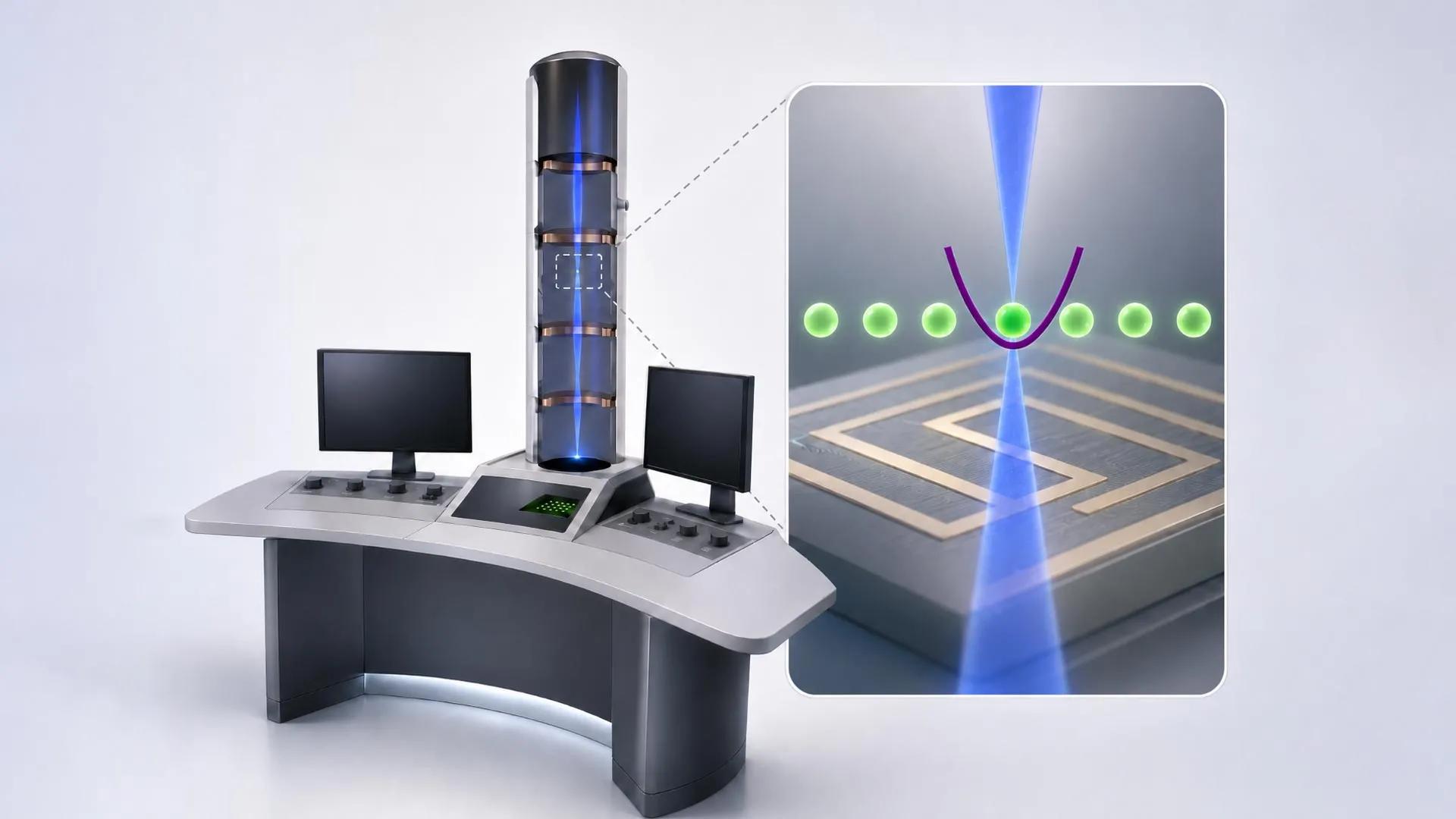
The process of creating a Bose-Einstein Condensate in space is a marvel of miniaturization and precision engineering. On Earth, similar laboratories often occupy entire rooms and require a dedicated team of technicians to maintain. NASA’s Jet Propulsion Laboratory (JPL) managed to compress this complex array of lasers, electronics, and vacuum systems into a package that fits within a standard EXPRESS (Expedite the Processing of Experiments to the Space Station) rack.
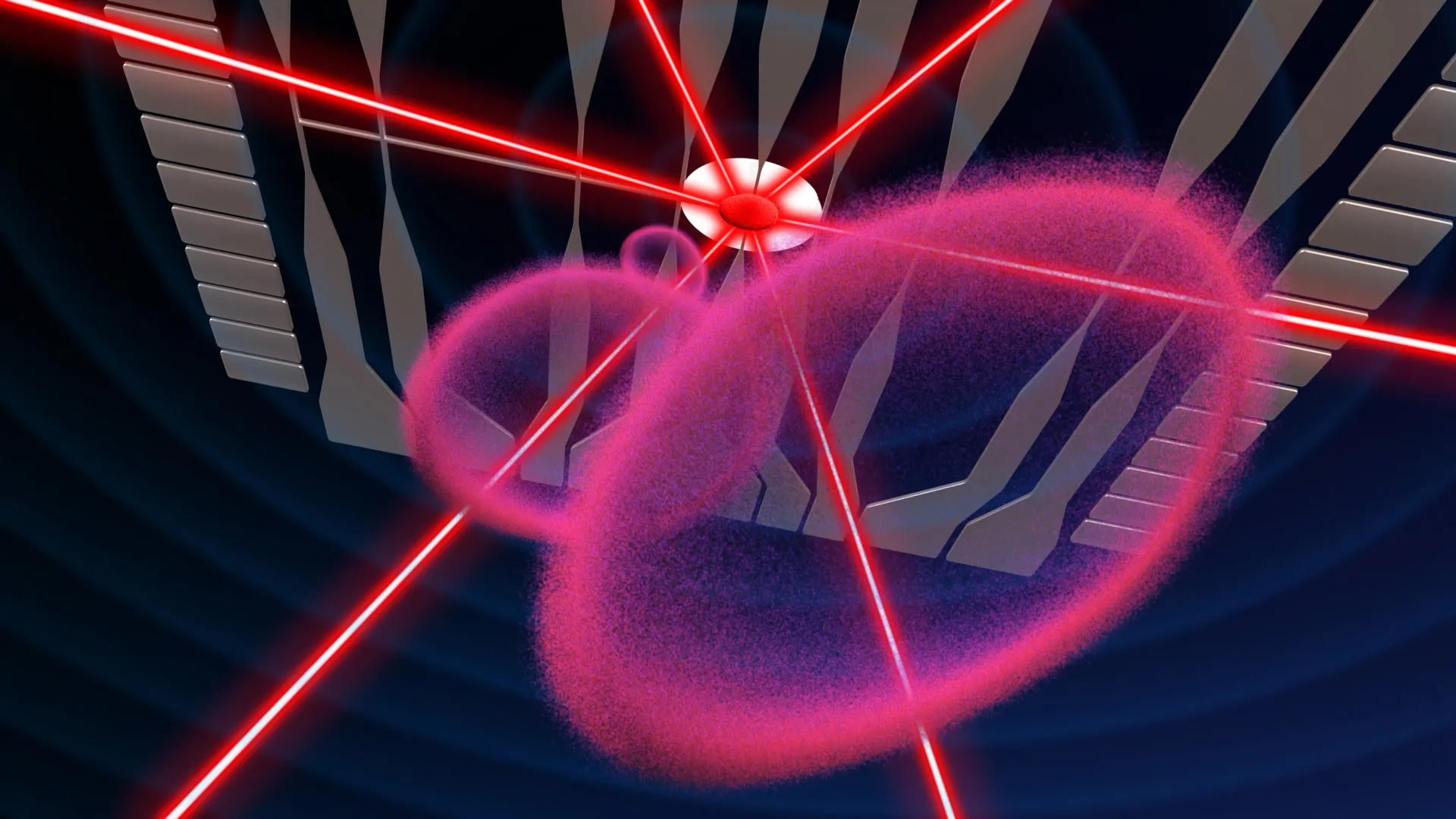
The experimental cycle begins by heating strips of rubidium or potassium metal to approximately 750°F (400°C). This creates a vapor that is funneled into a vacuum chamber. Once the gas is contained, a series of precisely tuned lasers intersect the cloud from multiple directions. Through a process known as Doppler cooling, the photons from the lasers strike the atoms, absorbing their kinetic energy and slowing them down.
Once the atoms are sufficiently sluggish, they are moved into a magnetic trap. Here, the researchers employ "evaporative cooling," a technique similar to blowing on a hot cup of coffee to let the most energetic molecules escape. As the hottest atoms are removed, the remaining atoms settle into the ultra-cold BEC state. In the microgravity of the ISS, these condensates can be held in a "free-fall" state for several seconds, whereas on Earth, gravity would pull them to the bottom of the container in a fraction of a second. This extended observation window is the primary reason why the ISS is an unparalleled venue for quantum research.
Perspectives from the Scientific Leadership
The successful deployment of the latest upgrade has been met with enthusiasm from the international scientific community. Jason Williams, the project scientist for the Cold Atom Lab at JPL, emphasized the transformative nature of the facility. "At the coldest temperatures, matter behaves drastically different from anything we have experienced," Williams noted. He explained that the wavelike nature of matter dominates at these levels, enabling measurements of time and gravity that are orders of magnitude more precise than current standards.
Ethan Elliott, the deputy project scientist, framed the current work as part of a broader historical arc. He described the 20th century as the era of "Quantum 1.0," which gave rise to the transistor, the laser, and the MRI. "We’re performing quantum 2.0—direct manipulation of large quantum states," Elliott stated. He suggested that just as the first quantum revolution fundamentally changed modern life, the advancements made in the Cold Atom Lab could lead to a similar leap in technological capability.
Kamal Oudrhiri, the project manager at JPL, highlighted the strategic importance of the facility for American leadership in space. He described the lab as the "closest thing we have to controlling the boundary of the quantum world." According to Oudrhiri, the new hardware not only advances fundamental physics but also matures the technology needed for future space exploration, such as matter-wave interferometers.
Broader Implications: From Fundamental Physics to Practical Technology
The research conducted within the Cold Atom Lab has implications that extend far beyond the walls of the International Space Station. One of the most promising applications is in the field of quantum sensing. Matter-wave interferometry, which uses the wave nature of atoms to measure forces, could lead to gravity sensors that are incredibly sensitive. Such sensors could be used to map the interior of planets, detect underground water deposits on Earth, or monitor changes in polar ice caps with unprecedented detail.
Furthermore, the development of ultra-precise quantum clocks could revolutionize deep-space navigation. Current GPS systems rely on atomic clocks, but the next generation of quantum clocks—tested and refined in the Cold Atom Lab—could allow spacecraft to navigate autonomously across the solar system without relying on signals from Earth. This "GPS-independent" navigation is considered essential for future crewed missions to Mars and beyond.
The lab also serves as a testing ground for theories regarding the "Dark Sector" of the universe. Some physicists believe that dark matter and dark energy might interact with ordinary matter through extremely weak forces that can only be detected using the precision of quantum sensors. By observing BECs in the quiet, gravity-free environment of the ISS, researchers may find the first hints of "new physics" that lie beyond the Standard Model.
Conclusion and Future Outlook
The Cold Atom Lab is currently supporting five international research teams, representing a collaborative effort to unlock the secrets of the quantum realm. Managed by Caltech and operated by JPL, the project is a cornerstone of NASA’s Biological and Physical Sciences division. As the facility continues its operations with its new upgrades, it stands as a testament to human ingenuity and the relentless pursuit of knowledge.
By studying the universe at its coldest and most fundamental level, NASA is not only exploring the origins of matter but also building the tools for the next century of discovery. The Cold Atom Lab proves that space is not just a destination for exploration, but a unique laboratory where the very laws of nature can be examined in ways that were once the stuff of science fiction. As the "Quantum 2.0" era unfolds, the lessons learned 250 miles above the Earth will likely reshape the technological landscape for generations to come.