The global healthcare industry, a cornerstone of human well-being, paradoxically carries a substantial environmental burden, contributing an estimated 4.4% of total global emissions annually. This significant footprint places it among the top contributors to climate change, a reality that often goes unacknowledged given its life-saving mission. A staggering 71% of these emissions originate from the sprawling and intricate healthcare supply chain, encompassing the vital pharmaceutical and biotechnology sectors. This intricate web includes everything from the sourcing of raw materials and the energy-intensive manufacturing processes to the complex logistics of distribution and the ultimate disposal of medical products.
The Heavy Carbon Footprint of Pharmaceutical Production
Within this broader healthcare context, the production, use, and disposal of medicines alone account for approximately 20% to 55% of the sector’s total carbon footprint. This wide range reflects variations across different drug types, manufacturing locations, and supply chain efficiencies. The emissions stem from several critical stages: corporate operations, the synthesis of Active Pharmaceutical Ingredients (APIs), and the extensive manufacturing processes.
Pharmaceutical manufacturing is notoriously resource-intensive. For every single kilogram of active drug produced, the process can generate an astonishing 25 to 100 kilograms of chemical waste. This highlights a fundamental challenge in drug production, where efficiency often comes at a high environmental cost. A primary culprit in this waste generation is the extensive use of solvents, which typically constitute 80% to 90% of the total mass in pharmaceutical processes. This reliance on solvents significantly inflates the Process Mass Intensity (PMI), a metric that measures the ratio of all materials used (raw materials, solvents, reagents) to the mass of the final product. The median PMI in the pharmaceutical industry ranges from 168 to 308, figures that are considerably higher than those observed in most other chemical sectors, underscoring the industry’s unique challenges in achieving material efficiency.
Beyond the manufacturing floor, the environmental impact of pharmaceuticals extends into ecosystems long after a drug has served its purpose. Pharmaceutical residues enter the environment through multiple pathways: patient excretion, direct emissions from manufacturing plants, and the improper disposal of unused or expired medicines. While current exposure levels of these residues in drinking water are generally deemed low risk to human health by many regulatory bodies, growing concerns persist regarding their long-term ecological effects. These effects can include subtle but significant disruptions to aquatic life, changes in microbial populations, and potential impacts on biodiversity. A particularly alarming concern is the presence of antibiotic residues in manufacturing effluents, which can act as a potent selective pressure, promoting antibiotic resistance and accelerating the development of "superbugs" – a global health crisis that threatens the efficacy of modern medicine.
A Wave of Corporate Sustainability Commitments
In response to these pressing environmental challenges and increasing stakeholder pressure, many leading pharmaceutical companies have voluntarily embraced ambitious sustainability goals and initiatives. This shift reflects a growing recognition that environmental stewardship is not merely a philanthropic endeavor but a strategic imperative for long-term business resilience and reputation. Giants like AstraZeneca, Johnson & Johnson, and Novartis have publicly committed to achieving carbon neutrality in the 2040s, signaling a long-term strategic pivot towards greener operations. Sanofi has set an even more aggressive target, aiming for carbon neutrality by 2030.
The broader industry’s commitment to climate action has shown a marked increase. According to the My Green Lab 2025 Carbon Impact Report, the proportion of the sector aligning its emissions reduction targets with a 1.5-degree Celsius global warming trajectory surged from 30% in 2024 to an impressive 52% in 2025. This alignment typically involves setting science-based targets (SBTs) in line with the Paris Agreement’s goals, which provide a clear pathway for companies to reduce greenhouse gas emissions.
Individual companies have reported tangible progress in their sustainability journeys. AstraZeneca, for instance, has reported being on track to achieve a remarkable 98% reduction in its operational emissions (Scope 1 and 2) by 2026. In 2025 alone, the company demonstrated significant resource efficiency improvements, reducing water use by 23% and waste production by 13%. These reductions are often achieved through investments in renewable energy sources for owned facilities, optimization of manufacturing processes, and rigorous waste management programs.
Sanofi, another industry leader, reported in 2024 that it is well on its way to achieving its 2030 carbon neutrality goal. The company has already reduced its emissions by 47% compared to its 2019 baseline, demonstrating substantial strides in decarbonizing its operations. Furthermore, Sanofi is actively working towards ensuring that 100% of its manufacturing sites implement robust monitoring and management plans to control the release of pharmaceuticals into the environment, directly addressing the critical issue of PiE.
The Paradox: Emissions Continue to Climb Despite Efforts
Despite these commendable individual corporate commitments and impressive gains in operational efficiency by some of the largest players, the overall trajectory for the pharmaceutical sector’s environmental impact presents a stark paradox: total emissions continue to rise. This counter-intuitive trend underscores the immense challenges faced by an industry characterized by relentless innovation, global expansion, and ever-increasing demand for its products.
The rapid scale-up of production, often driven by the introduction of new blockbuster drugs, the expansion into emerging markets, and the need to meet global health crises, frequently outpaces the gains achieved through sustainability initiatives. This growth imperative, while crucial for public health, inadvertently leads to higher absolute emissions. For example, Novo Nordisk, a leading company in diabetes and obesity treatments, reported a 19% increase in its total emissions between 2024 and 2025. This surge was attributed to the acquisition of new production sites and a corresponding increase in energy consumption required to ramp up manufacturing capacity for its in-demand therapies.
The issue is further complicated by the categorization of emissions under the Greenhouse Gas (GHG) Protocol, which divides carbon output into three scopes:
- Scope 1: Direct emissions from sources owned or controlled by the company (e.g., manufacturing facilities, company vehicles).
- Scope 2: Indirect emissions from the generation of purchased electricity, steam, heating, or cooling consumed by the company.
- Scope 3: All other indirect emissions that occur in a company’s value chain, both upstream and downstream. These are not directly owned or controlled by the company but are a consequence of its activities.
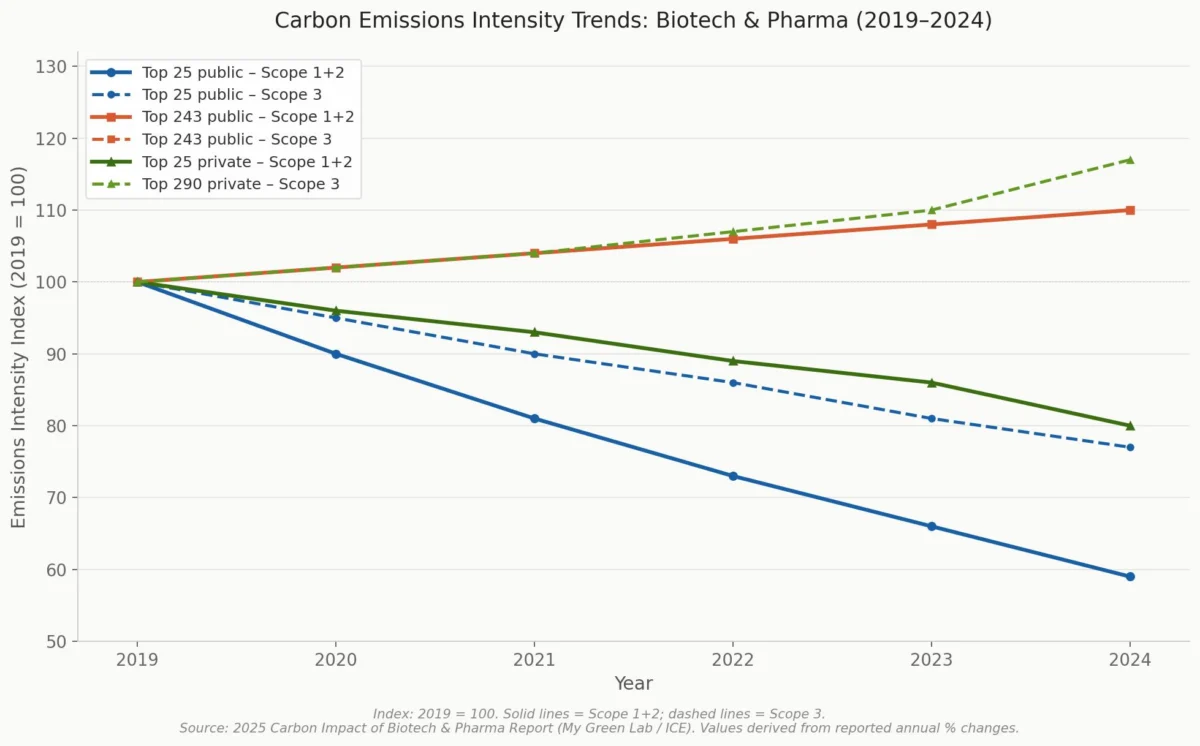
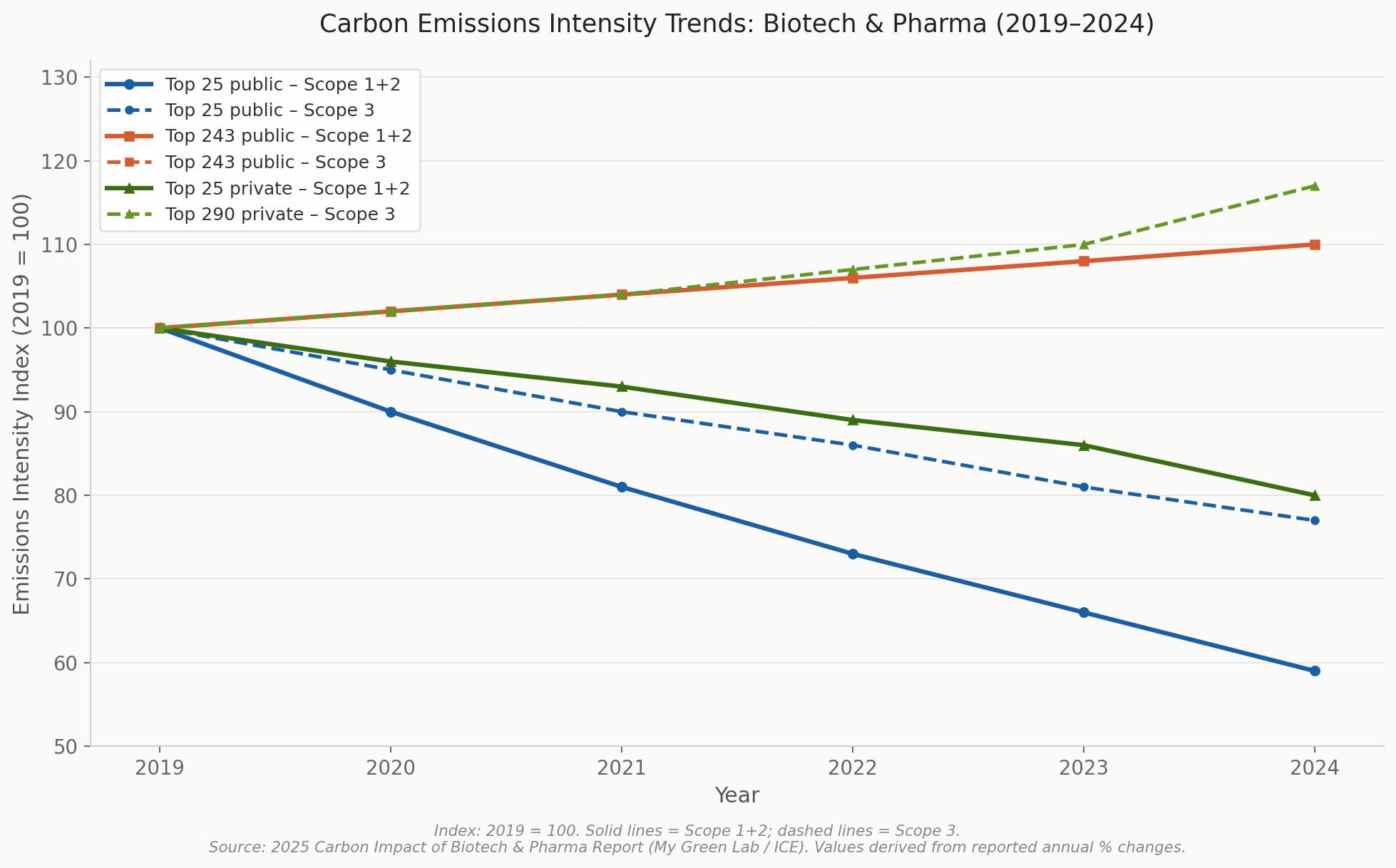
While many top pharmaceutical companies have successfully reduced their Scope 1 and Scope 2 emissions through direct investments in renewable energy and efficiency upgrades, the broader picture remains concerning. Overall carbon intensity for the industry is rising, primarily due to the collective impact of smaller and private firms that may not have the same resources or sustainability mandates, and, crucially, due to the burgeoning challenge of Scope 3 emissions.
The Scope 3 Conundrum: The Unseen Majority
Scope 3 emissions represent the "elephant in the room," accounting for a staggering 82% of the industry’s total carbon footprint. This category includes a vast array of activities across the entire value chain, making it incredibly complex to measure, monitor, and manage. Key components of Scope 3 emissions for pharmaceutical companies include:
- Purchased Goods and Services: This is often the largest source, particularly the emissions generated during the synthesis of Active Pharmaceutical Ingredients (APIs) and the production of other raw materials. The globalized nature of API sourcing, often from countries with less stringent environmental regulations or reliance on fossil fuels, contributes significantly.
- Capital Goods: Emissions associated with the construction of new facilities, laboratories, and manufacturing equipment.
- Upstream and Downstream Transportation and Distribution: The emissions from moving raw materials to manufacturing sites and finished products to markets worldwide. Air freight, chosen for its speed and critical for temperature-sensitive drugs, is particularly carbon-intensive.
- Waste Generated in Operations: Emissions from waste not directly under Scope 1 or 2 control.
- Use of Sold Products: Emissions related to the energy consumption of medical devices or patient use of certain products.
- End-of-Life Treatment of Sold Products: Emissions from the disposal or recycling of medicines and packaging after use.
The difficulty in managing Scope 3 emissions stems from their indirect nature. Pharmaceutical companies often lack direct operational control over their suppliers, logistics partners, or end-users. This distributed responsibility makes traditional top-down management strategies less effective.
Strategies for Decarbonizing the Value Chain
Addressing Scope 3 emissions requires innovative and collaborative approaches. Pharmaceutical companies are increasingly exploring strategies to exert influence and drive change across their extended value chains:
- Supplier Engagement and Incentivization: Companies can implement rigorous supplier codes of conduct that include environmental performance metrics. They can also offer incentives, such as preferred supplier status, longer contracts, or even financial support, to suppliers who adopt sustainable practices, invest in renewable energy, or improve their material efficiency. Collaborative initiatives, such as the Pharmaceutical Supply Chain Initiative (PSCI), bring together pharmaceutical companies to collectively audit and improve the environmental and ethical performance of their shared supply base.
- Transition to Renewable Energy in the Supply Chain: Encouraging and supporting suppliers to shift to renewable energy sources for their operations is paramount. This can involve sharing best practices, facilitating access to renewable energy purchasing agreements, or investing in community-scale renewable energy projects that benefit multiple suppliers.
- Green Chemistry and Sustainable Manufacturing: Promoting and adopting green chemistry principles in API synthesis and drug formulation can dramatically reduce waste generation, solvent use, and energy consumption. This involves designing processes that use less hazardous substances, maximize atom economy, and minimize energy requirements. Investing in research and development for more sustainable production methods, including biotechnological approaches, is also crucial.
- Logistics Optimization: Shifting away from carbon-intensive air freight to lower-emission alternatives like sea or road freight for non-urgent shipments can yield significant reductions. This requires careful planning, optimized supply chain networks, and potentially longer lead times, which must be balanced against the critical need for timely drug delivery. Implementing smarter routing, consolidating shipments, and using electric or hybrid vehicles for ground transportation can further reduce emissions.
- Product Stewardship and Circularity: Companies can take greater responsibility for the entire lifecycle of their products. This includes designing packaging that is recyclable or biodegradable, exploring take-back programs for unused medicines to prevent environmental contamination, and promoting responsible disposal practices among patients and healthcare providers. Moving towards a circular economy model, where resources are kept in use for as long as possible, holds immense potential for the industry.
Broader Implications and the Path Forward
The challenge of rising pharmaceutical emissions, juxtaposed with ambitious corporate sustainability goals, highlights a critical juncture for the industry. The increasing scrutiny from investors, who are integrating Environmental, Social, and Governance (ESG) factors into their investment decisions, is a powerful driver for change. Regulators are also beginning to consider mandatory climate-related financial disclosures, further compelling companies to quantify and manage their environmental impacts.
Ultimately, the path forward for the pharmaceutical industry requires a holistic and systemic transformation. It necessitates a delicate balance between meeting the ever-growing global demand for life-saving medicines and drastically reducing its environmental footprint. This will involve:
- Deep Collaboration: Beyond individual company efforts, industry-wide collaboration is essential to tackle shared Scope 3 challenges, standardize reporting, and accelerate the adoption of sustainable practices across the entire value chain, including smaller and private firms.
- Innovation in Green Technologies: Continued investment in green chemistry, sustainable engineering, and biotechnological solutions for drug discovery and manufacturing will be key to developing less resource-intensive and cleaner production methods.
- Policy and Regulatory Support: Governments and international bodies have a role to play in creating a supportive policy environment that incentivizes sustainable practices, potentially through carbon pricing mechanisms, grants for green R&D, and regulations on pharmaceutical waste.
- Transparency and Accountability: Enhanced transparency in reporting Scope 3 emissions and progress against sustainability targets is crucial for building trust and enabling stakeholders to hold companies accountable.
The pharmaceutical industry stands at a pivotal moment. Its ability to innovate for human health must now be matched by its commitment to innovating for planetary health. Achieving true sustainability will require not just individual company commitments, but a collective, coordinated, and continuous effort to decouple growth from environmental degradation, ensuring that the medicines of tomorrow do not compromise the planet’s well-being.