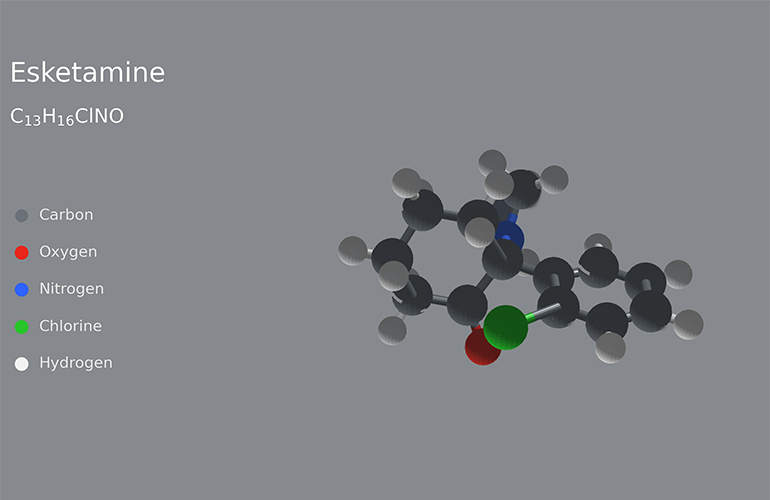
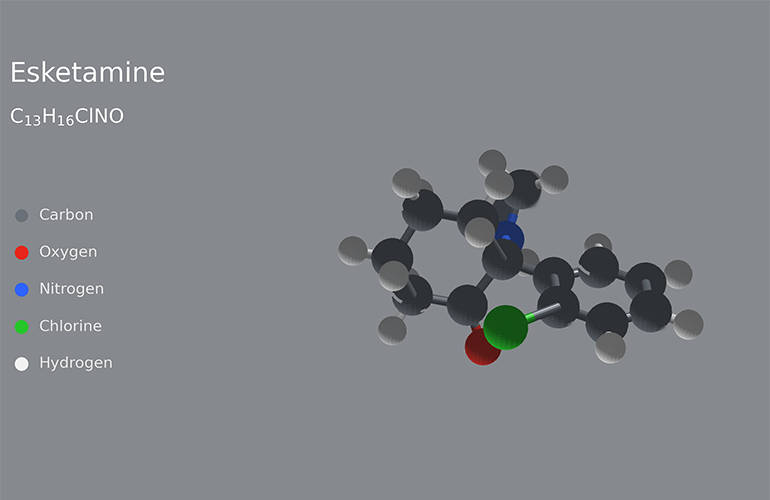
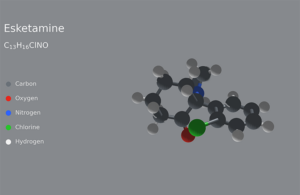
More than six decades after Calvin Stevens first synthesized ketamine at Parke-Davis in 1962 while diligently searching for a safer anesthetic, the compound has completed a remarkable migration into the specialized field of psychiatry, where its derivative, esketamine, has rapidly ascended to blockbuster status. Esketamine, the more potent S-enantiomer of that original dissociative anesthetic compound, received its initial U.S. Food and Drug Administration (FDA) approval for treatment-resistant depression (TRD) as a nasal spray in March 2019. At that time, its use was strictly as an add-on therapy, to be administered in conjunction with a conventional oral antidepressant. A significant expansion of its label occurred in January 2025, when regulators cleared esketamine as the first and only monotherapy specifically for adults with treatment-resistant depression. Following a relatively quiet period immediately after its launch, the compound, which Johnson & Johnson markets under the brand name Spravato, generated approximately $1.7 billion in global sales last year. Industry analysts on Wall Street anticipate an even more robust performance in the current fiscal year, projecting sales closer to $2.3 billion for 2026, signaling a strong growth trajectory for the innovative therapy.
Johnson & Johnson is strategically leveraging newly presented data to further propel Spravato’s sales and market penetration. A key item in this strategy is an overview of remission rates with esketamine nasal spray across six clinical trials in TRD, recently showcased at Psych Congress Elevate. This presentation aims to underscore the therapy’s efficacy in a patient population desperately in need of effective alternatives. The potential market for such a treatment is substantial and continues to expand. According to data from the National Institute of Mental Health (NIMH), an estimated 21 million U.S. adults experienced at least one major depressive episode in 2021, representing 8.3% of the total adult population. A significant subset of these individuals struggles with persistent symptoms despite conventional treatment.
Of the approximately 8.9 million U.S. adults who receive medication for major depression, roughly one-third—a staggering 2.8 million people—fail to respond adequately to standard oral antidepressants. This failure to achieve a satisfactory therapeutic response is the clinical threshold that defines treatment-resistant depression. "There are millions upon millions of patients, some of them your friends and mine, some of them your family members, who are being treated for depression and are simply not in remission," stated Rakesh Jain, MD, MPH, a clinical professor of psychiatry at Texas Tech University School of Medicine, Permian Basin, and the lead author of the comprehensive analysis presented at Psych Congress Elevate. His remarks highlight the profound and widespread unmet medical need that Spravato seeks to address.
The Genesis of a Psychiatric Breakthrough: From Anesthesia to Antidepression
The journey of ketamine from an operating room staple to a groundbreaking psychiatric medication is a testament to persistent scientific inquiry. Calvin Stevens’ initial synthesis in the early 1960s aimed to create a safer alternative to phencyclidine (PCP), another dissociative anesthetic. Ketamine quickly found its niche in surgical settings due to its rapid action and relatively favorable safety profile compared to its predecessors. For decades, its application remained largely confined to anesthesia, often used in emergency medicine and pediatrics. However, anecdotal reports and preclinical research gradually illuminated its unique neurobiological properties, particularly its interaction with the N-methyl-D-aspartate (NMDA) receptor, a glutamate receptor implicated in various neurological and psychiatric conditions. This mechanism of action stood in stark contrast to traditional antidepressants, which primarily target monoamine neurotransmitter systems (serotonin, norepinephrine, dopamine). The realization that ketamine could exert rapid antidepressant effects, even in severe, refractory cases, sparked a renewed interest in its therapeutic potential for mental health disorders. This growing body of evidence eventually led to the development of esketamine, a single enantiomer of ketamine, specifically designed and tested for psychiatric applications.
Spravato’s Regulatory Path and Ascent to Blockbuster Status
The FDA’s decision to approve esketamine in March 2019 marked a pivotal moment, offering the first truly novel mechanism of action for depression treatment in decades. This initial approval, however, was accompanied by a crucial stipulation: it could only be used as an adjunct to an existing oral antidepressant. This cautious approach reflected concerns over the drug’s dissociative side effects and abuse potential, necessitating a Risk Evaluation and Mitigation Strategy (REMS) program. The REMS program mandates that Spravato be administered in a certified healthcare setting, with patients monitored for at least two hours post-dose to manage potential adverse events like sedation and dissociation. Despite these stringent requirements, the drug’s efficacy in a difficult-to-treat population spurred its gradual adoption. The subsequent approval in January 2025, allowing esketamine as a monotherapy for TRD, significantly broadened its utility and accessibility for patients who might not tolerate or respond to concomitant oral antidepressants. This expanded indication is expected to be a major driver of the projected sales growth, cementing Spravato’s position as a leading therapy in the mental health landscape. Its trajectory from a "quiet start" to an anticipated $2.3 billion in sales for 2026 underscores the immense unmet need for effective TRD treatments and the market’s receptiveness to innovative solutions.
Addressing the Unmet Need in Treatment-Resistant Depression
Treatment-resistant depression represents a formidable challenge for patients, clinicians, and healthcare systems alike. Defined by an inadequate response to at least two distinct antidepressant treatments of adequate dose and duration, TRD is associated with profound functional impairment, reduced quality of life, and an elevated risk of suicide. The statistics cited by Dr. Jain—2.8 million U.S. adults suffering from TRD—paint a grim picture of widespread chronic suffering. Conventional antidepressant strategies, while effective for many, often fall short for this subgroup. The Sequential Treatment Alternatives to Relieve Depression (STARD) study, a landmark investigation funded by the National Institute of Mental Health (NIMH), powerfully illustrated this challenge. Conducted in the early 2000s, STARD enrolled over 4,000 outpatients with nonpsychotic major depression and systematically evaluated successive treatment steps. In the initial phase, with citalopram, approximately 28% of patients achieved remission. However, by the third step, after two prior treatments had failed—the very definition of TRD—the remission rate plummeted to a mere 13.7%. This steep decline in remission rates with subsequent treatment failures highlights the critical need for therapies like esketamine that can offer improved outcomes for those who have exhausted conventional options.
The Psych Congress Elevate Presentation: A Deeper Look at Remission
At Psych Congress Elevate, Johnson & Johnson presented a poster consolidating remission data from six diverse clinical trials involving esketamine. This comprehensive analysis, led by Dr. Rakesh Jain, aimed to provide clinicians with a holistic view of the drug’s performance. The poster focused specifically on remission, framing it as the central and most clinically meaningful outcome. Remission, defined as a near-complete absence of depressive symptoms, is a far more ambitious and desirable goal than mere "response," which often implies only a partial improvement.
The analysis reported remission against two critical cutoffs on the Montgomery-Åsberg Depression Rating Scale (MADRS). The MADRS is a widely used clinician-rated instrument that assesses 10 core depressive symptoms, with scores ranging from 0 to 60. A score of 7 to 19 typically indicates mild depression, 20 to 34 moderate, and 35 or above severe. Conventionally, remission is set at a score of 10 or below. Patients entering these esketamine trials typically had baseline MADRS scores ranging from 29 to 38, placing them firmly in the moderate-to-severe depression category. "We actually tightened the rules on SPRAVATO a little bit," Dr. Jain explained. "We said, okay, 12 is fine, but can we go to 10? And it performed quite well, even at 10. That’s the key." This stricter criterion underscores the robustness of the reported remission rates.
Navigating the Nuances: Short-Term vs. Long-Term Remission Data
The J&J poster provided a multifaceted view of Spravato’s efficacy, presenting both short-term and long-term remission data across various study designs. For short-term outcomes, the poster reported MADRS ≤10 remission at week 4:
- 13.9% for Spravato monotherapy doses versus 6.5% for placebo in certain trials.
- 42.6% for Spravato plus oral antidepressant versus 24.0% for placebo plus oral antidepressant in the TRANSFORM-2 study.
These figures suggest a clear advantage for esketamine, particularly when used as an add-on therapy, compared to placebo. However, Dr. Jain emphasized the importance of sustained remission. "The profound move is not just to achieve remission but to hold on to it year upon year upon year," he stated. The poster included data from open-label extension studies, which followed patients who continued on the drug, demonstrating remarkable durability:
- 49.3% remission at approximately one year.
- 78.2% remission at around two and a half years.
- 43.2% remission at the longest follow-up of approximately 5.5 years.
These long-term figures, while derived from open-label studies and thus subject to potential biases (e.g., patients who stayed on the drug were likely responders), offer compelling evidence of sustained benefit. Dr. Jain highlighted the comprehensive nature of the analysis, encompassing double-blind, open-label, and comparative studies, to provide a "not cherry-picking" perspective on the drug’s real-world behavior. The compilation included data from two four-week, placebo-controlled studies (TRD4005 monotherapy trial and TRANSFORM-2), one active-controlled trial (ESCAPE-TRD), and three open-label studies (ESCAPE-LTE, SUSTAIN-2, and SUSTAIN-3), reinforcing the breadth of the evidence.
Professional Consensus and Divergent Guidelines
Despite the positive data presented by J&J, professional opinion and guideline recommendations for esketamine remain varied, reflecting the complex interplay of clinical efficacy, safety profiles, cost-effectiveness, and practical implementation challenges.
The 2022 Veterans Affairs/Department of Defense (VA/DoD) depression guideline, for instance, lists ketamine or esketamine as an augmentation option after several failed drug trials. However, it issues only a "weak for" recommendation, resting on low-quality evidence and explicitly noting reservations regarding monitoring requirements and feasibility within typical clinical settings.
Britain’s National Institute for Health and Care Excellence (NICE), a highly influential body, went further in 2022, declining to recommend esketamine for routine use within the National Health Service (NHS). Their decision was based on the assertion that the clinical and economic evidence presented could not reliably support a cost-effectiveness estimate, a stance that predates the monotherapy approval. This contrasts with Scotland’s medicines regulator, which had reached a more favorable conclusion two years earlier, highlighting the international divergence in assessment.
The ESCAPE-TRD Trial: Head-to-Head Comparison and Contested Magnitude
One of the most robust pieces of evidence cited in the J&J analysis is the ESCAPE-TRD trial, the only active-controlled study in the compilation. This head-to-head trial pitted esketamine, administered with an SSRI or SNRI backbone therapy, against quetiapine extended-release (an atypical antipsychotic often used for augmentation) on the same background. Published in the New England Journal of Medicine, the results showed that esketamine plus oral antidepressant produced higher remission rates than quetiapine XR plus oral antidepressant, with 27.1% versus 17.6% remission at week 8. Furthermore, esketamine patients were less likely to discontinue treatment due to safety or tolerability issues.
However, the magnitude of this advantage has been a subject of debate. The same trial’s correspondence in the NEJM acknowledged that the difference in depression scores between the two groups was narrow: a 2.8-point advantage on the 60-point MADRS at week 8 and 2.2 points at week 32. Both of these differences fell below what is generally considered the smallest clinically meaningful difference.
Further critiques have emerged in the American Journal of Psychiatry. In a 2025 editorial, Baylor psychiatrists Sanjay Mathew and Nicholas Murphy argued that the phase 3 program for esketamine never definitively established the need for patients to continue treatment much beyond the first week, even as prescriptions nearly doubled after early 2023. Another systematic review by Fountoulakis, Saitis, and Schatzberg (AJP 2025) calculated esketamine’s add-on effect sizes at weeks 2 to 4 to be between 0.15 and 0.23. These figures, they contend, are comparable to those observed with atypical antipsychotic augmentation—a class of drugs Dr. Jain dismisses as having "abysmal" remission numbers. Crucially, this review also found no significant antisuicidal benefit directly attributable to esketamine.
Clarifying the Suicidal Ideation Indication
Beyond TRD, Spravato holds another FDA-approved indication: for major depressive disorder with acute suicidal ideation or behavior. Dr. Jain pointed to this as further evidence of the drug’s broad utility. However, the prescribing information itself, which clinicians are advised to consult, offers a more circumscribed view. While approved for the rapid reduction of depressive symptoms in these acutely suicidal patients when administered alongside an oral antidepressant, the label explicitly states that "the effectiveness of SPRAVATO in preventing suicide or reducing suicidal ideation or behavior has not been demonstrated" and that its use "does not obviate the need for hospitalization if clinically warranted." This distinction is critical: the drug addresses the depressive symptoms in acutely suicidal patients, but it does not make a direct claim about reducing suicidality itself. Dr. Jain clarified that the recent poster’s focus was squarely on remission rates for TRD, not on suicidality outcomes.
Overcoming Adoption Barriers: Clinician Psychology and REMS Program
The successful integration of novel therapies like Spravato into routine clinical practice often hinges as much on overcoming practical and psychological barriers as it does on demonstrating robust efficacy. Dr. Jain candidly acknowledged the inherent inertia within the psychiatric community. "Psychiatry is slow to change, it just is," he remarked. He views clinician hesitation and a lack of comprehensive information as significant obstacles, which the Psych Congress Elevate poster was specifically designed to address.
Beyond this psychological inertia, concrete logistical hurdles remain. Spravato’s dispensing is strictly controlled through a mandated REMS program. This is due to the drug’s potential risks, including sedation, dissociation, respiratory depression, and a recognized potential for abuse. The REMS program necessitates administration in a certified healthcare setting, followed by a mandatory monitoring period of at least two hours after every dose. Patients are also prohibited from driving or operating machinery until the day after treatment. These requirements, while crucial for patient safety, add layers of complexity and cost to the treatment process, potentially limiting its accessibility and widespread adoption.
Despite these "multiple roadblocks," Dr. Jain expressed optimism based on the feedback received at the conference. "I didn’t get any pushback," he reported. "On the contrary, the reaction was, ‘I really do need to start thinking about Spravato earlier and more often.’ And I told them, you’re right, that’s what the data compels us to do." This suggests that targeted education and data dissemination efforts may indeed be effective in shifting clinical perspectives and encouraging earlier consideration of esketamine for patients with TRD.
Implications for the Future of TRD Treatment
The ongoing discussion around Spravato’s efficacy, safety, and real-world applicability reflects a broader shift in the landscape of mental health treatment. As research continues to uncover the complex neurobiology of depression, therapies with novel mechanisms of action, like esketamine, are gaining prominence. While questions regarding long-term efficacy, cost-effectiveness, and the practicalities of administration remain, the emergence of rapid-acting antidepressants offers renewed hope for millions suffering from TRD.
The debate surrounding Spravato also highlights the increasing demand for clear, comprehensive, and comparative data to guide clinical decision-making. As more innovative treatments, including other rapid-acting agents and even psychedelic-assisted psychotherapies, enter the development pipeline, the need for robust evidence on remission, durability, and real-world outcomes will only intensify. Johnson & Johnson’s strategic emphasis on remission data at Psych Congress Elevate is a clear indication of the industry’s focus on demonstrating tangible, long-lasting benefits for patients, further shaping the future of treatment for one of psychiatry’s most challenging conditions.