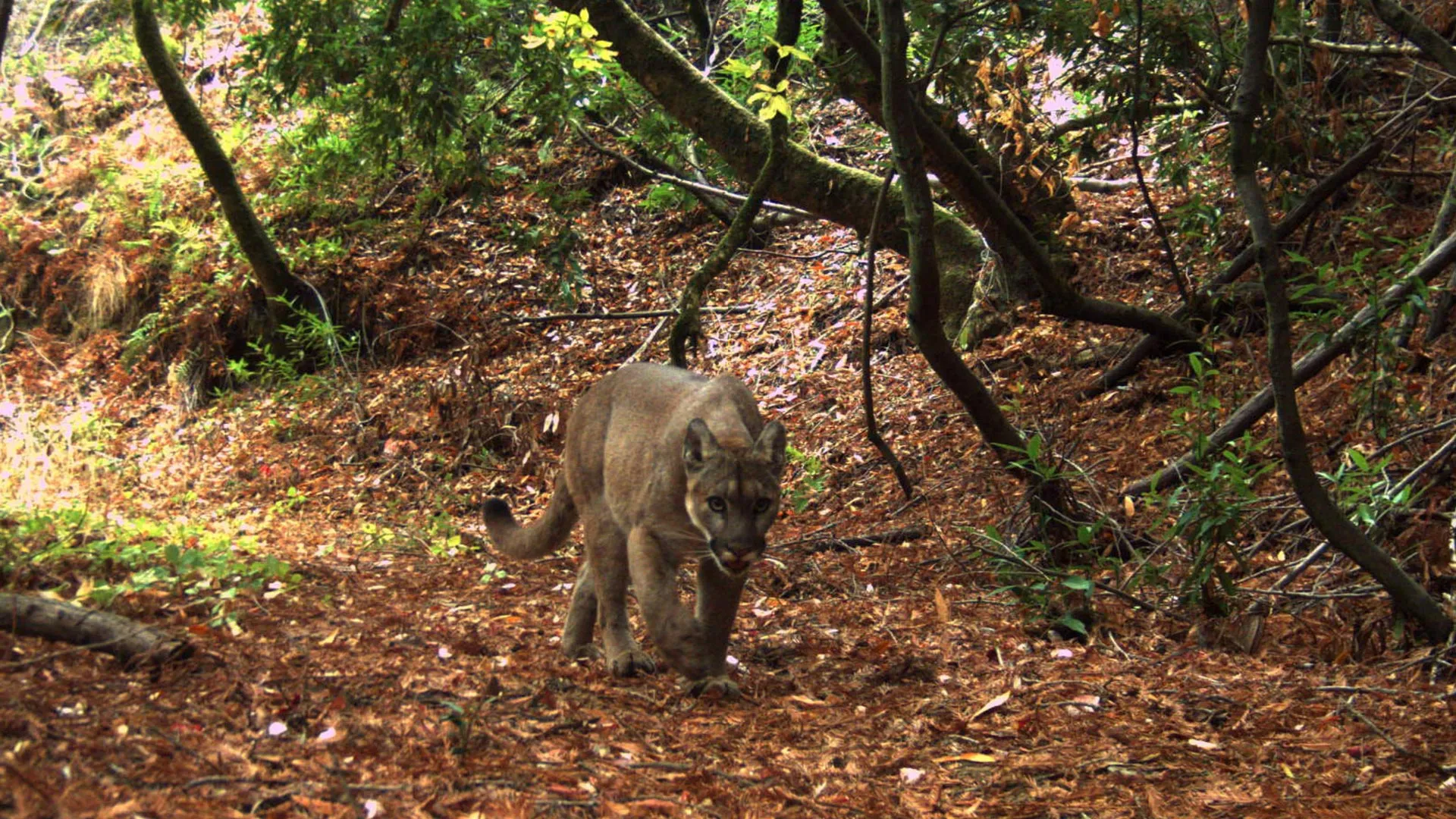
A groundbreaking long-term study conducted at Stanford’s Jasper Ridge Biological Preserve, located approximately 45 miles south of San Francisco, has revealed a profound ecological truth: the presence of apex predators, even on an intermittent basis, can fundamentally alter the dynamics of an entire ecosystem. Researchers meticulously documented how an increase in mountain lion activity between 2015 and 2020 triggered a cascade of behavioral and physical changes throughout the suburban preserve, impacting not only wildlife but also the health and composition of plant life, underscoring the far-reaching influence of top-tier predators.
The Shifting Landscape: From Deer Dominance to Predator Influence
For years, Jasper Ridge Biological Preserve, also known by its Ohlone name ‘Ootchamin ‘Ooyakma, served as a relatively undisturbed pocket of nature. However, the period between 2015 and 2020 marked a significant shift. Trail camera footage revealed a noticeable uptick in the frequency of mountain lion ( Puma concolor ) appearances within the preserve. This coincided with a discernible decline in deer activity, a stark contrast to earlier years when mountain lions were either absent or encountered very rarely. This inverse relationship between the presence of apex predators and their primary prey is a foundational principle in ecological study.
The implications of this shift were not confined to the animal kingdom. Vegetation surveys conducted during the same timeframe unveiled compelling evidence of recovery and regrowth among woody plants that are typically subject to heavy grazing or damage by deer. Young oak trees, a crucial component of the California chaparral and woodland ecosystems, showed signs of thriving, suggesting that the reduced deer presence allowed these vulnerable saplings to mature without constant pressure. This observation directly illustrates a trophic cascade, a phenomenon where changes at the highest trophic level (apex predators) propagate downwards through the food web, influencing multiple lower levels.
Trophic Cascades: The "Ecology of Fear" in Action
The findings, published in the esteemed journal Ecology and Evolution, shed light on the intricate workings of trophic cascades. While such phenomena are often studied and observed in vast wilderness areas, such as the well-documented reintroduction of wolves in Yellowstone National Park, this research demonstrates that similar ecological processes can unfold with remarkable intensity in much smaller, even suburban-adjacent, protected areas.
Chinmay Sonawane, the study’s lead author and a doctoral student in biology at Stanford, emphasized the significance of these findings. "In the past, small preserves like Jasper Ridge have often been dismissed for holding very little ecological value," Sonawane stated. "But this study shows that when these small preserves are connected to large wilderness like the Santa Cruz Mountains, you can still see magnificent ecological phenomena like trophic cascades. They are not just things that happen in places like Yellowstone far away from the city and people. They can happen in these places that are quite small and more urban as well." This perspective challenges the notion that ecological richness is solely dependent on sheer scale, highlighting the importance of connectivity between wild spaces.
The researchers delved deeper, identifying two distinct types of trophic cascades at play within Jasper Ridge. The most prominent involved the direct predator-prey relationship between mountain lions, deer, and plant life – a classic tri-trophic cascade. However, the study also uncovered subtler, yet equally significant, impacts on smaller predators that share the landscape.
As the presence of mountain lions increased, observations of coyotes and bobcats within the preserve decreased. Researchers posited that these mid-level predators may have altered their behavior to avoid increased encounters with the larger, more dominant mountain lions. This could manifest as avoiding the preserve altogether, shifting their hunting and activity times to periods when mountain lions are less active, or simply reducing their overall presence.
This shift in the predator hierarchy appeared to create an opening for foxes. With reduced competition and perceived threat from coyotes and bobcats, fox activity within the preserve saw an increase. This elevated fox population, in turn, may have exerted greater predatory pressure on their own prey, such as rabbits, leading to a potential decrease in rabbit activity or population density.
These interconnected behavioral adjustments are collectively known as the "ecology of fear." This concept explains how the mere awareness of a predator’s presence, even without direct interaction or predation, can profoundly influence the behavior of other species. Animals may alter their foraging grounds, adjust their activity patterns to be more nocturnal or crepuscular, and generally exhibit heightened vigilance. These fear-driven responses can ripple through an ecosystem, influencing population dynamics and resource utilization across multiple trophic levels.
While the evidence linking mountain lion activity to changes in deer, coyote, and bobcat behavior was robust, the researchers acknowledged that some of the more distal impacts, such as those on vegetation, foxes, and rabbits, could also be influenced by confounding environmental factors. Changes in microclimates, such as fog patterns, temperature fluctuations, or precipitation, could independently affect plant growth and the populations of smaller prey species. However, the consistency and strength of the observed predator-prey and predator-predator relationships provided a compelling case for the significant role of mountain lions.
The Critical Role of Small Protected Areas and Apex Predators
The study’s implications extend beyond the specific findings at Jasper Ridge, offering crucial insights into conservation strategies. The researchers highlighted the ecological importance of both apex predators and the preservation of small protected areas. Data indicates that a significant majority of protected areas in the United States, approximately 82%, are smaller than 5 square kilometers (about 2 square miles). As urban development continues its relentless expansion, these smaller, often fragmented, natural spaces are becoming increasingly vital for supporting biodiversity and maintaining ecological integrity.
Rodolfo Dirzo, a co-author of the study and a professor of biology at Stanford, underscored this point. "Maintaining sites where there is an entire community of animals, from predators to prey to the prey’s resource base, is very important," Dirzo stated. "When one piece is missing – and it’s typically the top predators that require larger areas and are more sensitive to human impact – we will no longer have fully functioning ecosystems." The loss of apex predators, often due to habitat fragmentation, hunting, or human conflict, can initiate a cascade of negative ecological consequences, leading to simplified and less resilient ecosystems.
Unraveling the Mystery: Why the Increased Mountain Lion Visits?
The precise reasons for the increased mountain lion activity at Jasper Ridge remain a subject of ongoing investigation. One prevailing hypothesis is that the preserve may have become a more attractive location for female mountain lions seeking relatively safe environments to raise their young. During the study period, cameras captured images of a mother mountain lion accompanied by kittens, lending credence to this theory. Such maternal behavior could explain a temporary or intermittent increase in the presence of these elusive predators.
It is important to note that mountain lions are not sedentary residents of Jasper Ridge. The Santa Cruz Mountains are home to mountain lions that typically maintain territories ranging from 20 to 170 square kilometers (approximately 8 to 66 square miles). Jasper Ridge, by its nature, is far too small to sustain a resident puma population. Their presence is likely transient, driven by territorial needs, prey availability, or the search for suitable denning sites.
Navigating the Human-Mountain Lion Interface
While mountain lion sightings can occasionally generate public concern and media attention in the San Francisco Bay Area and its surrounding suburbs, these animals are generally adept at avoiding human interaction. Elizabeth Hadly, the study’s senior author and an emerita professor of biology at Stanford, explained that mountain lions are primarily nocturnal, meaning their peak activity occurs during hours when human presence is minimal.
"Pumas are afraid of our smell and our sounds; they don’t like to see us moving," Hadly remarked. "Pumas use all of their senses to avoid humans." This innate wariness underscores the challenges faced by these animals in increasingly human-dominated landscapes. Despite their efforts to evade detection, humans remain the leading cause of mountain lion mortality, primarily through hunting, vehicle collisions, and habitat loss.
"Clearly, we exert our own ecology of fear," Hadly concluded. "Humans are the ultimate predator on almost every landscape." This statement serves as a poignant reminder of humanity’s pervasive influence on the natural world, and the ethical responsibility that comes with it. The study from Jasper Ridge provides a vital reminder that even in the shadows of urban life, the presence of apex predators can foster healthier, more dynamic ecosystems, urging a renewed commitment to their conservation and the preservation of connected wild spaces.
Dirzo also holds the Bing Professorship in Environmental Science at Stanford’s Department of Biology in H&S, serves as a professor of Earth System Science in the Stanford Doerr School of Sustainability, and is a senior fellow at the Stanford Woods Institute for the Environment.
Hadly is also the Paul S. and Billie Achilles Professor in Environmental Biology, Emerita, in H&S; professor emerita of Earth System Science in the Doerr School of Sustainability; a member of Stanford Bio-X; and a senior fellow at the Woods Institute.
Additional Stanford co-authors contributing to this research include Trevor Hébert, academic technology specialist at Jasper Ridge; Kevin Leempoel, a former postdoctoral scholar in biology; Nicole Nova and Jordana Meyer, both former biology doctoral students; and Amelia Zuckerwise, a former undergraduate student in biology.
This research was made possible through financial support from the National Science Foundation.