


In a development that promises to reshape the landscape of optical computing and wearable technology, researchers from the XPANCEO Emerging Technologies Research Center, in collaboration with Nobel Laureate Professor Konstantin Novoselov, have announced the discovery of unprecedented optical properties within crystalline arsenic trisulfide (As2S3). This material, a member of the van der Waals semiconductor family, exhibits a massive photorefractive response that can be triggered and manipulated using standard continuous-wave (CW) light. The findings, recently detailed in professional scientific correspondence, suggest a shift away from traditional, energy-intensive manufacturing processes toward a more streamlined, light-driven approach to creating photonic devices. By demonstrating that complex optical patterns can be "written" directly into the material at the nanoscale without the need for cleanrooms or expensive femtosecond lasers, the team has opened a new pathway for the development of smart contact lenses, advanced sensors, and high-security anti-counterfeiting measures.
The Science of Photorefractivity in Van der Waals Crystals
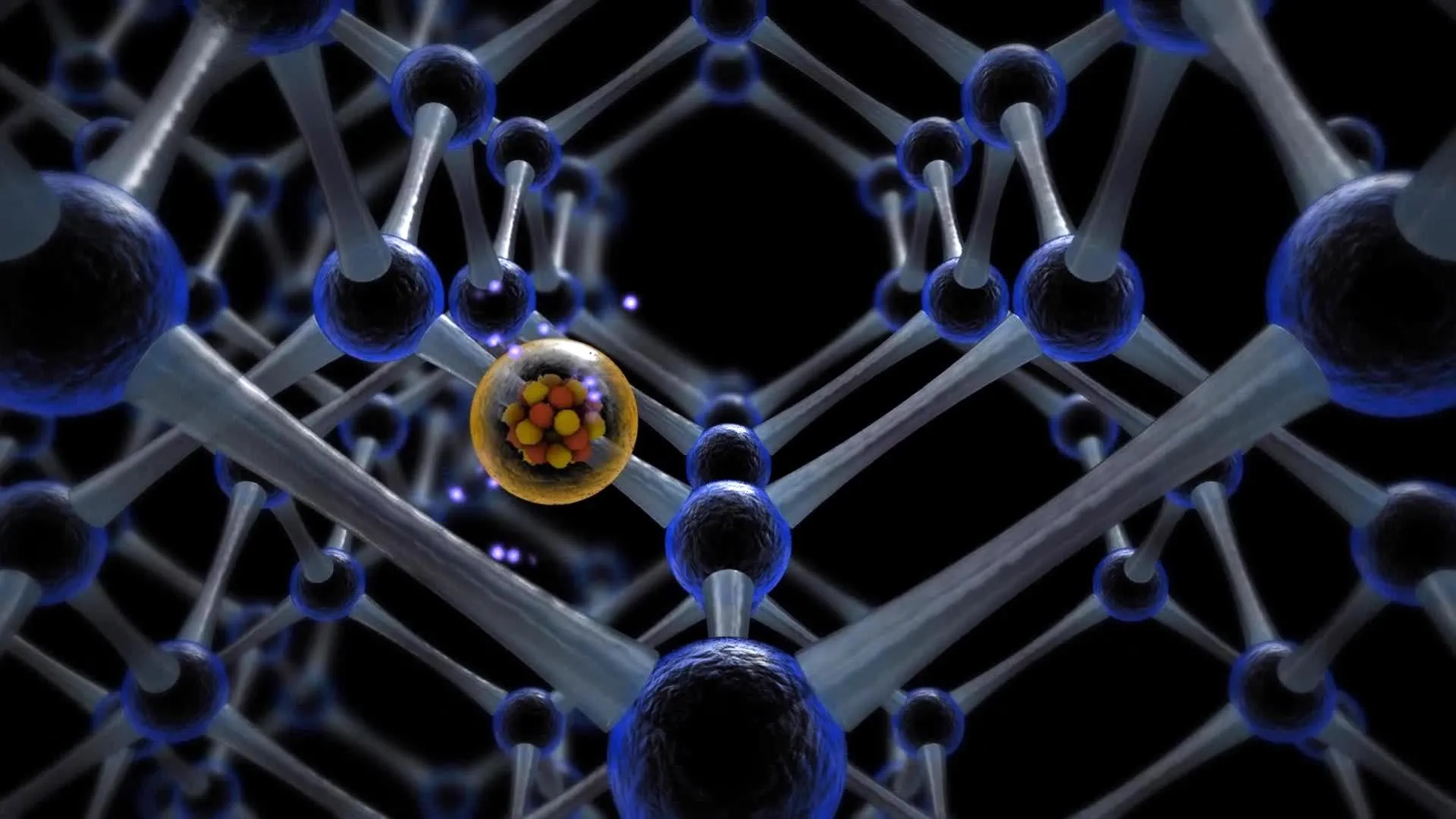
To understand the significance of this discovery, one must first look at the fundamental property known as the refractive index. In physics, the refractive index (denoted as n) measures how much a medium bends or slows down light as it passes through. In traditional optics, the refractive index of a material is largely static; glass remains glass, and silicon remains silicon. However, certain "active" materials exhibit photorefractivity, a phenomenon where exposure to light actually alters the material’s refractive index.
The research conducted by XPANCEO and Prof. Novoselov—who was awarded the Nobel Prize in Physics for his groundbreaking work on graphene—focuses on arsenic trisulfide in its crystalline form. While As2S3 has long been known in its amorphous (glassy) state for infrared optics, the crystalline van der Waals version provides a unique platform for light-matter interaction. The study reports a refractive index change ($Delta n$) of approximately 0.3. To put this in perspective, this value is significantly higher than those found in industry-standard photorefractive materials like lithium niobate (LiNbO3) or barium titanate (BaTiO3), which are the workhorses of modern telecommunications.
A refractive index change of 0.3 is considered a "giant" response in the field of photonics. It allows for much tighter confinement of light, enabling the creation of smaller, more efficient optical circuits. Because the change is permanent and occurs under low-intensity ultraviolet (UV) light, it allows researchers to treat the semiconductor like a piece of photographic film that can be "developed" into a complex functional device.
A Chronology of Development: From Graphene to Functional Semiconductors
The path to this discovery is rooted in the broader history of two-dimensional (2D) and van der Waals materials. The timeline of this research reflects a decade-long transition from studying fundamental physics to engineering practical applications:
- 2004–2010: The isolation of graphene by Novoselov and Geim at the University of Manchester sparks a global interest in van der Waals materials—substances where layers are held together by weak physical forces rather than strong chemical bonds.
- 2015–2020: Research shifts from graphene (a conductor) to other members of the "2D library," including transition metal dichalcogenides (TMDCs) and post-transition metal chalcogenides like As2S3, which possess semiconducting properties.
- 2021–2023: The XPANCEO team begins exploring the potential of these materials for "smart" surfaces. They identify arsenic trisulfide as a candidate for non-linear optics due to its unique atomic structure.
- 2024: The collaborative team successfully demonstrates that crystalline As2S3 does not just react to light, but undergoes a structural and optical transformation that can be controlled at the sub-micron level.
This chronology highlights the evolution of the field from pure materials science to "active photonics," where the material itself acts as both the medium and the processor for light signals.
Technical Specifications and Supporting Data
The research team provided extensive data to support the claims of As2S3’s superiority. One of the most striking aspects of the material is its dual-response mechanism. When exposed to light, the material undergoes both an optical change and a physical expansion.
Refractive Index Modulation:
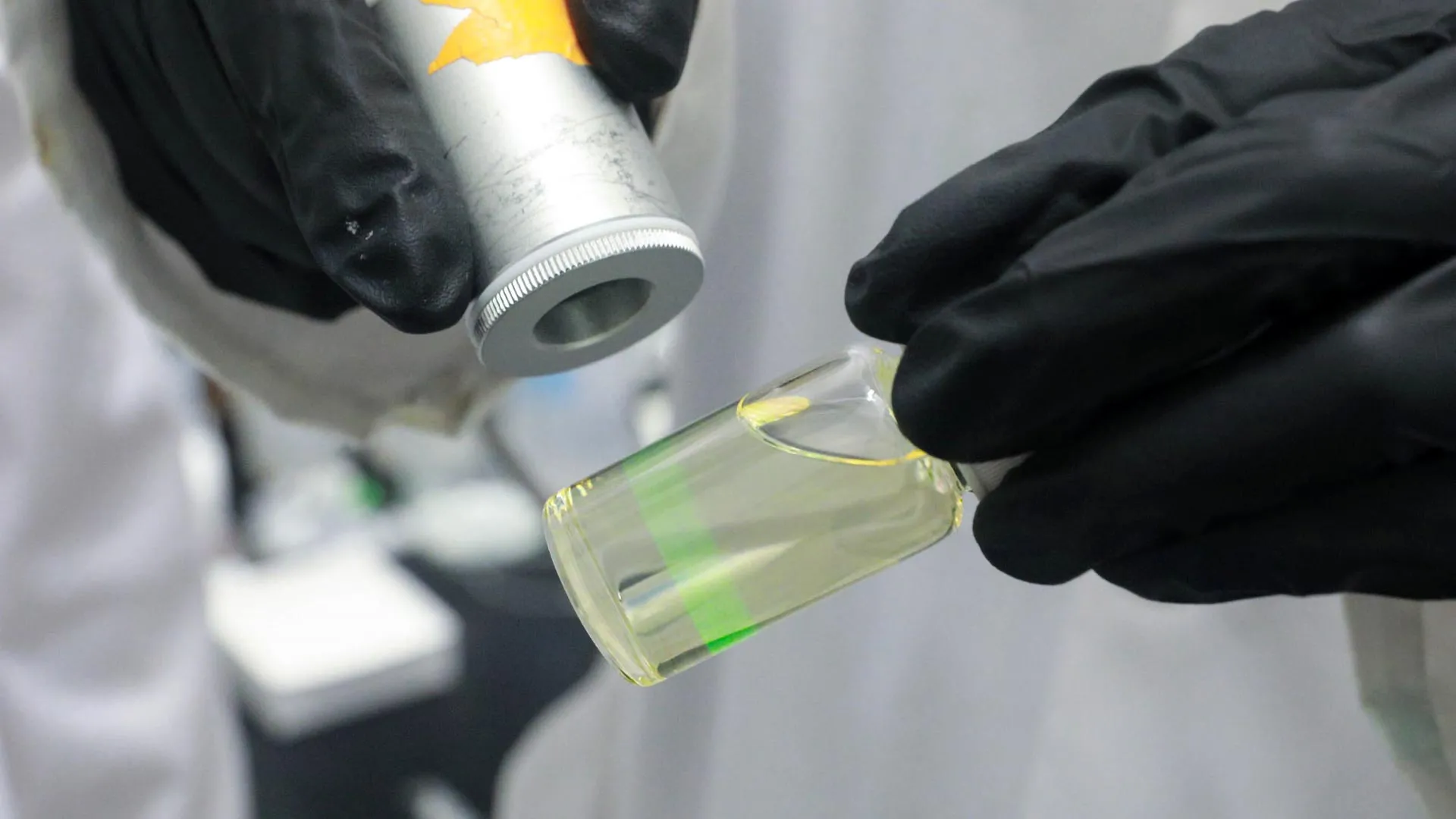
The study utilized spectroscopic ellipsometry to measure the changes in the material’s properties. The observed $Delta n approx 0.3$ was achieved using a standard 405 nm laser. This is a crucial data point because it means the material can be modified using low-cost, commercially available laser diodes rather than the multi-million dollar laser systems typically required for high-precision micro-machining.
Physical Volume Expansion:
In addition to changing how it handles light, the As2S3 crystal physically expands by up to 5% upon exposure. This expansion is not a temporary thermal effect but a permanent structural reorganization. This allows for the "printing" of 3D topologies. For instance, by varying the light intensity across the surface, researchers can create microlenses (tiny curved bumps) or diffraction gratings (ridges that split light into different colors) directly on the semiconductor surface.
Resolution and Density:
To test the limits of the material, the researchers performed a high-resolution patterning experiment. They successfully "printed" a monochrome portrait of Albert Einstein into the As2S3 crystal. The points in the image were spaced only 700 nanometers apart. Subsequent tests pushed this limit further, achieving a resolution of approximately 50,000 dots per inch (DPI), with a pitch of 500 nanometers between features. This resolution is far beyond the requirements of standard display technology and approaches the physical limits of optical microscopy.
Economic and Industrial Implications
The discovery has significant implications for the cost and accessibility of high-tech manufacturing. Currently, creating nanoscale optical devices requires a process called lithography, which involves several steps: coating a wafer with light-sensitive chemicals (photoresist), exposing it using a mask or an electron beam, developing the chemical, etching the material, and then cleaning it. This must be done in a "cleanroom" environment to prevent dust from ruining the tiny circuits.
The XPANCEO method bypasses almost all of these steps. Since the light directly changes the As2S3 crystal, there is no need for photoresists, etching chemicals, or vacuum chambers.
"The ability to define optical functions directly with light, without the overhead of traditional semiconductor fabrication, is a paradigm shift," noted one industry analyst following the announcement. "It reduces the capital expenditure required to produce advanced sensors and could decentralize the manufacturing of specialized photonic chips."
Furthermore, the use of continuous-wave (CW) light rather than pulsed femtosecond lasers is a major technical advantage. CW lasers are cheaper, more robust, and easier to integrate into automated industrial lines. This makes the technology particularly attractive for the mass production of consumer electronics.
Official Responses and Strategic Vision
Valentyn Volkov, Founder and Chief Technology Officer at the XPANCEO Emerging Technologies Research Center, emphasized that this discovery is a foundational step toward a broader goal: the creation of a light-driven technological ecosystem.
"The discovery of new functional materials, particularly within the unique family of van der Waals crystals, is the fundamental engine for moving the entire field of photonics forward," Volkov stated. He further explained that the complexity of modern challenges, such as developing smart contact lenses that can project augmented reality (AR) overlays, cannot be solved with existing electronic components alone. "In these systems, the material itself is the key component that determines what is physically possible. By identifying natural crystals with this level of sensitivity, we are effectively providing the essential building blocks for a new generation of technology that is driven entirely by light rather than electricity."
The involvement of Professor Konstantin Novoselov adds a layer of scientific prestige and suggests that the findings have undergone rigorous validation. While the University of Manchester and the National University of Singapore have not issued separate formal statements, the collaborative nature of the research indicates a unified push toward "active" van der Waals optics.
Broader Impact: Security, AR, and Telecommunications
The practical applications of this "optical fingerprinting" are diverse and immediate. In the realm of security, the ability to embed unique, sub-micron patterns into a transparent material provides a powerful tool against counterfeiting. Because these patterns are part of the crystal structure and are defined by specific refractive index gradients, they are nearly impossible to replicate using standard printing or embossing techniques. They can serve as "optical fingerprints" for high-value items, from pharmaceutical packaging to aerospace components.
In the field of Augmented Reality (AR), the 5% physical expansion and the high refractive index are particularly useful for creating waveguides. Waveguides are the transparent components in AR glasses that "guide" the light from a projector into the user’s eye. A high refractive index allows for a wider field of view and thinner lenses, solving two of the biggest hurdles in current AR hardware design.
Telecommunications also stands to benefit. As data centers struggle to keep up with the demand for bandwidth, the industry is moving toward photonic switching—using light instead of electricity to route data. Materials like As2S3 that can be easily patterned into complex optical circuits could lead to faster, more energy-efficient routers and switches.
As the research moves from the laboratory to the prototype stage, the focus will likely shift toward the long-term stability of these light-induced changes and the integration of As2S3 with existing silicon-based technologies. However, the current findings establish a clear precedent: the future of high-speed, high-resolution technology may not be etched in silicon, but written in light upon the layers of van der Waals crystals.















Leave a Reply