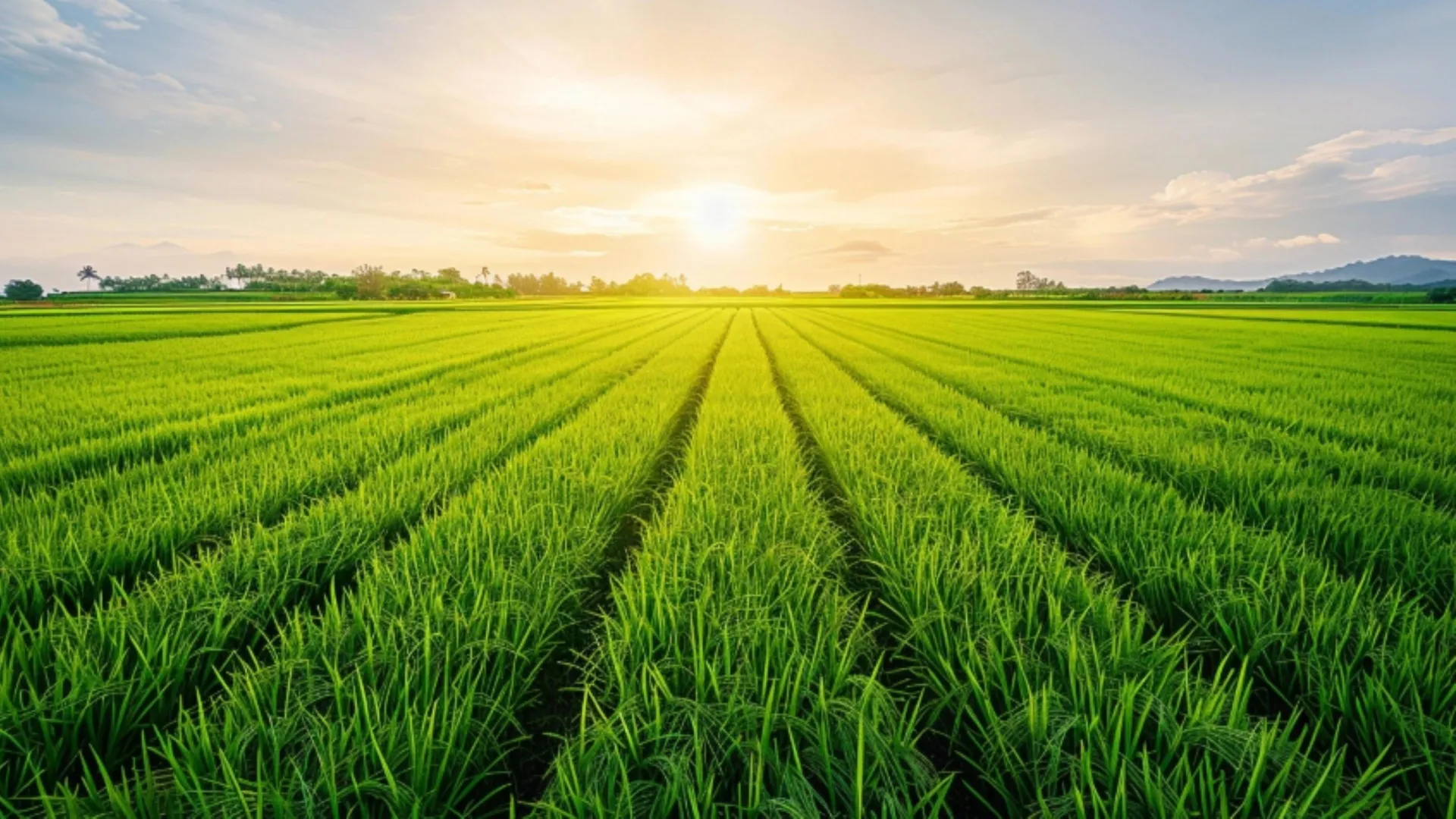
Researchers have uncovered an unexpected natural ally that could help farmers tackle one of agriculture’s fastest growing challenges: salty soil. A groundbreaking study, led by Chinese researcher Dr. Yanfen Zheng and involving scientists from the University of East Anglia (UEA), has revealed that common soil bacteria possess a remarkable ability to enhance plant resilience in saline environments. This discovery not only elucidates a previously unknown mechanism by which these microbes protect vital crops like maize, tomato, and rapeseed from salt stress but also offers a promising avenue for cultivating food on land increasingly rendered infertile by salinization.
The Escalating Threat of Soil Salinity
Soil salinity, the accumulation of soluble salts in the soil to levels that impede plant growth, represents a significant and escalating threat to global food security. This pervasive issue is exacerbated by a confluence of factors, including intensified agricultural practices, particularly irrigation in arid and semi-arid regions, alongside the undeniable impacts of climate change. Rising sea levels contribute to coastal salinization through saltwater intrusion into freshwater aquifers and agricultural lands. Moreover, unsustainable irrigation techniques, especially those relying on water with a high salt content, can lead to salt buildup over time as water evaporates, leaving salts behind.
The consequences of soil salinization are stark and far-reaching. As salt concentrations rise, they disrupt the delicate osmotic balance within plant cells, hindering water uptake and leading to dehydration. This physiological stress manifests as stunted growth, wilting, and a significant reduction in crop yields. In severe cases, entire harvests can be lost, impacting the livelihoods of farmers and contributing to broader food supply chain vulnerabilities. The United Nations Food and Agriculture Organization (FAO) has consistently highlighted soil degradation, including salinization, as a major impediment to achieving sustainable agriculture and ending hunger. Estimates suggest that over 20% of the world’s irrigated land and 33% of rain-fed agricultural land are affected by salinity, a figure projected to increase significantly in the coming decades.
Professor Jonathan Todd from UEA’s School of Biological Sciences and the Quadram Institute, a key figure in the research, emphasized the gravity of the situation: "The build-up of salt in farmland is a major and worsening problem — driven by climate change, irrigation and rising sea levels. Salt chokes plant growth, damages roots and severely impacts entire harvests, putting global food supplies at risk." He further elaborated on the long-standing scientific quest to understand how plants cope with such adversities: "We know that plants rely on communities of microbes around their roots, called the root microbiome, to help them cope with environmental stress. But exactly how these relationships work, and whether they are consistent across crops and soils, has remained largely unclear."
Unveiling the Microbial Guardians: Pseudomonads as Salt-Tolerant Allies
The research team meticulously investigated the root microbiomes of various crop species cultivated in diverse soil types to unravel these intricate plant-microbe interactions. Their consistent observation across multiple experiments was the significant aggregation of a specific group of naturally occurring soil bacteria, known as pseudomonads, around the roots of plants subjected to salt stress. This phenomenon was not confined to a single crop; it was observed across staple crops like maize, tomato, and rapeseed, suggesting a fundamental and widespread biological response to saline conditions.
Further in-depth genetic analyses provided crucial insights into the remarkable success of pseudomonads in these challenging environments. Professor Todd explained, "Compared to other microbes, pseudomonads carry specialized genes that help them tolerate high salt levels, including sodium transport systems and other stress-resistance mechanisms." This genetic predisposition allows pseudomonads to not only survive but thrive in soils where other microbial life struggles, making them ideal candidates for bolstering plant defenses against salt.
A New Era of Bio-Based Agricultural Solutions
To validate their findings and explore practical applications, the researchers embarked on a series of controlled experiments. They introduced selected strains of these salt-tolerant pseudomonads to soybean plants. The results were compelling. In both controlled greenhouse settings and more realistic field trials, the introduced bacteria effectively colonized the soybean roots and demonstrably enhanced plant growth under saline conditions.
"We found that plants treated with the microbes showed stronger root systems, better development and higher yields compared to untreated plants grown in salty soils," Professor Todd reported. This tangible improvement in plant health and productivity under stress conditions underscores the potential of these microbial allies in mitigating the detrimental effects of soil salinity. The study’s timeline, spanning several years from initial hypothesis generation to field validation, highlights the rigorous scientific process involved in bringing such discoveries to fruition.
A Surprising Mechanism: Lignin as the Key to Resilience
Perhaps the most significant and unexpected revelation of the study was the precise mechanism by which these pseudomonads confer salt tolerance. For decades, scientific consensus suggested that plants primarily cope with salinity by regulating the uptake and internal concentration of sodium ions, effectively preventing excessive salt accumulation within their tissues. However, the UEA-led research found no evidence to support this traditional understanding in the context of the pseudomonad-mediated protection.
"The most surprising thing was finding out how the bacteria helped plants cope," Professor Todd stated. "For decades, it was thought that plants survive salinity by controlling sodium levels – essentially keeping harmful salt out. But we found no evidence that bacteria influenced sodium transport or ion balance."
Instead of directly influencing the plant’s salt management system, the bacteria stimulated a different, and previously unrecognized, plant defense pathway. The pseudomonads triggered an increased production of lignin within the plant’s root tissues. Lignin is a complex polymer that forms a crucial component of plant cell walls, providing structural rigidity and strength. It acts as a natural reinforcing agent, akin to the binding material in concrete, enabling plants to withstand a variety of environmental stresses, including mechanical damage and desiccation.
The research provided quantifiable evidence of this effect: "Roots of bacteria-treated plants showed a significant increase in lignin content, with some measurements rising by over 30 percent under salt stress." This substantial boost in lignin production effectively strengthens the plant’s physical structure, particularly its root system, making it more resilient to the damaging effects of high salt concentrations.
Identifying the Genetic Basis for Enhanced Lignin Production
Further investigations delved into the genetic underpinnings of this lignin-boosting phenomenon. The researchers successfully identified specific genes within the plant that are responsible for orchestrating the increased lignin biosynthesis when influenced by the pseudomonads. To confirm the critical role of lignin, they conducted experiments where these genes were artificially overexpressed in plants. The results were conclusive: plants with enhanced lignin production capabilities exhibited significantly improved performance in salty soils, mirroring the benefits observed with microbial treatment. Conversely, plants engineered to be unable to produce lignin did not benefit from the presence of the bacteria, unequivocally demonstrating that lignin production is the essential pathway for the observed protective effect.
Broader Implications for Sustainable Agriculture and Food Security
The implications of this discovery are profound and extend far beyond the immediate crop species studied. By identifying a naturally occurring microbial solution that bolsters plant resilience through enhanced lignin production, scientists are paving the way for the development of innovative, bio-based agricultural treatments. These treatments could offer a sustainable alternative to conventional chemical inputs, helping crops thrive in saline soils without the environmental drawbacks associated with synthetic fertilizers and pesticides.
"We hope this discovery opens up new possibilities for agriculture," Professor Todd expressed. "By harnessing naturally occurring microbes like pseudomonads, bio-based treatments could be developed that help crops grow in saline soils without heavy chemical inputs. With vast areas of farmland already affected by salinity and more under threat, microbial solutions could become an essential tool for maintaining crop yields and ensuring food security."
The findings, published in the prestigious journal Science Advances under the title "Pseudomonads associated to salt-stressed plants facilitate stress adaption of soybean through enhanced lignin biosynthesis," represent a significant leap forward in our understanding of plant-microbe interactions and offer a beacon of hope in the ongoing battle against agricultural salinity. This research underscores the immense, often untapped, potential of the natural world to provide sustainable solutions to pressing global challenges, particularly in the realm of food production and climate resilience. The ongoing research is expected to explore the application of these findings to a wider range of crops and soil types, potentially revolutionizing how we manage and cultivate land in an increasingly salt-affected world.