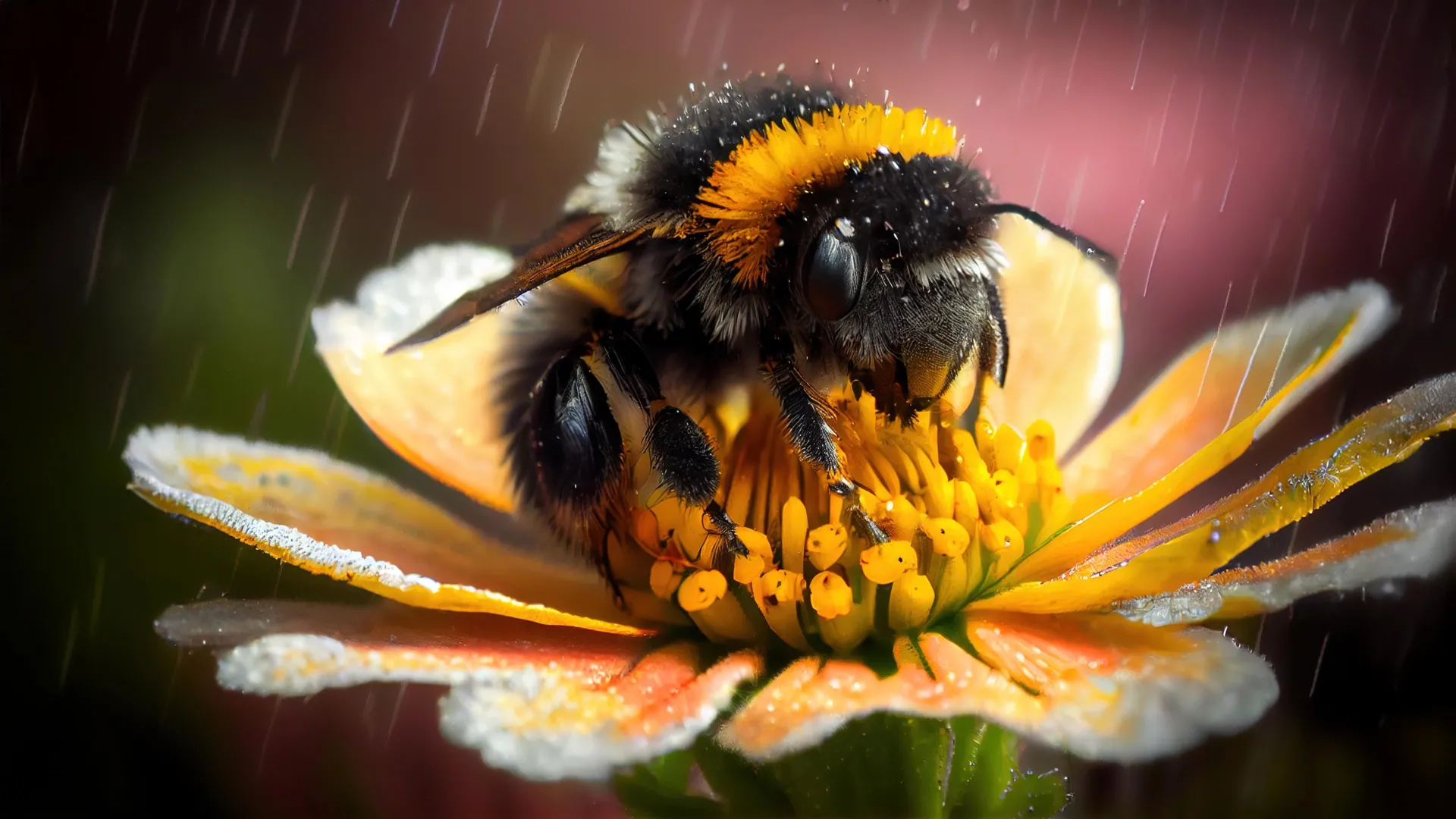
Bumblebees, often overlooked in their diminutive size—typically measuring no more than an inch in length—are monumental pillars of global agriculture. Their tireless work as pollinators underpins the production of approximately one-third of the world’s food supply, a statistic that underscores their indispensable role in sustaining human populations. However, these vital insects are increasingly imperiled, facing a relentless onslaught of environmental pressures, with modern pesticides emerging as a particularly insidious threat to their survival and reproductive capacity. Among these chemicals, sulfoxaflor, a next-generation insecticide introduced in 2013, is drawing significant scientific scrutiny for its detrimental effects on bee populations at the molecular level, even at low exposure rates.
The Double-Edged Sword of Modern Agriculture: Pesticides and Pollinators
The evolution of modern agriculture has been marked by remarkable advancements in pest management, leading to increased crop yields and enhanced food security. Pesticides, in particular, have been instrumental in protecting valuable crops from the ravages of insects and diseases. However, this progress has often come at a cost to non-target organisms, including the very pollinators essential for many agricultural systems. Sulfoxaflor, a systemic insecticide belonging to the sulfoximine class, was developed to combat sap-feeding insects like aphids, which plague crops such as soybeans, corn, cotton, and various fruits and vegetables. Its efficacy against these pests is well-documented, but mounting evidence suggests a darker side to its application: a significant toxicity to bees, including bumblebees.
Recent groundbreaking research, funded by the U.S. Department of Agriculture and conducted by scientists at the Georgia Institute of Technology, has shed critical light on how even minute exposures to sulfoxaflor can disrupt the delicate biological machinery of bumblebees, particularly impacting their reproductive functions. This study moves beyond observing colony-level declines and delves into the molecular mechanisms by which these pesticides exert their harmful influence.
Unraveling the Molecular Impact: Sulfoxaflor’s Effect on Bee Gene Activity
The core of the Georgia Tech study focused on worker bumblebees and their exposure to low doses of sulfoxaflor. Researchers meticulously examined changes in gene expression within these exposed bees, seeking to identify the specific biological pathways affected by the insecticide. The findings were striking: significant alterations in gene activity were observed, with the most pronounced changes occurring within ovarian tissue. This localized impact strongly suggests that sulfoxaflor directly interferes with the reproductive processes of female bumblebees.
According to the researchers, these chemically induced genetic disruptions have profound implications. They can lead to a reduction in the number of viable offspring produced by individual bees. Over time, this diminished reproductive output, when extrapolated across entire colonies and multiple generations, can contribute significantly to the alarming decline in bee populations observed globally. This phenomenon highlights a critical feedback loop where the tools designed to enhance agricultural productivity inadvertently undermine the very ecological services that make such productivity possible.
To rigorously investigate these effects, the research team employed sophisticated scientific methodologies. Bee tissues were rapidly frozen to preserve their molecular state, allowing for precise analysis of RNA. RNA sequencing enabled the researchers to quantify and compare gene activity levels between exposed and unexposed bees, effectively mapping the molecular landscape altered by sulfoxaflor. Complementing these experimental findings, computational models were utilized to identify the specific biological systems most vulnerable to the chemical’s influence. This integrated approach allowed for a comprehensive understanding of the pesticide’s impact, from the genetic code to systemic effects.
"What makes this study exciting is that it connects molecular changes in gene expression to real-world consequences for individual bees and their colonies," stated Michael Goodisman, a professor in the School of Biological Sciences at Georgia Tech and a senior author on the study. "That type of connection is rare and gives us a much clearer picture of how pesticides affect bees." This sentiment underscores the scientific community’s growing need for research that bridges the gap between laboratory findings and tangible ecological outcomes, providing actionable insights for policy and practice.
The Persistent Dilemma: Balancing Pest Control with Pollinator Preservation
The findings from the Georgia Tech study encapsulate a central and ongoing challenge for modern agriculture: the intricate balancing act required to protect crops from destructive pests while simultaneously safeguarding the beneficial insects that are indispensable for food production. This dilemma is not new, but the increasing sophistication of scientific investigation is revealing the depth and complexity of the problem.
"We need pesticides to control crop pests, but they can also harm essential non-target insects like bumblebees," explained Sarah Orr, the lead researcher on the study during her tenure as a postdoctoral fellow at Georgia Tech. Orr, who now serves as an assistant professor at the University of Tampa, elaborated on the critical need for sustainable solutions. "As a scientist, my goal is to identify practical solutions that support pest management while also protecting beneficial insects and the food systems that depend on them." Her perspective emphasizes a forward-looking approach, driven by the imperative to integrate ecological considerations into agricultural practices.
Orr further stressed the fundamental importance of maintaining robust bee populations for successful pollination. "We need many bees for successful pollination," she stated. "If they’re not producing enough offspring, pollination will decline." This simple yet profound statement encapsulates the cascading effects of pollinator decline. A reduction in the number of bees directly translates to reduced pollination services, impacting not only crop yields but also the biodiversity of wild plant species that rely on insect pollination.
A Multifaceted Crisis: Bumblebees Under Siege from Multiple Threats
While the impact of pesticides like sulfoxaflor is a critical concern, it is crucial to recognize that bumblebees face a confluence of threats that exacerbate their vulnerability. Beyond the chemical onslaught, environmental shifts are adding significant stress to pollinator populations.
Timeline of Concern and Research:
- Early 2000s: Growing awareness of pollinator decline globally, prompting increased scientific investigation into contributing factors.
- 2013: Introduction of sulfoxaflor to the agricultural market as a novel insecticide.
- Mid-2010s: Initial studies begin to raise concerns about the toxicity of neonicotinoids and other newer pesticide classes to bees.
- Late 2010s – Early 2020s: Accelerated research into sulfoxaflor’s specific impacts, including its effects on bee reproduction. The Georgia Tech study falls within this period.
- Present: Ongoing regulatory reviews and scientific discourse surrounding the safe use of sulfoxaflor and other pesticides, alongside efforts to develop alternative pest management strategies.
Supporting Data and Scientific Context:
The U.S. Environmental Protection Agency (EPA) has been involved in the registration and re-evaluation of sulfoxaflor. In 2016, the EPA initially approved sulfoxaflor for use, but this decision was later vacated by a federal court following challenges from environmental groups. The court cited concerns about the agency’s assessment of the pesticide’s risks to bees. Subsequently, the EPA re-evaluated the pesticide and issued new approvals with revised use restrictions and mitigation measures aimed at reducing bee exposure. However, scientific debate and ongoing research continue to inform these regulatory processes.
Globally, estimates suggest that pollinators, primarily bees, contribute over $200 billion annually to global crop production. This economic valuation underscores the immense financial and nutritional stakes involved in pollinator conservation. Studies have consistently shown that areas with healthier pollinator populations tend to have higher and more consistent crop yields.
The rise in global temperatures and the increasing frequency and intensity of heatwaves present another significant challenge for bumblebee populations. Bumblebees are ectothermic, meaning their body temperature is regulated by their environment. Extreme heat can directly impact their foraging ability, flight efficiency, and overall survival. Furthermore, changes in climate can alter flowering times of plants, potentially creating a mismatch between when bees are active and when their essential food sources are available. Habitat loss and fragmentation, driven by agricultural expansion and urbanization, also reduce the availability of forage and nesting sites, further stressing these already vulnerable insects.
By gaining a deeper understanding of how specific chemicals like sulfoxaflor influence the intricate biology of bees, researchers aim to pave the way for more informed agricultural practices. This includes the development of integrated pest management (IPM) strategies that prioritize non-chemical methods, the use of targeted pesticides with lower environmental impact, and the implementation of farming techniques that support pollinator habitats. The ultimate goal is to foster a agricultural landscape that is both productive and ecologically sustainable, ensuring the continued hum of bumblebees and the bounty they help to provide for generations to come.
Broader Impact and Implications: A Global Food Security Imperative
The implications of the Georgia Tech study and the ongoing research into sulfoxaflor’s effects extend far beyond the scientific community. The findings have direct relevance for agricultural policy, regulatory frameworks, and the future of sustainable food production.
Official Responses and Regulatory Landscape:
Regulatory bodies worldwide, including the U.S. EPA and the European Food Safety Authority (EFSA), are tasked with assessing the risks posed by pesticides to both human health and the environment. The ongoing evaluation of sulfoxaflor reflects the complex scientific data and the considerable societal pressure to ensure that agricultural inputs do not jeopardize essential ecological services. Decisions regarding the approval, restriction, or banning of such chemicals are often contentious, involving input from industry, scientific experts, and environmental advocacy groups. The re-evaluation process for sulfoxaflor demonstrates a commitment to adapting regulations based on emerging scientific evidence, although the pace of this adaptation is a subject of ongoing discussion.
Analysis of Implications:
The molecular insights provided by the Georgia Tech research offer a critical piece of the puzzle in understanding pollinator decline. By demonstrating a direct link between pesticide exposure and reproductive impairment at the genetic level, the study provides a scientific basis for stricter regulations and the exploration of alternative pest management strategies.
- Economic Ramifications: A significant decline in bumblebee populations could lead to substantial economic losses in agriculture due to reduced crop yields. Farmers may face increased costs for artificial pollination methods or experience decreased profitability if key crops are less productive.
- Food Security: For crops heavily reliant on bee pollination—such as almonds, apples, blueberries, and many others—a decline in pollinator numbers poses a direct threat to food availability and diversity. This could have particularly acute consequences in regions with high dependence on these crops.
- Ecological Balance: Bumblebees are not only agricultural assets but also vital components of natural ecosystems. Their role in pollinating wild plants is essential for maintaining biodiversity, supporting plant reproduction, and providing food sources for other wildlife. The decline of bumblebees could trigger cascading negative effects throughout food webs.
- Innovation in Agriculture: The challenges posed by pesticide toxicity are driving innovation in agricultural science. This includes the development of more targeted and less harmful pesticides, the advancement of biological control methods, and the adoption of precision agriculture techniques that minimize pesticide application.
The future of bumblebees, and by extension, a significant portion of our global food system, hinges on a concerted effort to address the multifaceted threats they face. Continued scientific research, informed regulatory action, and the widespread adoption of sustainable agricultural practices are paramount. The silent hum of the bumblebee, a sound integral to the health of our planet and our food supply, must be preserved through proactive and informed stewardship.