

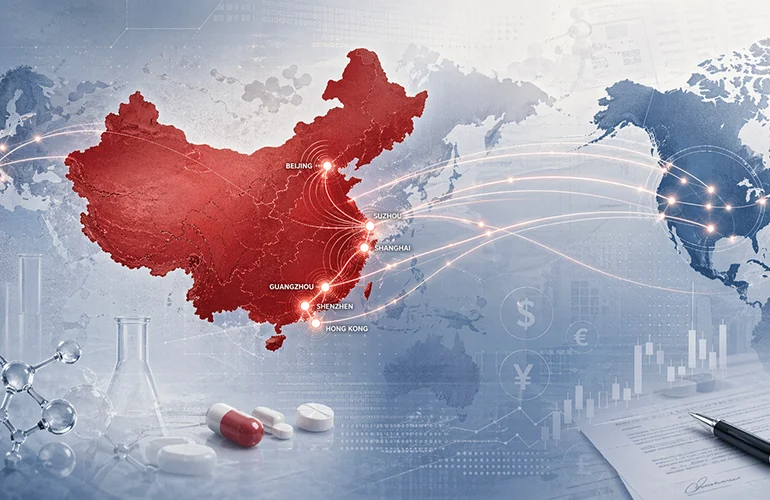
Over the past sixteen months, Chinese-domiciled biotechnology companies have solidified their position as pivotal players in the global pharmaceutical landscape, participating in a remarkable 6 out of 26 major licensing and acquisition deals. This flurry of activity, spanning from December 2024 to March 2026, collectively represents nearly one-third of the total headline value of these significant transactions, amounting to approximately $53 billion. The strategic embrace of Chinese innovation by leading Western pharmaceutical companies underscores a profound shift in the industry’s R&D and market dynamics. Roughly half of these high-value deals involved partnerships with U.S.-origin firms, predominantly structured as mergers and acquisitions, while just under 30% were licensing agreements with Chinese-headquartered companies. The remainder comprised mixed deals involving European pharmaceutical giants, highlighting a truly global collaborative trend.
This burgeoning influence is not merely a fleeting trend but a reflection of years of concerted investment, scientific advancement, and strategic policy within China’s biopharmaceutical sector. Historically, China’s pharmaceutical industry was largely characterized by generic drug manufacturing. However, a deliberate and sustained pivot towards innovation, supported by robust government initiatives and a rapidly expanding talent pool, has transformed the nation into a formidable force in novel drug discovery and development. The current wave of high-profile deals illustrates a maturation of the Chinese biotech ecosystem, where local companies are no longer just targets for market access but sources of cutting-edge therapeutic candidates and platforms.
A Chronology of Landmark Collaborations
The period under review provides a clear timeline of this escalating engagement, featuring some of the largest names in global pharmaceuticals forging alliances with Chinese innovators. Each deal not only brings significant financial investment but also validates the scientific rigor and commercial potential of the Chinese biotechs involved.
The momentum began in December 2024, when pharmaceutical giant Merck entered into an exclusive global license agreement with Hansoh Pharma, headquartered in Jiangsu Province, China. The deal, valued at up to $2 billion, secured Merck rights to Hansoh’s investigational oral obesity candidate, HS-10535. This move was particularly significant, as it tapped into the rapidly expanding and highly competitive market for GLP-1 receptor agonists, signaling Western pharma’s eagerness to access innovative assets from China to address major global health challenges. The substantial valuation reflected the potential of HS-10535 to carve out a niche in a therapeutic area with immense commercial promise.
Merck’s confidence in Chinese innovation was further underscored in March 2025, as the company returned to China for another major asset. This time, Merck licensed HRS-5346, an investigational heart drug from Jiangsu Hengrui Pharmaceuticals, in a separate deal also valued at up to $2 billion. The successive partnerships with different Chinese firms in critical therapeutic areas like cardiometabolic diseases demonstrated a strategic commitment from Merck to diversify its pipeline with promising candidates originating from China.
The pattern of significant investment continued and intensified throughout 2025. In July, Pfizer, another global pharmaceutical powerhouse, announced a substantial licensing agreement with 3SBio. This deal involved Pfizer licensing 3SBio’s cancer candidate SSGJ-707 for an impressive $1.25 billion upfront payment, with potential milestone payments reaching up to $4.8 billion. Adding to the commitment, Pfizer also planned a $100 million equity investment in 3SBio. The substantial upfront payment and the equity stake were strong indicators of Pfizer’s conviction in the asset and the long-term potential of the partnership, particularly in the high-stakes field of oncology.
June 2025 saw AstraZeneca, a major European player, entering into an AI-led chronic disease research pact with Hebei Province, China-based CSPC Pharmaceutical Group. This forward-looking collaboration was valued at up to $5.3 billion, highlighting the increasing integration of artificial intelligence into drug discovery and development, and China’s growing capabilities in this advanced technological domain. The focus on chronic diseases also pointed to the breadth of therapeutic areas where Chinese biotechs are making significant contributions.
The trend showed no signs of abating as the industry moved into 2026. In January, AbbVie announced a licensing agreement for RemeGen’s RC148, a novel bispecific antibody designed for advanced solid tumors. This deal was structured with a potential value of up to $5.6 billion, reflecting the escalating interest in innovative biologic therapies originating from China. Bispecific antibodies represent a cutting-edge area in oncology, offering enhanced precision and efficacy, and RemeGen’s asset showcased China’s leadership in developing next-generation modalities.
Just weeks later, in February 2026, AstraZeneca deepened its commitment to Chinese innovation by returning to CSPC Pharmaceutical Group. This second partnership, focusing on obesity and weight-related drug candidates, dwarfed previous deals with an astounding potential value of up to $18.5 billion, including a substantial $1.2 billion upfront payment. The magnitude of this deal underscored the immense global market potential for obesity treatments and AstraZeneca’s belief in CSPC’s capabilities to deliver in this critical area. This repeat collaboration further solidified the strategic importance of Chinese partners for major Western pharmaceutical companies.
Early March 2026 witnessed Sanofi licensing rovadicitinib from Sino Biopharm’s Chia Tai Tianqing unit for up to $1.53 billion. This agreement targeted blood cancer, diversifying the therapeutic areas of Chinese-sourced innovation to include hematology. By late March, Eli Lilly had expanded its existing work with Insilico Medicine, a company notable for being Hong Kong-listed yet Cambridge, Massachusetts-headquartered, into a licensing and research pact worth up to $2.75 billion. This hybrid model, combining Chinese origins with a presence in a major Western biotech hub, highlighted the global interconnectedness of modern drug discovery and the increasing reliance on AI-driven R&D platforms, where Insilico Medicine is a recognized leader.
Underlying Drivers of China’s Biotech Surge
The dramatic increase in cross-border deals is not accidental but the culmination of several strategic factors that have positioned China as a global biopharma innovation hub:
1. Robust Government Support and Policy Frameworks: The Chinese government has made biopharmaceutical innovation a national strategic priority. Initiatives like "Made in China 2025" and subsequent national plans have channeled significant investments into R&D infrastructure, talent development, and favorable regulatory pathways. Expedited review processes for innovative drugs, coupled with financial incentives for local drug development, have created a fertile ground for biotech companies to thrive.
2. Expanding Talent Pool and Scientific Expertise: China has invested heavily in higher education and scientific research, leading to a rapidly growing pool of highly skilled scientists, researchers, and clinical professionals. Furthermore, many overseas Chinese scientists, trained in leading Western institutions, have returned to China, bringing with them invaluable expertise, global best practices, and entrepreneurial spirit, significantly elevating the domestic R&D capabilities.
3. Increasing R&D Investment: Both public and private sector investments in biopharmaceutical R&D have surged. Venture capital funding for biotech startups in China has grown exponentially, fueling innovation and enabling companies to pursue ambitious drug discovery programs. This financial backing provides the necessary capital for long-term research, preclinical development, and costly clinical trials.
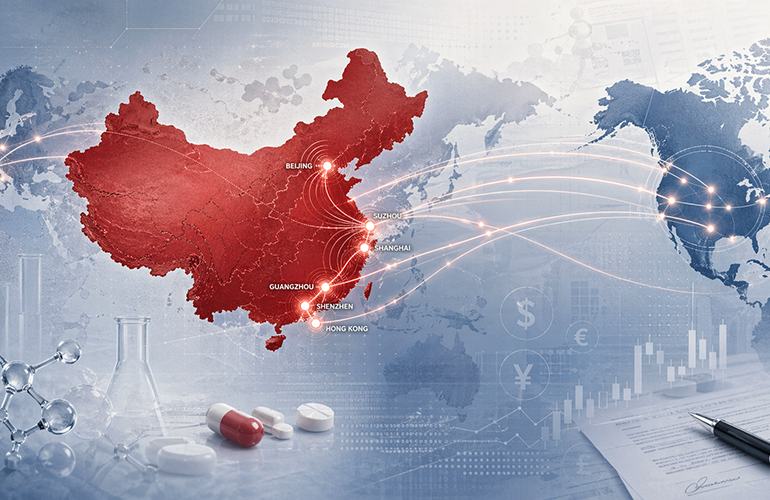
4. Cost Efficiency in R&D: Compared to Western counterparts, conducting preclinical research and clinical trials in China can often be more cost-effective. This efficiency allows Chinese biotechs to advance more candidates through the pipeline with less capital, making them attractive partners for global pharmaceutical companies seeking to optimize their R&D spending.
5. Large and Diverse Domestic Market: China’s immense population and rising healthcare demands provide a vast domestic market for new drugs. This large patient base offers unparalleled opportunities for clinical trial recruitment and provides a strong commercial foundation for local companies, reducing initial reliance on global markets. The ability to test and launch drugs domestically before seeking international expansion gives Chinese firms a competitive edge.
6. Focus on Novel Modalities and Therapeutic Areas: Chinese biotechs have increasingly shifted their focus from generic drugs to novel, first-in-class, or best-in-class therapies, particularly in high-demand areas like oncology, autoimmune diseases, and metabolic disorders. They are at the forefront of developing advanced biologics, such as bispecific antibodies, antibody-drug conjugates (ADCs), and cell therapies, as well as leveraging cutting-edge technologies like artificial intelligence in drug discovery.
The Shifting Global R&D Landscape
The impact of China’s rise is clearly reflected in industry-wide data. According to Citeline’s Pharmaprojects database, a significant milestone was reached in 2025: more drugs made their market debut in China than anywhere else in the world. This marked the first time any country had surpassed the United States on this crucial metric, signaling a profound shift in the global locus of pharmaceutical innovation. This metric, which tracks the introduction of new molecular entities (NMEs) to the market, is a powerful indicator of a country’s R&D productivity and its ability to translate scientific discoveries into approved medicines.
Fangning Zhang, a partner at McKinsey, articulated this new reality to Citeline sister publication Scrip, stating that China now "combines next-generation modality leadership and R&D velocity that runs faster and at lower cost than industry norms." Zhang further declared Asia to be "biopharma’s emerging epicenter," a sentiment echoed by the volume and value of recent deals. This assessment highlights not only the quantity but also the quality and efficiency of Chinese biopharmaceutical R&D. The ability to develop innovative therapies rapidly and cost-effectively presents an undeniable allure for multinational pharmaceutical corporations facing intense pressure to replenish pipelines and demonstrate returns on investment.
Strategic Implications for Global Pharmaceutical Giants
The influx of partnerships between Western pharma and Chinese biotechs carries significant strategic implications:
1. Access to Novel Pipelines and Innovation: For global pharmaceutical companies, these collaborations offer a vital avenue to access a burgeoning pipeline of novel drug candidates and innovative therapeutic platforms. As R&D costs continue to soar and internal pipelines face challenges, external innovation, particularly from dynamic ecosystems like China, becomes increasingly critical.
2. Market Penetration and Expansion: Partnering with Chinese firms can facilitate deeper and more effective market penetration into China’s massive and rapidly growing healthcare market. Local partners possess invaluable insights into regulatory landscapes, clinical practices, and patient needs, which are essential for successful drug development and commercialization in the region.
3. Cost-Effective Drug Development: Leveraging China’s relatively lower R&D costs can help multinational companies manage their overall development expenditures. This can accelerate timelines and improve the economic viability of bringing new drugs to market.
4. Diversification of R&D Footprint: These partnerships enable global pharma to diversify their R&D footprint, reducing over-reliance on traditional Western innovation hubs and building a more resilient, globally distributed discovery network.
5. Competitive Necessity: In an increasingly competitive global landscape, engaging with leading Chinese biotechs is becoming a competitive imperative. Companies that fail to tap into this source of innovation risk being outmaneuvered by rivals who are actively forming strategic alliances.
Challenges and Future Trajectories
While the outlook is overwhelmingly positive, the landscape is not without its challenges. Geopolitical tensions, intellectual property protection concerns, and differences in regulatory frameworks remain areas that require careful navigation. However, the sheer economic and scientific momentum appears to be outweighing these potential headwinds.
The momentum is projected to continue its upward trajectory. Tom Barsha, head of Asia Pacific M&A at BofA Securities, predicts that the total value of China’s licensing-out deals will double again over the next 18 to 24 months. This forecast suggests an ongoing and accelerating trend of Chinese biotechs not only contributing to global drug discovery but increasingly leading in certain therapeutic areas and technological innovations. This continued growth will likely attract even more foreign investment and partnerships, further cementing China’s role as a cornerstone of the global biopharmaceutical industry.
In conclusion, the past sixteen months have undeniably marked a transformative period, showcasing China’s emergence as a formidable and indispensable innovation hub in the global biopharmaceutical sector. The substantial value and frequency of these cross-border deals are a testament to the scientific prowess, R&D velocity, and strategic vision of Chinese biotech firms. As these partnerships continue to evolve, they are set to redefine the future of drug discovery and development, fostering a more interconnected and globally collaborative approach to addressing unmet medical needs worldwide.













Leave a Reply