The global transition toward renewable energy and the electrification of transport hinges on a singular, critical component: the battery. As the limitations of current lithium-ion technology become increasingly apparent, the scientific community and the automotive industry have turned their collective focus toward solid-state batteries. These devices, often hailed as the "holy grail" of energy storage, promise to revolutionize everything from consumer electronics to long-range electric vehicles (EVs). However, for decades, a microscopic phenomenon known as dendrite growth has stood as a formidable barrier to commercialization. Recent research from the Max Planck Institute for Sustainable Materials (MPI-SusMat), published in the prestigious journal Nature, has finally decoded the mechanical mystery of how these dendrites destroy solid-state batteries, providing a roadmap for the next generation of energy storage.
The primary difference between a conventional lithium-ion battery and a solid-state battery lies in the electrolyte. In the former, a liquid electrolyte facilitates the movement of ions between the anode and cathode. While effective, these liquids are often flammable and limit the battery’s energy density. Solid-state batteries replace this liquid with a solid ceramic or polymer electrolyte, which is inherently safer and allows for the use of a pure lithium metal anode. This shift could theoretically double or triple the energy density of current batteries, allowing a smartphone to last a week on a single charge or an EV to travel over 700 miles without stopping. Yet, despite the mechanical rigidity of ceramic electrolytes, they are frequently pierced by soft lithium dendrites during the charging process, leading to catastrophic short circuits and battery failure.
The Paradox of the "Gummy Bear" and the Rock
The central puzzle for researchers has been a matter of mechanical physics: how can lithium metal, which is soft and malleable—often compared to the consistency of a gummy bear—fracture a stiff, hard ceramic electrolyte? To solve this, Dr. Yuwei Zhang, head of the "Chemo-Mechanics of Battery Materials" group at MPI-SusMat, led an interdisciplinary team to investigate the root cause of these fractures.
Previously, two competing hypotheses dominated the field. The first suggested that internal mechanical stress builds up within the dendrite as it grows, eventually reaching a point where it cracks the ceramic. The second hypothesis proposed that electrons "leak" along the grain boundaries of the solid electrolyte, creating tiny pockets of lithium metal inside the ceramic that eventually link up to form a bridge, or a short circuit.
To adjudicate between these theories, the MPI-SusMat team utilized a sophisticated suite of characterization tools. Because lithium is highly reactive and sensitive to environmental factors, the researchers conducted their experiments under a strict vacuum and at cryogenic temperatures. This prevented the samples from being altered by oxygen, moisture, or the high-energy electron beams of the microscopes used for observation. This level of precision allowed the team to examine the internal stress and plastic deformation of lithium dendrites trapped within microscopic cracks in real-time.
Findings: The Hydrostatic Stress Mechanism
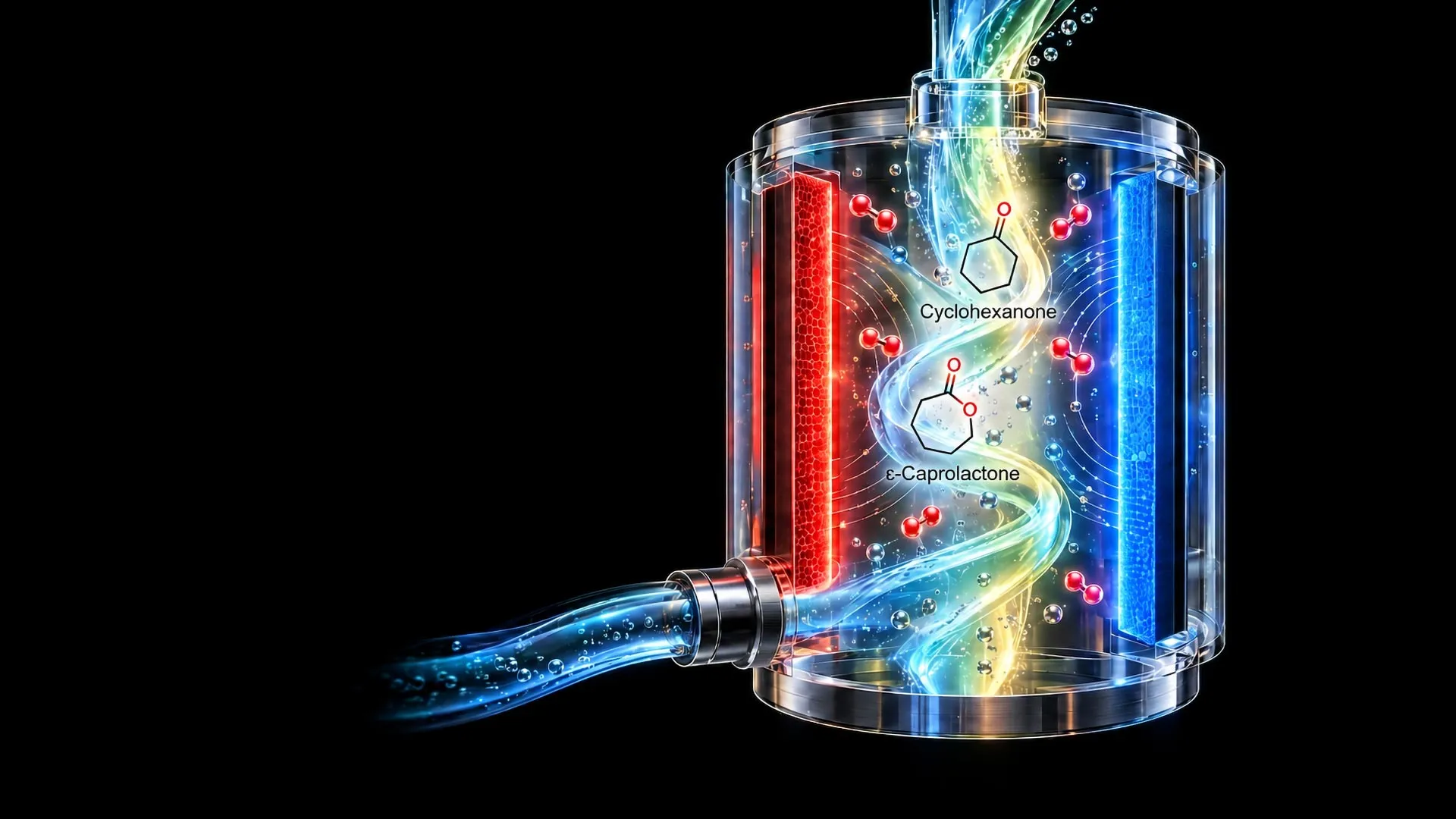
The team’s analysis led to a definitive conclusion: the failure is driven by mechanical stress, but not in the way many had imagined. By observing the dendrite tips, the researchers found no evidence of lithium buildup ahead of the crack, which ruled out several previous models of growth. Instead, they discovered that the soft lithium metal acts like a continuous, high-pressure waterjet.
"The soft lithium metal is able to penetrate the stiff ceramic electrolyte, like a continuous waterjet that penetrates a rock," Dr. Zhang explained. The team’s calculations and phase-field simulations revealed that as lithium is pushed into the microscopic pores of the electrolyte during charging, it generates immense hydrostatic stress. This pressure eventually exceeds the fracture toughness of the ceramic, leading to brittle failure. This discovery shifts the focus from electronic leakage to the fundamental mechanical properties of the interface between the lithium and the solid electrolyte.
To validate these findings, the researchers employed electron backscatter diffraction (EBSD) measurements, which allowed them to map the crystallographic orientation of the materials at the fracture site. The data confirmed that the ceramic was not failing due to chemical degradation or electronic flaws, but rather due to the physical pressure exerted by the lithium as it attempted to occupy space within the solid structure.
A Chronology of Solid-State Development
The road to this discovery has been decades in the making. The concept of solid-state ionics dates back to the 19th century, but it wasn’t until the 1970s and 80s that researchers began seriously considering solid electrolytes for batteries.
- 1991: Sony commercializes the first liquid-electrolyte lithium-ion battery, setting the standard for the next 30 years.
- 2010s: As the EV market begins to expand, companies like Toyota and QuantumScape begin investing heavily in solid-state research to overcome the range and safety limitations of liquid electrolytes.
- 2020-2023: Several "breakthroughs" are announced regarding new ceramic and sulfide-based electrolytes, yet dendrite-induced short-circuiting remains the primary cause of failure in long-term cycling tests.
- 2024: The MPI-SusMat study provides the first clear mechanical explanation for dendrite penetration, moving the industry from trial-and-error experimentation to informed engineering.
Supporting Data and Comparative Analysis
To understand the impact of this research, it is necessary to look at the performance gap between current technology and the potential of solid-state systems. Current high-end lithium-ion batteries typically offer an energy density of approximately 250 to 300 Watt-hours per kilogram (Wh/kg). In contrast, solid-state batteries using lithium metal anodes are projected to reach 500 Wh/kg or more.
Furthermore, the safety metrics are vastly different. Liquid electrolytes have a low flash point, making them prone to "thermal runaway" if the battery is punctured or overheats. Solid ceramic electrolytes are non-flammable and can operate at much higher temperatures, which also reduces the need for heavy and complex cooling systems in electric vehicles. However, the data from MPI-SusMat suggests that "mechanical safety"—the ability of the electrolyte to resist cracking—is just as vital as chemical safety.
Industry Implications and Official Responses
The findings from Max Planck have sent ripples through the battery manufacturing sector. While the institute operates as a fundamental research body, the implications for commercial partners are direct. Engineers at major automotive firms are already looking at how to apply these insights to their production lines.
Industry analysts suggest that the "waterjet" analogy provides a clear target for material scientists. If the problem is hydrostatic stress, then the solution must involve managing that pressure. Potential strategies identified by the MPI-SusMat team include:
- Toughening the Electrolyte: Increasing the fracture toughness of the ceramic so it can withstand higher pressures without cracking.
- Microscopic Voids: Intentionally engineering "sacrificial" pores or voids within the electrolyte to redirect dendrite growth away from the cathode, essentially giving the lithium a path of least resistance that does not lead to a short circuit.
- Interfacial Coatings: Applying ultra-thin protective layers to the lithium anode to ensure more uniform deposition of metal during charging, thereby preventing the initial formation of "points" or dendrite tips.
The Broader Impact on Global Electrification
The transition to a carbon-neutral economy depends heavily on the ability to store energy efficiently. The limitations of current batteries affect not only cars but also the stability of power grids that rely on intermittent solar and wind energy. If solid-state batteries can be perfected using the insights from Dr. Zhang’s team, the environmental footprint of battery production could also decrease. Solid-state cells often require less cobalt and nickel—materials associated with significant ethical and environmental mining concerns—while offering a longer cycle life, which reduces the frequency of battery replacement and recycling.
Furthermore, the aviation industry is watching these developments closely. Current lithium-ion batteries are too heavy for long-haul electric flight. The 2x or 3x increase in energy density promised by solid-state technology could finally make regional electric aviation a reality, significantly cutting carbon emissions from the transport sector.
Conclusion: From Concept to Reality
The research conducted at the Max Planck Institute for Sustainable Materials represents a pivotal moment in battery science. By identifying the exact mechanism of dendrite-induced failure, the team has removed much of the guesswork that has plagued solid-state development for years.
"Our work demonstrates the importance of understanding how materials behave at the microscopic level," the researchers noted in their concluding remarks. As the industry moves forward, the focus will shift from simply finding "harder" materials to designing "smarter" architectures that can manage the unique chemo-mechanical stresses of lithium metal. While challenges remain in scaling these solutions for mass production, the path toward a safer, more energetic, and longer-lasting battery has never been clearer. The "gummy bear" may have been breaking the "rock," but science now knows exactly how it happens—and how to stop it.